

Tel Aviv bourse chief warns political deadlock threatens growth, urges broad government
As coalition talks look set to drag on, head of TASE warns of economic cost of instability, saying investors need certainty, consistent policies and a clear economic outlook
 Add ToI as a Preferred Source on Google
Sharon Wrobel is a tech reporter for The Times of Israel

Tel Aviv Stock Exchange CEO Ittai Ben-Zeev on Sunday urged political leaders from across the spectrum to put Israel’s economic future ahead of political differences and form a broad, consensus-driven government.
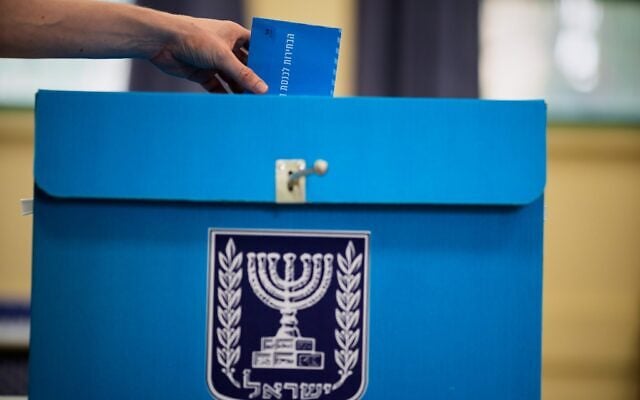
In an open letter, following Tuesday’s election, Ben-Zeev said the results “place before Israel’s leadership a national task that transcends the considerations of any political camp.”
“National responsibility must prevail over short-term political considerations,” he said. “A broad-based government, resting on cross-bloc agreements, does not require eliminating differences or giving up principles.”
Ben-Zeev said Israel’s economic future cannot be held hostage to political disputes, suggesting that prolonged infighting could hold back the country’s growth potential.
The appeal comes less than a week after Israelis went to the polls, with the question of who will lead the country’s next government still unsettled. The parties opposed to Prime Minister Benjamin Netanyahu collectively won 67 of the Knesset’s 120 seats, compared to 53 for the premier’s right-wing and ultra-Orthodox bloc. But deep ideological divisions and conflicting campaign promises have once again left the opposition without a clear path to forming an alternative government.

“Based on the recent election results, it is still difficult to factor in a stable government in Israel,” said Leader Capital Markets chief economist Jonathan Katz. “Clearly, the coalition formation process will be prolonged… another round of elections is also a possible scenario.”
Markets reacted accordingly. Last week, Tel Aviv shares dropped and the shekel weakened against the dollar, as election results thwarted investors’ bets on a change in government and fueled uncertainty over the formation of a stable coalition. The benchmark TA-125 index fell 3.4 percent in October but is still up 7.4% from the start of 2026.
Ben-Zeev praised the resilience of Israel’s economy, which he attributed to entrepreneurship, innovation, and technological achievements, despite three years of war. He said Israeli companies kept growing through the country’s hardest periods, while investors kept their confidence, helping the Tel Aviv bourse post among the best performances in the world.
That resilience, he said, “is neither accidental nor something to be taken for granted,” adding that technological advantage alone cannot guarantee economic prosperity.
“Turning potential into growth requires bold decisions, a long-term strategy and investments in infrastructure — all guided by a vision that extends well beyond the next election cycle,” said Ben-Zeev.
Similarly, Katz said that “political instability comes at a cost, making it more difficult to advance long-term commitments and infrastructure projects.”
Ben-Zeev called on the incoming government to pass a responsible, growth-supporting state budget; increase infrastructure investment; build an education system suited to the world of tomorrow; expand workforce participation; and broaden the circle of those who share the national burden.

Israel must also capitalize on regional opportunities, expand the Abraham Accords and open new markets for Israeli companies, he demanded.
“Investors are looking for opportunities, but they also demand certainty, consistent policies and a clear economic outlook,” Ben-Zeev said. “Israel can attract substantial investment and become an economic hub with global influence.”
“To achieve this, Israel must signal to the world that it knows not only how to cope with crises, but also how to unite around its long-term goals,” he said.
Times of Israel staff contributed to this report.




The Times of Israel Community.