

Tibi says Joint List ready to back anti-Netanyahu government from the outside
Veteran MK urges Eisenkot to follow Rabin model; Jabareen says coalition contacts have begun, rejects Qatar interference claims and declines to call Hamas a terror group
 Add ToI as a Preferred Source on Google
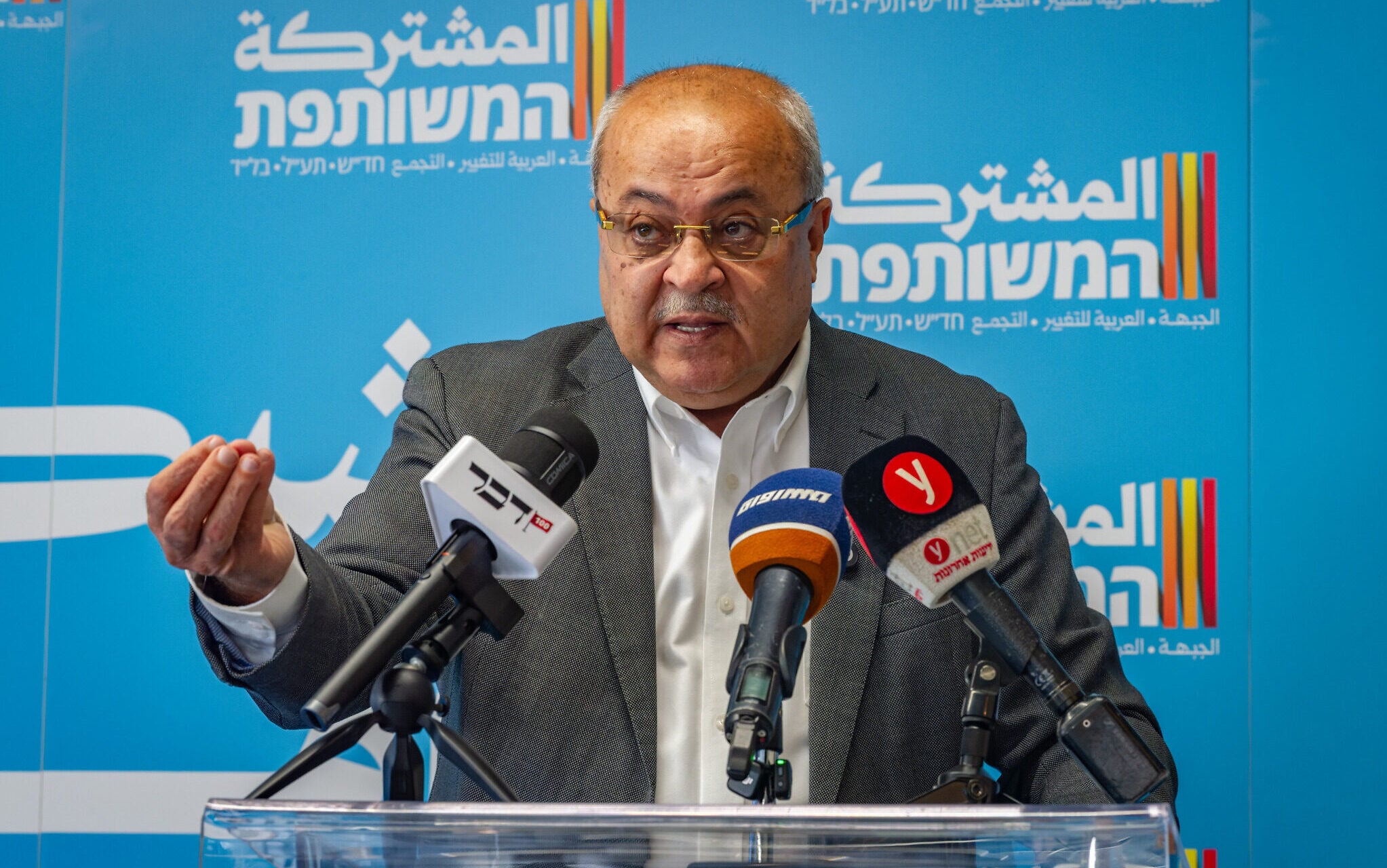
Veteran Arab MK Ahmad Tibi, No. 2 on the Joint List, said Saturday that his party was ready to support the anti-Netanyahu Zionist parties in establishing a government to replace the outgoing coalition, but stressed that it did not want to be part of the government itself.
He urged leading opposition candidate Gadi Eisenkot to “be like [the late prime minister Yitzhak] Rabin,” who relied on the votes of Arab MKs to pass the Oslo Accords with the PLO.
Tibi, whose Joint List of three Arab factions won 11 seats in Tuesday’s election, told Channel 12, “We want to help anyone who wants to bring down this awful government… and switch it for a different government. We want to be part of the correction, part of the hope.”
“We won’t be part of the government. I don’t want a ministerial post. I don’t want to be in the cabinet,” he stressed. “But without the Arab parties there won’t be change,” he added, referring to election results that gave the anti-Netanyahu parties 67 seats in the 120-member Knesset, 19 of them to the two Arab parties. Ra’am, the second Arab party, won eight seats.
The 67 seats held collectively by Netanyahu’s opponents would be enough for a parliamentary majority if the Jewish-led opposition parties agreed to cooperate with the Arab factions, but Yashar, B’Yachad and Yisrael Beytenu have ruled out sitting in a coalition with them.
Tibi said the unprecedented turnout and resulting Knesset representation from the Arab sector meant Prime Minister Benjamin Netanyahu could not form a government. “The heroic vote” of the Arab sector was “an act of self-defense” against the Netanyahu coalition, he said.
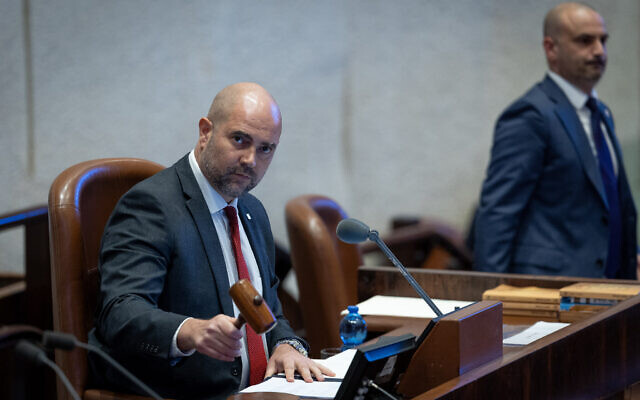
He indicated that the Joint List will recommend to President Isaac Herzog that a candidate from the anti-Netanyahu Zionist parties be given the mandate to form a coalition — presumably Eisenkot. He also said the party would back a vote to oust Likud’s Knesset Speaker Amir Ohana, and indicated that it would support a vote to establish a state commission of inquiry into the October 7, 2023, Hamas invasion and massacre. Those are two votes the anti-Netanyahu bloc is planning to prioritize after the Knesset is sworn in on November 10.
Indicating longer-term support, Tibi also said his party would not back a Likud-initiated no-confidence motion against the government he hoped would be established, and would not initiate its own motion to dissolve the Knesset.
Tibi dismissed the notion that the Joint List had received illicit election funding from Qatar or any other foreign country. He also claimed that Shin Bet chief David Zini had “manipulated” Central Elections Committee chair Justice Noam Sohlberg into announcing an investigation into alleged foreign interference, and had done so after meeting with Netanyahu, a candidate in the election. “Does that sound acceptable to you?” Tibi asked, predicting that the investigation would lead nowhere.
Channel 12 reported after the election on Thursday that Netanyahu and his Likud party were alleging that Qatar had secretly funded efforts to boost Arab voter turnout. Likud was said to believe Qatar was behind money allegedly transferred to Arab get-out-the-vote groups. Shin Bet opened a limited probe into suspected foreign funding and interference.
The allegations have not been substantiated. Shin Bet sources later told Channel 12 that nothing being examined in the foreign-interference probe could affect the election results, while the Central Elections Committee said the investigation was limited in scope.
Jabareen says Joint List ready to help build majority
Meanwhile, Joint List chairman Yousef Jabareen declined to call Hamas a terrorist organization and denied knowledge of the suspected Qatari election interference during an interview with Channel 12 on Saturday. He said initial contacts had been made with most of the leaders of the anti-Netanyahu bloc.
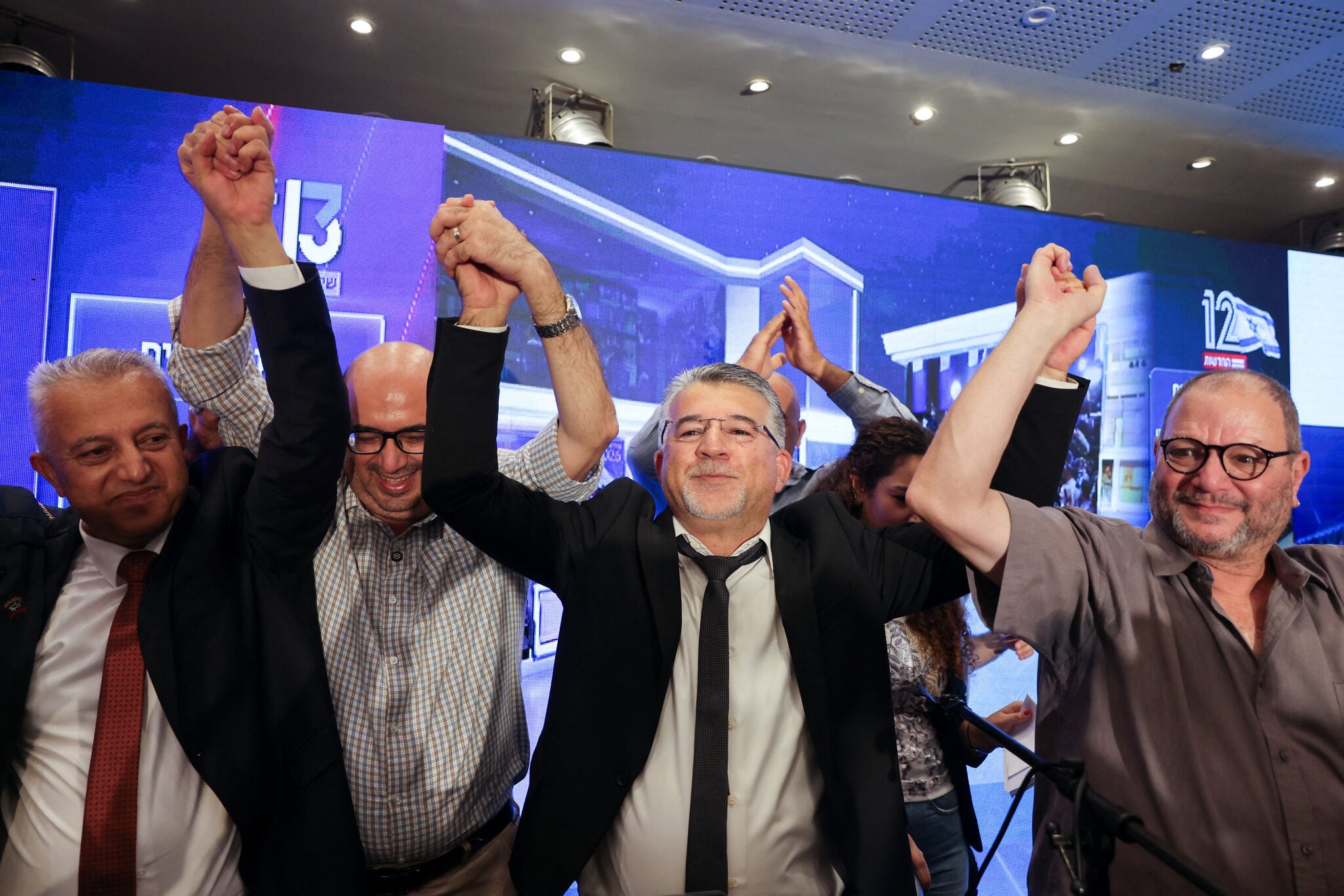
Jabareen said the unprecedented surge in Arab voter turnout — which jumped from 38 percent in the 2022 election to nearly 80 percent — came because “people saw an opportunity to overthrow [Prime Minister Benjamin] Netanyahu, [National Security Minister Itamar] Ben Gvir and [Finance Minister Bezalel] Smotrich and punish them,” over years of grievances.
“The Arab public saw the situation as a state of emergency, an almost existential election,” Jabareen stressed.

The Joint List was “truly ready” to help build a parliamentary majority in the coming weeks, according to Jabareen, who said informal contacts had begun with opposition parties, including Gadi Eisenkot, Yair Golan and members of Naftali Bennett’s B’Yachad party, but not with Avigdor Liberman. He described them as early “initial contacts,” rather than formal talks.
Jabareen’s conditions for such a deal could be a nonstarter, since one of them includes a commitment to a diplomatic avenue toward establishing a Palestinian state. Jewish-led opposition parties have expressed opposition to such an idea. The manifesto of the left-wing Democrats advocates for a regional diplomatic process including the Palestinians without mentioning statehood.
Jabareen’s conditions also include an organized plan, with a budget, for reducing violent crime in Arab municipalities. Additionally, he demanded halting home demolitions, a punitive tactic used on the residences of convicted terrorists and their families.
Jabareen brushed off reports that Qatar had attempted to interfere in the election as “spin” and “dangerous slander.”
“I don’t know of any interference by Qatar,” he said. “The only interference I know of is [US President Donald] Trump’s message supporting Netanyahu.”
Trump had given Netanyahu his “complete and total endorsement” nine days before the election, saying any alternative Israeli leader would leave Washington to confront Iran without the same partnership.
While Jabareen said his party had repeatedly condemned the October 7, 2023, Hamas-led attack, he repeatedly dodged questions about his refusal to call Hamas a terrorist organization. Asked several times for a straight answer, he replied, “My dear, I am not in an interrogation room.”
He added that the Joint List had been firm in its response to the October 7 invasion and massacre: “We said we condemn the slaughter in the communities on the Gaza border.”
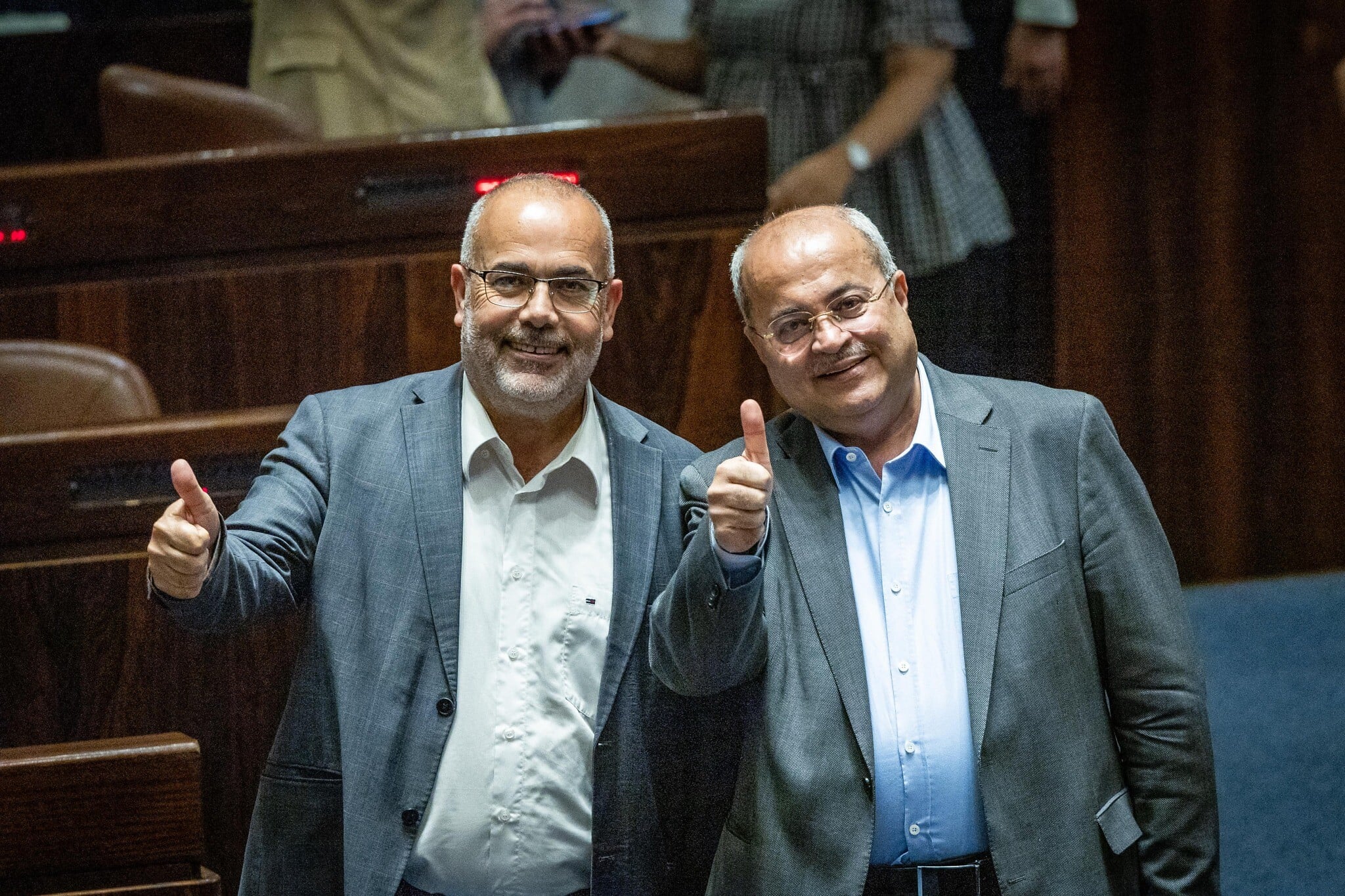
Regarding a speech by former Knesset member Osama Saadi in which he dedicated the Arab parties’ electoral gains to residents of Gaza, the West Bank and East Jerusalem, Jabareen questioned his choice of words even as he praised Saadi for providing legal defense to Palestinian families.
On the issue of IDF service, Jabareen reaffirmed that Arab Israeli leaders opposed compulsory military or national service in its current form. The deeper problem, he insisted, was the absence of genuine dialogue between the state and Arab community leadership.




The Times of Israel Community.