

To become PM, Eisenkot and Netanyahu may need to break key promises
With both blocs short of a 61-seat majority, their respective leaders must now decide which divisive issues are worth prioritizing, and which pledges are worth reneging on
 Add ToI as a Preferred Source on Google

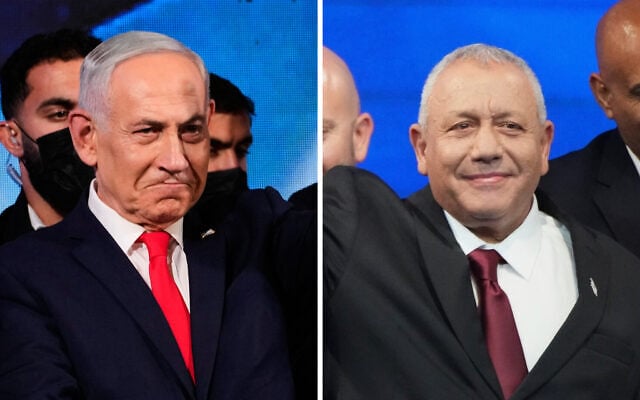
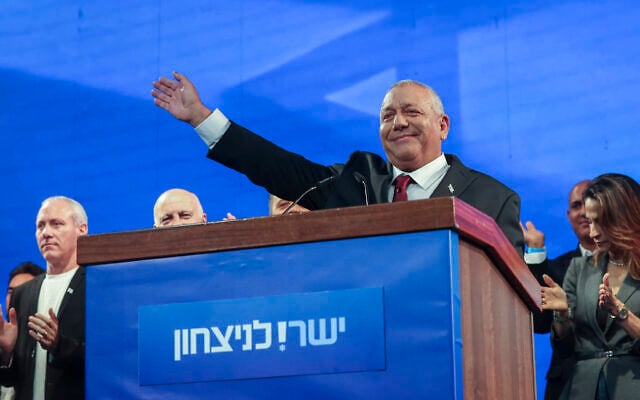
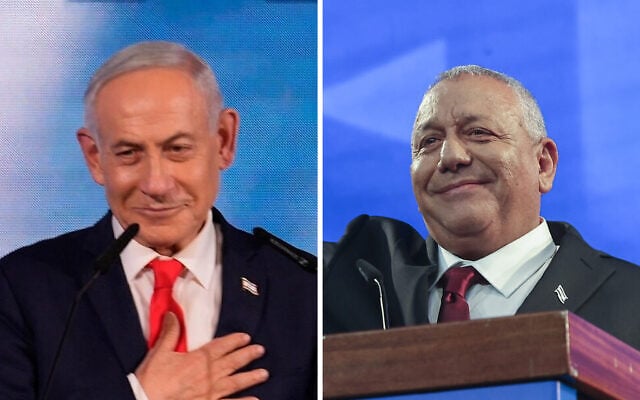
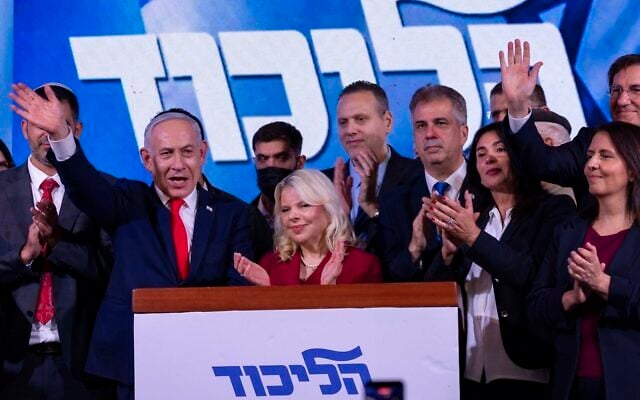
JTA — Prime Minister Benjamin Netanyahu and his opponent Gadi Eisenkot may have to break their promises to their constituents if they want to form and lead Israel’s next government.
Their potential political allies may have to do the same.
Netanyahu’s Likud and Eisenkot’s Yashar party both garnered more votes than any of the other nine parties that met the threshold to join the next Knesset.
Netanyahu and the bloc of parties that ideologically align with him, however, secured only 53 of the 61 seats needed for a governing majority in the 120-seat Knesset. The Eisenkot bloc won 48.
For Eisenkot, three divisive issues are likely to dominate the debate and force some politicians to renege on campaign pledges: partnering with Arab parties, instituting mandatory military service for Haredi men and the prospect of forming a unity government with Netanyahu.
Support from the Arab parties
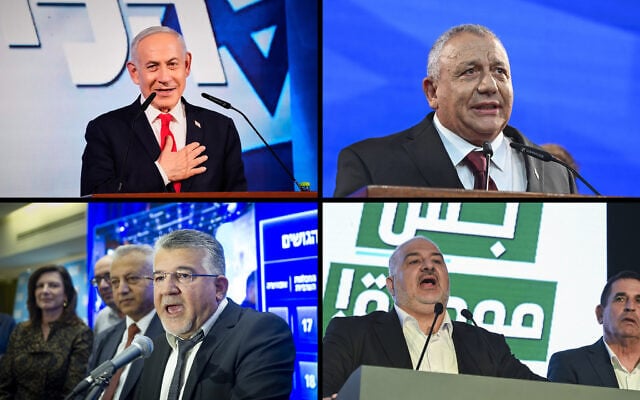
Eisenkot’s bloc includes four Jewish-led parties: his own party Yashar, B’Yachad led by former prime ministers Naftali Bennett and Yair Lapid, Yisrael Beytenu led by Avigdor Liberman, and the Democrats led by Yair Golan.
Eisenkot could easily become prime minister with a 67-seat coalition if he added the predominantly Arab parties, Ra’am with eight seats and the Joint List with 11. But that is far from straightforward. Three of the bloc’s four parties — Yashar, B’Yachad and Yisrael Beytenu — pledged not to form a government with Arab parties. And relying on their support would face an additional legitimacy hurdle given Netanyahu’s advantage among Jewish voters.
During the campaign, Eisenkot set four conditions for joining his government, including a commitment to Israel as a Jewish and democratic state and to the values of the Declaration of Independence, mandatory military or national service, and recognition of Hamas as a terrorist organization.
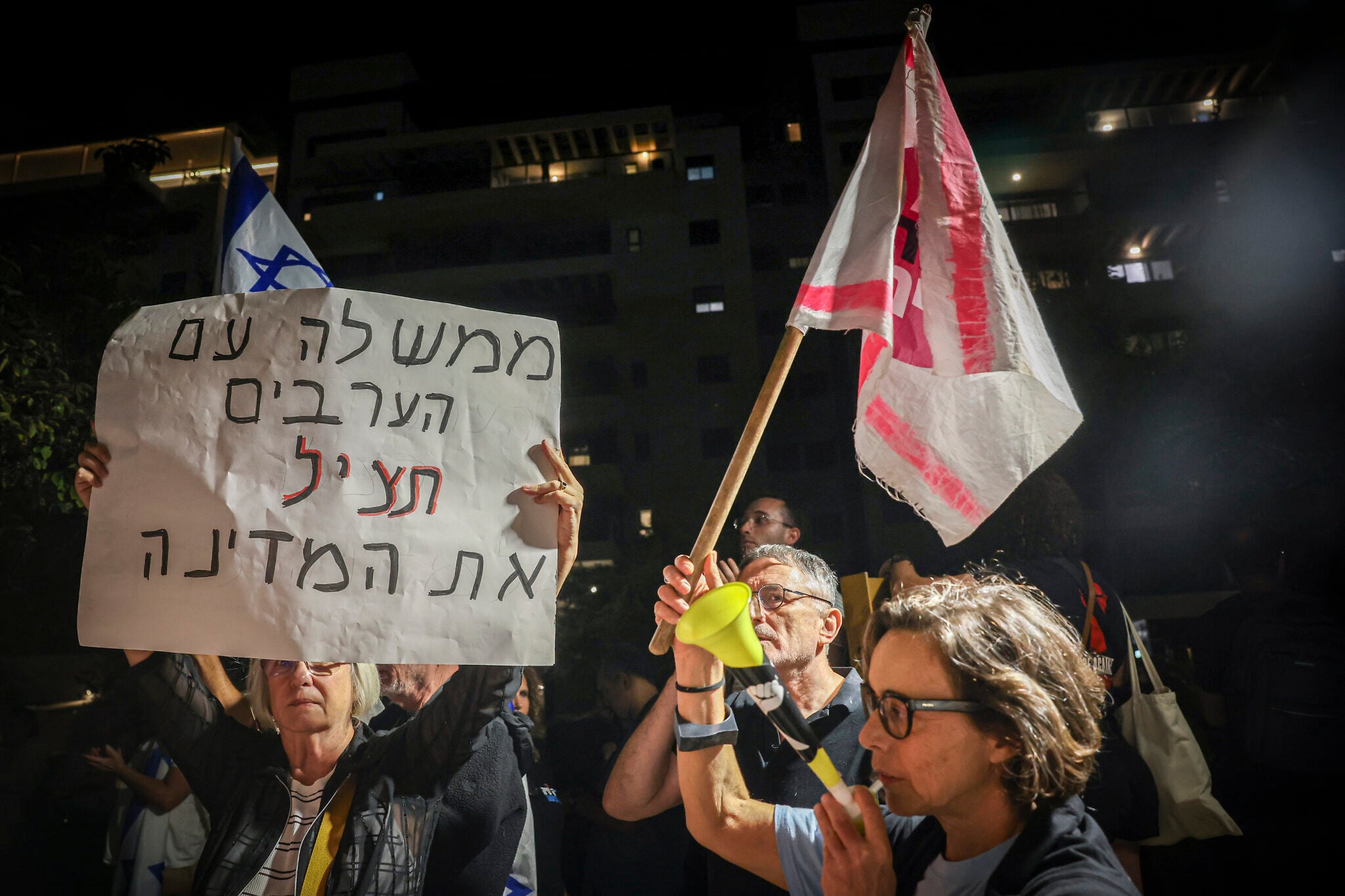
In an interview with Channel 12 in late September, Eisenkot, a former IDF chief of staff, said the Arab parties did not meet his conditions and therefore would not be part of the government.
On election night and since then, he has continued to speak of a coalition with Jewish Zionist parties.
Naftali Bennett, the former prime minister who relied on the support of Ra’am in 2021, when he and Lapid formed their coalition, also ruled out sitting in a government with the Arab parties. Liberman, whose party won seven seats, said he would form a coalition made up of “Zionist parties only.” Only the left-wing The Democrats’ Yair Golan spoke prior to the election about sitting with Arab parties, and since the election has called on the other three parties in his bloc to do so as well.
One attempt to circumvent the issue would be for Eisenkot to form a minority government that would depend on votes from Ra’am and the Joint List from outside the coalition. A more solid version of that game plan would be a coalition that included Ra’am but relied on the Joint List from outside the government. However, this option is also likely to face significant political and public opposition.
The Joint List stated in an official declaration following the election that it was willing to engage in “political cooperation to bring down Netanyahu’s government,” but it did not publicly clarify whether, and under what conditions, it would support a government led by Gadi Eisenkot. Ra’am leader Mansour Abbas said in an interview with Channel 12 news on the eve of the election: “I will know how to bring a government to the Knesset.”
The draft issue
Without the Arab parties’ support, the opposition bloc could theoretically turn to the 13 seats held by the ultra-Orthodox parties, Shas and United Torah Judaism, to form a government.
All four parties in the bloc made ending the ultra-Orthodox exemption from military service a central campaign issue. The Haredi parties demand continued exemptions, so cooperation with those parties would amount to breaking an explicit campaign promise.
A unity government with Netanyahu
With the path to a government that excludes Netanyahu looking tenuous at best, the opposition bloc’s alternative would be to join Netanyahu in a national unity government.
But that, too, would represent a flagrant breach of its campaign pledges. The one clear binding principle of these four parties is their goal of unseating Netanyahu, Israel’s longest-serving prime minister, whom they have said poses an existential threat to the country.
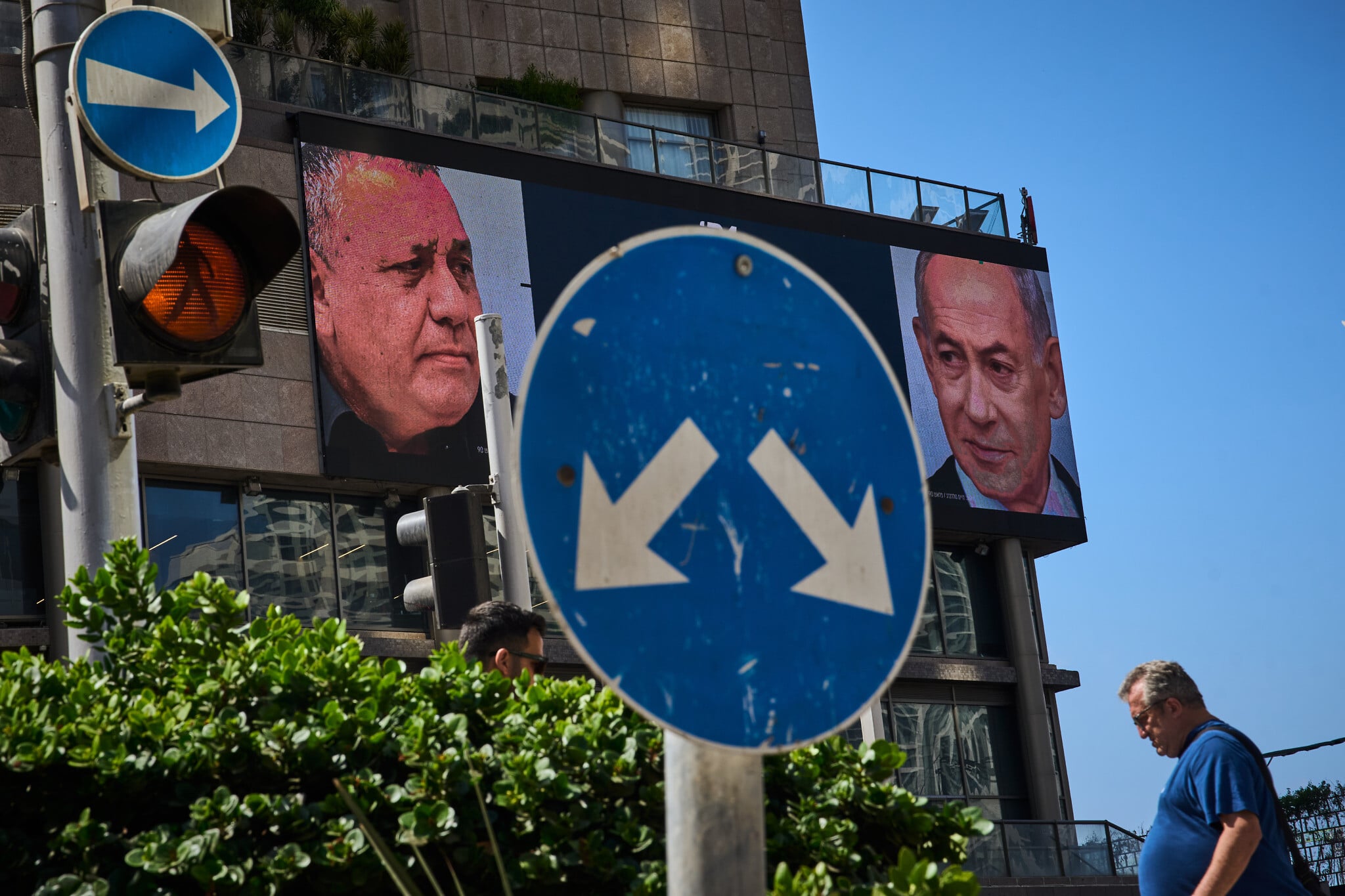
In a late-October radio interview, Eisenkot said, “I unequivocally commit that I will not sit under Netanyahu, not even in a rotation,” in which he and Netanyahu would share the prime ministership. Bennett said in a radio interview, “I am not going to sit under him because he is the person destroying the State of Israel.” Liberman wrote on X two weeks ago, “With Netanyahu — even if the world turns upside down, we will not sit with him under any circumstances.” Golan said, “We will not sit with Netanyahu and his partners. Period.”
The challenge for Netanyahu
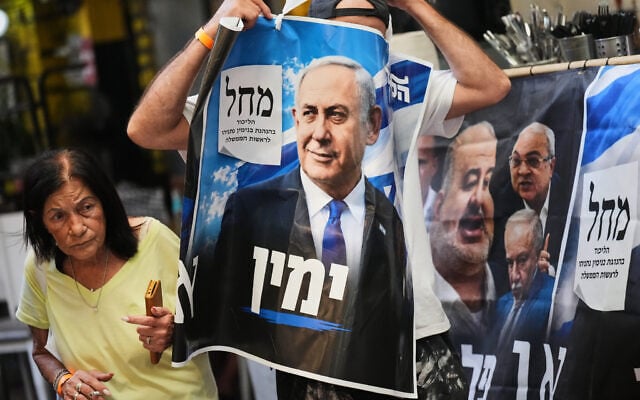
On the other side, Netanyahu also has no clear path to forming a government. The parties in his coalition defied expectations by winning 53 seats — down from the current 68 — and securing the eight additional seats needed for a majority appears out of reach. Netanyahu deployed the prospect of the Arab parties in the coalition as a cudgel to bash the opposition during the campaign. In a speech on the eve of the election, Netanyahu called cooperation with those parties “a disgrace.”
That may not stop him from trying to form a government with one of the Arab parties, particularly Ra’am, whose leader Mansour Abbas told Channel 12 on election night that he was speaking with politicians from both blocs.
Netanyahu during the 2022 election held talks with Abbas about forming a government.
Even if Netanyahu were to do the unthinkable and cooperate with the Arab parties, however, he would be unlikely to secure a majority. His far-right partners, Itamar Ben Gvir and Bezalel Smotrich, made clear during the campaign that such cooperation was out of the question for them.
With all apparent paths to a government blocked, forming a coalition in Israel may require a fundamental breach of campaign promises that would shake up the entire political system. The alternative is another election, which would be held if no side succeeds in forming a government.


The Times of Israel Community.