

For pro-Israel diaspora, Israel’s Arab voters are a point of pride. For Israeli Jews, they’re a national security threat
High Arab turnout makes it easier to make case for Israel abroad, but complicates coalition-building for Jewish-led parties that have embraced PM’s delegitimization of Arab political leaders

 Add ToI as a Preferred Source on Google

The results hadn’t even come in and Israel’s supporters abroad were already touting the strength of the country’s democracy by highlighting the high participation of its Arab minority.
“Israel’s Arab citizens, men and women, are turning out in historic numbers to vote. They can vote, run for office and serve in the Knesset — rights denied to many Arabs and women across much of the Middle East,” tweeted Democratic US Rep. Josh Gottheimer.
“Our critical ally in the fight against terror, Israel, is the only democracy in the region, and today shows it,” he added.
Gottheimer is one of the most staunchly pro-Israel lawmakers in Congress, and an increasingly lone voice among Democrats, which also includes Rep. Tom Suozzi.
“Today, 5.5 million Jewish, Christian, and, notably, Arab Israelis participated in the only democracy in the Middle East,” Suozzi tweeted, employing a common argument used against those who accuse Israel of apartheid.
“The elections in Israel today are a further reminder of the shared values of our two nations. Am Yisrael Chai,” he added.
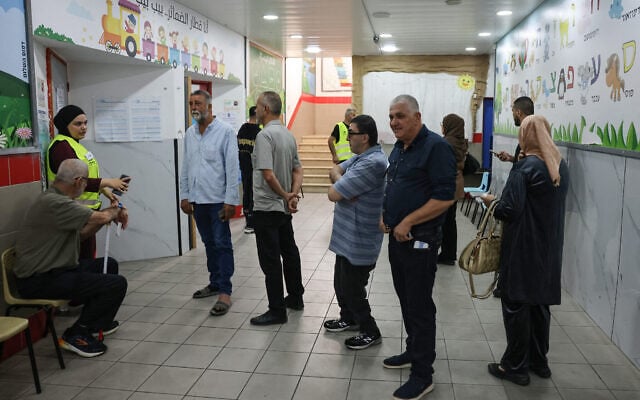
Another foreigner — albeit one temporarily in Israel — tried to offer the country similar accolades for the voting rights it grants to its Arab citizens.
“Today is election day in Israel… Arabs vote same as Israelis. Contentious process, but it’s a democracy — not many of those in this region!” US Ambassador to Israel Mike Huckabee wrote.
Outside the equation
The American envoy tellingly suggested that Arabs are not Israeli citizens, and he later acknowledged his poor choice of words.
But his initial detachment of Arabs from the rest of the country is one made and regularly accepted by the Jewish public in Israel when discussing the minority community’s political representation.
It is why headlines have characterized Tuesday’s election results as inconclusive, even though a majority of voters backed parties determined to replace Prime Minister Benjamin Netanyahu, thanks to an unprecedented 19 seats from the two Arab-majority parties.

The anti-Netanyahu bloc is regularly crafted to omit the Joint List (12 seats) and Ra’am (7 seats), leaving it with a minority of 48 seats, after some 90 percent of the vote was counted on Wednesday.
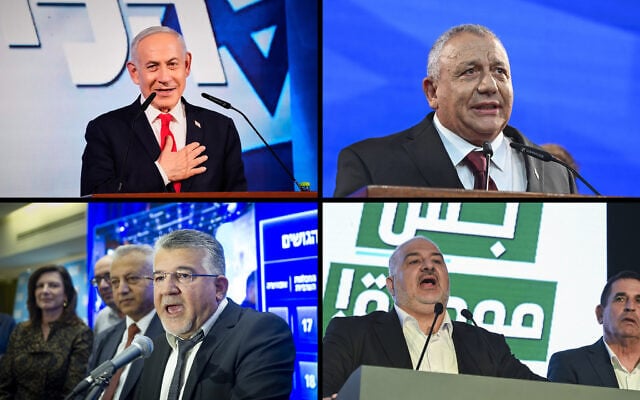
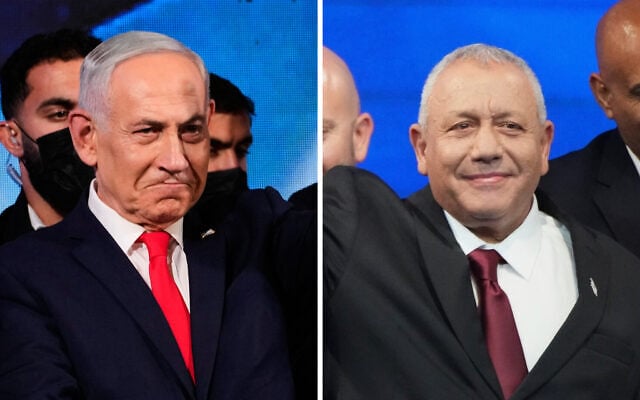
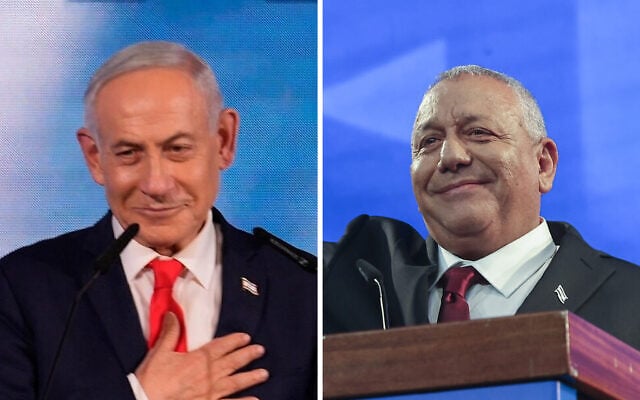
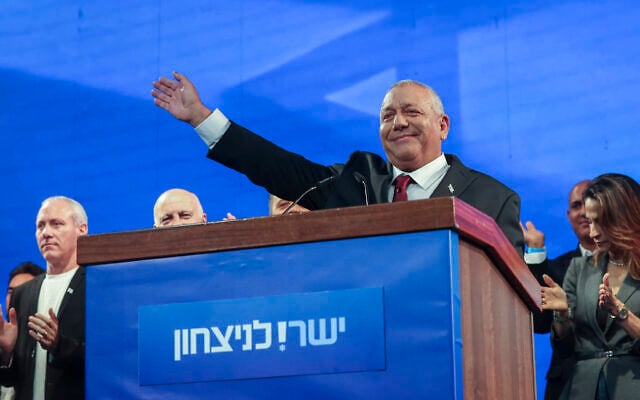
This framing partly owes to the bloc leaders’ own remarks — Yashar party chief Gadi Eisenkot, B’Yachad chairman Naftali Bennett and Yisrael Beytenu head Avigdor Liberman have all ruled out a coalition with the Arab-led parties.
Added criteria
The more Palestinian nationalist Joint List has shown little appetite for such a political partnership, but has expressed eagerness to collaborate with the other anti-Netanyahu parties to at least replace the longtime prime minister who relentlessly demonized Arab voters in the latest campaign and appointed far-right ministers who advanced measures against their communities and their Palestinian brethren beyond the Green Line.
But the more pragmatic Ra’am party is desperate to join an anti-Netanyahu coalition, and its leader, Mansour Abbas, took a series of steps to kasher his faction in the eyes of the Jewish public, including by bringing former senior police commander Yoav Segalovitz onto Ra’am’s Knesset slate.
Abbas has also for years recognized Israel as a Jewish state, meeting a key criterion laid out by Eisenkot for political partnership.
But in the lead-up to Tuesday’s election, Eisenkot added a new condition — recognizing Hamas as a terror group that Israel must destroy.
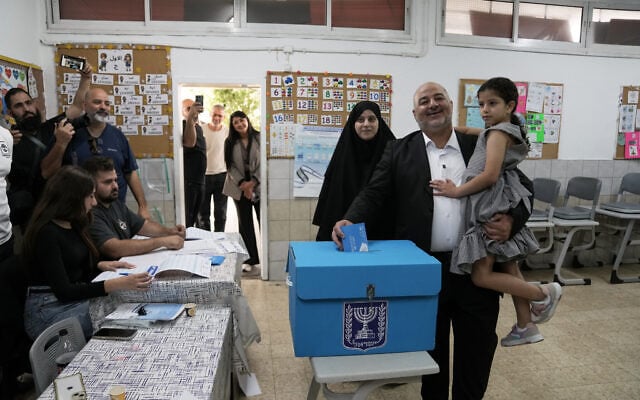
Abbas condemned the October 7, 2023, attack, called for the release of the hostages and supports a two-state framework rejected by Hamas. But he has refrained from calling for Hamas’s destruction, as Israel’s war against the terror group has also come at the significant expense of Palestinian civilians in Gaza.
The Ra’am chairman hasn’t ruled out fulfilling Eisenkot’s latest condition, saying it’s a matter to be discussed in coalition negotiations. But even if the sides reached a consensus, it would be insufficient for two other parties in the anti-Netanyahu bloc.
Bennett and Liberman have both ruled out a coalition with any non-Jewish parties, claiming that there is no mandate for such a partnership after October 7, even though Arab citizens were murdered and taken captive into Gaza alongside Jewish ones. This is despite both party chiefs having privately praised Abbas as a loyal partner in their previous 2021-2022 government, according to two sources familiar with the matter.
Only Democrats chief Yair Golan has expressed a contrary opinion, but the other Jewish party leaders are following the lead of Netanyahu.
Netanyahu sets the standard
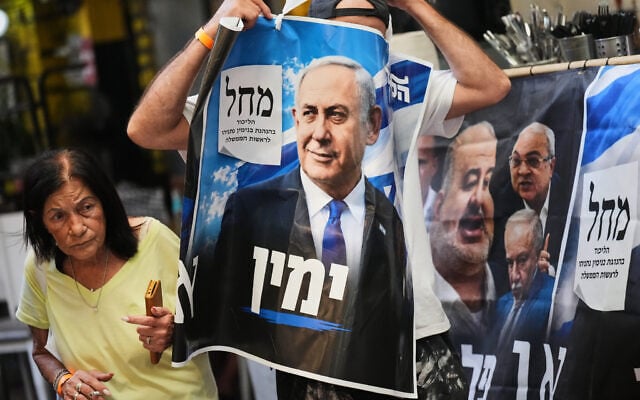
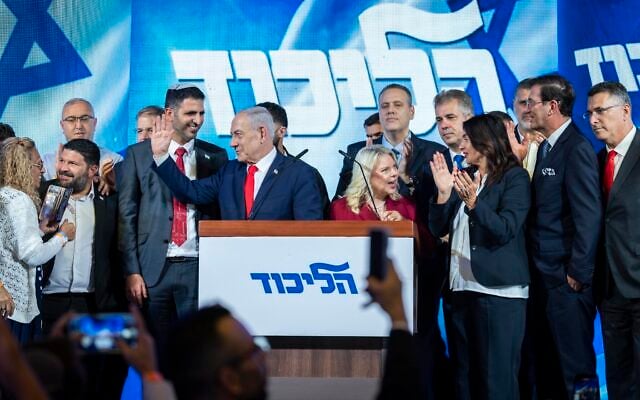
The prime minister hasn’t sought to strip Arabs of their right to vote, but he has worked to strip that vote of meaning and legitimacy — presenting the entire community’s participation in the election as a national security threat.
He issued a frantic video on Tuesday, highlighting the high turnout in Arab towns and accusing the minority community of “trying to steal the election from us.”

Netanyahu posted a similar warning on the day of the 2015 election and went on to apologize for it after he was roundly accused of racism.
In this campaign, though, the rhetoric was a feature, not a bug, as he warned that his rivals would form a coalition with the Arab parties, which he claimed would consequently be unable to tackle threats to Israel’s security.
One right-wing political commentator described the record-high Arab turnout as a “political October 7.”
“It is simply forbidden to endanger Israel and form a government that rests on anti-Zionist Arab parties,” Netanyahu said early Wednesday morning after exit polls indicated that one of the only scenarios threatening his continued rule was the formation of a minority government propped up by the Arab parties.
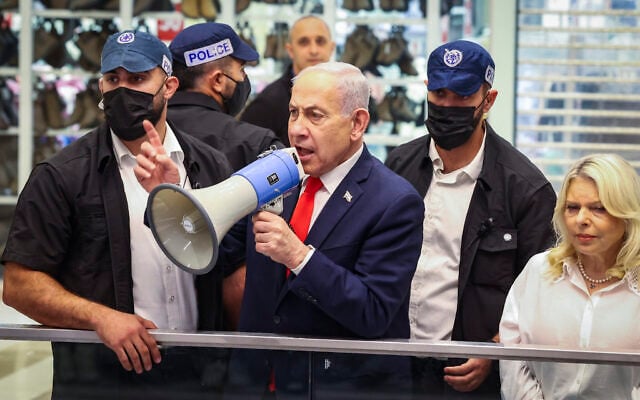
Ra’am’s participation in the previous government did not prevent an Israeli counterterrorism campaign in the West Bank, which made 2022 the deadliest year for Palestinians in the territory in nearly two decades.
Netanyahu disparaged the “anti-Zionist Arab parties” even as his own bloc includes Orthodox lawmakers representing anti-Zionist communities and settler extremists, some of whom similarly reject the Jewish state’s sovereignty.
The prime minister himself even courted Ra’am after the previous election, but didn’t succeed in forming a coalition, so the Arab party teamed up with Bennett instead.
Netanyahu’s rivals have the opportunity to forge a similar partnership again, but few analysts expect Eisenkot, Bennett and Liberman to all violate campaign promises by forming a coalition with the assistance of Ra’am and the Joint List.
Accordingly, those Arab votes may have counted more abroad than they did at home.


The Times of Israel Community.