

Saudis intercept Houthi missiles, blasts heard in Riyadh; 12 reported killed in Yemen
Tribal leaders launch effort to protect civilians; aid agencies warn health needs in besieged city are at ‘breaking point’ as hospitals struggle to treat wounded
 Add ToI as a Preferred Source on Google
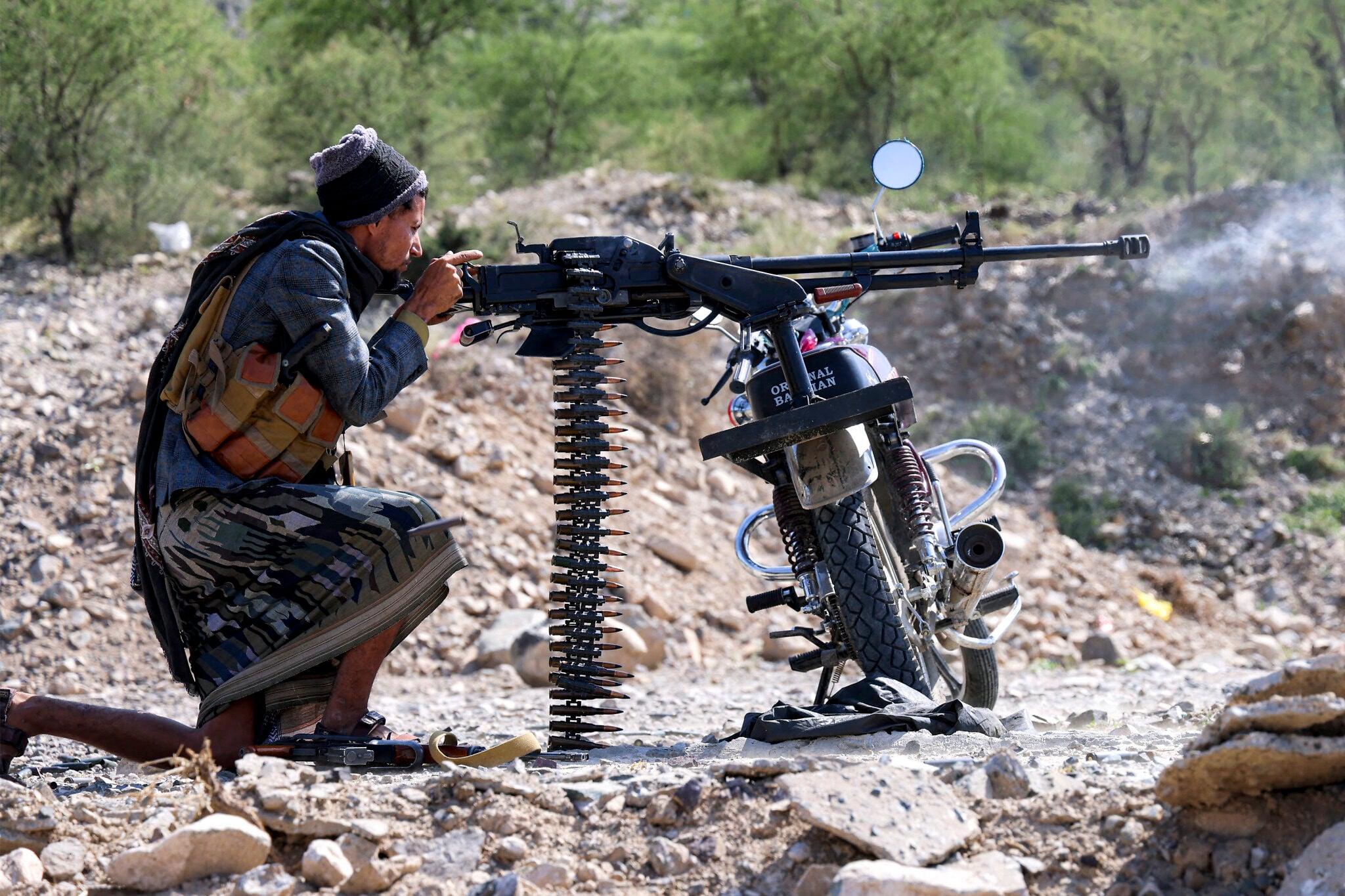
The Houthis reported 12 killed in strikes Thursday on residential areas of western Yemen, which they blamed on Saudi Arabia, while explosions later rocked Riyadh.
The Iran-backed Houthis and the Saudi-backed, internationally recognized Yemeni government have exchanged daily attacks since a years-long truce fell apart over the summer.
“As an initial toll, 12 citizens were killed and three others were critically injured when the Saudi enemy targeted” a list of people, the Houthi-run health ministry said in a statement Thursday shared by the group’s Saba news agency.
The Saudi-led coalition fighting the Houthis said on Thursday it had intercepted two ballistic missiles launched by the group toward the Saudi capital, soon after fresh explosions were reported there.
Earlier, AFP correspondents in Riyadh had heard at least eight explosions as authorities warned the city was “under a hostile aerial threat” in a phone alert.
Saudi civil defense issued warnings for “potential danger” in Riyadh, Kharj and the southern city of Najran that were lifted shortly afterwards.
The Houthis have ramped up attacks on Saudi Arabia, including by launching deadly strikes on the Riyadh airport that forced its shuttering for two weeks as flagship events in the kingdom were cancelled — threatening its economic diversification plans.
More than 1,600 people have been killed in Yemen since hostilities resumed, with more than 275,000 displaced, according to United Nations figures.
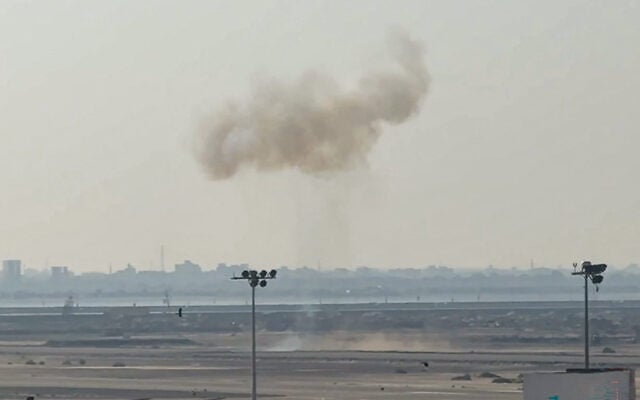
On Wednesday, at least 14 people were killed in Saudi strikes on a petrol station and market, according to the Houthis, while the Iran-backed group targeted the airport in government stronghold Aden, wounding civilians.
In July, a fragile 2022 truce fell apart amid the US-Iran war after the Houthis allowed an Iranian plane to land in Yemen’s capital Sanaa in defiance of Saudi control over Yemeni airspace, setting off a spate of attacks.
Later, the Houthis declared a maritime blockade of Saudi Arabia and began hitting its ships, territory and oil facilities, before seizing Yemen’s entire Red Sea coast in a lightning campaign.
The Houthis have in turn reported frequent Saudi airstrikes.
Yemen has been reeling from war since 2014, when the Houthis seized the capital, with a Saudi-led coalition entering the conflict a year later in support of the government.
Healthcare system ‘at breaking point’
The UN and aid agencies say health needs in the besieged Yemeni city of Taiz are critical, amid acute shortages of medicine, oxygen, surgical gloves, anesthetic and fuel. Hospitals near Yemen’s front lines are facing large influxes of patients, treating up to 700 war wounded in a single week, according to the Red Cross.
In a hospital in Taiz, a 25-year-old pregnant mother of two lay immobilized after a bullet lodged in her spine while she was trapped inside her home without food or water for two days.
Amal al-Sabri said she was injured by a sniper bullet in the village of al-Shaqb — perched on the slopes of Mount Sabir overlooking Taiz — amid the fighting.
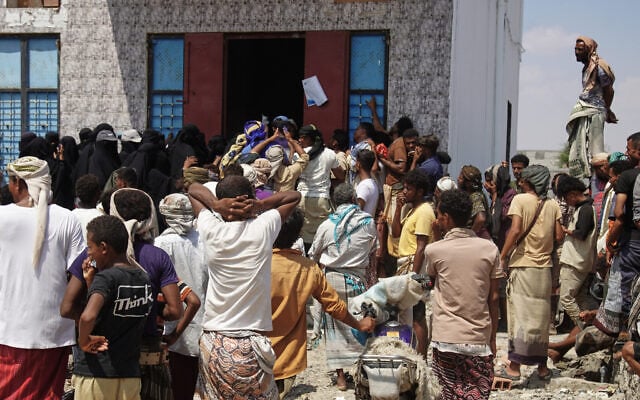
The Taiz governorate has been largely isolated since October 3, with fighting preventing humanitarian supplies from entering and civilians from leaving.
“The healthcare system across Yemen is at a breaking point,” said Red Cross spokesperson Hachem Osseiran.
Even before the latest fighting, more than 40 percent of hospitals and healthcare facilities across the country were already either closed or partially functioning following years of protracted conflict, he said.
There are also concerns about the outbreak of disease as water runs short and rubbish accumulates on the street.
Medical facilities under attack
Throughout Yemen, primary care for pregnant women is disrupted. In some hospitals near the front lines, maternity wards are being converted into emergency rooms, Osseiran said.
“Some (doctors) have to make a very difficult and painful choice: Do I help this woman deliver her baby, or do I rush to a person who is bleeding out because of a gunshot wound?” he said.
In Taiz city, the UN says community midwives have stopped working due to restrictions on movement.
Not only are health services stretched, but they are also under attack. A hospital in Taiz’s Sabir Al-Mawadim district was hit by mortar fragments for the second time this month, while a strike on an ambulance killed its driver and a paramedic, according to the UN.
On Monday, another strike that hit near Mocha General Hospital — where medical charity Doctors Without Borders supports the maternity and pediatric wards — damaged the building and triggered panic among patients.
“Such incidents are preventing patients from coming to the hospital for fear of their lives,” the group said.
Tribal leaders seek to protect civilians
Yemeni tribal leaders gathered at the United Nations on Thursday to present an agreed set of principles aimed at protecting civilians and improving aid access in the war-ravaged country.
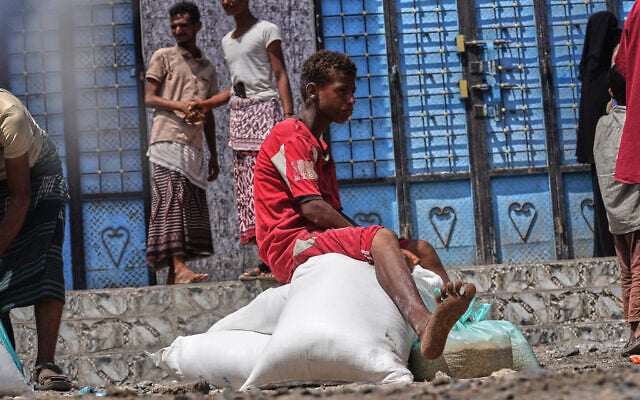
They hope the measures will prove a useful step in easing the vast humanitarian crisis gripping the country.
The Yemeni Tribal Code of Honour for the Protection of Civilians draws upon tribal customs, Islamic values and the principles of international humanitarian law.
It was drafted over the past two years by tribal leaders with support from the Geneva Center for Security Sector Governance Foundation, also known as DCAF, as well as Switzerland and the Netherlands.
It was agreed by “tribes of Yemen from all areas, both government-controlled and Houthi-controlled”, Sheikh Abdulkarim Al-Magdashi, who worked on the drafting process, told AFP.
Some 5,000 leaders have signed the code, with around 100 coming to Geneva for the formal launch at the UN’s Palais des Nations headquarters.
“If the role of the tribes can be effective in achieving peace and protecting civilians, then hopefully they can also play a role in the political process,” said Magdashi.
DCAF helped find common ground between tribal customs and international law, notably concerning the treatment of civilians, detainees, prisoners and the wounded, as well as humanitarian access.
“The code is not a substitute for state institutions, for the wider political process, or for the efforts led by the United Nations,” DCAF director Nathalie Chuard said at the launch. “Rather, it complements them by building confidence and reinforcing protection where people are most directly affected by conflict.”

The Times of Israel Community.