


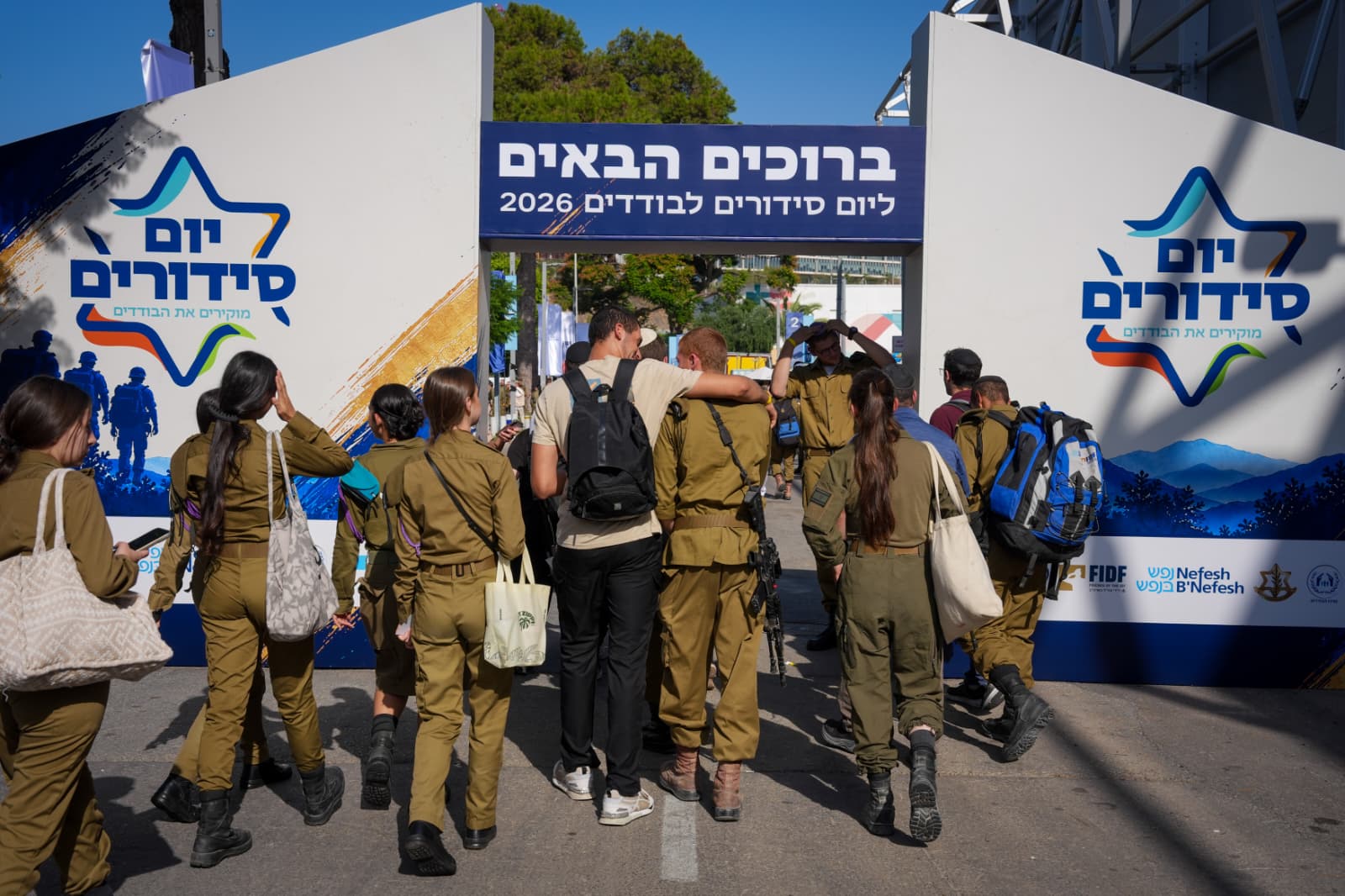
From obtaining a driver’s license or passport to paying an electricity bill or even getting a haircut, lone soldiers face a long list of errands to manage during the limited days allotted for personal affairs throughout their military service.
“Sometimes you might bring the wrong form, or the person you need to meet is sick, or everything just took too long and you might have spent your entire errand day and not got anything done,” said Marc Rosenberg, VP of Diaspora Partnerships at Nefesh B’Nefesh. “We decided to concentrate all the errands that soldiers need to do in one place.”
The Times of Israel sat down with Rosenberg during the ninth annual Yom Siddurim, translated as Errands Day, at the Tel Aviv Expo on Oct. 22, 2026. Organized by Nefesh B’Nefesh, Friends of the Israel Defense Forces (FIDF), in partnership with the Mofet Unit of the IDF Manpower Directorate and the Association for Israel’s Soldiers, the event was attended by more than 9,200 soldiers doing multiple errands, each of which could have taken an entire day on their own.
“They chose to live here, they chose to serve,” Rosenberg said. “We need to support them.”
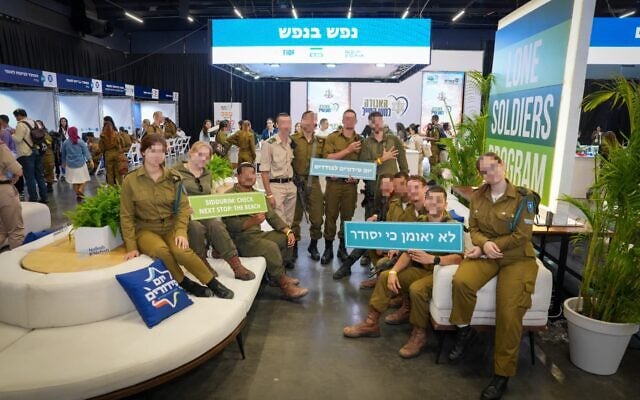
Lone soldiers are soldiers in the IDF who do not have support from local immediate family. There are more than 7,000 lone soldiers drafted to the IDF each year, half of whom are new immigrants who made Aliyah from countries across the globe, and others are native-born Israelis who serve without the support of immediate family. Lone soldiers have rights and benefits to help them with the struggles that come without having familial support. For example, they receive stipends for housing and food, plus extra days off to complete personal errands.
Still, lone soldiers must navigate bureaucracy alone. For the immigrants, this often means doing everything in a foreign language.
“I didn’t know Hebrew when I got here,” said K, who made Aliyah two years ago from New York, at his second Yom Siddurim. The IDF requested that names of soldiers not be printed for security reasons. “And while people like that I am an oleh, I’m different and it’s hard.”
Last year at the Yom Siddurim, K got his Israeli driver’s license and a passport. This year, he got an international license and met with student advisors for advice on earning a degree after his release from the army.
“I could not have done any of these things if there wasn’t a day like this,” K said of the NBN and FIDF event. “I definitely never would have gotten my driver’s license.” As K spoke, he waved and greeted many of the other soldiers walking by, noting that while he came to get things done, this event was also a great opportunity to see friends, other lone soldiers stationed in different units and bases around the country.
“I’m here to see friends,” another soldier, J, agreed. J, who made Aliyah in August 2024 from Toronto, is preparing for his upcoming release and using this Yom Siddurim to learn about his options for the future.
“Joining the army was the most meaningful thing I could have done for Israel,” said J, who noted that he decided to make Aliyah and join the army on Oct. 7, 2023, when he first heard about the Hamas attack while in university. “Nefesh B’Nefesh helped me with everything.”
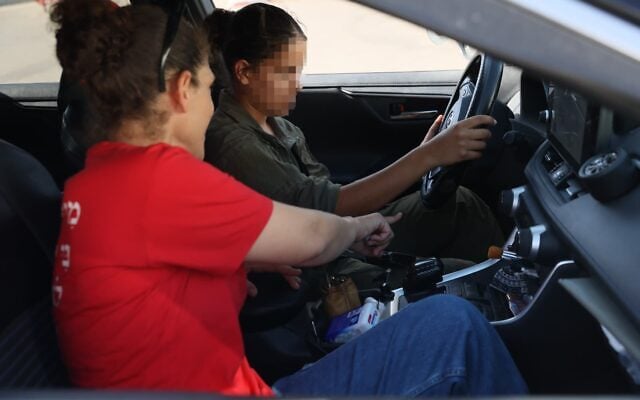
More than 70 government ministries, public agencies, organizations, and service providers took part in this year’s Yom Siddurim. At the event, the Ministry of Transportation set up a large area where soldiers could convert foreign driver’s licenses. This included getting an eye exam, taking the written test, and even taking the driving test in a nearby parking lot using taxis offered by volunteer taxi drivers.
The Population and Immigration Authority operated 20 service stations at the event, while the Ministry of Aliyah and Integration, the National Insurance Institute, foreign embassies, and other organizations provided other services ranging from legal guidance to degree recognition, as well as housing, and employment assistance. Soldiers could get a passport, a biometric ID card, an international driver’s license, settle accounts with the electric company, and complete other bureaucratic tasks.
In a separate area, further services were offered for former lone soldiers or those nearing the end of their service, with mental health professionals, academic advisors from universities, and career counselors.
“Errands Day is another example of our ongoing commitment to supporting IDF soldiers, particularly lone soldiers, who face unique challenges alongside their military service,” said Brig. Gen. (Res.) Liron Donel, CEO of Friends of the Israel Defense Forces (FIDF) in Israel, in a statement about the event. “The deep connection between FIDF donors in the United States and the State of Israel enables us to provide year-round support to active-duty soldiers and reservists, wounded IDF veterans, bereaved families, and lone soldiers, offering them comprehensive assistance and support tailored to their needs.”
Getting a driver’s license was the event’s most popular station. Rivaling that station’s popularity was the barbershop in the center of the expo hall, where men and women soldiers sat in leather salon chairs in front of round mirrors while volunteer barbers trimmed and styled soldier after soldier.
In another room off the main hall, soldiers could exchange old uniforms and shoes. Volunteer tailors and seamstresses sat nearby to repair hems or rips in old uniform or tailor new ones to fit.
Liron Sitruk of Rishon Letzion was one of the tailors who took a day off from his own work to volunteer. By 11:00 am that morning, Sitruk had already fully tailored six brand new uniforms for women who wouldn’t have been able to wear them comfortably otherwise.
“These people all made Aliyah to serve us in the army,” said Sitruk. “It’s a nice gesture for us to help them while they’re protecting us.”