

Opposition chiefs meet, agree to launch coalition talks, but path remains unclear
Netanyahu lashes out at rivals, claims they will form ‘dangerous government’ and rely on ‘supporters of terrorism,’ as they pledge to swiftly replace him with a ‘Zionist,’ ‘national emergency government’
 Add ToI as a Preferred Source on Google
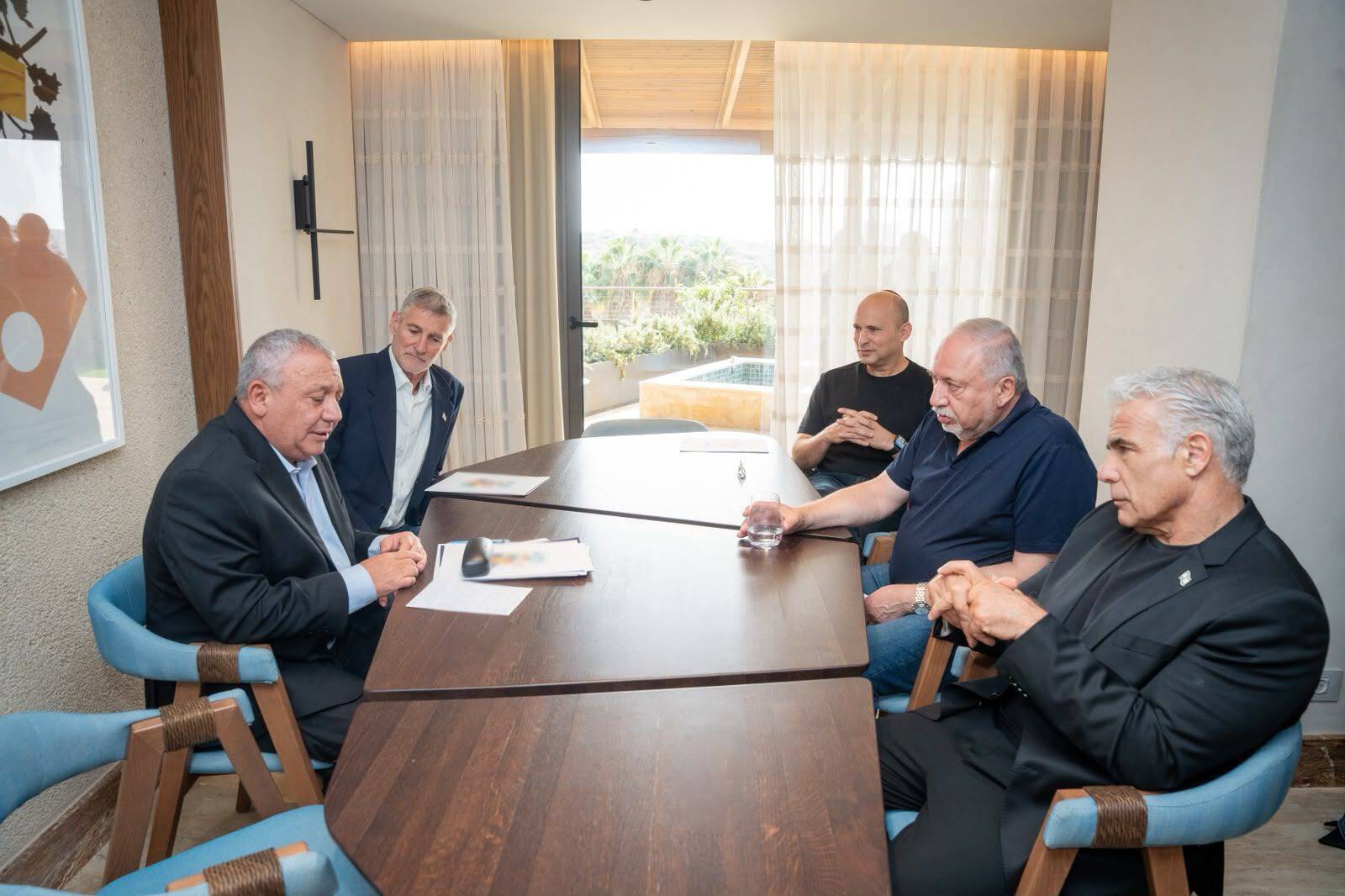
The leaders of the four Jewish opposition parties held a meeting in Herzliya on Tuesday during which they agreed to immediately launch coalition negotiations and coordinate their parliamentary strategy ahead of the new Knesset’s swearing-in next week.
They did not, however, give an indication of how they intend to form a government without the Arab parties, which most of the Jewish opposition parties have ruled out as coalition partners.
While Prime Minister Benjamin Netanyahu’s bloc lost its parliamentary majority in last week’s election, the Jewish opposition parties hold just 48 seats to his 53. They can command a majority only with the support of the two Arab parties, which won a combined 19 seats, leaving the route to forming a new government uncertain.
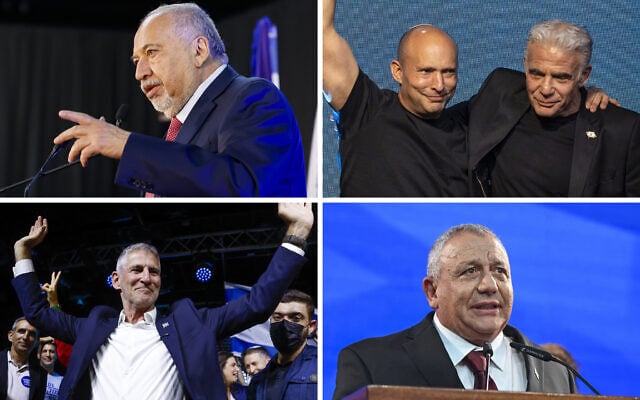
In a joint statement released just after their meeting, Yashar leader Gadi Eisenkot, B’Yachad chairman Naftali Bennett, Democrats head Yair Golan and Yisrael Beytenu chief Avigdor Liberman pledged to act swiftly to replace Prime Minister Benjamin Netanyahu’s government with a “Zionist” government based on the four principles outlined by Yashar chairman Gadi Eisenkot.
Those principles are: recognition of Israel as a Jewish and democratic state; commitment to the values of the Declaration of Independence; mandatory service for all; and recognition of Hamas as a terrorist organization and the obligation to dismantle its military capabilities and end its rule in the Gaza Strip.
“The party leaders are united and will act immediately to replace the October 7 government with a national emergency government and put the clear parliamentary majority in the Knesset to work,” the statement said.
The meeting was also attended by B’Yachad No. 2 Yair Lapid, a former prime minister and the opposition leader of the outgoing Knesset.
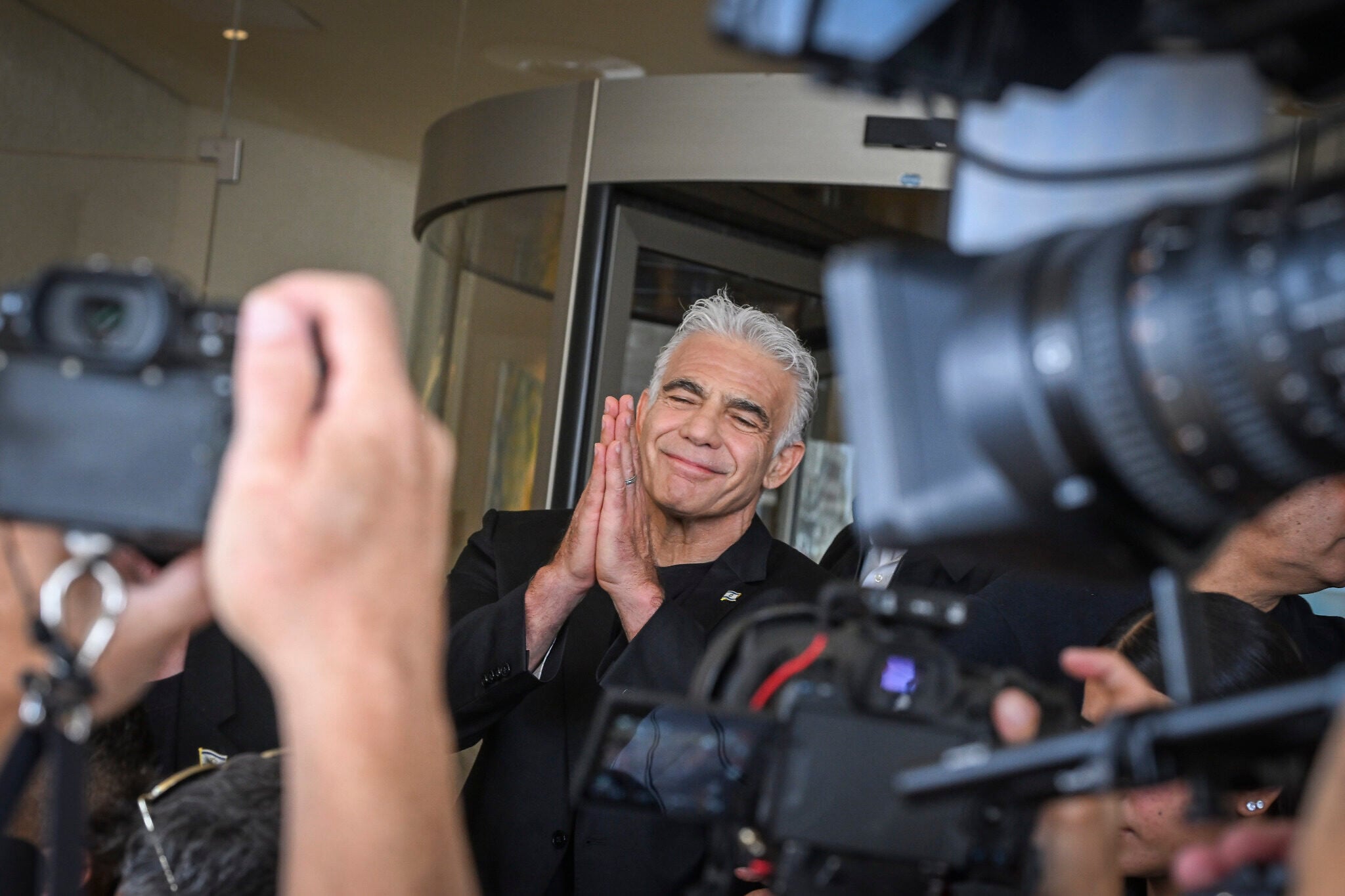
Among the first items on their parliamentary agenda once Knesset convenes will be to replace Likud MK Amir Ohana as Knesset speaker. Doing so would allow the opposition parties to advance legislation that Netanyahu has blocked, most notably the establishment of a state commission of inquiry into the October 7, 2023, Hamas-led massacre in southern Israel.
At their Tuesday meeting, the opposition chiefs discussed replacing Ohana as speaker, Channel 12 reported. The leaders discussed backing Lapid for the post, but agreed to make a final decision by Monday.
The leaders reaffirmed their support for recommending that President Isaac Herzog give Eisenkot the first chance to form a government, and agreed that their negotiating teams will begin drafting coalition agreements and policy guidelines immediately.
They also condemned what they describe as a “dangerous and unhinged campaign” by Netanyahu and the Likud party to delegitimize the election results, pledging to defend the democratic process.
Likud’s claims, which have not been substantiated, center around allegations that Qatar, or other foreign powers, secretly funded efforts to boost Arab voter turnout and influence the election. The party is pushing to delay the official certification of the election results, but Noam Sohlberg, the Supreme Court justice overseeing the election, has rejected the demand.
Following the meeting, Bennett reasserted his B’Yachad party’s full support for Eisenkot’s efforts to form a government.
“The entire B’Yachad party will mobilize all its efforts to help Gadi Eisenkot form a government as soon as possible,” Bennett said in a statement.
“We have no time to waste,” he said. “We need to act with great urgency.”
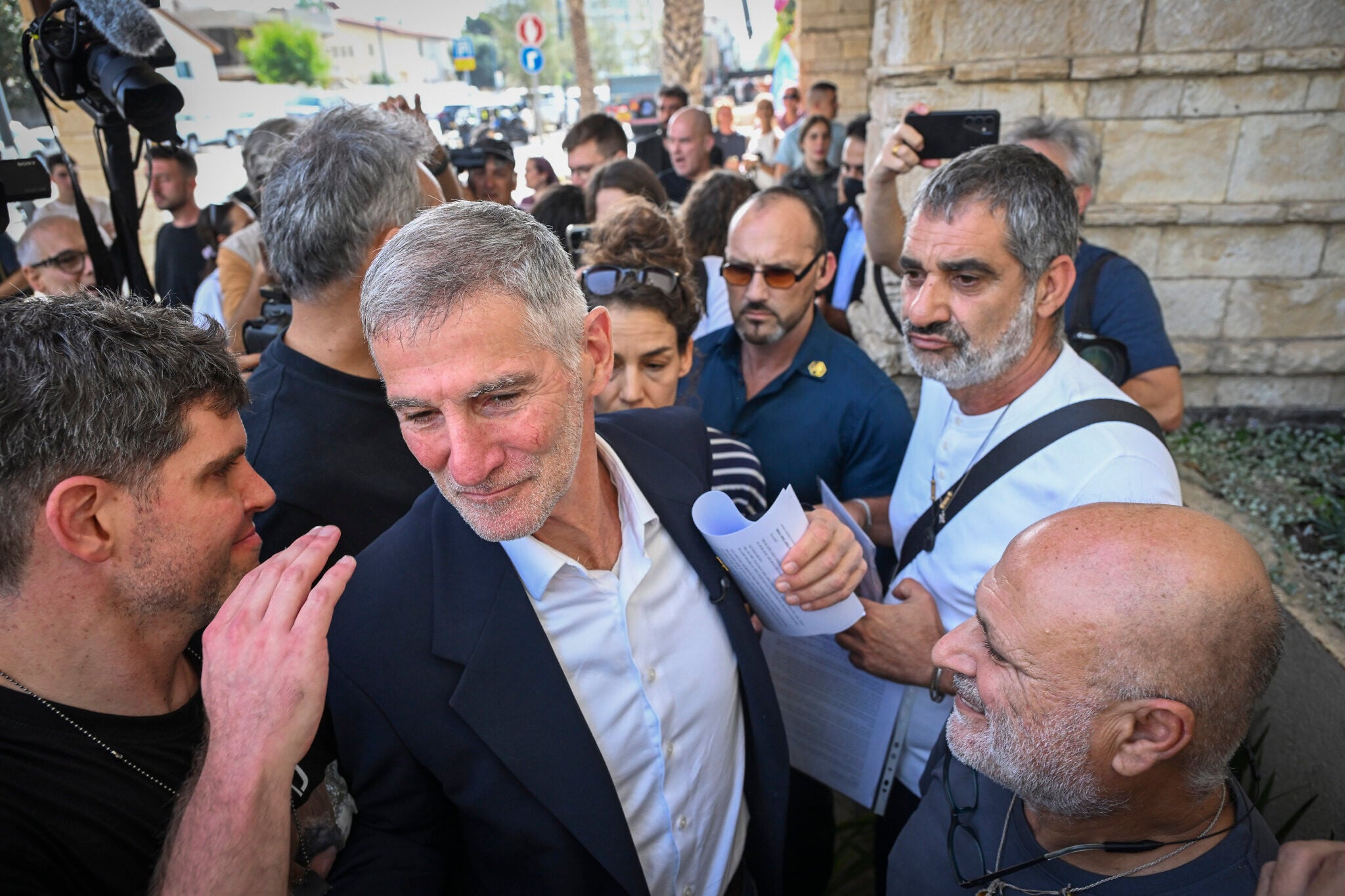
The B’Yachad leader called on members of the bloc to swiftly replace Ohana as Knesset speaker and secure the mandate to form a “Zionist government of national repair” that will bring about a “revolution for those who serve.”
Before entering the meeting, Lapid emphasized the stakes of the moment at hand: “We are facing a grave and dangerous attempt to undermine the election results. We must form a government. The conduct of recent days is just another reminder that we need to remove Netanyahu from the Prime Minister’s Office.”
Golan also meets with Arab party chiefs
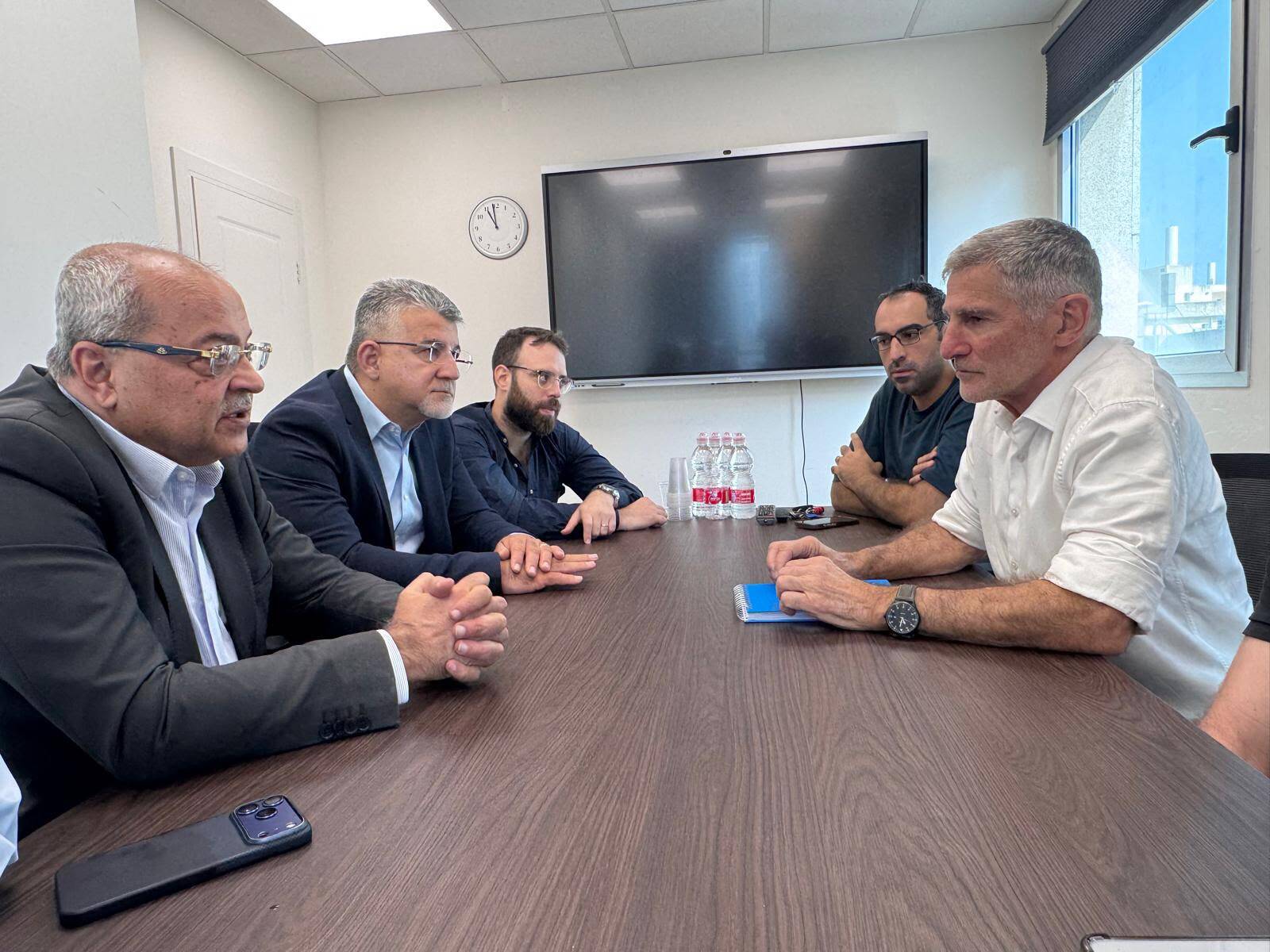
Also before meeting his opposition counterparts, Democrats chairman Golan met with the leaders of the Arab-led Joint List, Yousef Jabareen and Ahmad Tibi, for the first time since the election.
According to a statement from Golan’s party, the three discussed “coordination between the factions and the steps needed to use their parliamentary majority to replace” Netanyahu’s government, as well as “key issues affecting the Arab public and the need to advance practical solutions.”
“The sides agreed to continue coordinating ahead of the next political moves, with the aim of forming a ‘change government,'” the Democrats said.
Golan has openly backed cooperating with Arab parties to form a government and has said they could join a future coalition. He is the only leader in the four-party Jewish-led opposition bloc to publicly support that approach.
Other opposition bloc leaders have ruled out sitting with Arab parties. Liberman has also rejected a minority government that relies on their support.
Earlier Tuesday, Liberman, who leads the hawkish Yisrael Beytenu party, said he believed “a stable government” could be formed without Arab-led parties.
“We must prevent another election,” Liberman said in a statement on X. “In the current political situation, there is enough room to maneuver, and with proper navigation, a functioning and stable government can quickly be established without Ra’am and the Joint List.”
He did not offer any more details on how this could be done.
Liberman, who said Monday he would recommend that Eisenkot be tasked with forming a government, has also ruled out sitting in government with Haredi parties or Netanyahu. In a briefing with reporters Monday, he did not repeat his definitive opposition to Haredi participation, potentially signaling his openness to including ultra-Orthodox coalition partners despite having vocally campaigned against their continued exemption from IDF service.
Likud lashes out at rivals
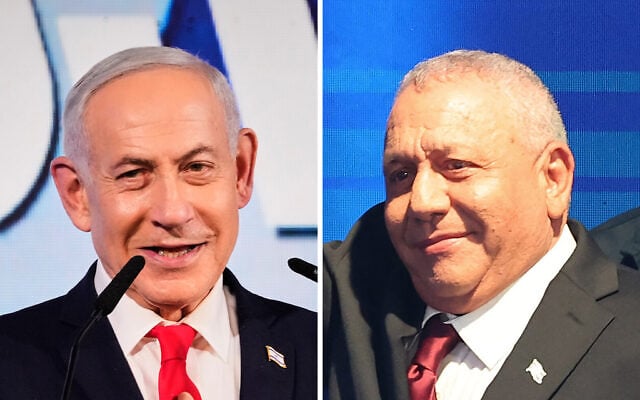
As the opposition parties were beginning to formulate their coalition plans, Netanyahu on Tuesday lashed out at his rival party leaders, targeting two potential avenues for forming a government without him: cooperation with Arab or ultra-Orthodox parties.
“While Prime Minister Netanyahu extended a hand to establish a broad national government, they intend to form a dangerous government reliant on supporters of terrorism,” a statement released by Netanyahu’s Likud party said, questioning how such a government would handle the ongoing conflicts in Gaza, Lebanon and Iran “when key members of it are unwilling to call Hamas and Hezbollah terrorist organizations,” referring to the Arab-majority Joint List and Ra’am.
Opposition leaders have also rejected a unity government with Netanyahu whom they hold responsible for the failures surrounding the October 7, 2023, Hamas attack and deeply distrust.
The premier separately accused the opposition of hypocrisy over the possibility of cooperating with ultra-Orthodox parties despite its pledges to introduce universal conscription, after Liberman stopped short of ruling out cooperation with Haredi parties, and amid reports that United Torah Judaism, a longtime Netanyahu ally, is considering supporting an Eisenkot-led government.
Having lost his parliamentary majority in last week’s election, Netanyahu has no apparent path to forming a government of his own, and his efforts appear aimed at preventing the opposition from assembling a government, potentially forcing another election


The Times of Israel Community.