

US teen discovers 3,300-year-old Egyptian amulet during Israel tour
17-year-old Shiloh Attoun spots the small scarab-shaped seal while visiting Tel Gezer National Park with his class
 Add ToI as a Preferred Source on Google
Zev Stub is the Times of Israel's reporter on diaspora affairs and Israeli real estate.

A 17-year-old American student visiting Israel for the first time discovered a 3,300-year-old ancient Egyptian amulet during a school trip, the Israel Antiquities Authority said Tuesday.
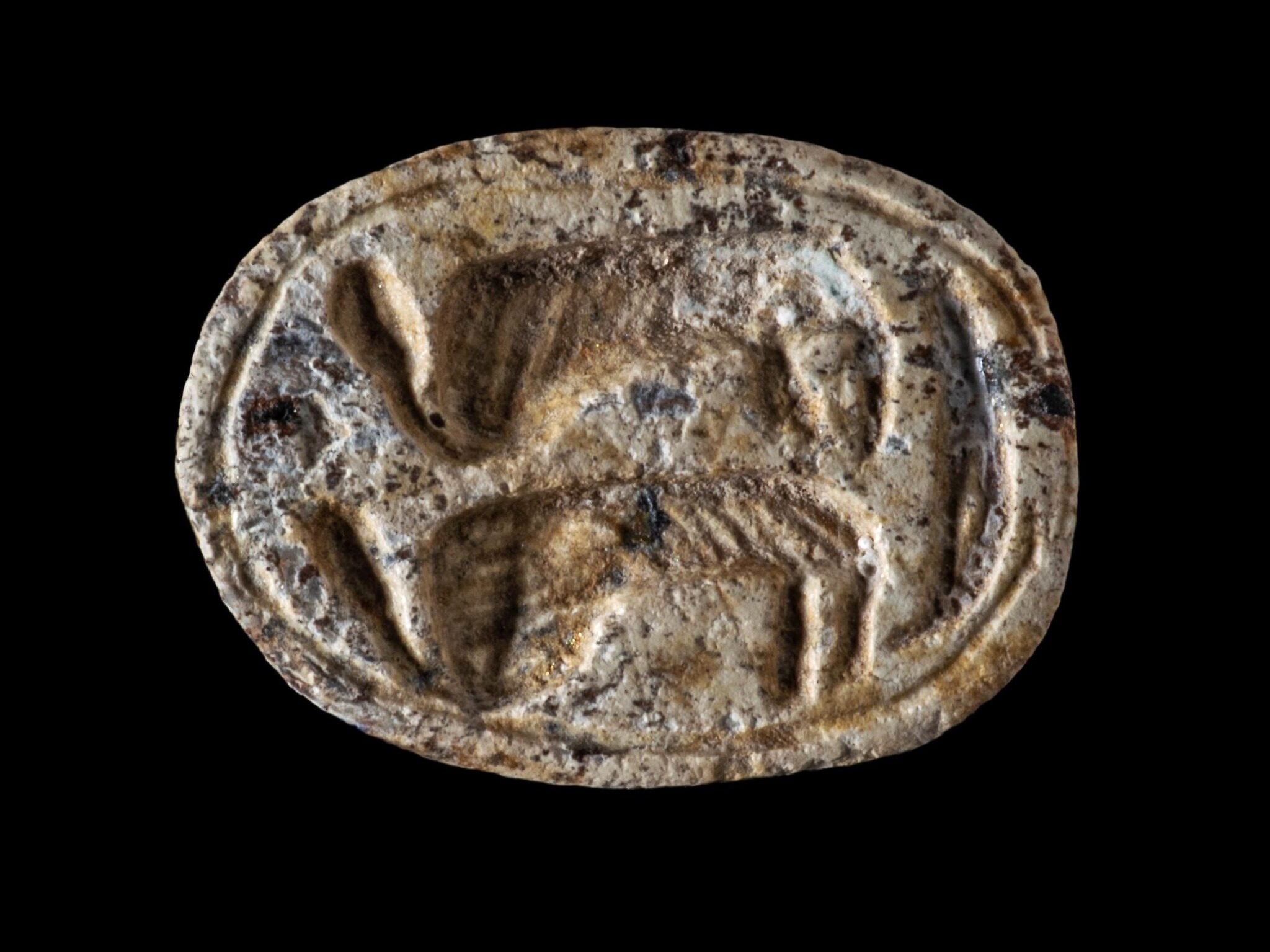
Shiloh Attoun, a student on the Jewish National Fund-USA’s Muss High School in Israel study-abroad program, was visiting Tel Gezer National Park in the Judean lowlands when he spotted the small scarab-shaped seal lying on the ground. The amulet, decorated with two cobra motifs, dates to the Late Bronze Age, according to an examination by Prof. Ido Koch of Tel Aviv University’s Department of Archaeology and Ancient Near Eastern Cultures.
Attoun had just arrived in Israel two days before, and was participating in the school’s first educational trip of the year with Benji Hain, the dean of students.
“We had just come from the gates of Tel Gezer, and we were walking up the mountain to an altar,” he recalled in a video distributed by JNF-USA. After he picked up a rock and threw it in boredom, it hit another rock and uncovered something spherical and shiny.
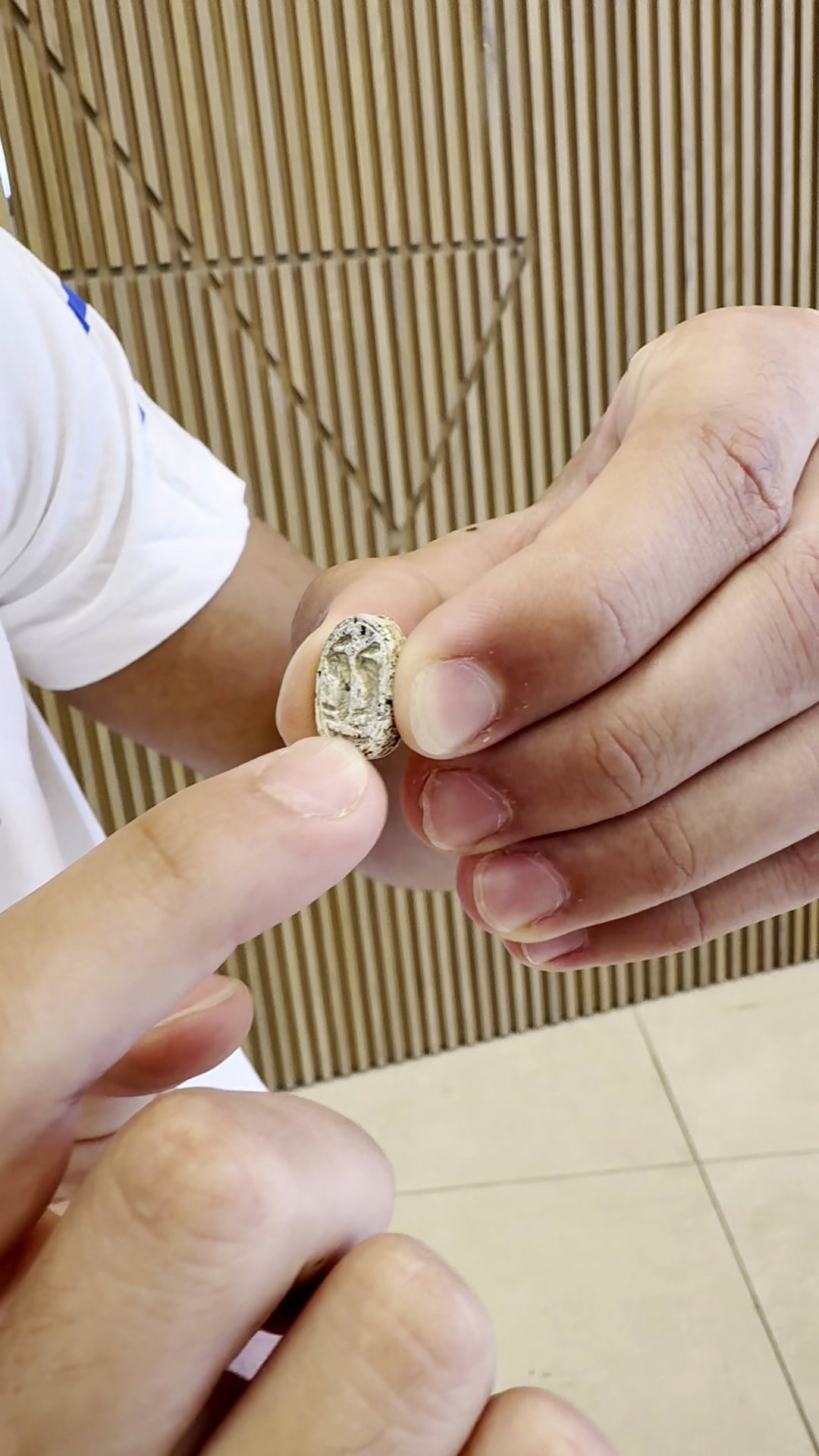
“I was like, ‘Ooh, look at this!’ So I picked it up and flipped it over, and I saw two faces of what looked like a [Hebrew letter] Nun,” Attoun said. “I brought it to Benji, and I’m like, ‘ Could this be cool?’ and his face lit up. He’s like, ‘Oh my god, you don’t understand what you found,’ [and] he started jumping.”
Together with Hain, Attoun reported the discovery to the IAA, and archaeologist Adam William Asper came to the school to collect it for the National Treasures of Israel.
Attoun was given a certificate of appreciation by the IAA for his responsible handling of the find.
The scarab, an amulet shaped like a dung beetle, depicts two cobras above a semi-ellipse, Koch explained. The cobra, known as the uraeus in Egyptian and Greek, was a widespread protective and royal symbol in ancient Egypt and the southern Levant. The semi-ellipse represents the Egyptian hieroglyphic sign “nb,” meaning “lord.”
A similar scarab, depicting three snakes rather than two, was previously discovered during excavations at Tel Megiddo, Koch noted.
Scarab amulets, sometimes used as seals, reflect ancient Egypt’s cultural influence over the region during the period of Egyptian rule over Canaan, approximately 3,500 years ago.
Considered sacred by the ancient Egyptians, the scarab beetle was a symbol of new life because it rolled a ball of dung, representing death, and laid its eggs inside it, from which new life emerged. The Egyptian name is derived from the verb “to be formed,” or “to be created, to come into being,” because the Egyptians saw the scarab as an incarnate symbol of the god who creates life.
Tel Gezer was one of the most important Canaanite cities in the country during the Late Bronze Age, controlling a strategic crossroads in the Shephelah region. The archaeological site is now a national park managed by the Israel Nature and Parks Authority.
“Shiloh’s story is a charming example of the connection forged between the young people who come to study in Israel and the country’s history and archaeology, through firsthand experience in the field,” said Amit Melman, the IAA’s Central Region educational director.
He praised Attoun and the program’s instructors for immediately reporting the discovery and ensuring that the artifact was preserved for future study.
The IAA noted that archaeological objects discovered in the field should be left in place and reported immediately to the authority, allowing archaeologists to document their original context and preserve information that might otherwise be lost.










The Times of Israel Community.