

Central bank holds rates days before election, warns next government on fiscal choices
Governor Yaron urges next government to cut debt and pursue growth reforms to fund security needs; bank raises forecasts but warns overseas production distorts domestic picture
 Add ToI as a Preferred Source on Google
Sharon Wrobel is a tech reporter for The Times of Israel
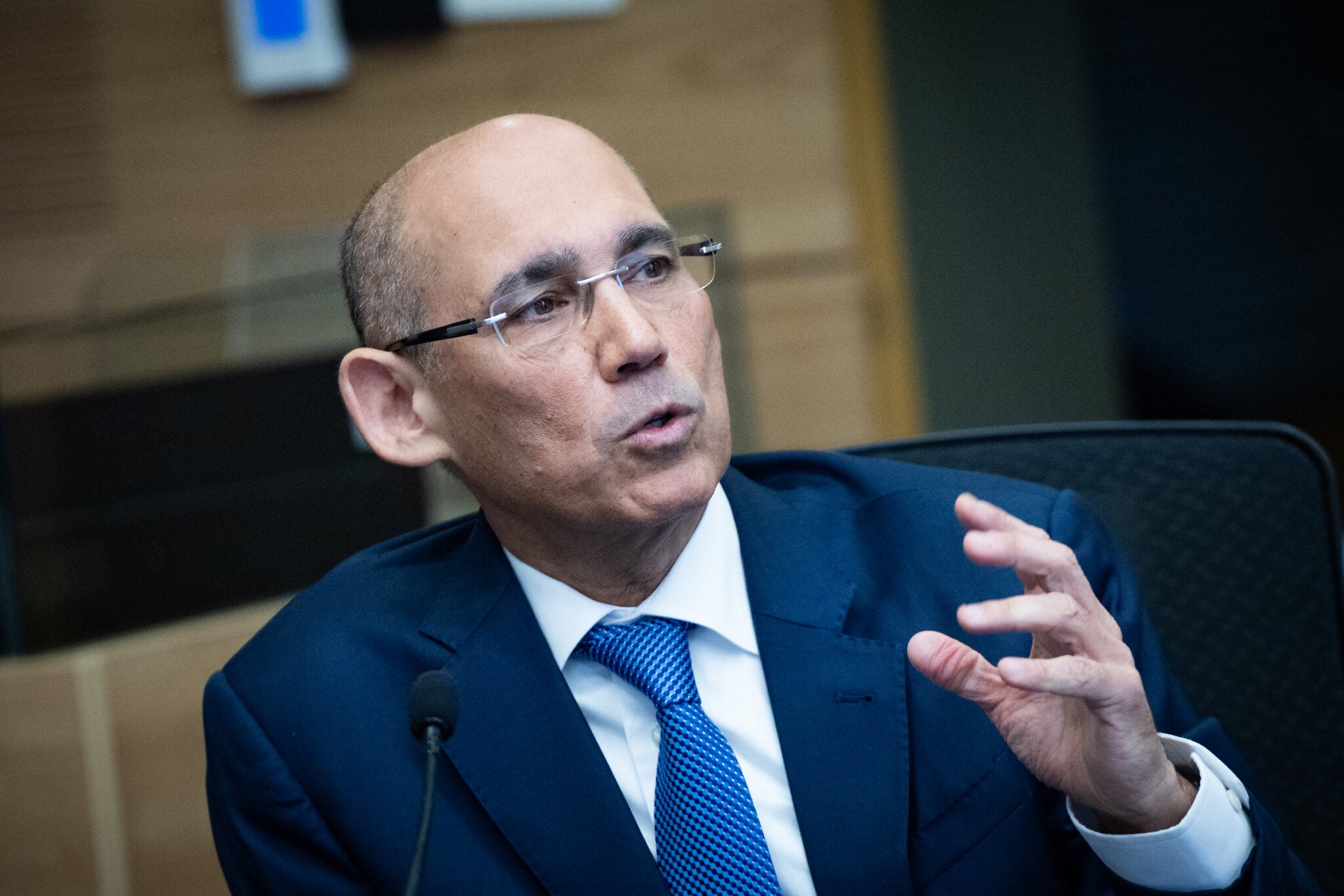
The Bank of Israel held interest rates at 3.25 percent on Wednesday, days before the national election, warning that the next government must balance rising defense spending against the need to rein in expenditure and support growth.
In its previous decision in September, the central bank cut borrowing costs to 3.25% from 3.50%, after trimming rates in July, May and January this year.
“After three consecutive rate cuts, we view this decision as appropriate,” said Bank of Israel Governor Amir Yaron. “The Israeli economy has shown resilience and remains robust after three years of war, but it continues to operate in an environment characterized by high geopolitical and fiscal uncertainty.”
Ahead of the October 27 election, Yaron cautioned that “heightened geopolitical uncertainty facing Israel makes it all the more important to preserve adequate fiscal policy space.”
Speaking at a press conference in Jerusalem after the interest rate decision, Yaron warned that the incoming government will face tough fiscal choices and will need to implement “significant growth-enhancing reforms” to ensure the economy’s resilience and prosperity over time.
“The main challenge for economic policy has three dimensions: achieving a sustained decline in the debt-to-GDP ratio, financing essential security needs and investing in growth engines, particularly human capital and infrastructure,” said Yaron. “Achieving this objective will, in part, require reducing expenditures that impair growth, improving the efficiency of public spending, and broadening the tax base through higher employment rates and productivity.”

“The greater the share of the population that participates in the labor market and increases its earning capacity, the more it will be possible to support fiscal policy objectives while reducing pressure for further tax increases,” Yaron noted.
Yaron referred to the disproportionately low participation of the Haredi and Arab populations in the labor market, and said that closing these large and persistent gaps will require teaching STEM subjects across all population groups.
Many Haredi schools eschew instruction in science, math or other “secular” subjects and instead concentrate on Jewish education.
Alongside the rate decision, the central bank’s research department revised its growth outlook for the economy.
The central bank now expects the economy to grow by 5.6% this year, up from its July forecast of 4%. For 2027, it projects growth of 7.5%, up from 5.5%.
Yaron stressed, however, that much of the upward revision is expected to come from “the substantial contribution of production abroad by Israeli companies,” particularly multinational businesses.

The central bank pointed to the rapid growth of Israeli companies’ production of goods that are sold overseas through subcontractors or affiliated companies abroad, without crossing Israel’s borders. This includes large revenues from the sale of advanced technology products manufactured abroad, using know-how developed in Israel by multinational companies that operate and are registered in Israel, but are predominantly foreign-owned, the central bank said.
“In the past two years, overseas production by Israeli companies has accounted for a rapidly growing share of GDP,” said Yaron. “This component contributes in part to government tax revenues, but it does not utilize domestic capital or labor, and most of the income it generates does not accrue to Israeli households.”
“As a result, its rapid growth may create a distorted picture of the pace of real domestic economic activity,” Yaron cautioned.
Excluding production abroad, the economy is expected to grow by 3.4% in 2026 and by 5.1% in 2027, according to the central bank’s forecast.








The Times of Israel Community.