 Add ToI as a Preferred Source on Google
For decades, Barbara Hines explored the world’s religions, searching for spiritual truths in Hinduism, Sufism and Buddhism. But when her son began exploring Judaism while studying at a Christian school in London, a family secret emerged: the Jewish heritage her parents had hidden from their daughters after the Holocaust.
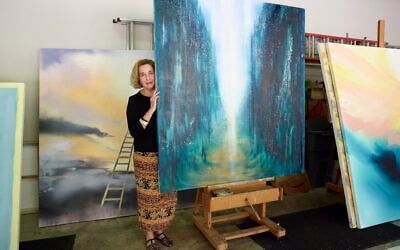
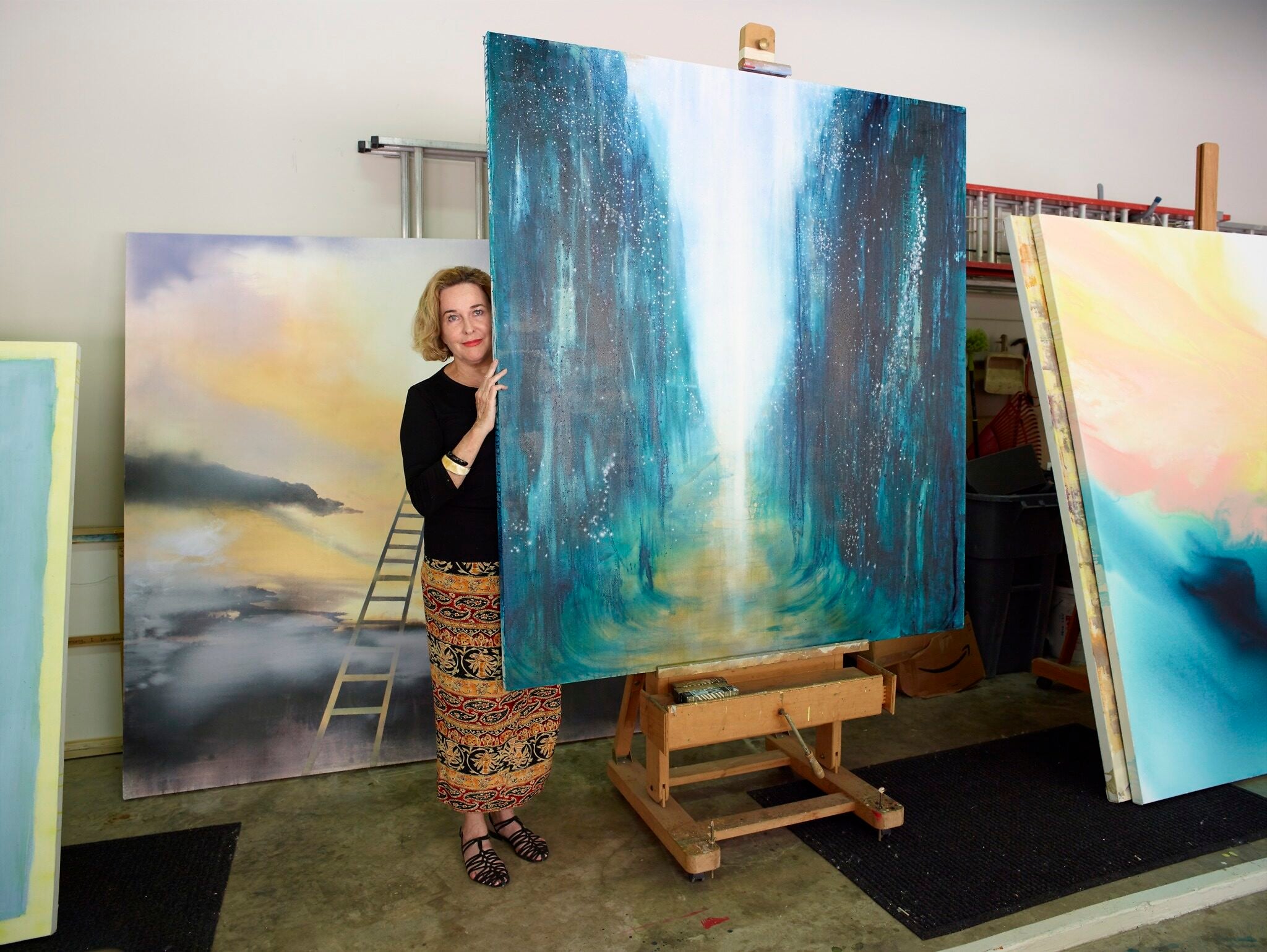
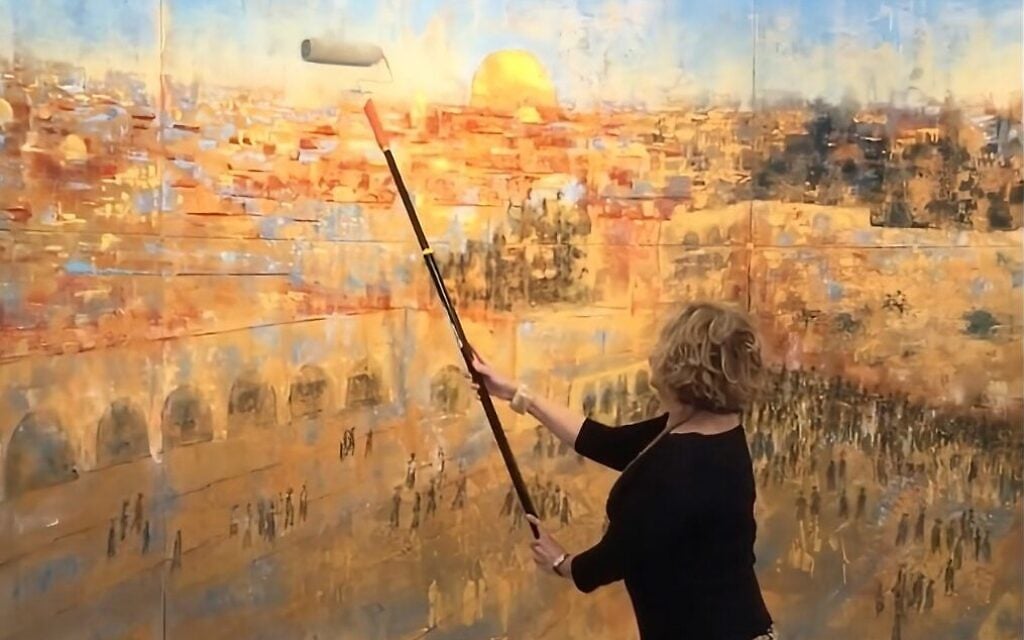
Now living in Jerusalem, Hines is bringing that journey to Judaism to life through her art. A new exhibition running through the end of the year at the Moshe Castel Museum of Jewish Israeli Art in Ma’ale Adumim captures her remarkable religious evolution and explores her connection to Israel and the stories of the Bible.
“I’ve been painting my entire life, and my subject matter always reflected what I was passionate about,” Hines told The Times of Israel during an interview in her spacious apartment in Jerusalem’s German Colony. “For me, it was always about expressing what I love.”
Hines was born in Germany to Jewish parents who managed to survive the Holocaust together after her father, Rolf Otto Julius Fritzsche, escaped from a Nazi prison. But her parents intentionally kept their heritage from their two daughters, believing that concealing their Jewishness would help keep them safe.
“My father was expelled from the German Luftwaffe when it was discovered that he had a Jewish mother and was imprisoned with six other men in a tiny cell,” Hines said. “[But] my father did not reveal the true reason for his imprisonment. His story was that he had spoken out publicly against Adolf Hitler, and I had no reason to suspect that there was a hidden story.”
According to Hines, her father was able to escape as a group of prisoners were being taken to the forest to be shot, and was hidden from the Nazis by Ursula, who later became his wife. Ursula’s mother was Jewish, but not her father, and they avoided attention by presenting themselves as Christians in public.
After the war, the family left Germany for Australia, and the girls were brought up in a predominantly Christian community, attending Methodist Sunday school and Bible classes. Her mother put crosses everywhere, even though the family wasn’t particularly active in the church, Hines said.
When she graduated from the University of Sydney, Hines saved enough money to return to Germany, where she had relatives. Before she left, her father shared his secret Jewish roots because he wanted her to hear it from him instead of from distant relatives.
“He told me he had a Jewish mother, and that he was half-Jewish,” Hines said. “I didn’t know what that meant, and it didn’t affect me at the time.”
Hines had studied comparative religion at university and was drawn to the questions these traditions raised.
“I was looking for the truth,” she said. “Christianity didn’t add up for me. It just had too many flaws.”
She began practicing yoga, which introduced her to Hinduism. That eventually led her to Sufism, a mystical stream of Islam, which she studied intensively for several years. From there, she moved on to Buddhism, which she practiced for more than 20 years. During this time, she studied Tibetan, served on the board of one of the Dalai Lama’s NGOs, and worked on projects for Buddhist communities in northern India.
As she was beginning her journey, Hines met her future husband, Gerald, while vacationing in Monte Carlo, and moved with him to the United States. A successful real estate developer, he shared her interest in yoga and meditation, though he attended Catholic school as a child.
Gerald’s work took the family around the world, and they moved to London when their two children were young. The kids, Trevor and Serena, studied at the Westminster School, near the geographical heart of the Anglican Church. It was there that Hines’s return to Jewish life began.
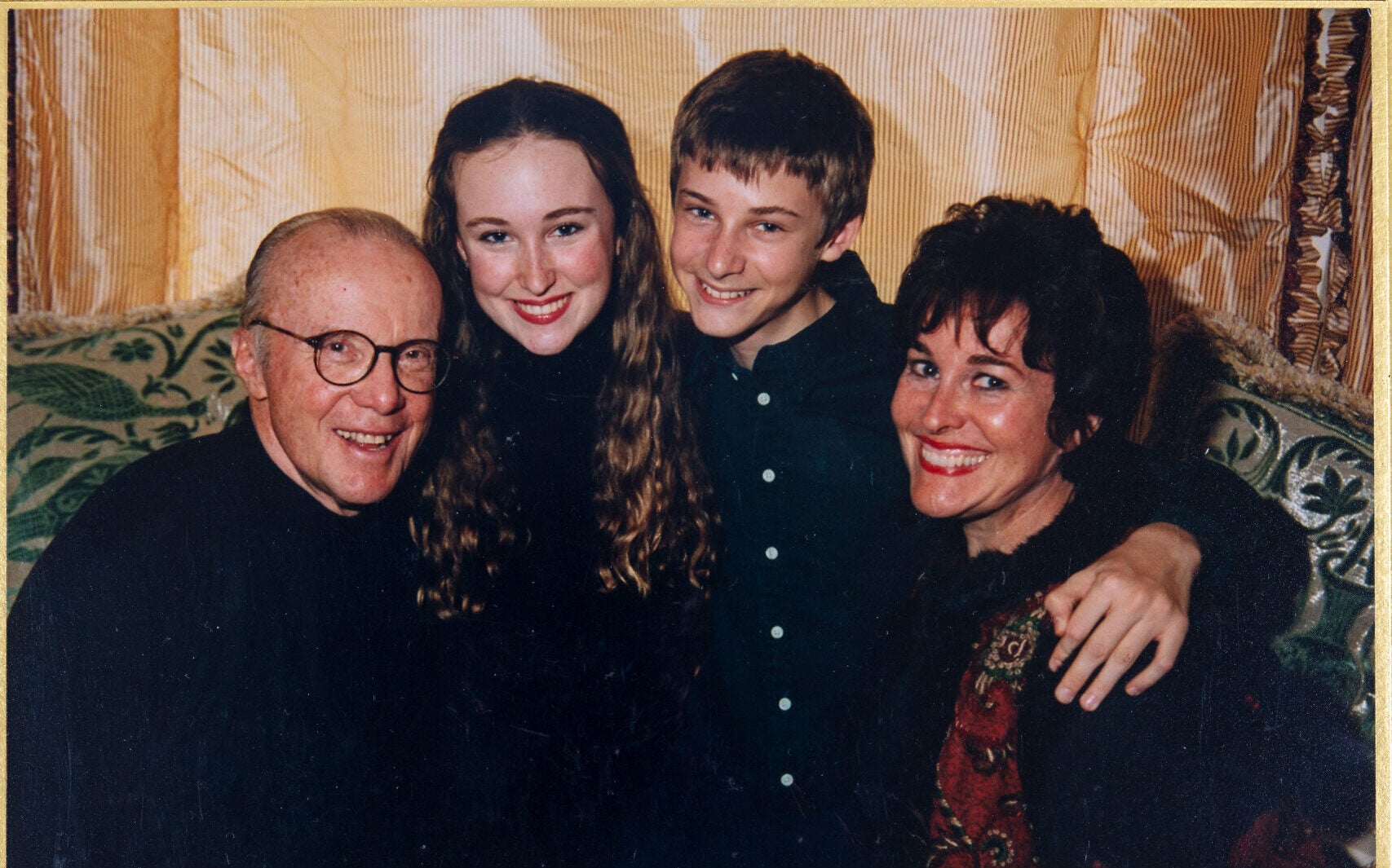
“I taught my children about Hinduism, Sufism, and Buddhism, and they were learning about Christianity in school,” she said. “And one day, my son Trevor came home from school and said, ‘Mummy, I think I’m going to become Jewish.'”
Trevor said the Jewish concepts he’d learned about answered the theological questions he was struggling with, and Hines respected the decision.
“I said that was fine with me as long as he was connected to the divine,” she said. “Soon, he was sitting at the dining room table with stacks of books written in Hebrew, in English, and Yiddish.”
Over the coming years, Hines supported Trevor’s journey, organizing Shabbat meals for him, driving him to synagogue, and connecting him with a local Chabad house. And as she used her knowledge of German to translate the Yiddish texts, Hines slowly began to embrace Jewish practices as well.
“I remember one time surprising him in his room, and he had on tefillin [phylacteries],” Hines said. “I thought, ‘This is too weird,’ and I said to my husband, ‘What are we going to do?'”
He answered, perhaps as a joke, “You’re going to have to become Jewish yourself.”
The bombshell came when Trevor called his grandmother in Australia to tell her that he had decided to convert to Judaism.
“She replied in thick German, ‘That’s interesting, because my mother and grandmother were Jewish,'” Hines recalled.
Trevor turned to his mother: “Well, Mum, that makes you Jewish.”
Hines’s mother revealed that 86 of her relatives were killed during the Holocaust, and that her life was spared during a bombing attack because she was among the first to fall and was protected by all the dead and wounded bodies that fell on top of her. It was the first time she spoke of it.
After the initial shock, Hines finally understood what her father had shared with her decades ago, and she began to embrace Judaism as her own. Unlike other spiritual paths she had previously chosen, she said this one came to her through her own lost heritage.
“I decided I wasn’t going to let Hitler decide my future and my religion and my path in life, so I turned around and embraced it 100%,” Hines said.
Hines and her two children embraced Jewish life, while her husband was a practicing Unitarian, a liberal denomination that embraces shared values and unity. Hines said that on Friday nights, he would drive alongside the family as they walked to Friday night dinner, lighting the way with his headlights.
“He was so supportive all the time,” Hines said. “When people would ask how he was handling everything, he would smile and say, ‘Well, I don’t know anybody else whose teenagers stay home on Friday night and talk to them on Saturdays.'”
Meanwhile, Hines’s sister began exploring the family’s genealogy after learning they were Jewish. Today, she is affiliated with Chabad in Australia.
After Gerald died in 2020, Hines briefly moved to Florida before she decided to immigrate to Jerusalem. Painting, a constant throughout her life, had increasingly become a way to explore the places and stories that mattered most to her.
“I was always a painter,” she said, recalling studios she had maintained in London, Texas and Colorado, and even aboard the family boat.
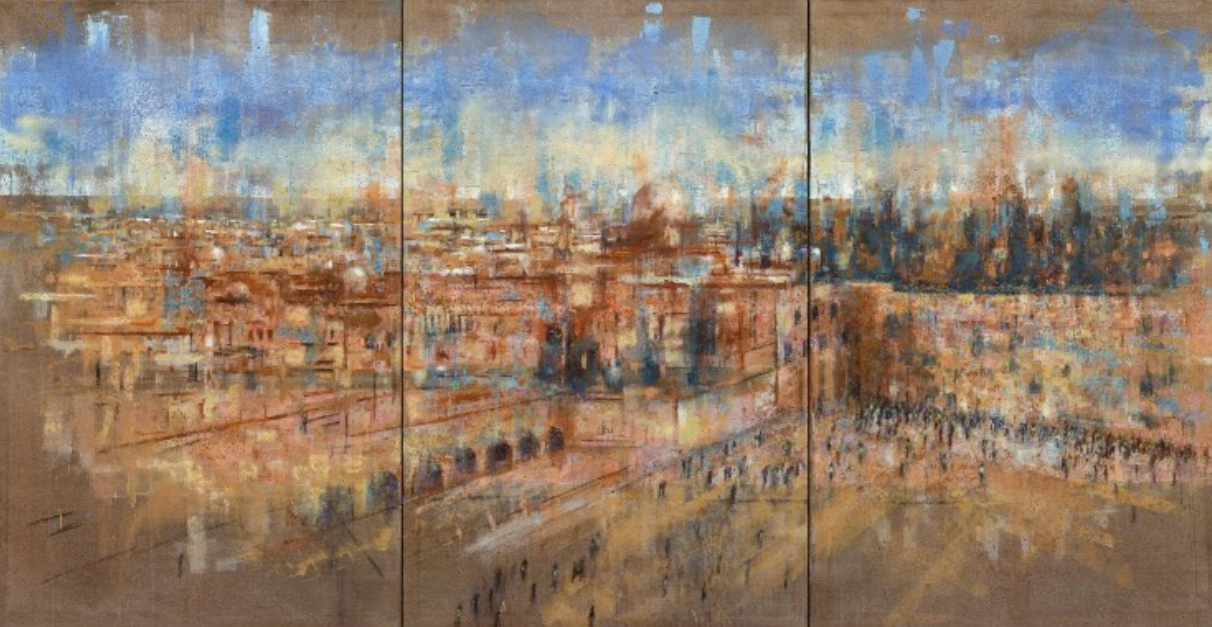
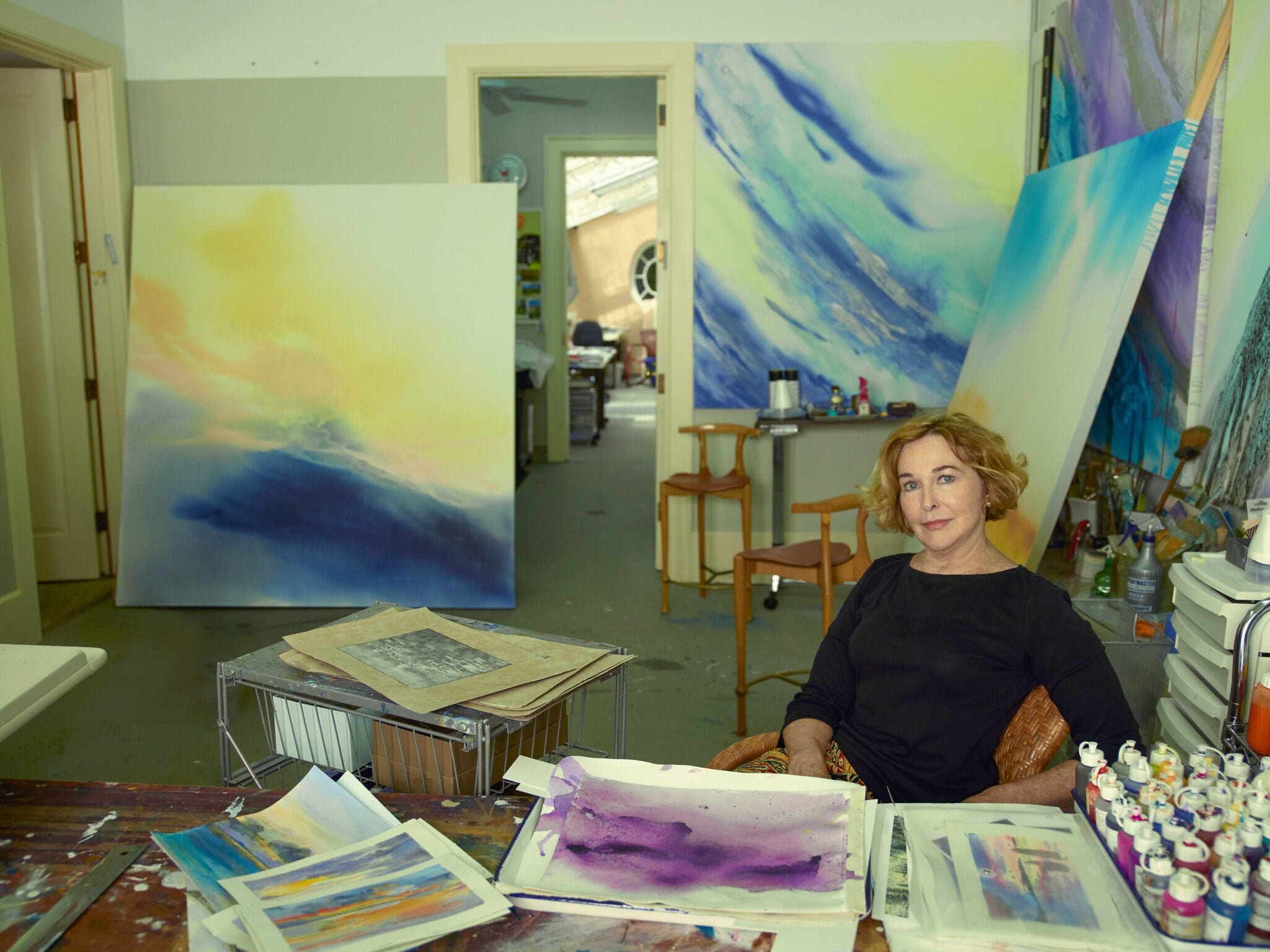
Her work initially focused on landscapes, flowers and portraits, but as her interests shifted, so did the paintings’ subjects: Israel, Jerusalem and stories from the Torah began to take center stage.
Pulling out a pile of exhibition books, Hines reviewed some of her most successful showings: a long-running show at the Dallas Holocaust and Human Rights Museum, a series exploring the biblical Joseph character, a project exploring the circle of life that appeared in the 2019 Jerusalem Biennale.
“I’ve always painted what was closest to my heart,” Hines said.
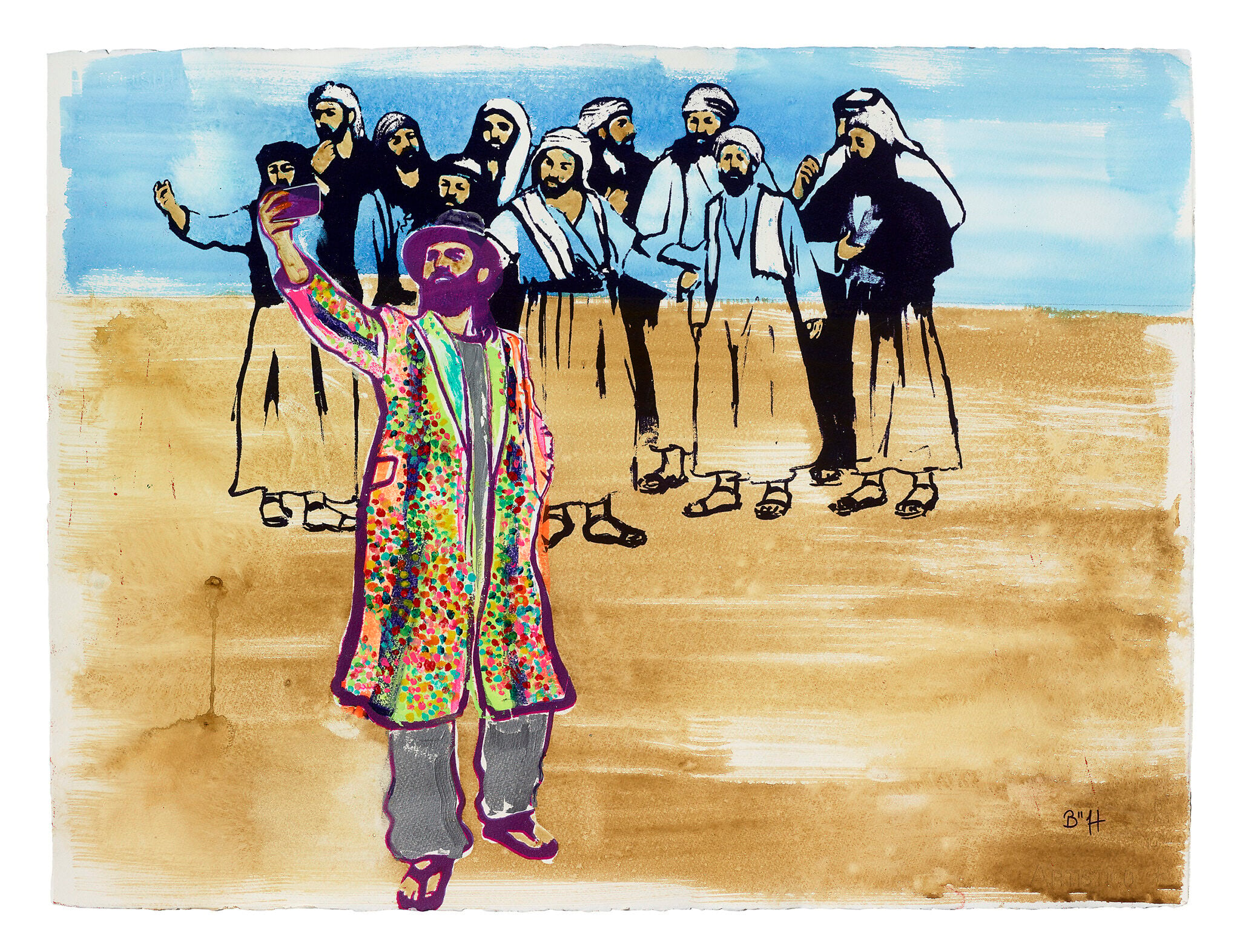
When she first shifted from painting Aspen landscapes to scenes from Israel while still living in the United States, she asked people to send her earth from their Jerusalem gardens, which she mixed into her paints.
“I wanted to imbue the paintings with Israel itself,” she said.
The story of her current exhibition at the Castel Museum in Ma’ale Adumim connects to the latest chapter of Hines’s life. When a potential suitor, Rabbi Dr. Natan Ophir, asked her out on their first date, she requested that he take her to an art gallery in the city where he lived, Ma’ale Adumim. Ophir arranged for a warm welcome from the directors of the Castel Museum of Jewish Israeli Art, and one thing led to another. The couple married in Jerusalem this May.
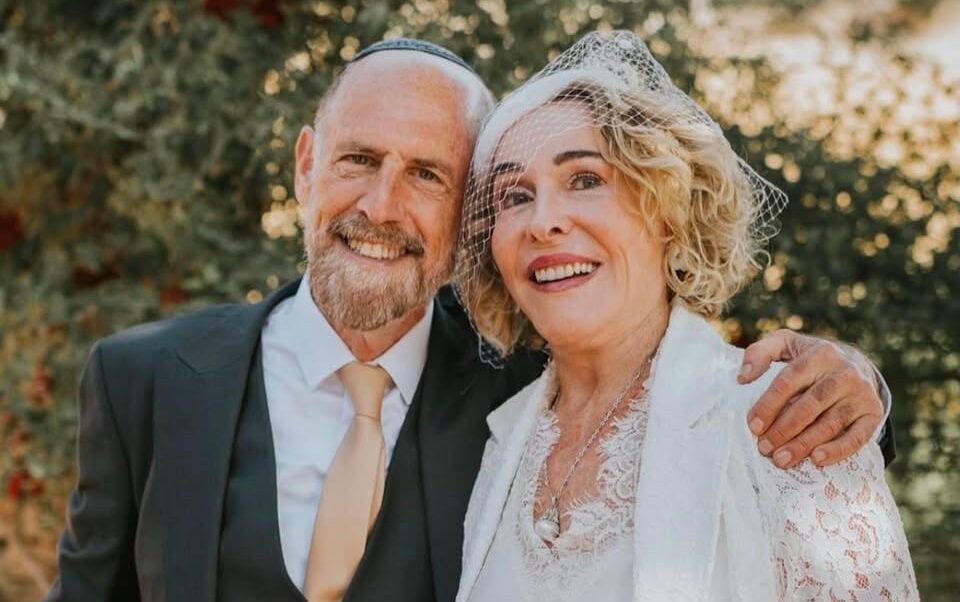
Ophir has a long history with Jewish meditation and yoga, and the two have lengthy discussions about Jewish philosophy, Hines said.
The new exhibition at the Castel Museum, “Jerusalem in My Soul,” reflects Hines’s connection to the city and the Jewish heritage she spent much of her life discovering, she said.
“Now,” she added, using the Hebrew term for immigration to Israel, “My paintings have made aliyah, too.”
The Times of Israel Community.