

Ex-Joint List leader Ayman Odeh said suspected by Shin Bet of taking foreign funds
Outgoing lawmaker warns ‘spins and lies’ will only increase ahead of Knesset swearing-in, as his party condemns ‘campaign of political persecution’ amid voter fraud probe
 Add ToI as a Preferred Source on Google
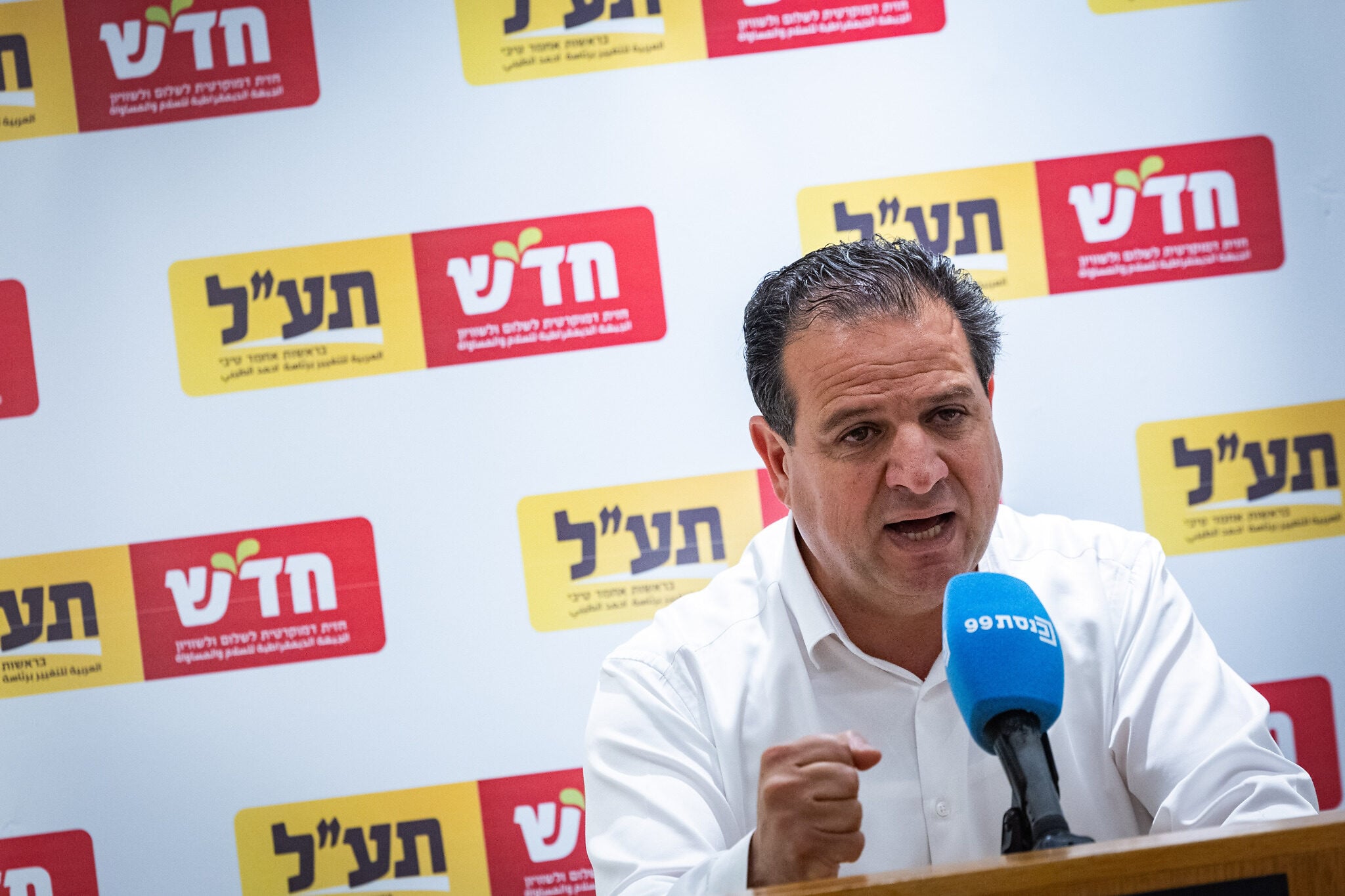
MK Ayman Odeh, the former leader of the Arab-majority Hadash party and the Joint List of Arab parties, has been identified as the senior Arab lawmaker suspected of receiving hundreds of thousands of shekels in cash from a foreign source.
Several outlets, including Kan, Haaretz and i24News, identified Odeh on Wednesday as the individual who had been hitherto unnamed. Shin Bet chief David Zini has reportedly sought to question Odeh as part of a probe into alleged foreign interference in the October 27 election.
Prime Minister Benjamin Netanyahu’s Likud and its allies have sought to cast doubt on the integrity of last week’s vote over the probe, despite top judicial and enforcement officials stressing that the suspected actions did not interfere with the vote itself and would not have had a significant effect on the results.
Odeh is set to retire from the Knesset when new lawmakers are sworn in next week. He was named after an i24News report on Tuesday said that Zini was seeking to question a number of senior Arab politicians, including Ra’am leader Mansour Abbas, and the leaders of two of the three Joint List factions, Ta’al’s Ahmad Tibi and Balad’s Sami Abou Shahadeh, in the election interference case, without providing any evidence against them.
However, that report said Zini had provided evidence against a fourth man — now identified as Odeh — and that there was agreement by security officials that there was sufficient evidence to justify his questioning.
Zini’s alleged push to question the other politicians without evidence prompted a rare public rebuke from Attorney General Gali Baharav-Miara, who stressed in a statement that it was illegal to question anyone, including lawmakers, without sufficient evidence.
The Shin Bet then denied seeking to question the three Arab party leaders, saying it instead wished to question people in their orbit, according to Hebrew media reports.
Election officials, including the chair of the Central Election Committee (CEC), conservative Justice Noam Sohlberg, have repeatedly stressed that the suspicions of voter fraud are not significant enough to impact the outcome of the election results.
On Wednesday morning, the CEC announced that its extensive post-election review had found no irregularities or evidence that the integrity of the vote itself had been compromised or that the results had been altered. The examination covered protocols from 9,069 polling stations.

“The conclusion of the operation revealed no irregularities or findings that would suggest that the integrity of the election had been compromised or that the results had been altered,” said the panel’s statement, before the certified results were handed over to President Isaac Herzog.
Nevertheless, elements in the outgoing government, including Netanyahu himself, have continued to insist that the vote was “stolen.”
Far-right National Security Minister Itamar Ben Gvir declared on Wednesday that all Arab party leaders should be arrested and questioned “in Shin Bet basement cells,” even without the attorney general’s approval — an illegal proposition.
Odeh did not directly address the allegations against him following the reports on Wednesday, but criticized the Shin Bet’s probe, calling it “political persecution.”
“The historic turnout among Arab citizens has driven Netanyahu and the fascists out of their minds,” Odeh said in a statement, adding that fear of losing power was making them “fire in every direction.”
“As we get closer to the swearing-in of the Knesset and the end of Netanyahu’s rule, you will see more and more spins and lies,” he said, urging his allies to keep working to replace Netanyahu’s government.

The Joint List, in a statement of support for its former leader, likewise decried what it called a “campaign of political persecution” against Odeh, saying the allegations were “a serious escalation in the campaign of incitement against the Arab public and its leadership.”
The party accused Zini, a Netanyahu appointee, of acting as “a political arm at his service.”
“The Arab public has spoken at the ballot box,” the Joint List said, referring to record turnout among Arab voters in last week’s election, yielding Arab-led parties a historic high of 19 Knesset seats. “No threats, investigations or intimidation campaigns will silence us or delegitimize our political representation.”
The fraud allegations began on election day, when Netanyahu and other Likud figures claimed, without presenting evidence, that the vote was being “stolen” amid very high turnout in Arab communities.
The claims later centered on two separate suspicions: an alleged vote-buying scheme involving Ra’am activists, and the purported foreign-funded effort — linked in reports to Qatar or Turkey — to boost Arab turnout and influence the election.
Ra’am has denied any wrongdoing by the party, and three activists arrested as part of the suspected vote-buying scheme have all been released from detention unconditionally.
Journalist cousin of Balad chief charged with contacting foreign agent
Separately on Wednesday, Arab journalist Abed Abou Shahadeh, the cousin of Balad chief Sami Abou Shahadeh, was arrested overnight and charged with contact with a foreign agent.
Abou Shahadeh’s identity was initially placed under a gag order, which was overturned by the Tel Aviv Magistrate’s Court.
He will be kept in custody until Sunday, after the court shortened his detention period from eight days to four.
Abou Shahadeh’s family said that some 15 security personnel raided his home in Jaffa overnight and arrested him without citing a reason.
The investigation is being conducted jointly by police and the Shin Bet.
Abed Abou Shahadeh hosts the Arab48 news site’s flagship podcast Al-Midan, and previously sat on the Tel Aviv-Jaffa city council for Yafa, a municipal alliance of Balad and Hadash.
His team of defense lawyers said the foreign agent in question is former Balad MK and leader Azmi Bishara, who fled Israel in 2007 amid suspicions he aided Hezbollah in the previous year’s Lebanon war.
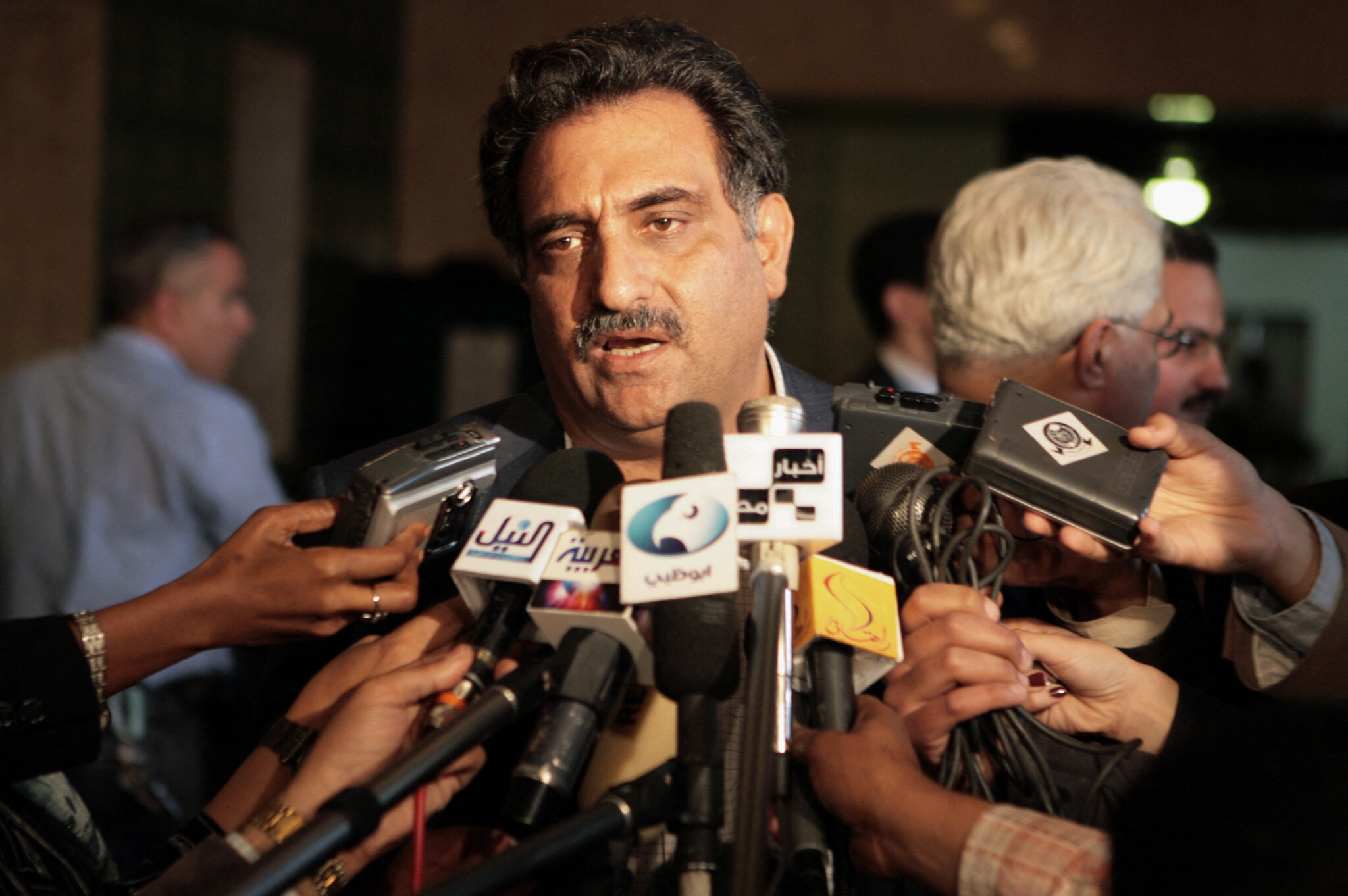
Abou Shahadeh traveled to Doha over a week ago to interview Bishara for Arab48 ahead of Israel’s election.
His legal team argued that Bishara is not necessarily a foreign agent as defined by law, and that in any case the contents of the meeting have been public for some time and did not include any conspiracy against Israeli security. Abou Shahadeh previously interviewed Bishara without facing legal trouble.
A police representative at the Tel Aviv court declined to confirm whether Bishara is the foreign agent in question or if the podcast interview was the reason for the arrest. Instead, the representative referred the judge to a confidential dossier submitted by investigators.
Judge Shelly Kotin noted that Abou Shahadeh does not hold a Government Press Office card, and described himself in his interrogation as a political consultant.





The Times of Israel Community.