

As Eisenkot wins 67 nods to be PM, Herzog says he’ll announce mandate decision on Sunday
Yashar rules out coalition with Netanyahu; reversing boycott, Liberman said open to sitting with Haredi UTJ, which refrains from recommending incumbent premier; Likud urges unity while calling rivals ‘the disaster bloc’
 Add ToI as a Preferred Source on Google
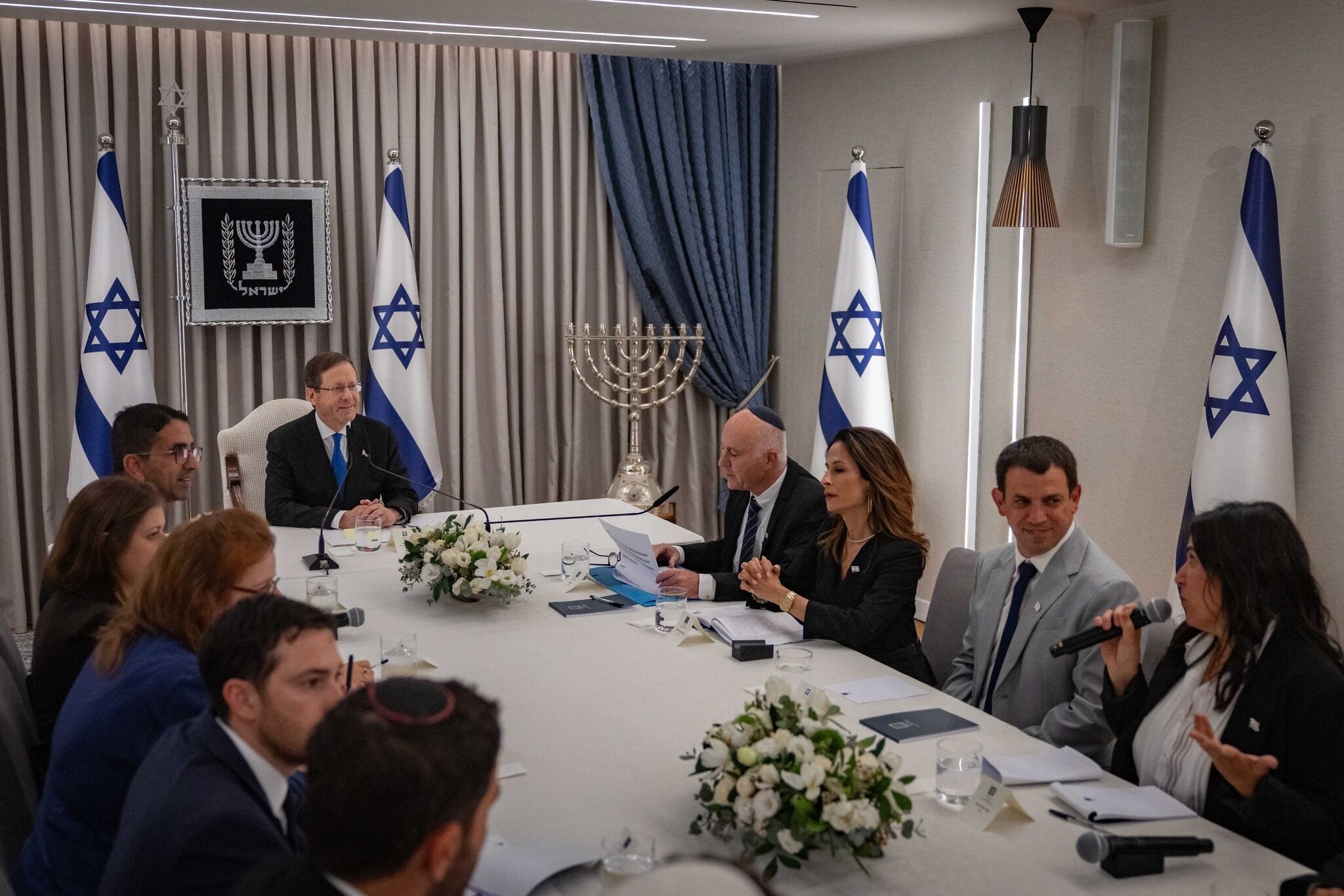
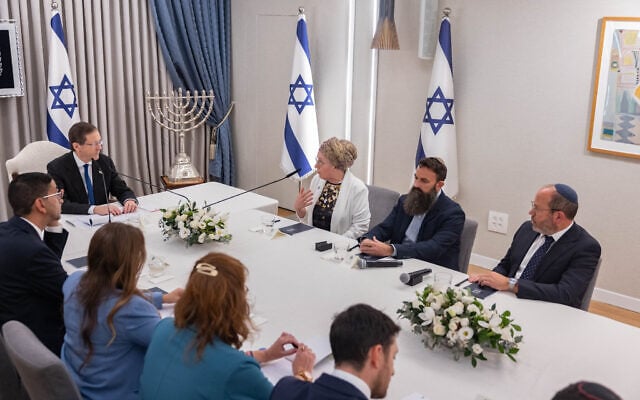
Yashar leader Gadi Eisenkot on Thursday received the backing of a majority of Knesset members to be prime minister after parties consulted with President Isaac Herzog, paving the way for him to be granted the mandate to attempt to form the next government.
Following the meetings, Herzog said representatives of factions totaling 67 lawmakers backed Eisenkot, while factions totaling 46 lawmakers recommended Prime Minister Benjamin Netanyahu. While the result was “clear,” the president said he would hold further talks with party leaders to clarify the situation before assigning the mandate to form a government on Sunday.
Yashar subsequently urged Herzog to give Eisenkot the mandate “as soon as possible,” noting that the support of 67 seats is the largest number of recommendations given to a candidate since 2015.
Despite the support, Eisenkot’s path to assembling a coalition is still unclear. In last week’s election, Netanyahu and his allies lost their parliamentary majority. The anti-Netanyahu parties are split between a 48-member Jewish-led bloc and a 19-member bloc of Arab-led parties. Netanyahu now leads a 46-member bloc after seven-seat United Torah Judaism refused to recommend its longtime ally, apparently clearing a path for an option to back Eisenkot in a future coalition.
Potentially making Eisenkot’s path to a government easier, Channel 12 news reported Thursday that Yisrael Beytenu party chairman Avigdor Liberman, a staunch secularist, has lifted his longtime refusal to sit with the Haredi parties and is open to a partnership with UTJ, viewing the possibility of ousting Netanyahu as a more important goal.
Liberman has also reportedly said he believes sitting with Haredi factions in a government is preferable to joining with or relying on the support of Arab-led parties. The report suggested that such a government would include a prime ministerial rotation agreement between Liberman and Eisenkot, as well as negotiations over a Haredi military draft agreement.
Despite the political deadlock, the new Knesset, after it is sworn in on November 10, could elect a new speaker. The speaker wields considerable influence over parliamentary proceedings and, together with his deputies, controls the legislative agenda.
On Thursday, the Arab Ra’am party formally joined Yashar, the Joint List, Yisrael Beytenu and the Democrats in calling for an early vote on the speaker on Thursday. Current speaker Amir Ohana said he will schedule a debate on his replacement if at least 61 lawmakers formally request one.
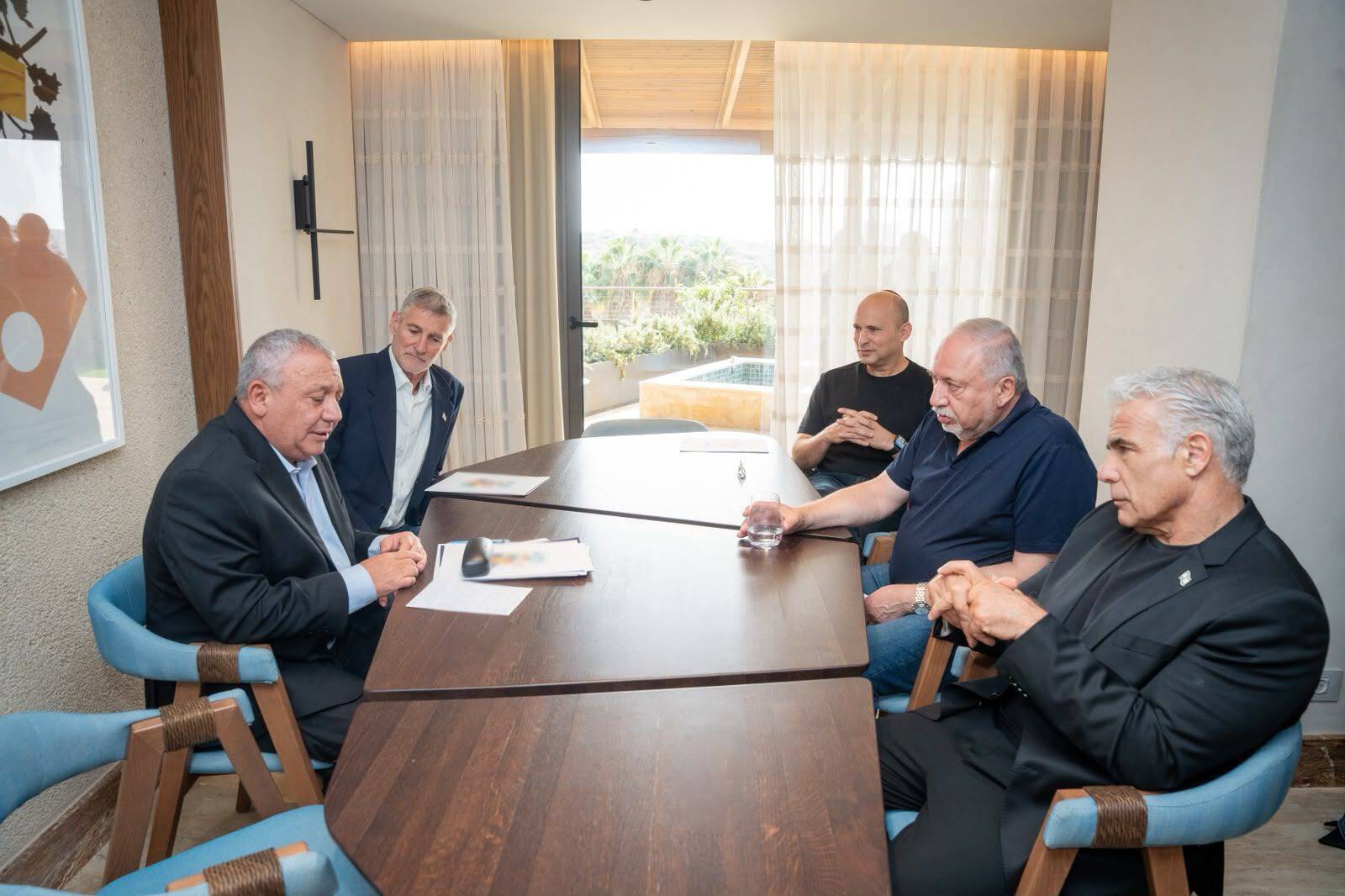
Ra’am backs Eisenkot, says it would not interfere in defense matters
In his meeting with Herzog, Ra’am leader Mansour Abbas stopped short of explicitly recognizing Hamas as a terrorist organization, despite repeatedly condemning terrorism and political violence and calling for Hamas to be disarmed and removed from power.
Eisenkot has made recognition of Hamas as a terrorist organization one of his conditions for parties seeking to join his prospective government.
Abbas expressed his hope to see Eisenkot form a “good government.”
Recounting the government he formed with Yair Lapid and Naftali Bennett in 2021, Abbas told Herzog that “its worst day was infinitely better than the fully right-wing government in terms of security — national and personal — as well as in civil matters.”
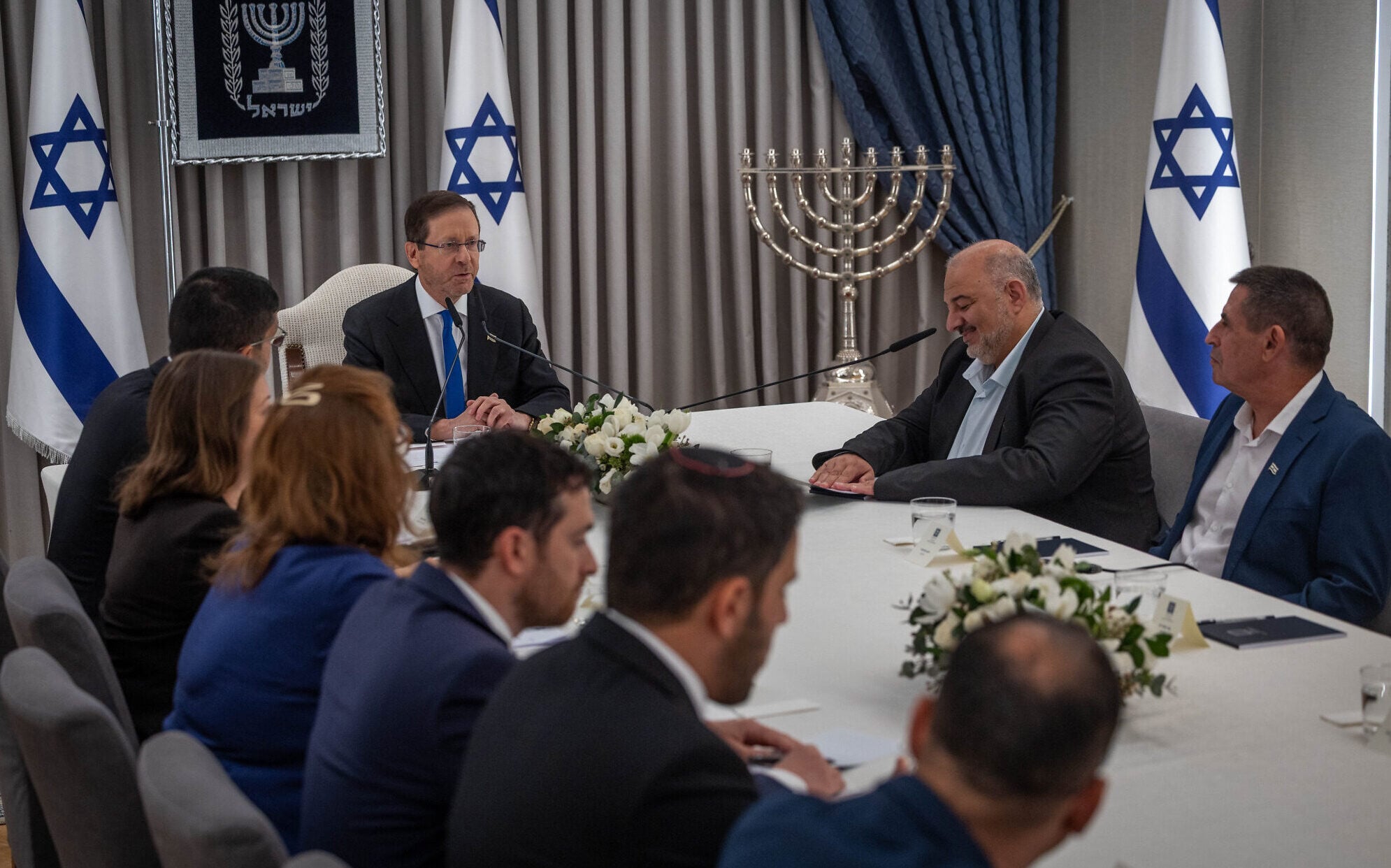
Pressed by Herzog on whether Ra’am could be a part of a government that fights terrorism without limits, Abbas said: “To claim that our presence in a government would prevent a cabinet or government from defending Israeli citizens is not right.”
The Ra’am leader questioned why his party is repeatedly subjected to “loyalty tests,” suggesting a double standard in the demands placed on Arab politicians.
Arab lawmakers have previously raised similar complaints, noting that Jewish politicians face no equivalent demands to recognize Jewish terrorism in the West Bank or elsewhere, despite the fact that, as Abbas noted, no Ra’am lawmaker has been charged or convicted of terrorism-related offenses, while Otzma Yehudit leader Itamar Ben Gvir was convicted in 2007 of incitement to racism and support for a Jewish terrorist organization.
Ra’am No. 2 Yoav Segalovitz, who made history as the first Jewish candidate of the Islamist party, described the ongoing discourse in Israel as “toxic, and the one who is leading it is Netanyahu.”
“Just yesterday he said that the Islamic Movement is dangerous and that everyone is a terror supporter. The only one that is a terror supporter is Itamar Ben Gvir, who sits in his government and was convicted,” Segalovitz said.
Joint List: Choice is between ‘bad and even worse’
Also recommending Eisenkot, Joint List chair Yousef Jabareen said the delegation’s support reflects Arab voters’ demand for change, citing what he said was racism, discrimination, crime and exclusion affecting Arab citizens under the current coalition.
“Our public really went out to vote for change,” he said. He acknowledged “disagreements with Eisenkot on many issues,” including what Jabareen called his failure to take a firm stance against incitement targeting Arab citizens during the election campaign.
“We are not choosing between good and better, but between what we see as bad and even worse,” he said.
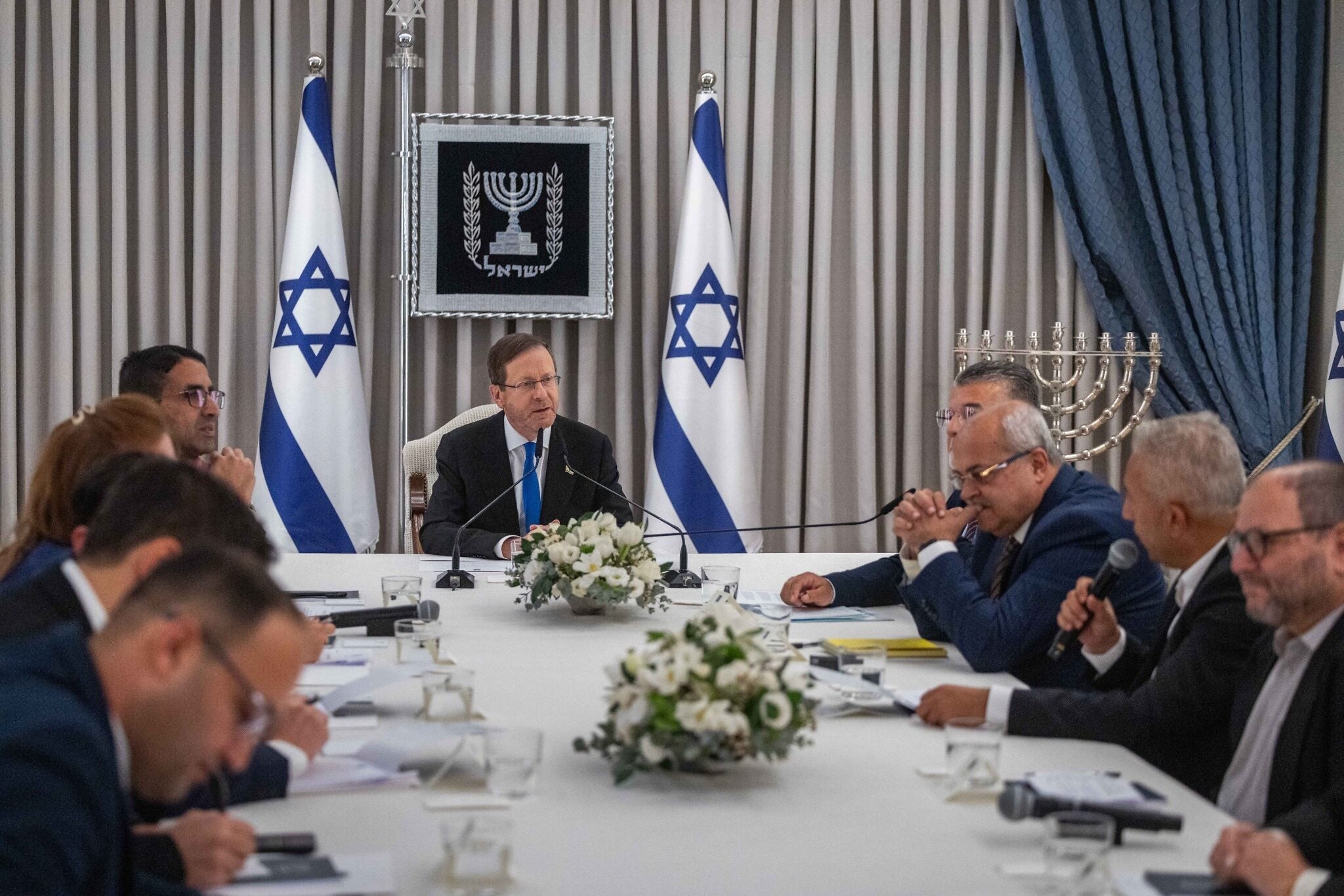
Asked about Israel’s security and what the party would do in case of a major military campaign, Jabareen said: “We’re looking at the bigger picture. We will make strategic decisions. The public did not elect us to bring down Netanyahu only to bring him back, and therefore we will make decisions that serve both our platform and our strategy for advancing the values we believe in, while also striving for a path of peace.”
Jabareen accused Netanyahu and Ben Gvir of leading a campaign of incitement, charging that if their comments were to be heard in Europe, with the word “Jew” replacing “Arab,” Israelis “would call them antisemitic, and justifiably so.”
MK Ahmad Tibi told Herzog the Joint List would support a minority government from the outside, and did not want to help form a government only to see it collapse soon afterward.
“If we support a government from outside, we don’t want to give it a safety net only to bring it down a month, two months or three months later,” he said.
Tibi also stressed the party’s leverage in the next Knesset, where it will hold 11 seats: “No parliamentary or political move in the Knesset can happen without the Joint List,” he argued.
B’Yachad dismisses unity: ‘Won’t do business with scorpions’
B’Yachad representatives voiced skepticism about a unity government with partners they consider untrustworthy or opposed to basic democratic values, while saying they will work with any party that accepts their core principles.
Recommending Eisenkot as the next prime minister, B’Yachad said they were standing by a commitment made after the election.
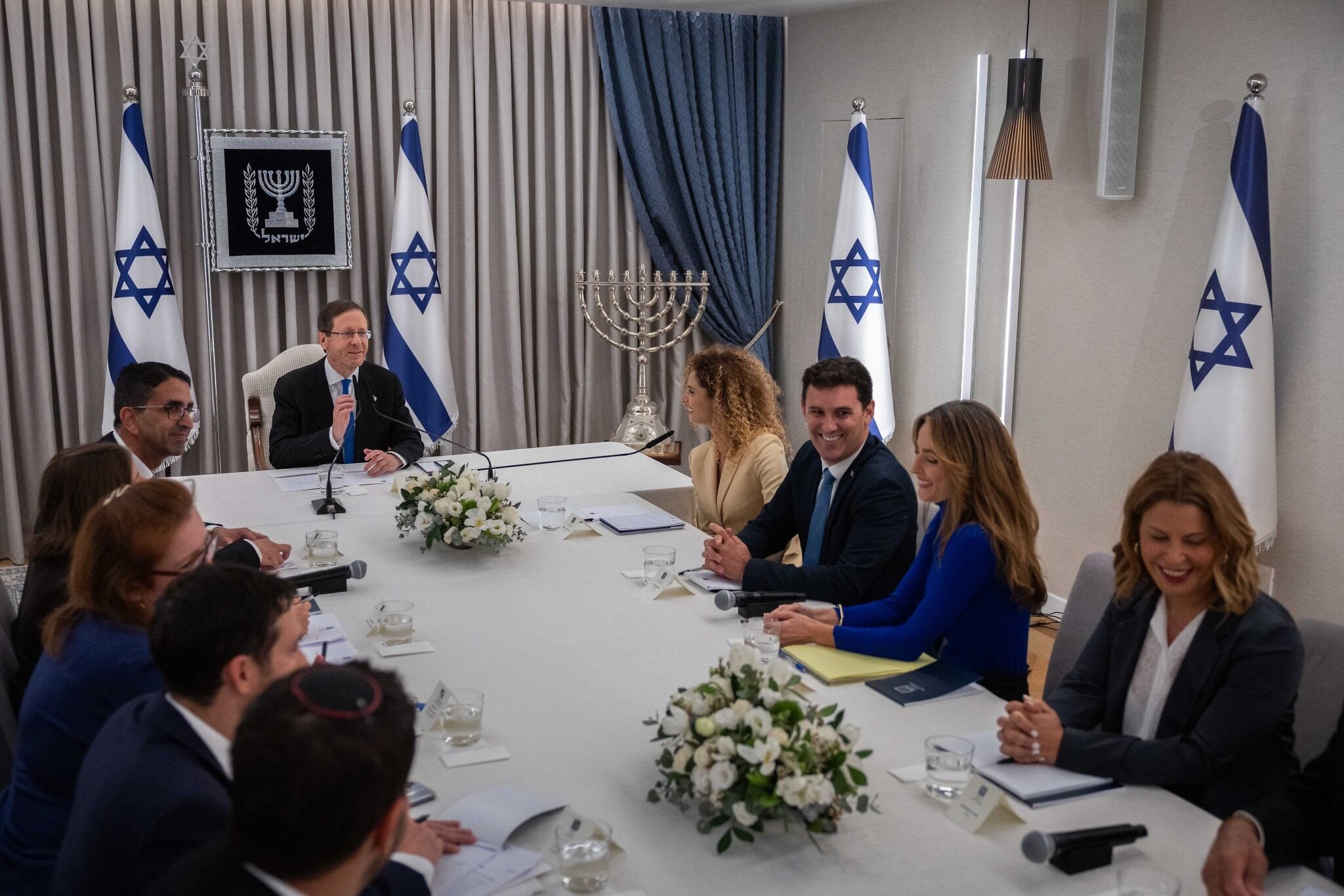
MK Merav Cohen called Eisenkot “an extraordinary person” who “can form a government in Israel,” but said it will need to be stable enough to last.
“The people of Israel need this change and are hungry for it,” said incoming MK Bruria Naim Arman. “That’s the Israel we met: a people who need this repair and healing.”
When Herzog asked whether a broad unity government could lead Israel through its challenges — an idea floated involving a rotation government with Netanyahu’s Likud — MK Ram Ben Barak said cooperation was possible with people who hold different political views, but not with those who reject basic democratic values.
“If your worldview says that some people are worth more than others, then we can’t have a dialogue,” he said.
Cohen said sitting with people who disagree with her is “an important goal,” but that cooperation requires trust.
She referenced the fable of a scorpion that persuades a frog to carry it across a river, but then stings the frog halfway across, leading both to die, while explaining that it is in its nature.
Recalling her experience in a previous unity government between Netanyahu and Benny Gantz, she said, “The agreements were broken, one after another. Instead of helping my country, I harmed it. I learned from that. I learned not to do business with scorpions.”
‘Unity is not a slogan’
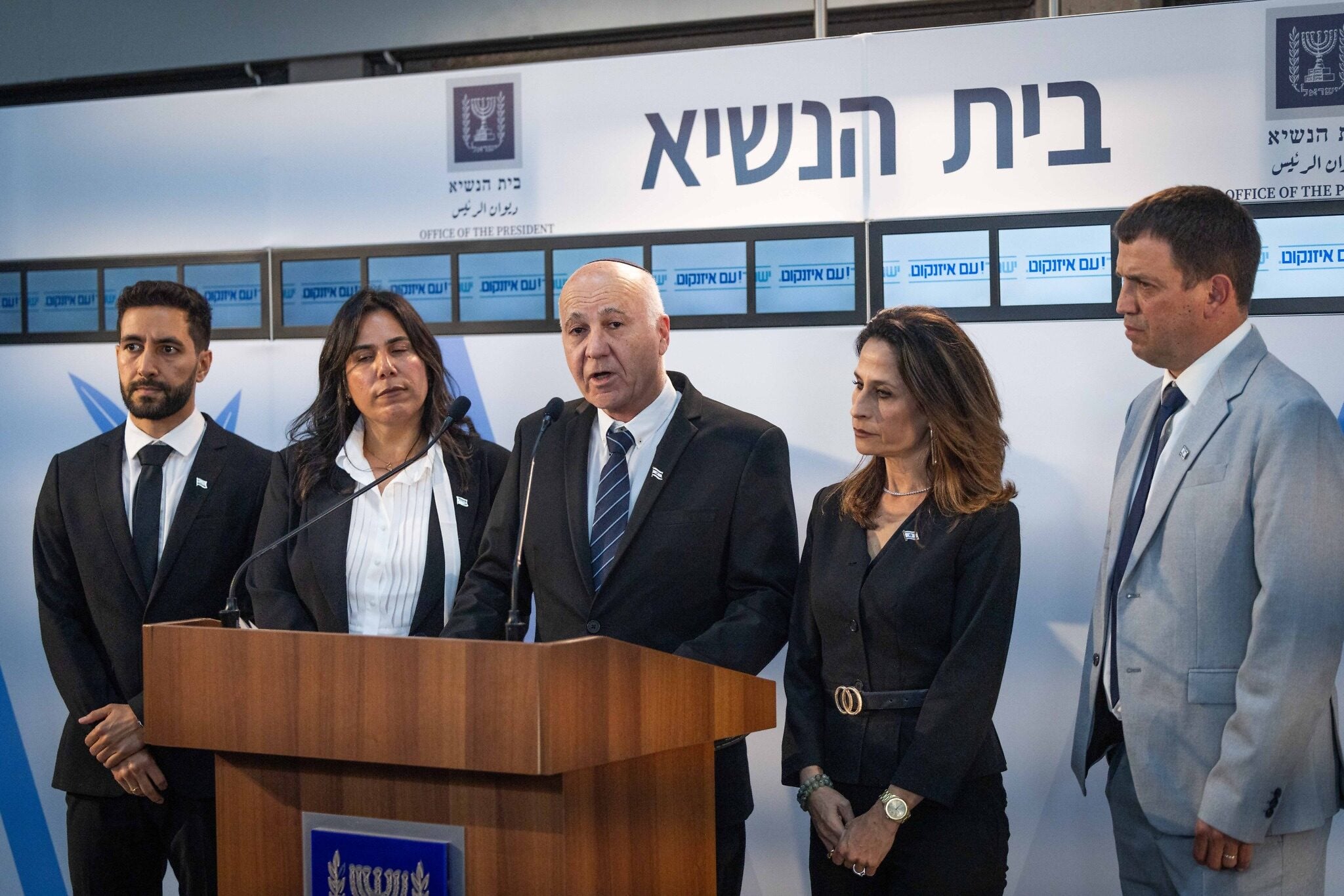
Yashar representatives argued that Israel needs new leadership and rejected a unity arrangement with Netanyahu.
Former Shin Bet chief Yoram Cohen said Israel needs a stable government quickly and that Yashar would welcome any party that accepted its principles. Given the high voter turnout in last week’s election, he said, “it would be wrong to ignore the people’s desire for change and go to another round of elections.”
When asked about forming a government despite lacking a Knesset majority, Cohen said Yashar will first negotiate with allied parties in the opposition bloc, forming a core that could later be joined by others who accept its principles.
“I hope there will be no surprises,” he said, “and if there are, only pleasant ones.”
Cohen accused Netanyahu himself, not his Likud party, of responsibility for the disunity among Israelis, citing his attacks on state institutions and derogatory comments about Arab citizens.
Likud urges ‘broad national government,’ slams ‘disaster bloc’
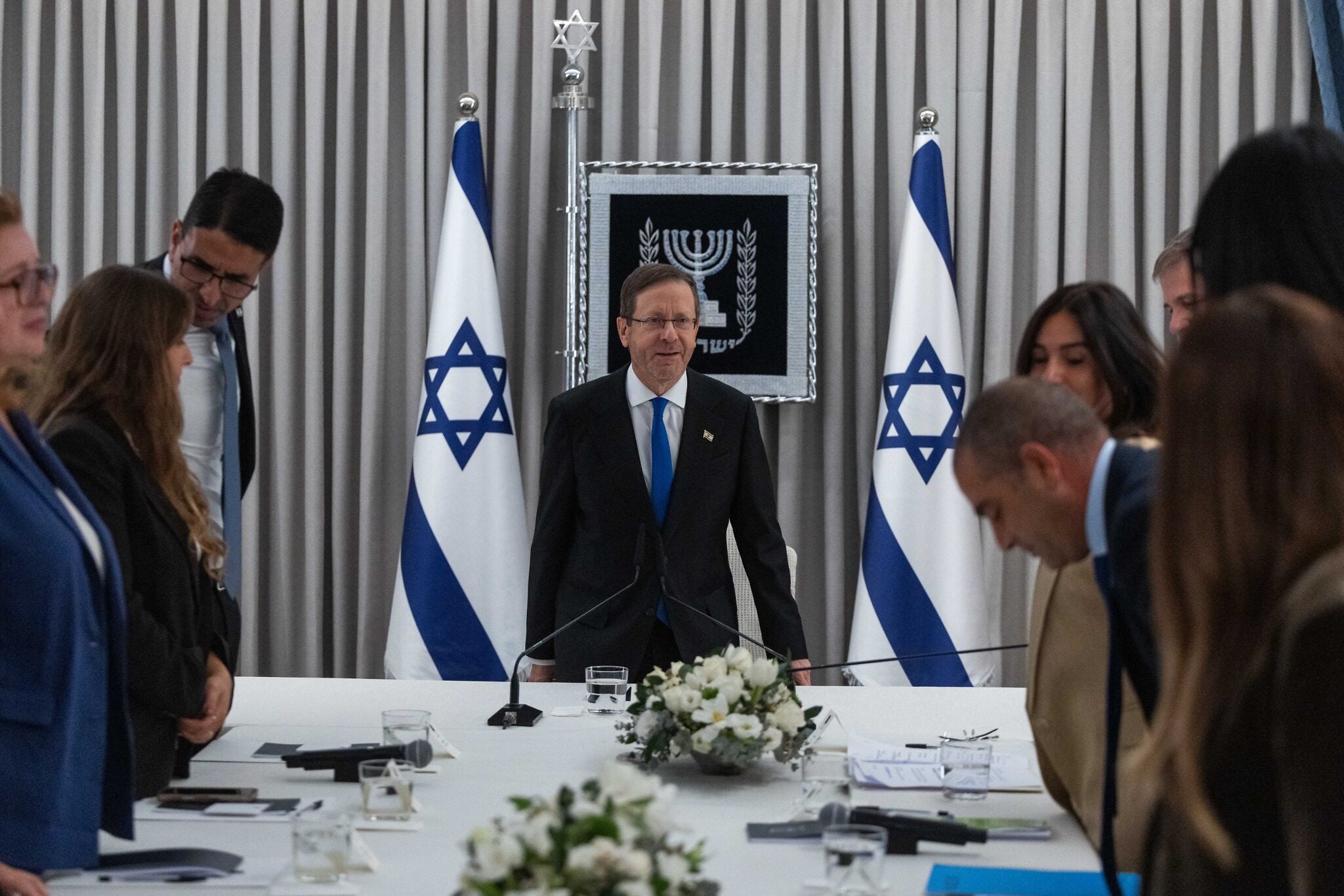
Likud lawmakers meanwhile urged opposition parties to join a broad unity government, during their consultation with Herzog.
Education Minister Yoav Kisch called for a “broad national government” of Jewish-led Zionist parties, saying Israel could not meet its challenges under a government reliant on Arab parties that “support terror.” He accused opposition leaders of boycotting Likud, and said the measure had “done enormous damage” to Israel.
Herzog asked Kisch what Likud was prepared to sacrifice to secure a unity government. Kisch said he did not know, but insisted the opposition needed to “come and talk with us.”
Transportation Minister Miri Regev said Likud was extending a hand to the opposition, but argued that Eisenkot and his “disaster bloc” were instead willing to sit with the Joint List.
Herzog pushed back: “He didn’t say he would sit with them.” The president also challenged Regev’s rhetoric, telling her, “If you want to extend a hand, you can’t call it a ‘disaster bloc.’”
Regev said Likud only rejects parties that support terror, accusing Arab lawmakers of refusing to call Hamas a terrorist organization. Herzog noted that Abbas told him Ra’am supported disarming Hamas.
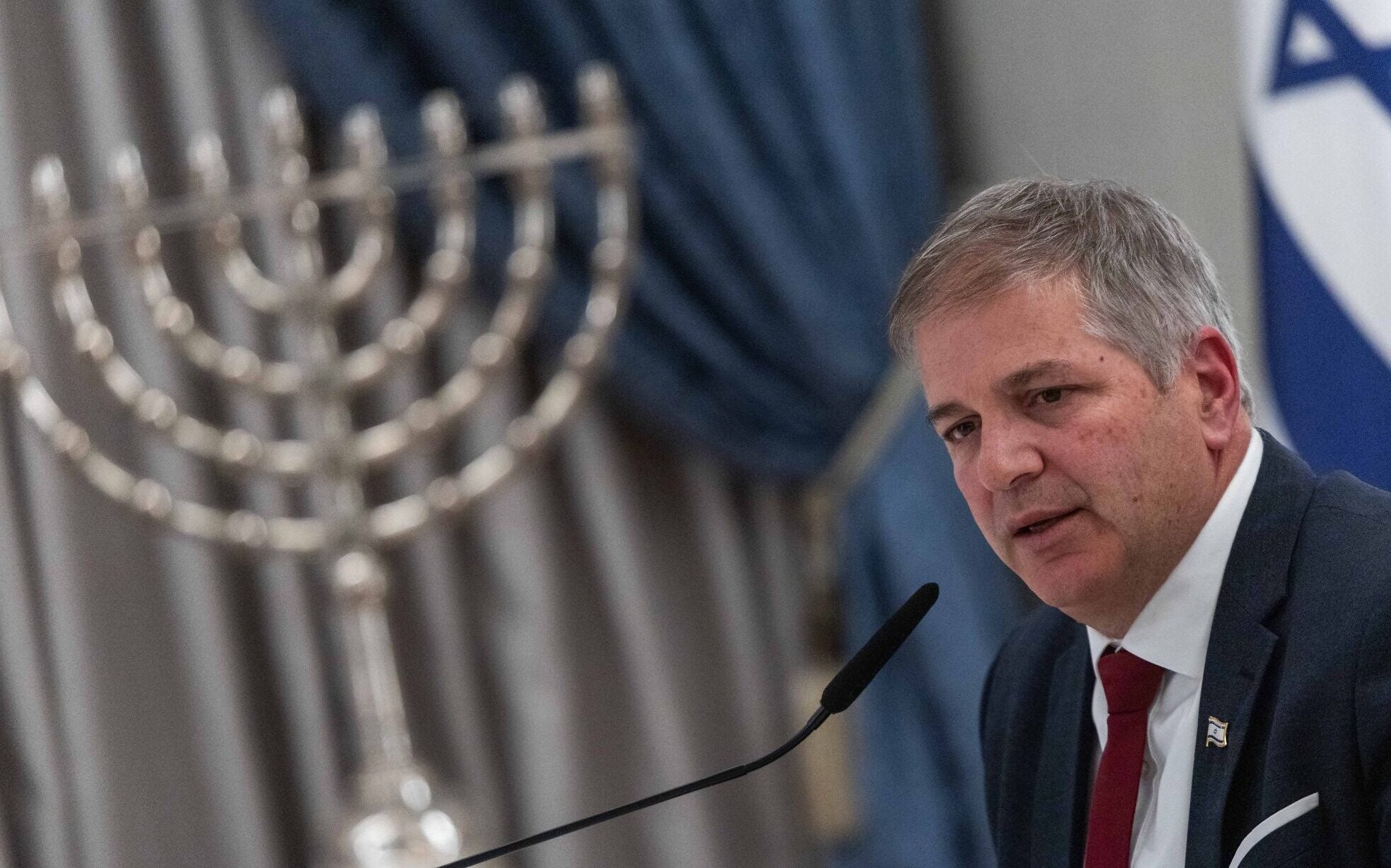
Likud representatives also accused Yashar’s Cohen of not sharing with Herzog his party’s condition that potential coalition partners recognize Hamas as a terrorist organization. Herzog replied that he “didn’t notice.” Cohen said during Yashar’s consultation withe president that parties in must commit to dismantling Hamas.
Incoming MK Talik Gvili, who joined Likud after her son Ran Gvili was killed and abducted to Gaza while battling Hamas-led terrorists during the October 7, 2023, onslaught, urged politicians to restore the unity she said had prevailed at the start of the war.
“You have the power to unify us,” she told Herzog.
Asked what the government would do differently from its past four years of rule to reduce polarization among the Israeli public, Regev claimed the opposition was to blame, saying Netanyahu’s government did not lead national protests against itself during the past four years.


The Times of Israel Community.