

From Israel hawks to ‘genocide’: The Jewish center no longer holds in Congress
Freshmen Jewish Democrats differ vastly on policies regarding arming Israel and the war in Gaza, marking end of era of consensus and reflecting diverse community

 Add ToI as a Preferred Source on Google

WASHINGTON (JTA) – The Jewish center did not hold in the midterm elections because the Jewish center is a thing of the past, especially when it comes to Israel.
This is true not just among the Jewish politicians returning to Congress from across the partisan spectrum; the eight newly elected Jewish Democrats vastly differ on Israel.
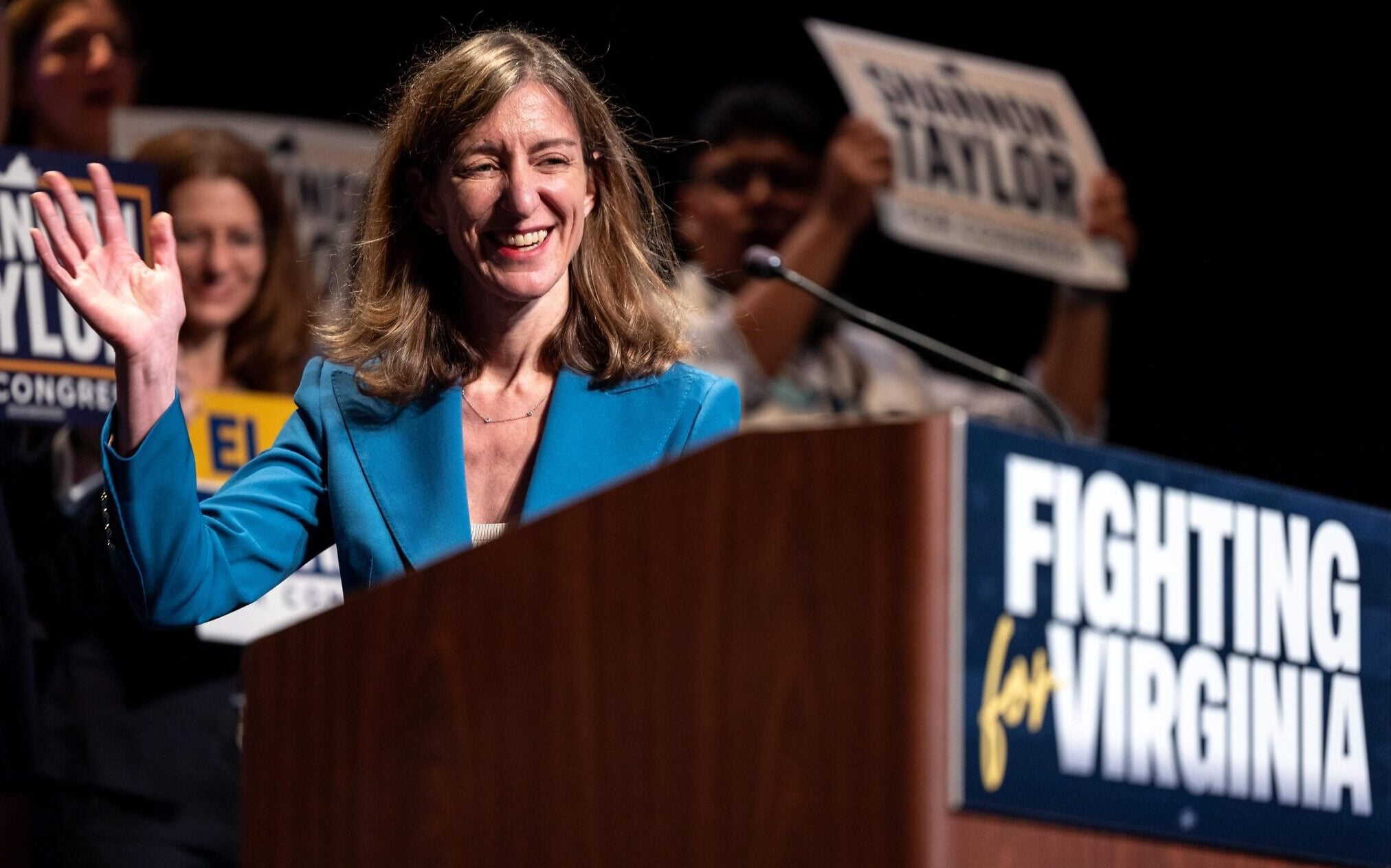
Should Israel get offensive weapons? No, says Brad Lander, newly elected Jewish Democratic congressman from New York. Absolutely, says Elaine Luria, newly elected Jewish Democratic congresswoman from Virginia Beach. Luria, who lost the district in 2022, flipped it back on Tuesday.
For decades, the Jewish caucus in Congress was a cohesive unit, the go-to destination for Republican and Democratic leaders who wanted its approval for issues of special interest to Jewish Americans – chief among them, Israel.
At political conventions every four years, the American Israel Public Affairs Committee (AIPAC) convened breakfasts for this “mishpacha,” or family in Hebrew, and most, if not all, of the Jewish lawmakers at the convention would attend.
That gathering would be unimaginable in this cycle – one in which Lander ousted incumbent Jewish opponent Daniel Goldman in the Democratic primary in part because Goldman would not describe Israel’s conduct in the Gaza war as genocide. Lander also successfully used AIPAC’s endorsement of Goldman against the sitting congressman – a signal of how divisive the lobby has become among progressives.

Ira Forman, who for years led the now-defunct National Jewish Democratic Council, said it would be impossible to imagine the type of consensus among Jewish lawmakers on issues surrounding Israel that he routinely observed when the NJDC was active in the 1990s and 2000s.
“When I was at the NJDC, what we needed was 80% consensus, and with 80%, we could make decisions,” Forman said of the group, which worked closely with congressional Jewish Democrats. “We don’t even have anything like that now.”
Jewish partisans on Israel – those who support its current relationship with the United States and those who don’t – each claimed the Jews elected Tuesday proved the appeal of their favored, and diametrically opposed, direction.
“Brad’s victory in one of the most Jewish congressional districts in the country is proof that our vision for safety, equality, justice, and a thriving future for all Palestinians and Israelis is shared by Jewish voters,” declared IfNotNow, a non-Zionist activist group highly critical of Israel, in celebrating the election of one of its own, Lander.
Meanwhile, Democratic Majority for Israel, a group that backs candidates who support a robust US-Israel relationship, touted the wins of its endorsees, among them a host of traditional pro-Israel Jewish Democratic freshmen and returning lawmakers: Luria in Virginia, Brad Schneider in Illinois, Kim Schrier in Washington, Mike Levin in California, Brad Sherman in California, Greg Landsman in Ohio, Josh Gottheimer in New Jersey, Jeremy Moss in Michigan, and Jared Moskowitz, Lois Frankel and Debbie Wasserman Schultz in Florida.
“We look forward to working with Caucus leadership to strengthen the US-Israel relationship and advance US interests,” DMFI’s political action committee said in a statement.
The return of Luria, an Israel hawk, seemed especially sweet for DMFI. Its PAC “launched a nearly $1 million digital ad campaign to help send Elaine Luria back to Congress in VA-02,” the statement said.
The Jewish Democratic Council of America, the NJDC’s successor, counted 38 Jewish lawmakers in Congress this cycle, including senators who were not up for election on Tuesday: 25 Democrats elected to the US House of Representatives, among them the eight freshmen; three Jewish Republicans returning to the House; and 10 Jewish Democrats in the Senate.
None of the Jewish lawmakers elected Tuesday rejected Israel’s existence as a Jewish state, an outlook until Tuesday held only in Congress by Democratic Michigan Rep. Rashida Tlaib. She was joined after the election Tuesday by at least three other rejectionists: Darializa Avila Chevalier in New York, Melat Kiros in Denver, and Abdul El-Sayed, elected to Michigan’s open Senate seat.
But while all the Jewish winners Tuesday have said they support the country in some capacity, their differences make consensus on Israel unlikely: Lander, Vermont Sen. Bernie Sanders, Vermont Rep. Becca Balint and Scott Wiener accuse Israel of genocide and favor banning most weapons sales to the country.
Another significant cadre, led by reelected Georgia Sen. Jon Ossoff, focused their ire not on the entire country but on its current leadership. They oppose the sale of some offensive weapons, but also uphold Israel’s right to defend itself.
Then there are Israel hawks like Gottheimer, Moskowitz and Luria who vigorously defend Israel’s right to obtain US weaponry and unambiguously reject genocide charges. And that’s just within the Democratic Party.
On the other side of the aisle are three Republicans. Two, David Kustoff of Tennessee and Craig Goldman of Texas, do not oppose a two-state outcome, deferring to Israel to decide its best path forward. But the most outspoken pro-Israel representative, Randy Fine of Florida, favors Israeli control of all the disputed territory and is frequently accused of trafficking in anti-Islamic tropes.
Halie Soifer, the JDCA CEO, said the diversity in the Jewish caucus was a natural reflection of a community that has become increasingly diversified in how it relates to Israel.
“The Jewish community is not a monolith and neither are the Jewish members of Congress,” she texted. “Jewish voters largely support Israel’s security and right to exist as a Jewish state, and disapprove of the policies of the current Israeli government. The same is true of the vast majority of elected Democrats, including Jewish members of Congress. The incoming class of new Jewish members represents the diversity of opinion among Jewish Americans on Israel.”
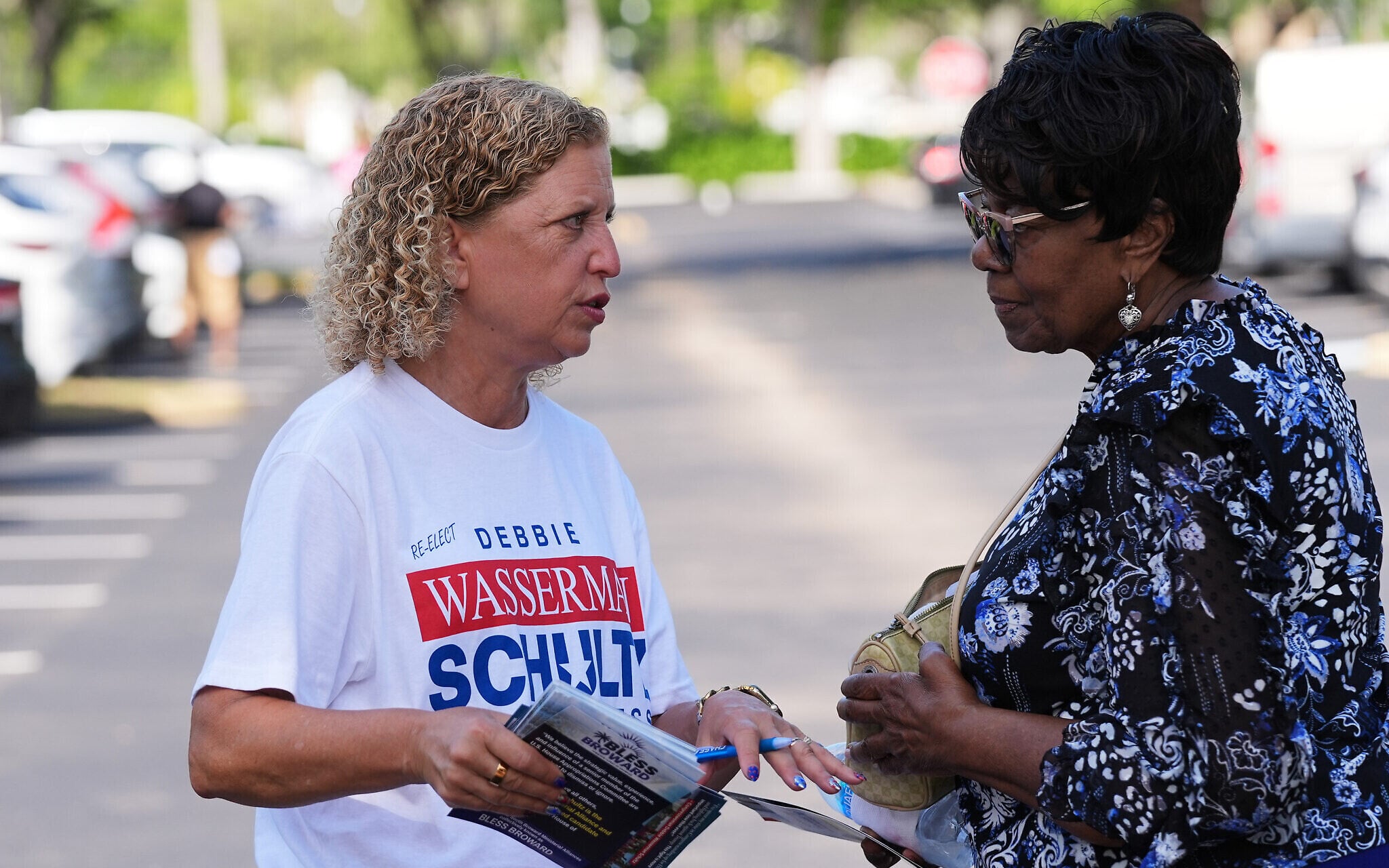
Though two or three dozen Jewish lawmakers have consistently served in Congress throughout much of the post-World War II era, according to “Jews in American Politics,” the seminal 2001 work Forman co-edited, a Jewish caucus did not exist in any official capacity for most of that time. After Hamas’s deadly invasion of Israel on October 7, 2023, Wasserman Schultz launched a formal entity. But even when they lacked a formal structure, Jewish lawmakers would routinely consult with one another on issues of Jewish interest, and presidents and party leaders knew to check in with them before launching any major moves involving Israel.
Before initiating renewed Israeli-Palestinian peace talks in 2007, the Republican George W. Bush administration secured the backing of key Jewish Democrats for expanding assistance to the Palestinians – a key predicate for relaunching the process. Getting the Jewish Democrats on board helped nudge AIPAC, which was deeply skeptical of the Palestinian Authority leadership, into backing the initiative.
That may have been the last gasp of an era of Jewish consensus. The following year saw the launch of J Street, the lobby that believes the United States should exert pressure on Israel to make concessions toward a two-state outcome – precisely the opposite approach of AIPAC.
J Street, from its outset, methodically solicited the backing of Jewish Democrats as a means of integrating itself into the community, announcing each Jewish endorsee with fanfare. Among the first were Reps. Jan Schakowsky of Illinois, John Yarmuth of Kentucky and Steve Cohen of Tennessee.
In recent years, J Street has competed with AIPAC in influencing Democratic Middle East policy, slowly accruing success. Over the following two decades, Democrats transitioned from most of their lawmakers taking the lead from AIPAC, a lobby that aligned with Israel’s government, to most of their lawmakers taking the lead from J Street, a lobby that for the most part opposed Israel’s government. In September, J Street established an advisory board consisting of former officials of the mainstream organizations that had once sought to marginalize the lobby.

J Street declared victory on Tuesday night, noting that AIPAC had in recent weeks folded one of its political action committees, which J Street attributed to the negative attention many of its endorsements gathered.
“J Street is now the political center of gravity on Israel and Palestine in the Democratic Party,” its president, Jeremy Ben-Ami, said on X. “When the new Congress convenes, nearly two-thirds of the Democrats in the House and Senate will be J Street-endorsed. These members are the mainstream of the party: committed to Israel’s security and existence, to Palestinian rights and self-determination, and to a US policy that advances both. AIPAC, meanwhile, was losing endorsed candidates so rapidly that it ultimately decided to abandon candidate endorsements altogether.”
AIPAC, which has said it dropped direct endorsements because of strategic considerations, was not as triumphant in its own post. “AIPAC congratulates the hundreds of pro-Israel Democrats and Republicans who won their elections last night,” it said Wednesday on X. The lobby claimed “more than 234” candidates supported by its members had won – but did not say how many were Democrats.

Part of the diversity is a function of the Democratic Party coming to terms with wildly divergent factions: Lander emerges from New York City’s increasingly socialist-friendly political landscape. Luria, a former Navy commander, is a product of the heavy military presence on Virginia’s Atlantic coast.
Forman said the collapse of a congressional Jewish consensus on Israel reflected the reality of a community that no longer spoke as one on the subject – or on any subject. In his day, heading a Jewish organization, he would take cues from giants of the community like AIPAC or the Anti-Defamation League when it was led by the late Abe Foxman.
“Who do you go to now in the Jewish community if you want to know where the center of the Jewish community, the organized Jewish community, is?” he asked. “Who’s the center? Who gives you kind of a majoritarian, somewhat of a consensus view of the Jewish community? Who’s out there?”







The Times of Israel Community.