

Can studying the Quran alongside the Torah help Jews and Muslims reach mutual understanding?
A new book explores the connections between the two faiths’ sacred texts — and challenges the idea that they are fundamentally at odds
 Add ToI as a Preferred Source on Google
Zev Stub is the Times of Israel's reporter on diaspora affairs and Israeli real estate.
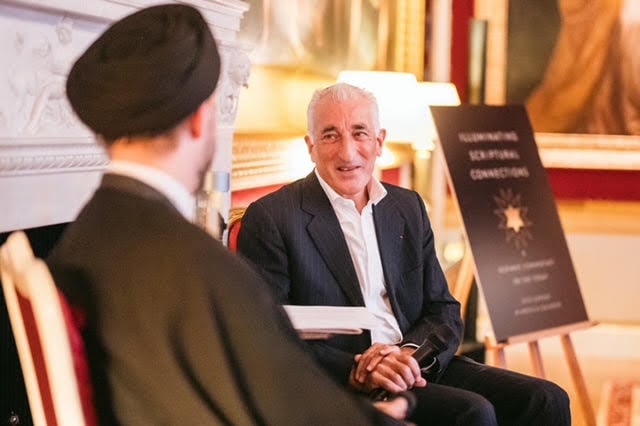
In an age when it often seems that peace between Muslims and Jews is impossible, few imagine that the central religious texts of the two religions complement each other. But Rick Sopher, a British interfaith activist, believes the Quran was originally intended to confirm the spiritual messages of the Torah and be read alongside it.
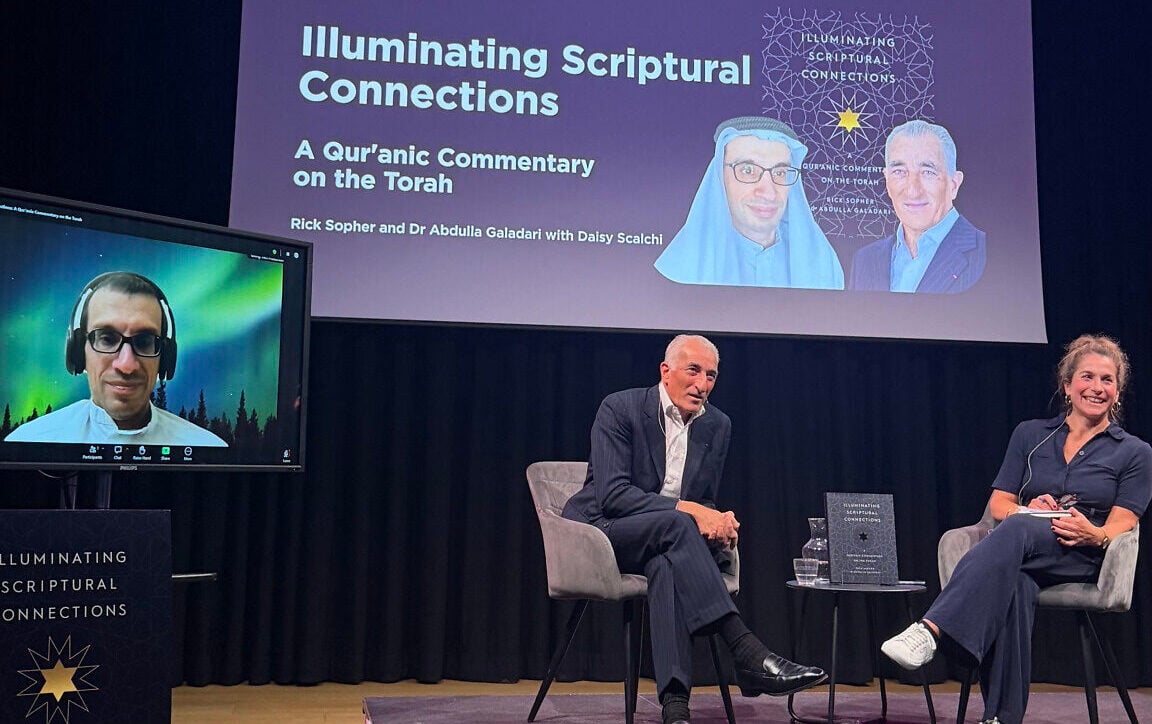
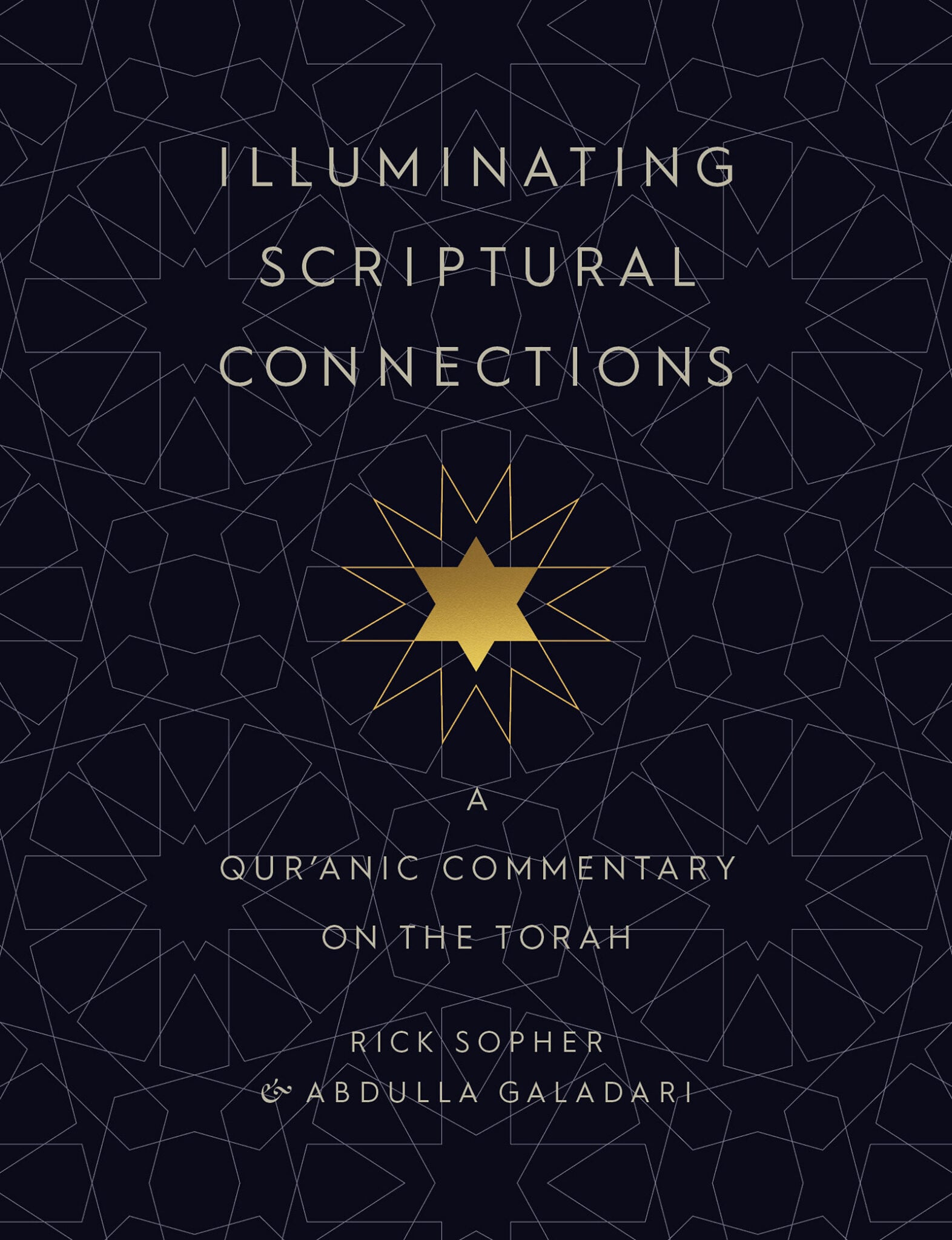
In a new book, “Illuminating Scriptural Connections,” published by the Jewish Publication Society (JPS), Sopher and his co-author, Emirati scholar Abdulla Galadari, look to bring readers into an active dialogue between the two books, using the weekly Torah portion as a starting point.
It’s a project that has become increasingly important to the authors following the October 7, 2023, Hamas attack on Israel and its impact on Jewish-Muslim relations around the world, noted Sopher, a British Jew of Sephardic ancestry who is also a leading figure in the banking world as senior adviser at Edmond de Rothschild Capital Holdings.
“My family came from Baghdad, a Jewish community that goes back about 2,500 years, and we lived peacefully among Arabs and Muslims for most of that time,” Sopher said. “Our last relative left Iraq in 1971, crossing the northern border on a donkey. The question that drove my work was, does the Quran make Jewish-Muslim cohabitation impossible?”
After 10 years of studying with scholars from across the world, he has concluded that, in contrast to what he’d previously imagined, the Quran itself was not in opposition to the Torah, Judaism, or all Jews.
“While the Quran has negative verses about some Jews, it also has verses of reverence and praise,” Sopher told The Times of Israel in a telephone interview. “I don’t think the wars between our peoples can be attributed to scriptural differences.”
Rather than attempting to replace the Hebrew Bible, as is commonly believed, the Quran itself — which emerged some 2,000 years after the Torah — says that it comes to “confirm” the Torah and designate it as a source of “guidance and light,” Sopher insists.
Not all Muslim scholars agree with all of Sopher’s conclusions, and the tumultuous relations with Jews and Muslims over the centuries result from many sources of friction beyond their origin texts. But Sopher and Galadari, who declined to be interviewed for this article, believe there are remarkable parallels between the stories, characters, and messages of the Torah and the Quran, and seek to encourage Jewish readers to become familiar with them.
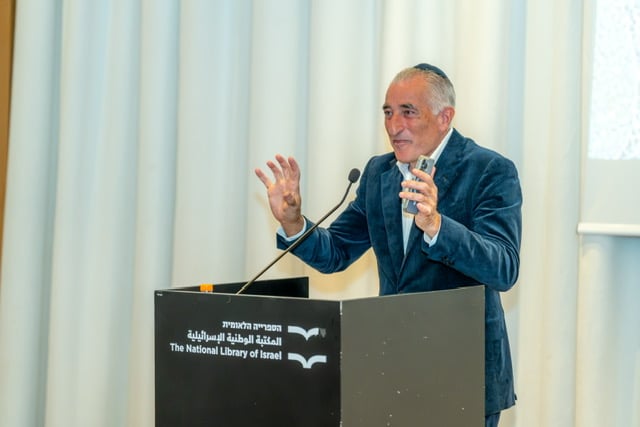
“When I give talks about the Quran, I’ll ask how many people have actually read it, and one or two hands will go up in a room of 150 or so,” Sopher said. “There’s so much ignorance, and very little knowledge. Most people don’t know that statements like ‘Globalize the Intifada’ or ‘From the river to the sea’ have no basis in the Quran.”
To bridge that gap, Sopher’s new book adopts the Parshat Hashavua (weekly Torah portion) format often used in Jewish commentaries, using the 54 portions of the Torah to explore different aspects of the Quran and uncovering shared concepts and variations as they appear in the weekly readings.
Sopher and Galadari both read both texts in their original Hebrew and Arabic languages. The book uses the JPS translation of the Torah except for certain cases where the authors preferred their own alternative translation. English translations of Quran texts were written primarily by Galadari.
The authors write with a goal of promoting interfaith understanding, and their rigorously researched volume sometimes has a tendency to understate significant disparities between the two texts. Nonetheless, Sopher believes readers will be surprised at how similar in substance these texts are at their core.
“These are different books for different audiences containing different messages, but there are no fundamental contradictions between them,” he said.
Differences in the details
That statement about “no fundamental contradictions” requires explanation, because there are plenty of scriptural differences, Sopher pointed out.
That’s because, unlike the Hebrew Bible, the Quran does not present biblical stories in a chronological sequence or as a continuous narrative. It only presents those portions of it that it considers useful in conveying its own ethical messages, Sopher said. Aspects that don’t serve this purpose — including historical context, dates and names — are frequently omitted.
“The Torah speaks with the Israelites and gives them their national history and laws, while the Quran is a book of messages addressed to many people,” Sopher said. “So it is different in its audience and style, and contains differences, but they do not refute the Torah’s religious and ethical teachings.”
One example of this is the Islamic principle of ‘ismah, the infallibility of the prophets. While the Torah offers many narratives in which its heroes sin — examples include Noah’s drunkenness, Joseph’s tattling on his brothers, and Moses disobeying God — these stories are intentionally suppressed in the Quran, which portrays these prophets as having exemplary behavior.
Additionally, the Quran’s theology emphasizes what Sopher calls the “exaltedness of God,” emphasizing submission to God’s will while downplaying the value of human action. That’s why, for example, while Adam is given the job of naming the animals in the Torah’s creation story, the Quran sees God naming the animals Himself.
“The Quran keeps reminding you that God is in charge, God is directing everything,” Sopher said. “Humans are not given a sense of agency.” (The message of the Torah is nearly the opposite, Rabbi Jonathan Sacks has said: Leadership begins when the biblical characters take responsibility for their actions.)
There are other narratives and details that diverge from the biblical text, Sopher notes, many intended to put forth the Quran’s specific messages. But he insists that these aspects do not detract from the Quran’s identification with Torah concepts like ethical monotheism and the importance of virtuous behavior.
“These are representations that slightly shift the message, or present it in a different way to a different group of people,” he asserted. “But there’s no contradiction of any fundamental message in the Torah.”
Enmity against Israel
What about passages that appear hostile to Jews? Sopher said readers need to understand the context in which they were said and compare those statements with their Torah parallels.
Statements referring to Jews as “apes and pigs” refer specifically to those who transgress the will of God, including breaking the Sabbath. The Torah decrees a punishment of death for the same violations, Sopher noted.
And while the Quran contains a number of calls to violence in certain circumstances, Sopher said, these are actually far tamer than the Torah’s instructions to wipe out the people of Amalek or Canaanite nations.
“There’s no verse calling to wipe out all Jews or all Christians completely,” Sopher said. “The Quran is acting more like a late Israelite prophet who chastises the people for not following the law closely enough.”
Some statements get lost in translation, Sopher said. When the Quran refers to pre-Islamic figures like Abraham, Moses and Jesus as Muslims, the intention is to praise them for submission to God’s will, not to retroactively convert them to the religion of Islam, he noted. And the word jihad, often used in modern times as a call to wage holy war against non-Muslims, actually refers to an inner struggle to do God’s will.
Scholars note that the post-Quranic Hadith literature — which includes tens of thousands of individual reports compiled centuries after Prophet Muhammad’s death — contains many more anti-Jewish statements, often with much more explicit, detailed, and aggressive rhetoric.

The chosen son of Abraham
In “Illuminating Scriptural Connections,” the authors use themes from many of the weekly Torah portions as jumping-off points to discuss similarities and differences in Muslim and Jewish practice and theology. Thus, for example, the ritualistic portions in the book of Leviticus include discussions on ritual purity, dietary laws, and fasting, while others look at approaches to charity, monetary laws, prophecy, and the weekly day of rest.
In the book of Genesis, some of the most striking essays relate to the stories of Abraham’s sons, Isaac and Ishmael, widely seen as the spiritual forefathers of Judaism and Islam.
While the Torah makes it clear that Isaac was nearly sacrificed in the episode known as Akeidat Yitzhak (the binding of Isaac), the Quran leaves the identity of the son who was nearly sacrificed unclear, referring to him only as ya bunayy (Oh, my son).
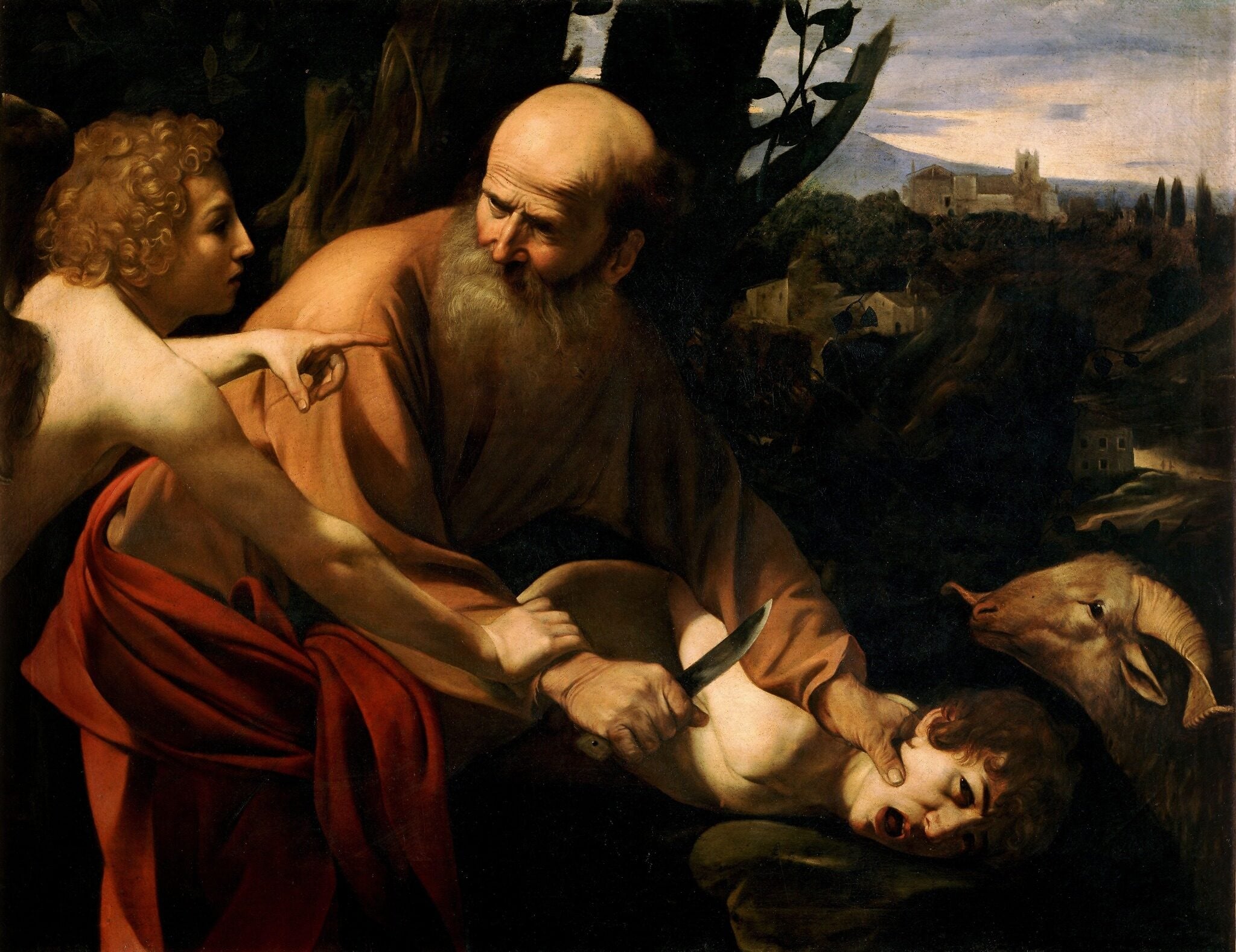
Whether that son was Isaac or Ishmael has significant theological ramifications, and Muslim scholars have differed in their interpretations over the centuries.
According to Sopher, most Muslim scholars identified that son with Isaac during the first several centuries after the Quran was written; it was later scholars, including influential 14th-century Islamic figures like Ibn Taymiyyah and Ibn Kathir, who increasingly identified the son as Ishmael.
The book cites an analysis by modern scholar Reuven Firestone claiming that, in the seven centuries of Islam before the year 1350 CE, 131 Muslim traditions supported the Isaac view, while 133 supported the Ishmael choice.
The shift toward Ishmael as the subject of the story led to another change in the story’s understanding, Sopher noted: instead of the near-sacrifice taking place in the land of Moriah, identified by Jewish tradition as Jerusalem, the Ishmael view led many Islamic scholars to place the story near Mecca, where Ishmael and his mother Hagar later lived.
Meanwhile, the book notes that Jewish attitudes toward the character of Ishmael, seen as the spiritual ancestor of some Arab groups, hardened over time as well. While the biblical text presents him in an arguably sympathetic light, later rabbinic writings describe him as acting in evil ways, dishonoring women, and worshiping idols.

A surprising revelation
Many of the ideas in the book are things Sopher didn’t know when he began working on the project that yielded this book a decade ago.
“It was so surprising to me that the Quran is full of references to biblical stories and characters that I’m familiar with, and it was nothing like the war manual that some people seem to think the Quran is,” he said. “The study started as a scholarly exercise I was doing for my own education. But after the breakdown in Jewish-Muslim relations after the October 7 attack, the subject matter of this book suddenly became of great interest to people.”
Sopher acknowledges that many Jews and Muslims may have little interest in studying the other’s scriptures. But he believes there is a substantial audience willing to look beyond the political conflict and explore the religious traditions they share.
“Jews and Muslims are deeply connected through their foundational texts, and most people never realized it,” he said. “No one ever told them.”




The Times of Israel Community.