

Coalition scored successes in judicial overhaul, but High Court, elections, will decide its fate
High Court will likely strike down changes to judicial appointments process, among other legislation, but it may have to fight to keep that power if coalition comes back after vote

 Add ToI as a Preferred Source on Google
Jeremy Sharon is The Times of Israel’s legal affairs and settlements reporter

On January 4, 2023, new justice minister Yariv Levin dropped a political bombshell that would reverberate across the government’s entire four-year term, with enormous repercussions for Israeli society.
Just seven days into his new job, Levin told a press conference in the Knesset that he would drastically change Israel’s legal and judicial frameworks, laying out a plan that, once enacted, would remove practically all restraints on executive and legislative power from Israel’s system of government.
Having barely discussed the idea of legal reform during the campaign leading up to the November 2022 election, Levin, backed by Prime Minister Benjamin Netanyahu, set the new government on a course to radically overhaul constitutional arrangements keeping government power in check that had developed over the course of decades.
Levin’s reform agenda spawned a massive protest movement unparalleled in the history of the country, in which hundreds of thousands of citizens took to the streets and campaigned ferociously against the proposed reforms.
That protest movement ultimately succeeded in stymieing the most radical aspects of Levin’s overhaul agenda in the spring of 2023, and the government failed to make any significant progress on the initiative before the October 7, 2023, Hamas attack reordered the government’s priorities.
As Israel went to war following the worst-ever invasion and massacre in the country’s history, Levin’s overhaul plans fell off the agenda, with most of the country preoccupied with what felt like existential fights with external enemies rather than squabbles with neighbors over judicial powers.

But in early 2025, Levin revived his contentious program, and during the course of the next 18 months, the government succeeded in pushing several key components of its judicial overhaul agenda through the Knesset and into law.
Now that the government’s term has ended and elections have been set for October 27, several questions present themselves. How far did Levin succeed in achieving the goals of his judicial overhaul agenda? Could an opposition-led government reverse those changes if it wins office? And did Levin, and the government at large, succeed in making changes to Israel’s legal landscape beyond the parameters of Knesset legislation?
Mixed record
In March 2025, the government succeeded in passing the most consequential component of its judicial overhaul program to date, a law changing the composition of the committee which selects judges for all courts in the country, including the Supreme Court, and the appointments process itself.
Under the law, political representatives from both the coalition and opposition on the Judicial Selection Committee have increased control over nominations of judges, and exclusive power to appoint Supreme Court justices.
The appointment of Supreme Court justices requires the vote of at least one coalition and one opposition committee member, but in the likely event of a deadlock created by the mutual veto power, both sides can handpick a candidate after 12 months of stalemate. That means each side will be able to bypass any requirement for consensus and seat radical, politically aligned justices on Israel’s highest court.
Whether in the government or opposition, Levin will be able to fill the bench with the radical conservative academics he was unable to appoint under the old system. The opposing camp will be able to do the same with extreme jurists that align with its ideology.
Levin argued that law was needed in order to diversify the court and give expression to parts of the population which are “not represented” on it.
But critics of the measure, including numerous prominent legal scholars and every opposition party, argued it would politicize not only the Supreme Court but the entire judicial hierarchy, motivating promotion-seeking lower court judges to sway their rulings in order to curry favor with one side of the political aisle or the other.
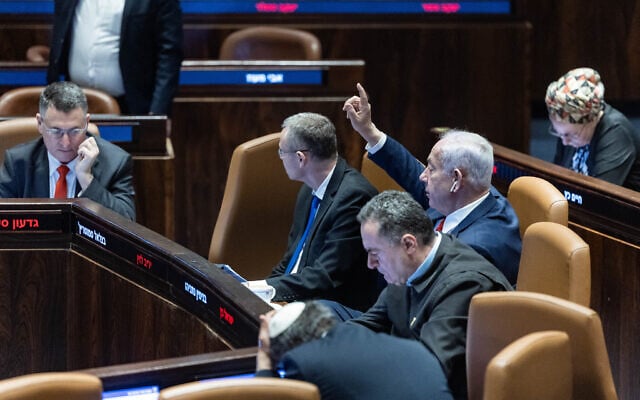
The law only comes into effect when the next Knesset is sworn in following the upcoming election, so no appointments have been made under the new system, and a deadlock must persist for a year before it can be bypassed. It’s unclear that the legislation will remain in effect that long.
After the legislation was passed into law, opposition parties vowed to repeal the measure should they take power.
The Supreme Court, acting in its capacity as High Court, has also signaled that it is likely to strike down the law. In a June hearing for petitions asking that the law be annulled, nine of the 11 serving judges, including both conservatives and liberals, strongly criticized the measure.
In the meantime, more than 50 judicial posts are waiting to be filled in courts around the country, including the Supreme Court, meaning politicians will be under pressure to quickly staff the Judicial Selection Committee and begin appointing judges to relieve the burden on the court system.
Another key legal reform was a law passed in the dying days of the Knesset which gave the government the ability to ignore the attorney general’s position on the legality of government policies and actions.
In 1993, a landmark High Court decision controversially enshrined the principle that the attorney general’s position on any given issue is binding on the government, a legal reality which has led politicians on the left and right to assert that the attorney general has too much power to restrict government action.
But opposition parties argued that the sweeping manner in which the government essentially stripped this power from the attorney general and politicized the appointments process for the position removed one of the only real checks on executive power in Israel’s system of government, and gave the government almost unrestrained power to act as it pleases regardless of the law.
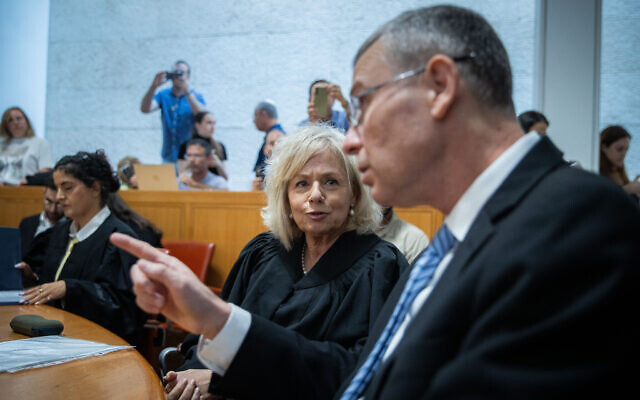
Not all opposition leaders promised explicitly to repeal this law, however, in a testament to the controversial nature of the attorney general’s power to neuter government actions.
Petitions have been filed with the High Court against the law, but a hearing has yet to be held.
Another key component of the judicial overhaul passed by the government was a law removing the Department for Internal Police Investigations from the authority of the State Attorney’s office, which deals with criminal prosecutions, and instead establishing it as an “independent” agency within the Justice Ministry.
Controversially, the law gives the justice minister effective control over the appointment of the DIPI director and creates a second role for a key agency position, also appointed by the minister. The involvement of the justice minister has led to accusations that probes into alleged misdeeds by cops will become politically tainted.
The High Court has already frozen the appointments process for the new director while it evaluates petitions against the law.
One other key component of the judicial overhaul passed into law was an amendment to one of Israel’s quasi-constitutional Basic Laws, canceling the courts’ ability to reverse government action by deeming it unreasonable in the extreme.
Levin and the government argued that the reasonableness principle gave the judiciary too much power to intervene in decisions made by elected officials, while critics argued that the doctrine was crucial in helping protect rights that are not specifically enumerated in Israeli law.
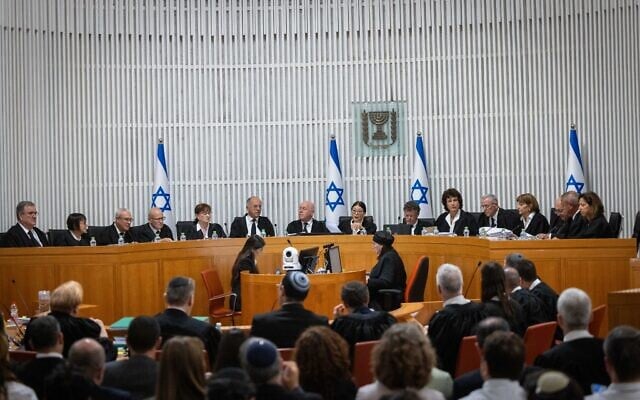
In an unprecedented and landmark decision, the High Court annulled the legislation, the first time a Basic Law or an amendment to one had been annulled by the court, which argued in a narrow seven-to-six decision that the law undermined Israeli democracy and was therefore unconstitutional.
Despite some successes, the government failed to pass into law the most crucial component of Levin’s judicial overhaul agenda: legislation that would enable the Knesset to override High Court decisions and essentially remove the most significant check on executive and legislative power.
That bill was a key component of Levin’s original legislative package announced in January 2023 and was passed in its first Knesset reading.
But enormous public protests, including mass strikes and threats by IDF reservists to refuse to serve, forced Netanyahu to shelve the bill in March 2023 before it could advance to a final vote. Efforts to reach a compromise with the opposition on restructuring the bill foundered, and it remained stored away even as other parts of the overhaul agenda re-emerged in the months and years following the October 7 attack.
However, Knesset procedures allow bills that pass a first reading to be revived fairly easily by the next Knesset, meaning it could re-appear should a right-wing coalition return to power following the election.
Bend it like Rothman
In a recent interview, MK Simcha Rothman, a leading proponent of the overhaul agenda, said the measure could indeed be brought back to the Knesset if the current coalition returns to power.
The Religious Zionism MK, whose party is at risk of failing to return to the Knesset according to some recent polls, said that if the revived override effort itself falls foul of the court, the coalition could respond by creating a constitutional court above the High Court to stop judicial intervention in Knesset legislation.

To Rothman, who ushered much of the judicial overhaul legislation through the Knesset Constitution, Law and Justice Committee he chairs, the government was largely successful in implementing its judicial overhaul agenda, with the two other keystones of Levin’s legal reform program — changing how judges are appointed and curtailing the power of the attorney general — passed into law.
And even though the High Court struck down the law abolishing judicial use of the reasonableness doctrine, he said, the bench had nonetheless stopped applying the principle due to threats by the government to ignore any such decision.
The pugnacious MK argued that the threats had kept the High Court from striking down the government’s appointment of Shin Bet chief David Zini and Mossad Director Roman Gofman.

“After many, many years of the right-wing government in Israel allowing the High Court to play in front of an empty net, the government took to the field, blocked many goals from the other side and scored a few goals itself,” said Rothman.
There is no proof that judges were indeed cowed by the government. The High Court has historically used the reasonableness principle relatively sparingly, and has struck down government appointments only a handful of times.
‘We’re doing what we want’
Yoav Dotan, a professor of public law at Hebrew University and former dean of the Faculty of Law, argued, however, that Levin, Rothman and the outgoing government did not achieve a great deal in the four years in which they pursued their judicial overhaul agenda.
Dotan said that the changes to the judicial appointments process would politicize the judiciary to a certain extent, and that the laws regarding the attorney general’s power and DIPI “do harm to a certain extent the independence of the legal system and the rule of law.”
But he nevertheless opined that those moves would be short-lived: Either the High Court would strike down the key judicial overhaul laws, or a new opposition-led government would repeal them.
The professor expressed greater concern with appointments of loyalists to top positions in major government agencies, such as the Shin Bet, the Mossad, the Civil Service, and others. He noted Netanyahu’s failed attempt to make his longtime lawyer and adviser Michael Rabello State Comptroller, a move Dotan described as “very Orban,” in reference to the recently ousted illiberal Hungarian prime minister.
“The idea is to say ‘we’re doing what we want, we appoint our people, or people who are obligated to us’,” Dotan said of the government’s appointments to key institutions.
He also expressed concern with the numerous appointments and promotions by far-right National Security Minister Itamar Ben Gvir in law enforcement bodies under his purview, which Dotan said had politicized police appointments and would be hard for a new government to reverse without introducing political meddling of its own.
Final boss
Despite the coalition’s years-long effort to neuter its power, the High Court appears to remain a potentially insurmountable final boss for the judicial overhaul program.
The overwhelming majority of the 11 justices who heard the petitions against the Judicial Selection Committee law were highly critical during the hearing, with even conservatives on the bench describing the likely outcome of the legislation as “a dark corner” and warning of the politicization of the judiciary.

The tone and language of the justices during that hearing, in which Supreme Court President Isaac Amit called the legislation “regime change,” have led many observers to conclude that the law is now doomed.
Similarly, the High Court’s interim injunction barring Levin from making appointments under the DIPI reform law may foreshadow that legislation’s demise as well.
In all likelihood, it will be hard for the court to stomach the fact that the law gives the justice minister control over the appointment process for the DIPI director who has the power to indict police officers for wrongdoing.
The political independence of officials with the power to issue criminal indictments is broadly considered crucial in preventing the politicization of law enforcement in democratic regimes.
The fact that the attorney general and the legal adviser to the Knesset Constitution, Law and Justice Committee, where the law was prepared, both opposed the legislation also bodes poorly for the measure.
The fate of the law gutting the attorney general’s powers, which will come into effect in January, is less clear. There is no wall-to-wall opposition among anti-Netanyahu politicians, as there is for other parts of the overhaul.
That leaves the court, which may also refrain from intervening. The powers of the attorney general have never been laid out in prior legislation, and conservative justices may be reticent to intervene unless petitioners can point to specific harm done by the law.
Voice of the people
The fate of Levin’s overhaul agenda may, therefore, ultimately come down to how the election shakes out.
Should the current coalition with its far-right parties obtain a majority in the Knesset, which seems unlikely from almost all polling, Levin, Rothman and their allies can be expected to double down on the project to overhaul the judiciary, including seeking even more radical moves to defang the High Court in order to preserve their successes and expand their agenda.
If not, then there will be no political possibility of revoking the High Court’s power to strike down legislation, blocking the path set out by Rothman to thwart judicial review of the government’s overhaul.
The drastic nature of many of the changes the government has pursued was always too extreme to garner much support for any reform from across the aisle, meaning that an opposition-led government will likely reverse most legislative components of the judicial overhaul that the High Court does not strike down.
In the final analysis, Levin, Rothman, and the outgoing government managed to score several still highly contested achievements toward reducing legal and judicial restraints on executive and legislative power, a project they have long argued is aimed at putting authority back into the hands of those democratically elected. So they may be pleased to know that when it comes to the question of whether their agenda advances or is undone, here as well the people will decide.









The Times of Israel Community.