 Add ToI as a Preferred Source on Google
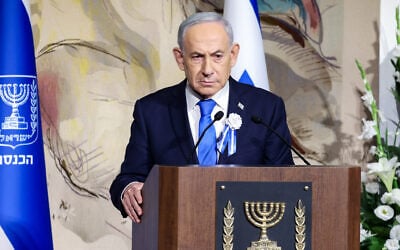
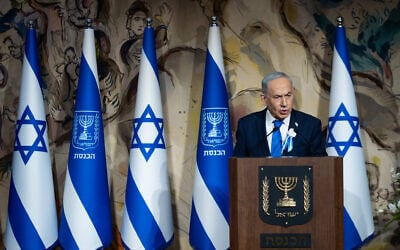
Shortly before 5:30 p.m. on Tuesday, Prime Minister Benjamin Netanyahu rose in front of the newly sworn-in Knesset and proceeded to deliver a diatribe against the parliament’s two Arab parties, branding their lawmakers as terror supporters who seek Israel’s destruction.
The answer, he said, is for the remaining parties, including his opponents, to unify under him and his outgoing hardline right-wing coalition.
Just after 7 p.m., with the speech still fresh in people’s minds, Yinon Magal, a former lawmaker and current media pundit, sent two tweets to his 488,000 followers on X. One questioned why Channel 12, the nation’s leading news network, put Netanyahu’s call for a unity government in quotation marks. The other noted that most of the Arab lawmakers exited the plenum for the singing of Israel’s national anthem after being sworn in, and asked jokingly whether that constituted “outside support” for Netanyahu’s rivals.
About two hours later, at 9:12 p.m., journalist Amit Segal, known for his connections to Netanyahu’s inner circle, shared a social media post from a Likud lawmaker with his 373,000 subscribers on Telegram. It too noted the anthem walkout, and asked why Gadi Eisenkot, Netanyahu’s chief opponent, was so “agitated” by the speech, which after all contained the “truth about terror supporters.”
Seven minutes after that, at 9:19 p.m., Melukadim, a pro-Netanyahu group, posted the same exact tweet on its own Telegram account. Earlier, it had published another post on the anthem walkout, and had also amplified Segal’s reports on Channel 12’s nightly news broadcast.
As all that was happening online, on television Magal was anchoring “The Patriots,” a popular nightly talk show on the pro-Netanyahu Channel 14. The leading topic of discussion: Netanyahu’s call for a unity government, and what the panelists portrayed as his opponents’ subsequent, hypocritical freakout.
“He’s going after Arabs who are extremists, who are haters of Israel,” Magal said of Netanyahu, his eyes flicking intermittently to his fellow panelists. “How is Eisenkot then saying that he can’t unify because [Netanyahu] gave a divisive speech?”
“This is like ‘1984’!” fellow pundit Yotam Zimri responded, referencing the dystopian novel. “We’re not allowed to call these MKs supporters of terror? They say it themselves!”
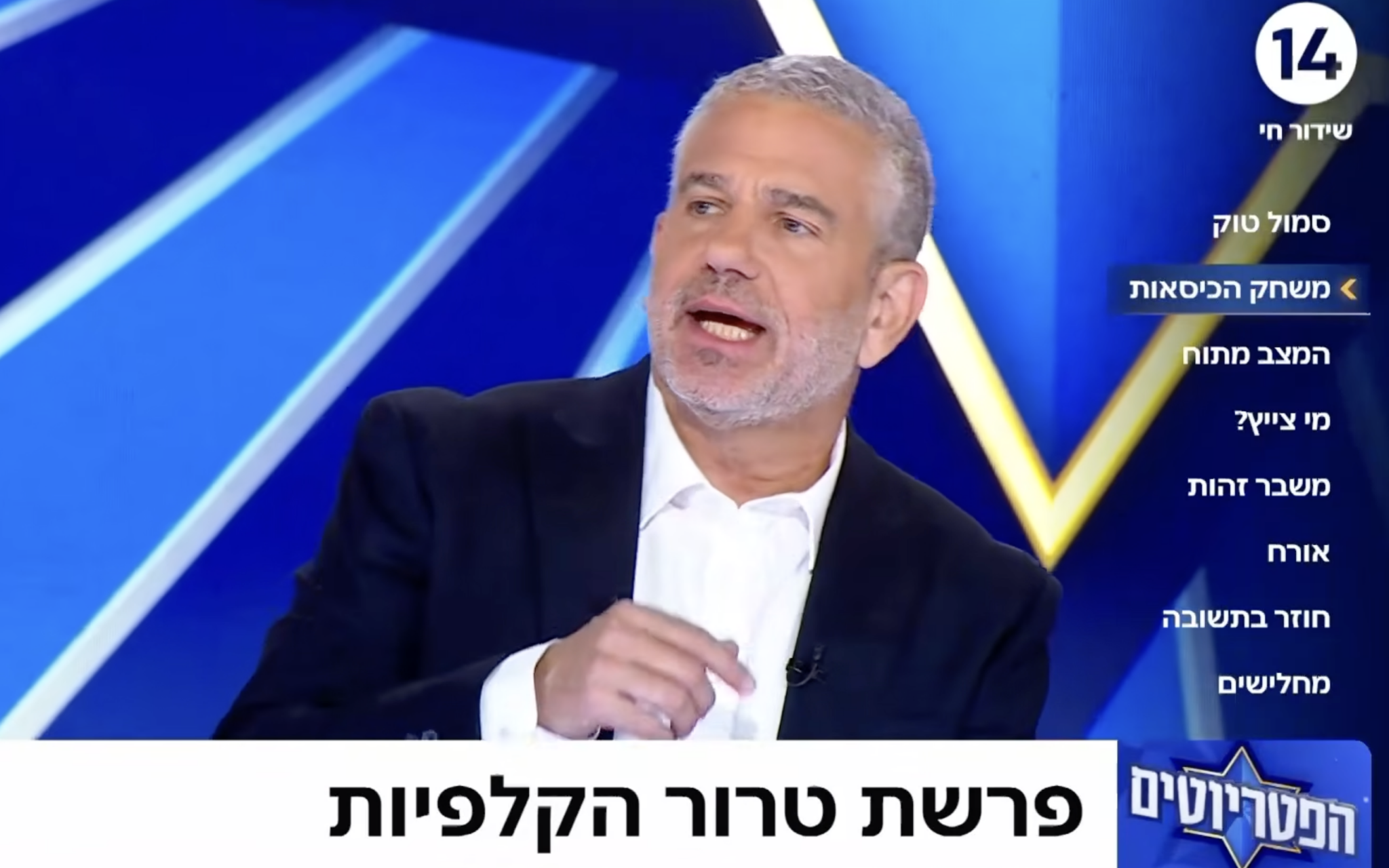
A third panelist added that Eisenkot, a centrist former IDF chief of staff, “isn’t very, very smart” and is a “puppet controlled by progressives.”
Their discussion of the topic continued for some 10 minutes. All the while, a chyron on the bottom of the screen informed viewers that “The PM says not to form a government with haters of Israel; the left shoots back: incitement and racism.”
“The Patriots” wrapped at around 10:30. At 10:34, Netanyahu himself brought the discourse full circle, posting a Channel 14 segment on X that played a highlight reel of his opponents’ controversial statements.
“Do not form a dangerous government with the terror supporters of Ra’am and the Joint List!” the tweet read, naming the two Arab parties.
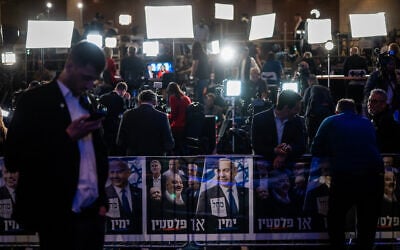
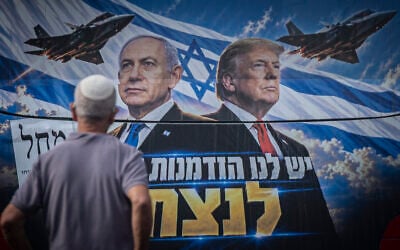
Utilizing a bullpen of influential pundits, a juggernaut TV news station and a number of other outlets, Netanyahu and his supporters have cultivated a powerful media ecosystem that is part echo chamber and part megaphone, allowing them to reach millions of Israelis’ eyes and ears with messaging tailored to benefit the Likud leader and his allies, largely bypassing Israel’s establishment media.
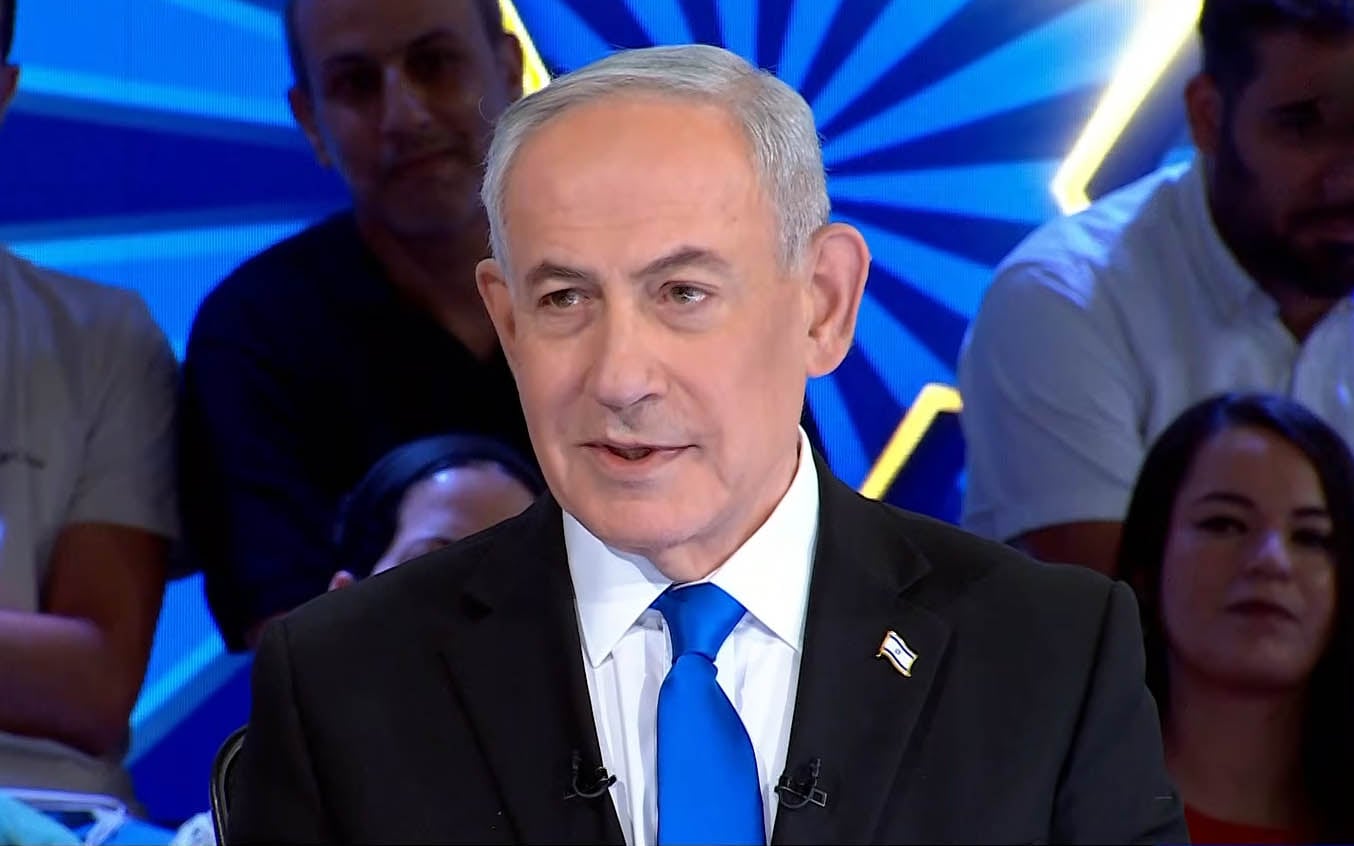
To Netanyahu’s opponents, this media ecosystem is “the poison machine,” a term meant to convey that it clouds reliable news and facts with a miasma of toxic pro-government propaganda. Netanyahu’s supporters contend that Magal and company are simply a counterbalance to the “hegemony” of a left-wing media infected with what one Channel 14 commentator recently called “anyone-but-Netanyahuitis.”
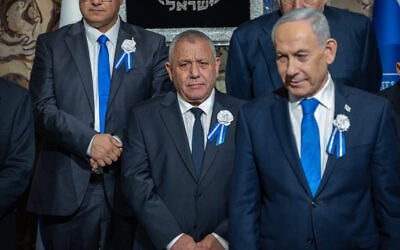
Earlier this week, Eisenkot was officially granted the first shot at forming a government. Netanyahu is still in office, but only as a caretaker prime minister.
As he attempts to cling to power despite losing his Knesset majority, Netanyahu’s messaging machine is operating at full steam, crafting post-election narratives and pushing the Likud leader’s talking points.
In the two weeks since the October 27 election, Netanyahu has pivoted between charging that the election was “stolen” and warning his ultra-Orthodox allies not to defect to his opponents, all while branding the Knesset’s 19 Arab lawmakers — a record-breaking and potentially king-making number — as a fifth column. Recently, he’s been urging a “unity government” that would effectively be an expanded version of the coalition he’s helmed since 2022.
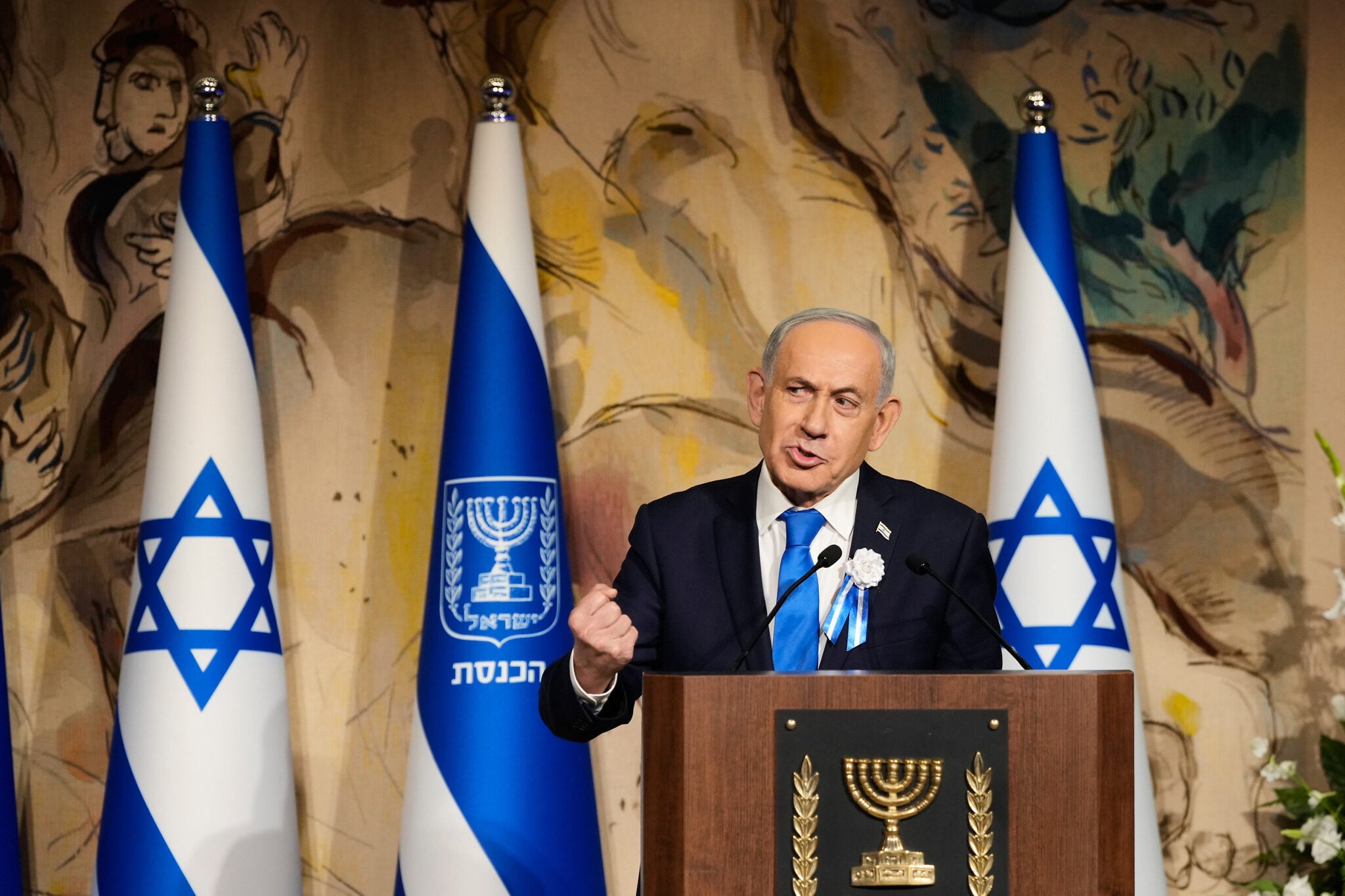
The army of pro-Netanyahu pundits and influencers is following in tow. In the immediate aftermath of the election, “The Patriots,” which serves as a kind of laboratory for government-aligned messaging, focused on the “stolen election” allegations. That prompted fears of an election-denial movement similar to the one spearheaded by US President Donald Trump in 2020, leading to the January 6, 2021, riot at the US Capitol.
But on Saturday night, after Eisenkot’s camp had begun making overtures to its erstwhile ultra-Orthodox opponents, the program shifted, spending much of its time blasting the anti-Netanyahu parties for their hypocrisy. By Tuesday, it was pushing the “unity government” line and echoing the premier’s criticism of the Arab parties.
“Whenever Netanyahu changed his mind on anything or broke a promise… Channel 14 is the first to realign itself,” Ayala Panievsky, author of “The New Censorship: How the War on the Media is Taking Us Down,” told The Times of Israel. “You can see them flip-flopping with him in a way that doesn’t indicate a strong ideology or principles but rather a very personal loyalty to Netanyahu.”
‘You can see them flip-flopping with him in a way that doesn’t indicate strong ideology or principles but rather a very personal loyalty to Netanyahu’
She added, “You can really see that wherever Netanyahu goes, they go.” That intense loyalty means the popular TV channel can whip up the passions of its followers. If Netanyahu wants it, she said, “We have all the ingredients for a January 6 taking place.”
‘A society of echo chambers’
Channel 14 first came onto the scene in 2014 as Channel 20, initially focused mostly on religious programming with conservative leanings, but it gradually moved to right-wing, pro-Netanyahu content. In 2021, it got its current channel number, positioning itself as a direct alternative to the country’s three major news channels: the Kan public broadcaster on Channel 11, and channels 12 and 13.
Those three channels feature voices considered right-wing (Segal, for example, is a senior analyst on 12), in addition to acclaimed newsmagazine programs. But they also frequently air criticism of the government, and Netanyahu and his lieutenants often portray them as tools of a left-wing establishment, or “deep state.”
At times, that leads to a split reality. This was most evident leading up to the election, when Channels 11, 12 and 13 predicted that Netanyahu would lose his majority in an inconclusive vote, and Channel 14 showed his coalition winning another term. All the polls were off, but Channel 14’s ended up being the least accurate.
“The Patriots,” which has hosted Netanyahu repeatedly for friendly interviews, is one of the top five shows on a near-nightly basis, drawing Israelis who see Channel 14’s programming as a corrective to a media biased against Netanyahu.
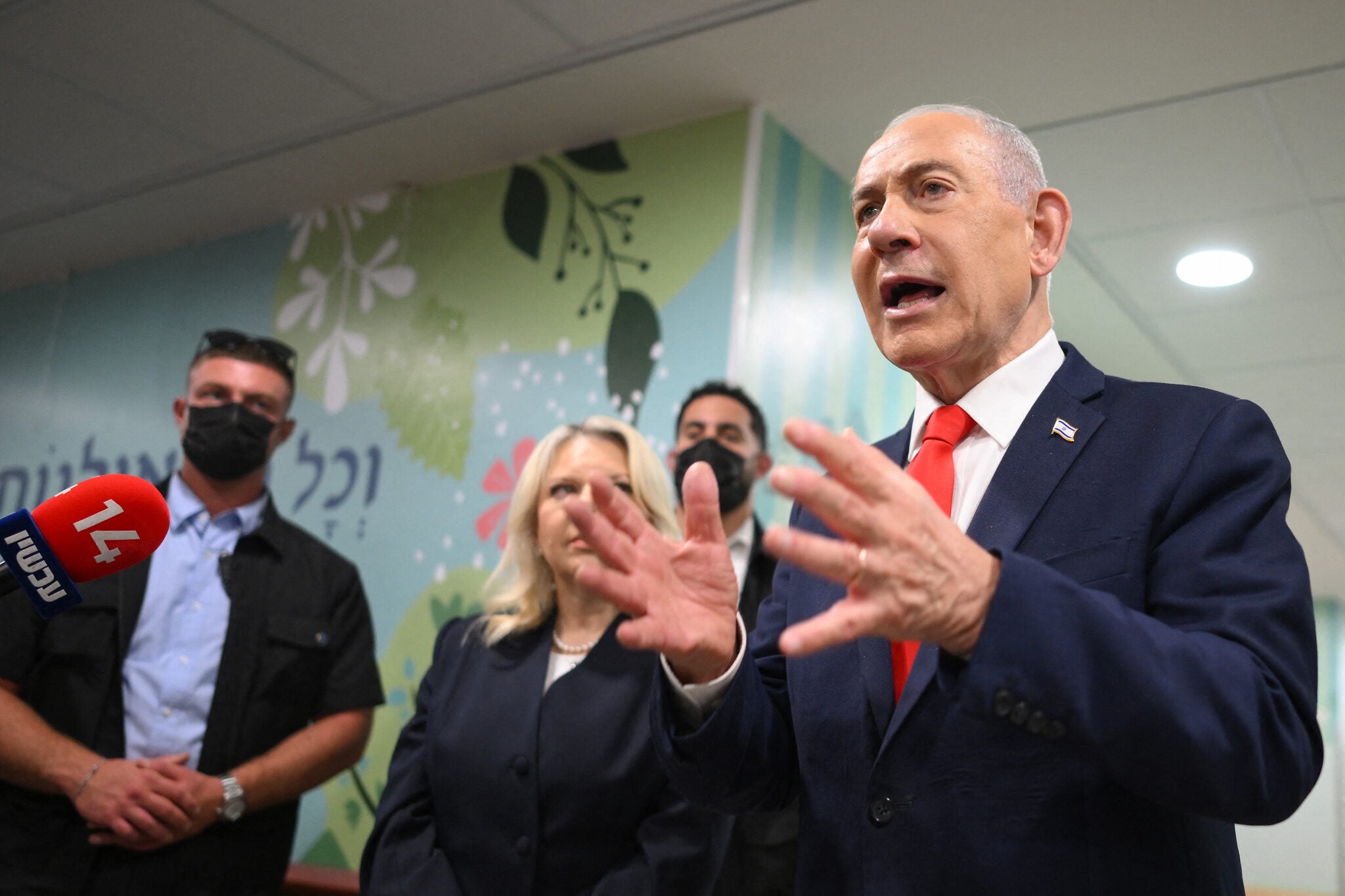
Nissim Katz, a professor at Kinneret Academic College whose research focuses on politics and media, said that the Israeli media landscape is best seen in terms of dueling narratives, in which the establishment channels tend to advance an anti-Netanyahu line and Channel 14 airs perspectives supporting the premier. He noted that while presenters on the leading Channel 12 portrayed the coalition’s judicial overhaul as a “coup,” Channel 14 described it as expressing the will of the people.
“Today, we’re living in a society of echo chambers,” he told The Times of Israel. All media outlets, he said, are “scratching the truth. It isn’t the absolute truth, but you echo what you feel is appropriate to echo. It’s a matter of emphasis, how you frame things.”
Channel 14’s personalities describe themselves not as mouthpieces for Netanyahu but as a counterbalance to a media that’s hostile to the prime minister and the wider community of right-wing and religious voters his coalition represents. There are debates on the channel: “The Patriots” always includes a token critic of Netanyahu, and there have been fights over ultra-Orthodox enlistment as well as US President Donald Trump.
The panelists don’t hide their preferences — opening a show last week, Magal said, “We won’t give up and won’t bow our heads until, God willing, we form a government led by Benjamin [Netanyahu].”
But they also don’t see themselves as a partisan outlier in an otherwise objective media industry. “The Patriots” refers to rival networks as “the panicky channels,” and in a recent segment (in which the panelists bashed Panievsky by name), author and pundit Avishay Ben Haim articulated the way the show sees the rest of Israeli media.
“She says, there’s one channel that brings another opinion,” he said. “But she isn’t even aware that all of the other channels are expressing her position. Why? Because to her, her positions sound like they’re objective.”
Zimri tag-teamed, adding, “What’s amazing is that [we’re] just one channel. Think of it: It’s most of the [Israeli] Jewish public, and, honest to God, there’s just one channel… that broadcasts to them.”

Today, Channel 14 is built for an era whose polarization is fueled by social media, where algorithms prize rage-bait that keeps viewers’ eyeballs on the screen. Magal is frequently found screaming on “The Patriots,” and his co-panelists talk over each other and argue night after night, even though most of them agree on almost everything.
One advantage the channel has on social media is that its programs also air on YouTube, a social platform where it’s easy to comment, like and share. That means, perhaps more than among Netanyahu’s opponents, there’s significant overlap between the premier, his social media boosters and the journalists on his favored TV station.
Pro-Netanyahu influencers, such as Hadar Muchtar or Yoav Aliasi, the rapper known as The Shadow, echo the same messages, sometimes with the same language the channel uses.

On Channel 14 and other pro-Netanyahu outlets, “there is always a very gray line between what the proper party line is and what is meant to look like an independent media investigation,” said Maya Ilany, CEO of the Louis Brandeis Institute for Society, Economy, and Democracy, which has studied Channel 14.
Politics and press
That line is blurred further by what seems like a revolving door between the Knesset and the press. Jacob Bardugo, a prominent pro-Netanyahu commentator on Channel 14, is now a freshman Knesset member for Likud. (In 2024, The Seventh Eye, an Israeli media watchdog, reported that Channel 14 apparently printed talking points from Likud in a transcript of Bardugo’s on-air commentary. The outlet denied the allegation, saying the talking points were just Bardugo’s own notes.)
Joining the party’s Knesset caucus years before Bardugo was Boaz Bismuth, once editor in chief of Israel Hayom when it was seen as a Netanyahu mouthpiece, who most recently served as chair of the Knesset’s powerful Foreign Affairs and Defense Committee. Magal has moved between the Knesset and the TV studio as well.
The political-media pipeline is not limited to Likud or its partners. Yair Lapid, a former prime minister and a leader of the anti-Netanyahu opposition, was once a popular news anchor and columnist. His father made the same move from journalism to politics a generation earlier. Merav Michaeli, also a former news presenter, went on to lead the Labor party.

There is also no shortage of popular social media accounts critical of Netanyahu, such as those of journalists Raviv Drucker, Ben Caspit or Nadav Eyal, each of whom has hundreds of thousands of followers on X. But they’re closer to Segal — a respected journalist whose political leanings are widely assumed — than they are to purely partisan firebrands like Magal.
Posts among anti-Netanyahu pundits echo each other to a certain extent as well: Since Netanyahu’s Tuesday speech, Drucker, Caspit and Eyal have thrown shade at his calls for unity or aspects of his outgoing coalition. But the references, timing and language are far less identical than in the Channel 14 expanded universe.
Channel 14 is sometimes compared to the US’s Fox News, and the dilemma over how the center and left can replicate the right’s media success will be familiar to anyone who follows American politics. But Ilany said the quest to create an anti-Netanyahu sphere of influence like Channel 14’s is a fool’s errand, because us-and-them politics always plays better with online algorithms primed for outrage than do staid defenses of liberal democracy.
“It doesn’t matter if it’ll have the best influencer in the world, it won’t play well on social media,” she said of a liberal alternative to the pro-Netanyahu sphere. “The machine is not built for that. There are some incredible liberal democracy political content creators or influencers that are doing an amazing job. That’s something that didn’t exist five years ago. But they could never compete with someone like The Shadow or Mordechai David,” a far-right provocateur who posts videos of his confrontations.
From ‘Muhammad’s army’ to a ‘stolen election’
Recently, the Brandeis Institute put out a study tracking how the language used by Channel 14’s presenters evolved from the morning of election day to the end of the following day. The report, complete with clips from the pro-Netanyahu flagship, traced a path from alarmism about Arab citizens voting to claims that those Arab votes had come illicitly.
A separate report in Haaretz traced how months before a single vote had been cast, Likud had already been priming voters for claims that the election had been stolen.

On election day, according to the Brandeis report, viewers of Channel 14 could see that campaign gaining momentum as the hours passed, beginning with depictions of Arab voters as hostile.
“Muhammad’s army is trying to take over the State of Israel,” one of the channel’s panelists said a few minutes before 10 a.m. on October 27.
Delegitimizing Arab voters is nothing new: In 2015, on election day, Netanyahu infamously put out a video warning that Arabs were going “in droves” to the polls.
“People are telling me that we’re doing a campaign of ‘Arabs are going in droves to the polls,’” a presenter on the channel said the morning of October 27. “I have no problem with Arabs. I have a problem with terror supporters.”
‘I have no problem with Arabs,” one presenter said. “I have a problem with terror supporters’
Later, claims that the Arab parties were stealing the vote began to pop up, starting with statements by Netanyahu about the arrests of three activists who, allegedly, had envelopes of cash. (Police subsequently admitted that they had searched the men’s homes without a warrant; all three suspects have since been released from prison as the investigation unfolds.)
“I say this with a great deal of caution,” the channel’s pollster, Shlomo Filber, said after voting ended, with exit polls showing record Arab turnout. “The only way [this happened] is that they forced people, or tempted them to get out of the house” and vote.
The next day, another commentator on the channel said election day had been the “political October 7 of Arab-Israeli citizens” — likening their record turnout to the deadliest attack in Israel’s history, in which Arab citizens were among the murdered. Channel 14 has since referred to the fraud allegations as “ballot box terror.”
“It was clear that what you’re seeing is the talking points of Likud for the first hours,” Ilany said. Referring to Trump’s campaign of election fraud claims in 2020, she added, “Most disturbingly, the kind of Israeli version of ‘Stop the Steal’ was building throughout the day.”
An Israeli January 6?
Guy Lurie, a research fellow at the Israel Democracy Institute, called Likud’s claims straight out of the “populist playbook, if you will, of trying to delegitimize professional institutions and delegitimize democratic institutions when the results of the election did not go in favor of the populists.”
Ultimately, the true test of how influential Netanyahu’s media machine is may be what happens should he lose the premiership, especially to a coalition that relies on Arab support. Will he be able, if he chooses, to get thousands of people out to protest and challenge the new government’s legitimacy?
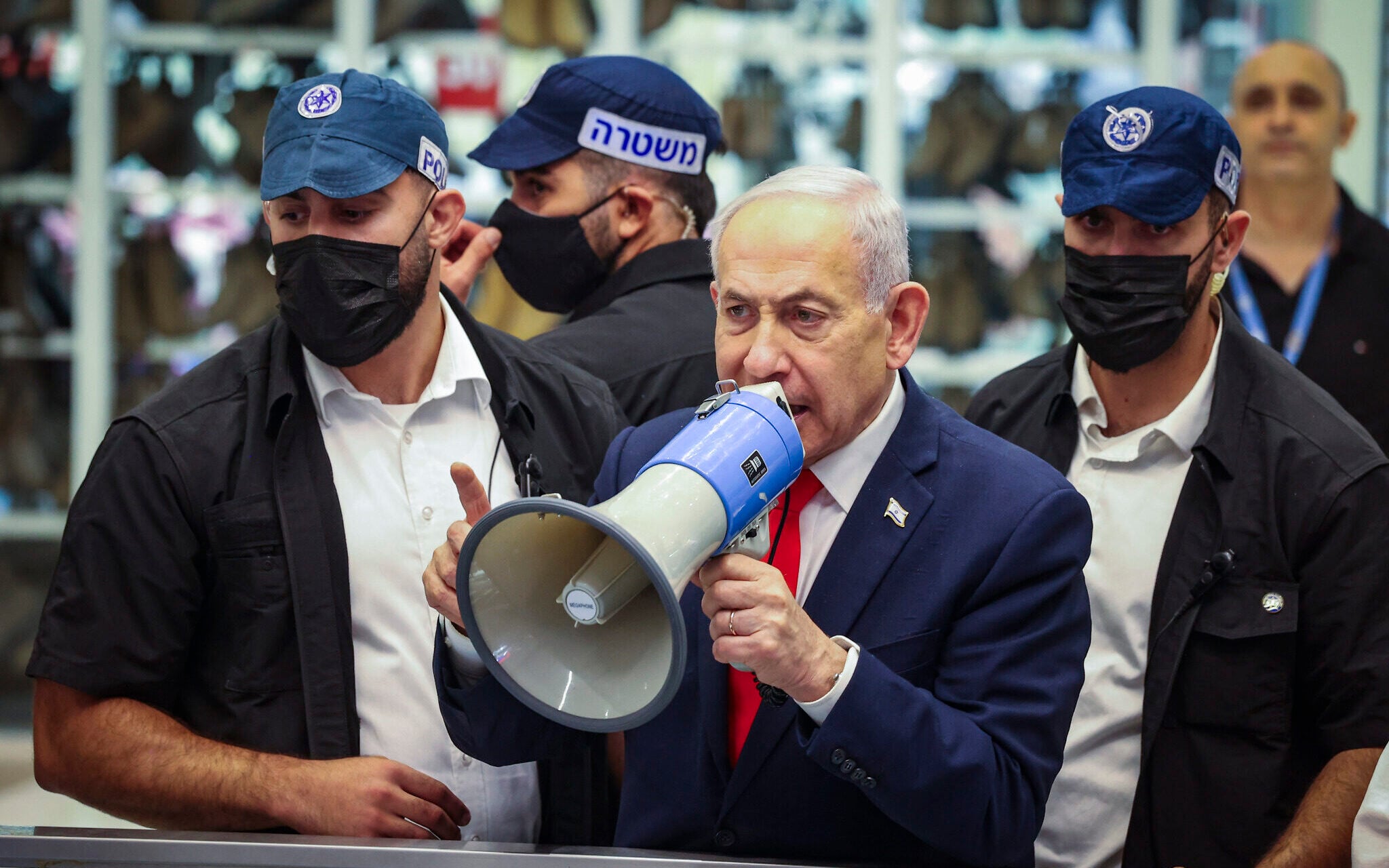
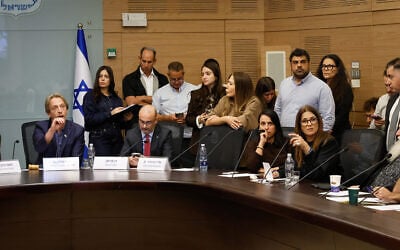
Hundreds of Netanyahu supporters demonstrated outside as the Knesset was sworn in on November 10. A subsequent demonstration could be much bigger.
“They are weighing their options,” Ilany said. “Does that mean that once there is a coalition, Netanyahu might not go back to this narrative and push it full on, and encourage violence in the streets, etc.? Yes, I think he might still do that.”
She added, “You nurture this kind of conspiratorial thinking among your supporters, and then it’s easier for them to swallow even the most unhinged kind of theories, right?”
There are good reasons to think that Netanyahu’s claims of a stolen election will not lead to a January 6-style attack on the Knesset: Eisenkot may not manage to form a government; Israel’s post-election period works differently, and is shorter, than the US’s; Netanyahu seems to have moved on to other lines of attack.

If a new government does form, Netanyahu may decide it’s in his best interest to wait for the coalition to fall apart — or force its demise — as he did last time he was unseated. He’s come back from the opposition multiple times in the past. He could do so again.
“Bibi didn’t tell anyone to go besiege the Knesset,” Katz said. He added at another point, “Politically, it is good for Benjamin Netanyahu that the Arabs have 19 seats. Why? Because it hamstrings Eisenkot.”
If Eisenkot decides to go back on his word and form a Jewish-Arab government, Katz said, Netanyahu “can say, ‘Look, Eisenkot is relying on the Arabs.’ In any case, it’s a win-win.”
Katz also disputed the idea that claims of voter fraud should be dismissed, defending Likud’s statements on the matter, citing the high Arab turnout and adding that officials all acknowledge “that there were irregularities in this election.” (Law enforcement has said its fraud investigations are limited in scope, and election officials have stressed repeatedly that the vote was conducted properly.)
Even if Eisenkot takes office without the Knesset being stormed, the “stolen election” campaign is still pernicious for Israeli democracy, Lurie said. What happens, for example, if Likud, the largest party, refuses to take part in what it considers an illegitimate Knesset?
“The long-term possibilities are very problematic,” he said. “I mean, first of all, the legitimacy of the Knesset, I think, is at stake here. And I fear that if political parties do not accept or do not concede election results, then they would not cooperate with the workings of the Knesset.”
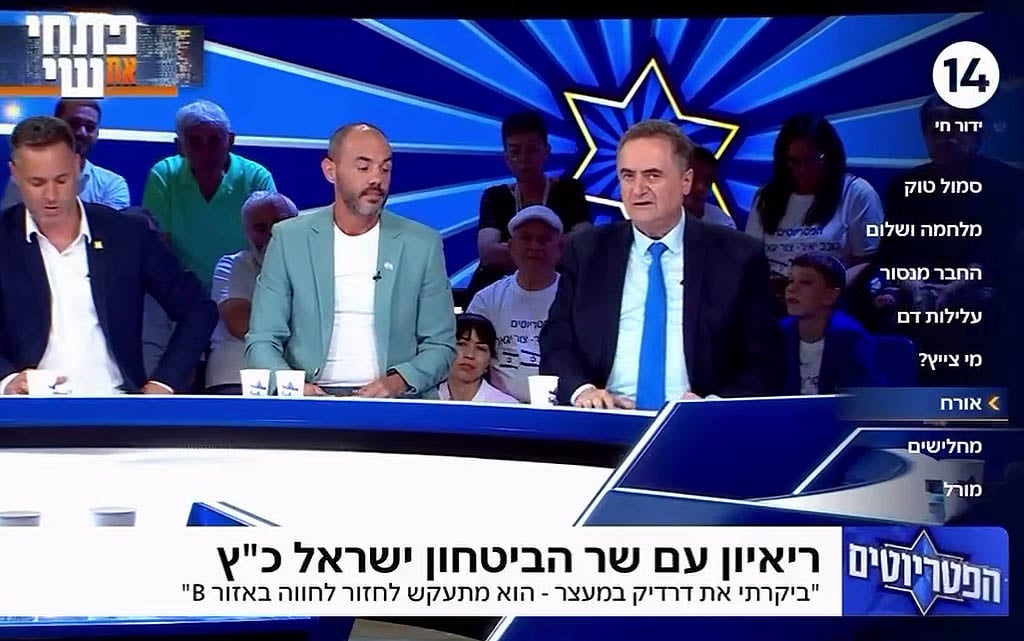
A post-Netanyahu government could also imply a post-Netanyahu Channel 14. The prime minister is 77 years old. If he is unseated, and the new government lasts, how much longer will he stick around? And what will it mean for his media ecosystem if and when he retires?
Panievsky thinks a Netanyahu loss wouldn’t be the worst thing for the station. But, surveying the media landscape Netanyahu has tilled and nurtured, she doesn’t expect the next leader of the right to simply pick up where he left off.
“It’s very easy to be in the opposition and criticize the government,” she said, considering the impact of an Eisenkot government on Channel 14. “You could see, potentially, [far-right National Security Minister Itamar] Ben Gvir or somebody else working closely with Channel 14. However, it will be very difficult to compete with the very strong networks of power and money and associates and loyalists that Netanyahu managed to form over the years.”
‘It’s not just a personality cult, it’s bigger than him’
Ilany believes the channel will survive, that it’s built a culture, ethos and media empire that could outlast Netanyahu. And like its favorite politician, she said, it won’t go down without a fight.
“It’s not just a personality cult, it’s bigger than him,” she said. “It’s a whole industry of people whose livelihood depends on this to continue. And I think we’ll see a fight for survival.”

The Times of Israel Community.