

‘We’re not in a fight about facts’: Scholars analyze post-Oct. 7 pop-up campus protests
In ‘Toward the Last Encampment,’ Alvin Rosenfeld collects academics’ firsthand testimony to examine ideology behind university protests, administrative failures and resilience of Jewish students
 Add ToI as a Preferred Source on Google
Zev Stub is the Times of Israel's reporter on diaspora affairs and Israeli real estate.
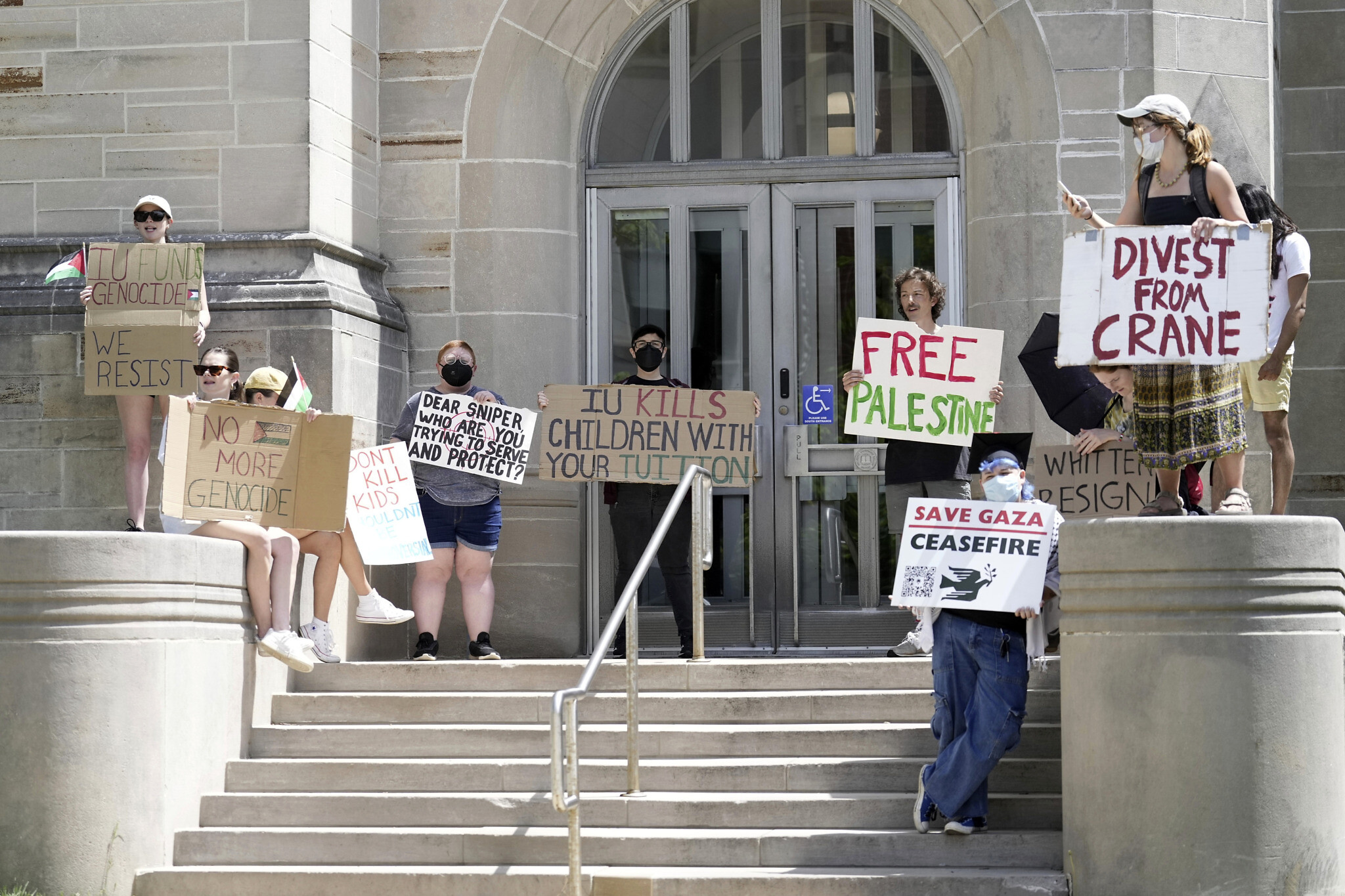
During the anti-Israel encampments at Indiana University in 2024, Jewish studies professor Alvin Rosenfeld decided to walk among the tents to see what was driving the protests.
“I saw a lot of students milling around, and lots of very similar tents, probably paid for by a well-financed source,” Rosenfeld recalled in an interview with The Times of Israel. “Students were shouting slogans about the Intifada, so I approached one and asked what he knew about the Intifada, especially the Second Intifada.”
The student drew a blank, Rosenfeld said. He had no idea that the Second Intifada had killed about 1,000 Israeli civilians in bus bombings, restaurant bombings and other attacks between 2000 and 2005.
“Nonetheless, he kept on shouting,” he said.
That encounter illustrated what Rosenfeld sees as a defining feature of the post-October 7 campus protests: a movement driven by ideological mobilization, not knowledge.
“We’re not in a fight about facts,” he said. “The facts can be all wrong. We are in a fight about feelings, and those feelings are very impassioned, very determined, very aggressive.”
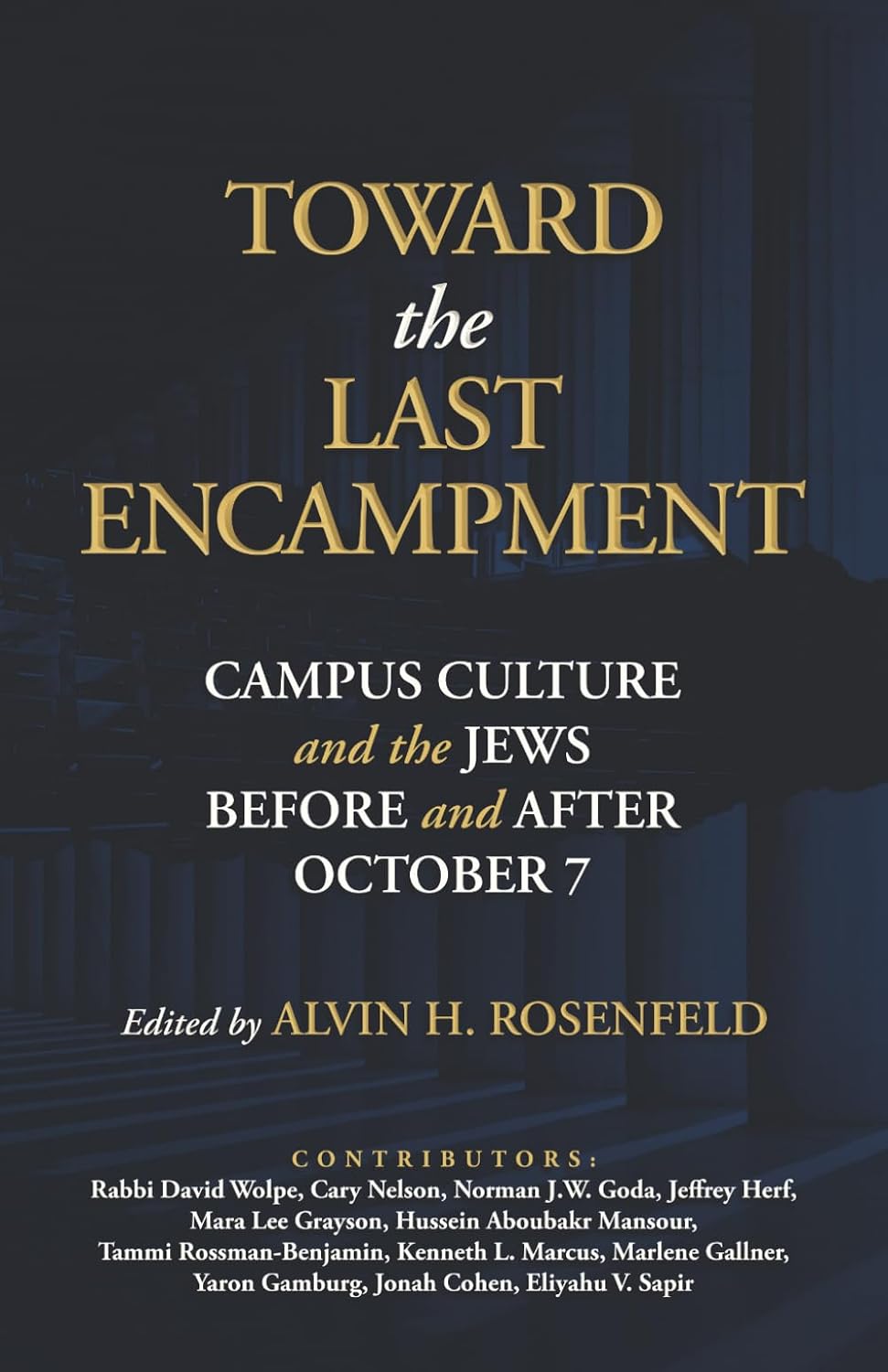 A new book Rosenfeld edited, “Toward the Last Encampment: Campus Culture and the Jews Before and After October 7,” examines the explosion of anti-Israel activism and antisemitism at universities in the United States and Europe following the October 7, 2023, Hamas onslaught on Israel.
While several recent books have examined antisemitism on university campuses, Rosenfeld said his collection brings together firsthand accounts and scholarly analyses of the political, cultural and ideological forces behind the post-October 7 hostility.
Rosenfeld has extensive knowledge of the topic. He serves as the director of Indiana University’s Institute for the Study of Contemporary Antisemitism, one of the longest-established academic centers devoted to the subject in the United States. The institute recently received a $6 million grant from the National Endowment for the Humanities, the largest award announced by the agency this year, he noted.
“After October 7, Jew hatred is a global phenomenon, particularly on college campuses,” he said. “This book charts the progress of those developments at campuses in America and abroad, with a great deal of detail previously unknown.”

An organized battlefront
In the opening chapter, an essay by Rabbi David Wolpe recounts in detail how the protests unfolded at Harvard University, where he was serving as a visiting scholar at the time of the October 7 invasion. Wolpe recalled with fear how a Jewish student who had been screamed at while crossing Harvard Yard told him, “They don’t just hate what I believe. They hate me.”
In another chapter, Israeli scholar Eliyahu Sapir, who teaches in the Netherlands, examines how university administrators in that country responded to complaints from Jewish students and faculty. Rather than addressing their concerns directly, he said, administrators dodged responsibility by universalizing the problem in abstract ways without offering meaningful solutions. Sapir went on to chart how such “impoverished responses” became structurally entrenched among university administrators.
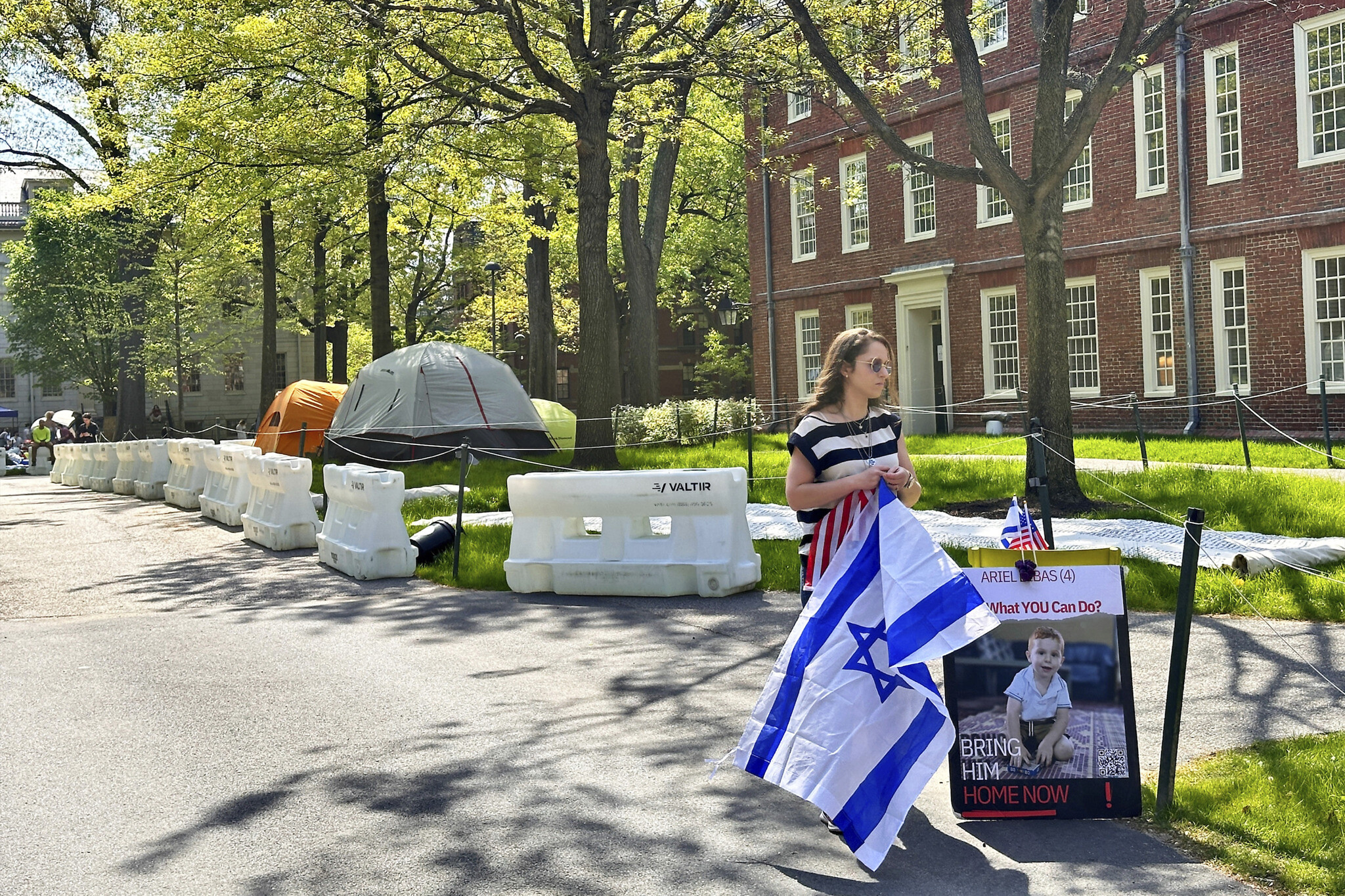
One of the book’s more striking accounts concerns the speed with which anti-Israel activism spread across universities immediately after October 7.
At Harvard, more than 30 student organizations issued a statement on October 7, blaming Israel for the attack before a single Israeli soldier entered Gaza, Rosenfeld said. Online, a handbook for resistance was published and distributed nationally within 24 hours of the Hamas attack by Students for Justice in Palestine and an allied organization, Faculty for Justice in Palestine, he said.
“There was clearly preparatory work done ahead of this,” he said.
Rosenfeld recalled an unusual encounter he had several days before the attack, when a strongly anti-Israel faculty member he barely knew approached him and told him that difficult times might lie ahead on campus.
“I didn’t know why he was seeking me out for that, as nothing unusual had happened at that point,” Rosenfeld said. “Was he onto something? I can’t say for sure, but he may have been.”

A campus transformed
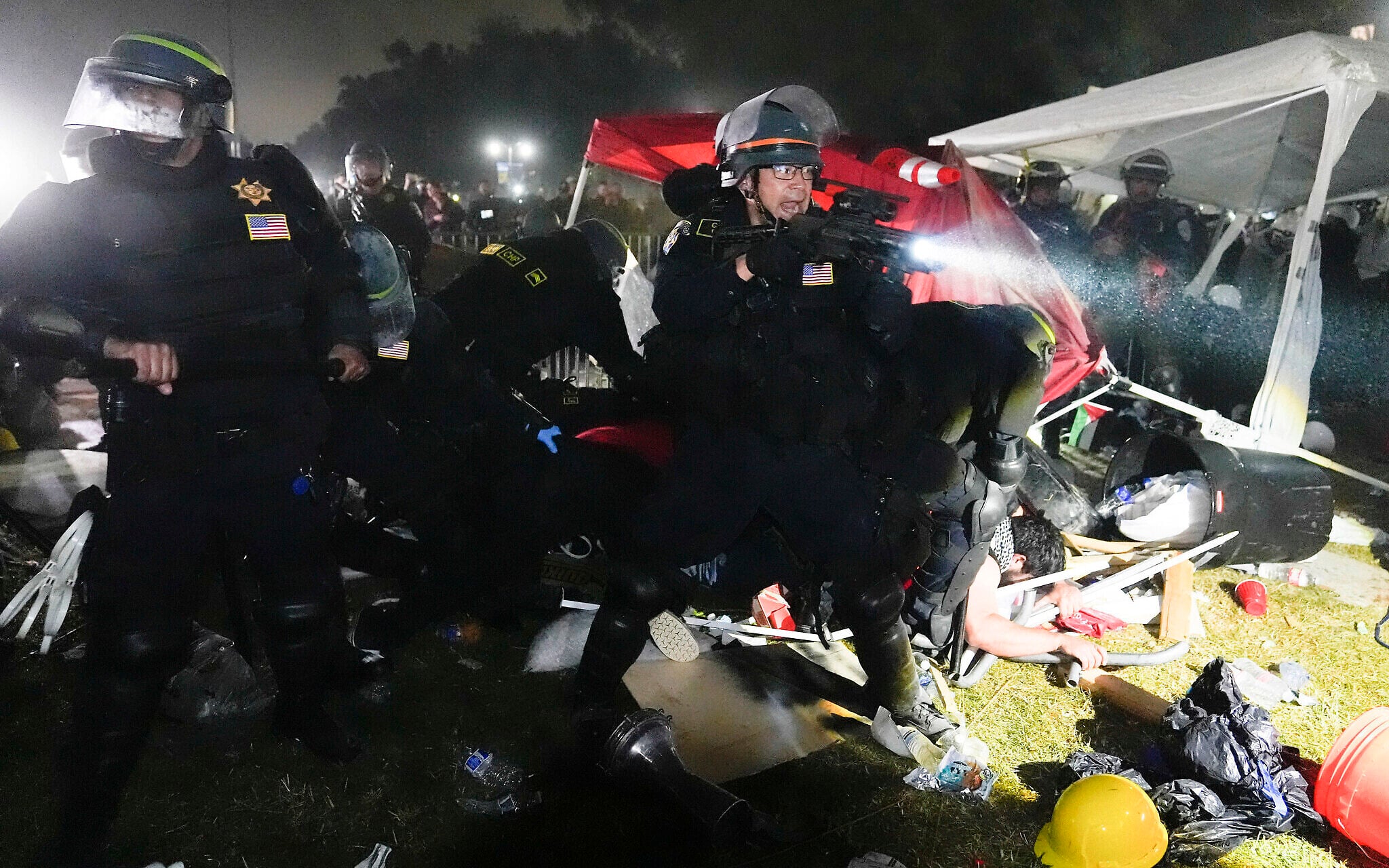
The subsequent encampments, which appeared at more than 100 American universities in spring 2024, revealed the massive scale of the movement.
At Indiana University, which has approximately 45,000 students, no violence was reported, but Rosenfeld recalled being disturbed by the lack of knowledge he saw among the tent protesters. One person who yelled at him apparently thought that Palestine was a city in Gaza, he said.
“This was at a university where people are supposed to know a thing or two,” Rosenfeld said. “I could have told this student that he doesn’t know what he is talking about, but I didn’t. They weren’t interested in dialogue at all. They were just interested in demonstrating.”
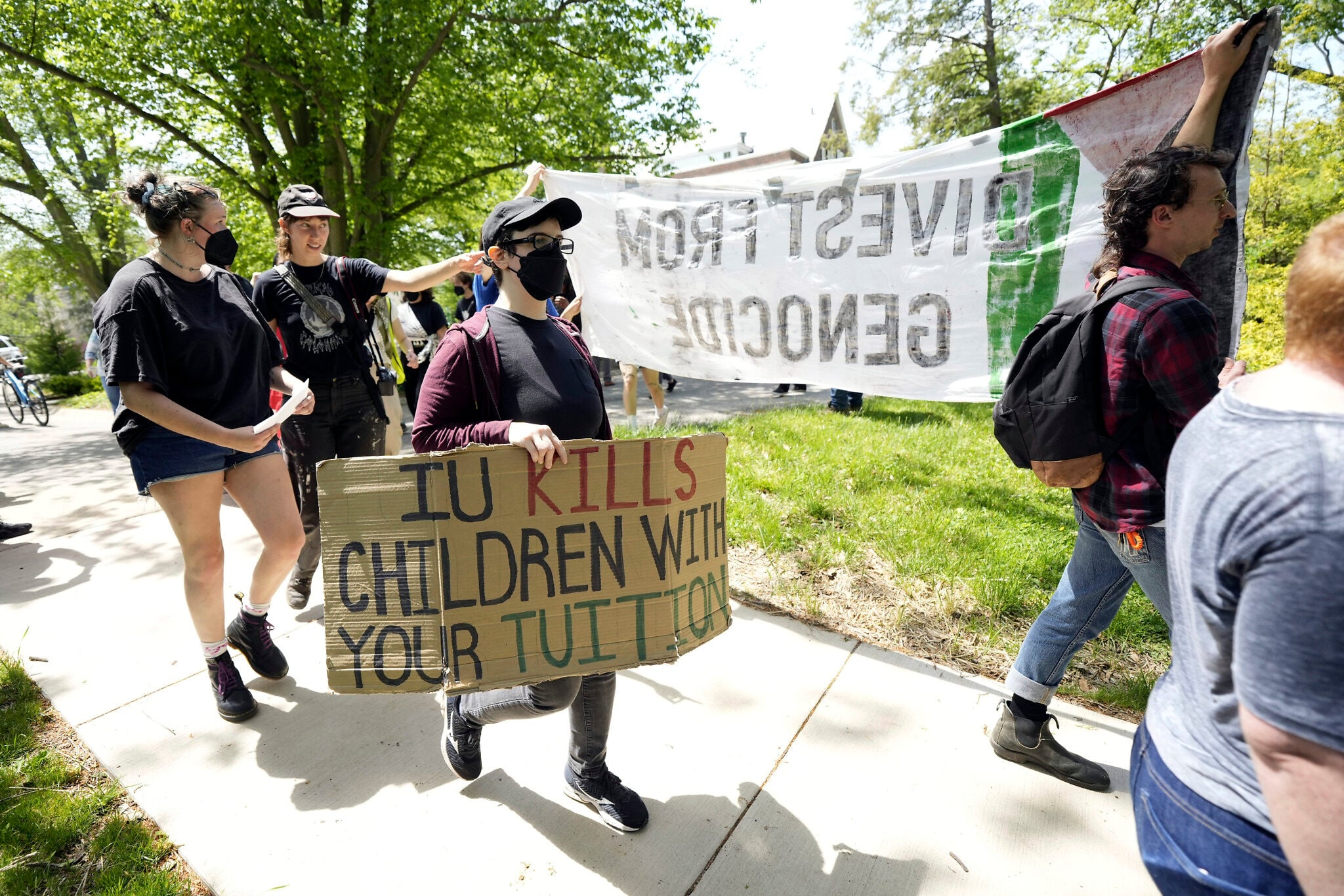
Meanwhile, the protests engulfed the entire university, Rosenfeld said. Posters depicting Israeli hostages were torn down, while anti-Israel slogans appeared across sidewalks and on campus bulletin boards. Mezuzahs were removed from the doorposts of Jewish students’ dormitory rooms and apartments. Parents of prospective students visiting the university were harassed.
Rosenfeld noted that no more than 200 or 300 students at his university were leading the anti-Israel activity on campus. But, he said, “even a group of that size that is determined and organized can change the tone of the campus.”
Administrators learning on the job
University administrations were initially caught flat-footed by the scale of the protests, Rosenfeld said. The congressional hearings of December 2023, during which the presidents of Harvard, MIT and the University of Pennsylvania were grilled by Elise Stefanik and others about antisemitism on their campuses, helped force university leaders to confront the seriousness of the problem.
“Those hearings made campus administrations across the country realize that this was serious, and that they had to think hard about campus order and the boundaries of free speech,” Rosenfeld said. “Everyone is in favor of free speech, but there’s a difference between speaking and harassment. And once administrators began hearing from political leaders, they realized they had to rethink their own procedures.”
In many cases, Rosenfeld said, universities realized they already had rules in place to address harassment and disruption, but were not enforcing them. Some implemented stronger measures on their own, while others did not — at least until the Trump administration intervened.

Rosenfeld said he has mixed feelings about how Trump used federal funding as leverage against universities accused of failing to address antisemitism. On the one hand, he criticized the administration’s heavy-handed measures, which included cuts to research funding in science and medicine. On the other hand, he said, things probably wouldn’t have changed so much if the federal government hadn’t stepped in.
“Would universities have done anything at all, short of pressure from the Trump administration?” Rosenfeld asked. “It’s doubtful that they would have. At the same time, though, these measures have been very hard for them.”
Universities have improved in some respects, but many of the underlying problems have not been resolved, Rosenfeld said. He voiced particular concern about humanities departments, including Middle Eastern studies and Postcolonial studies, arguing that some disciplines have become so politically compromised by bad actors that they “indoctrinate rather than teach.”
“Do the humanities really humanize? The answer is yes,” Rosenfeld said. “But only as long as they don’t dehumanize Jews and others.”
Jewish pride resurging
Rosenfeld also pointed to a more encouraging development: a revival of Jewish identity and pride among university students.
At Indiana University, an estimated 4,500 students are Jewish, approximately 10% of the student population, he said. Despite anti-Zionist pressures, many discover new aspects of their Jewish identity during their university years.
Jewish communal life is thriving through the local Chabad house and Hillel, as well as Jewish fraternities and sororities. More students are also openly displaying their Jewish identities, wearing Star of David necklaces and kippahs on campus, he added.
The university’s Jewish Studies Program, now in its 54th year, offers approximately 40 courses annually. Its classes attract Jewish and non-Jewish students alike, while courses on the Holocaust and Nazi Germany consistently fill to capacity. And despite campus tensions, Israeli speakers and cultural events have continued unabated.
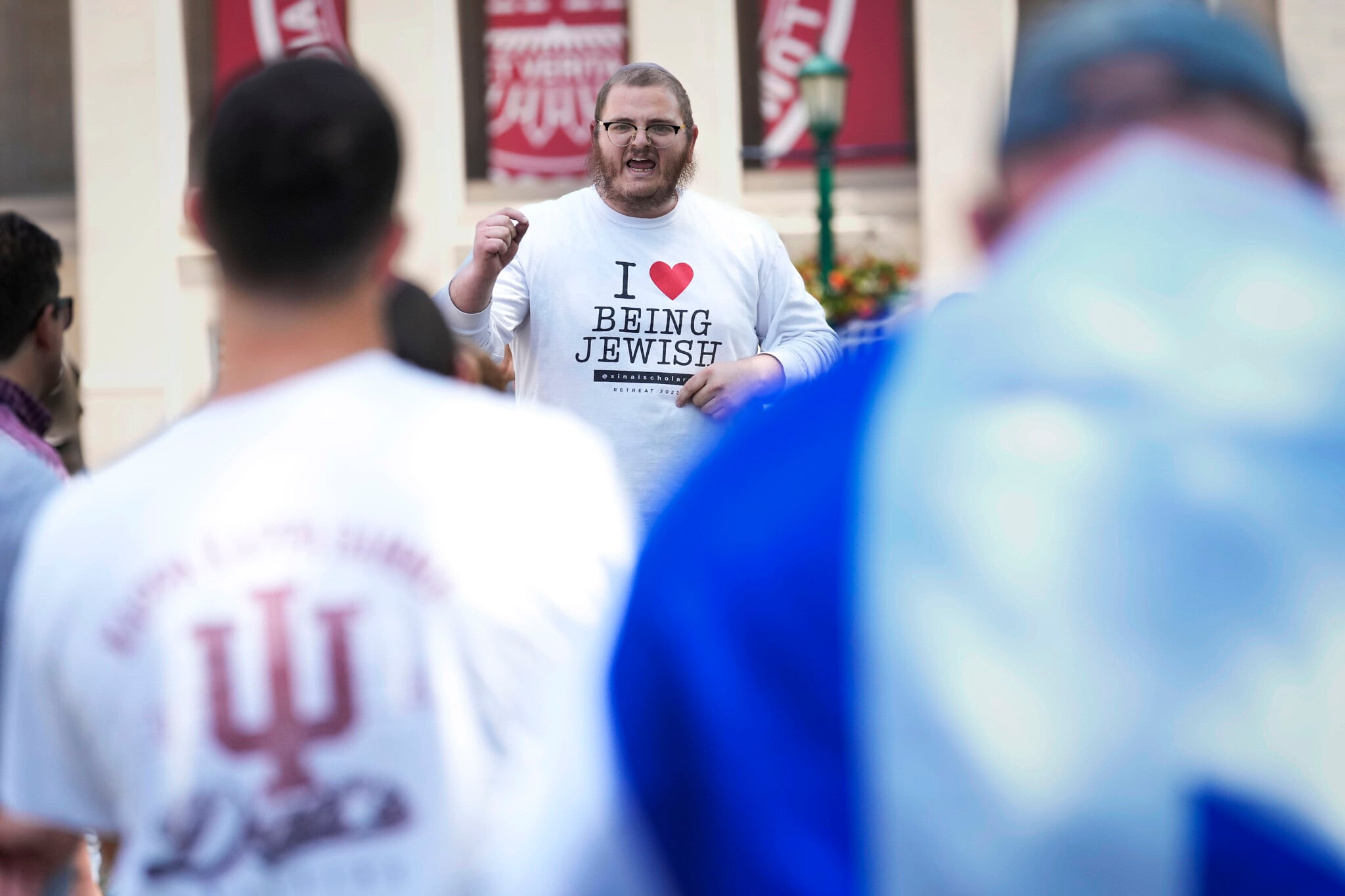
“There are more and more kids gravitating to all of these things in a positive spirit,” Rosenfeld said. “Some of that might have been born originally out of anxiety and concern, but once they see that they’re on a welcoming campus and that one can thrive Jewishly here, the results are very good.”
Despite everything he has described, does Rosenfeld believe Jewish life can still thrive on American campuses?
“I do,” he said. “And I would like to see more of it.”







The Times of Israel Community.