

Report: UTJ rabbis push for signed commitments on draft evasion law from entire Eisenkot bloc
In exchange for help in ousting Netanyahu, Agudat Yisrael advisers want all 48 MKs to sign pledge that they’ll pass law exempting Haredim from military service together with override clause to prevent court from striking it down
 Add ToI as a Preferred Source on Google
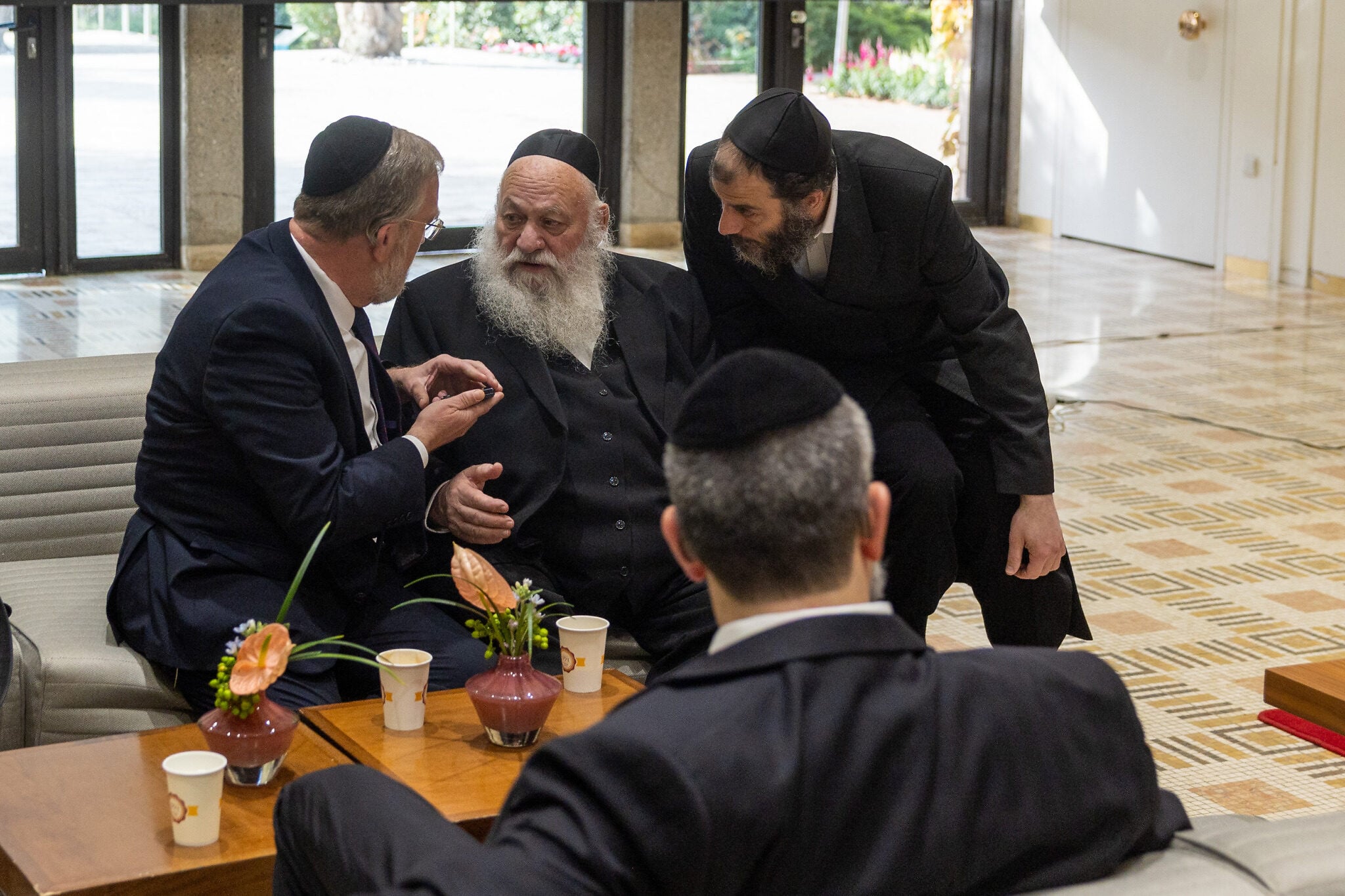
Rabbinic advisers of the United Torah Judaism’s Agudat Yisrael faction are reportedly seeking written commitments from all 48 MKs in the bloc of Zionist parties seeking to oust Prime Minister Benjamin Netanyahu in exchange for the ultra-Orthodox party’s support in forming a government.
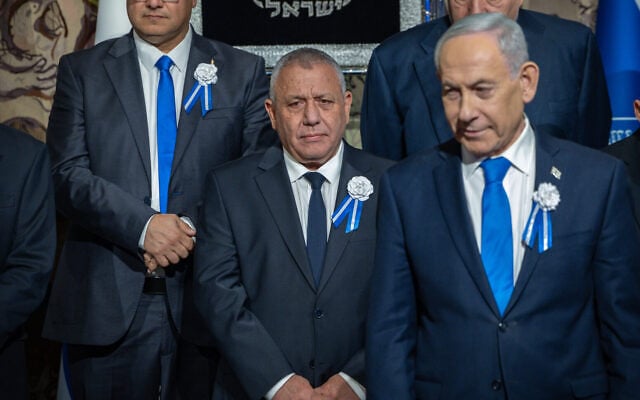
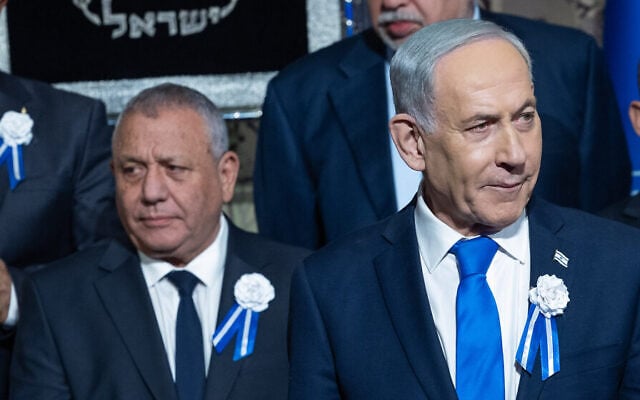
Top leaders of several Hasidic communities penned a document obtained by Channel 12 on Thursday in which they argue that every member of the bloc of Zionist parties headed by Yashar chairman Gadi Eisenkot should sign onto a pledge that they will not only pass a law granting blanket exemptions to Haredi yeshiva students from military service, but also an override clause that prevents the High Court of Justice from striking down what likely would be unconstitutional legislation.
While Eisenkot’s bloc may well be forced to break promises made during the campaign in order to form a government due to the inconclusive results from the October 27 general election, the demands from the Agudat Yisrael rabbinic advisers would seem to go way further than what any of the four parties are prepared to accept.
The document obtained by Channel 12 urges the three-member faction within UTJ to seek the attorney general’s approval for the draft evasion bill in advance — another aim that would appear unlikely to meet given the legal problems of such legislation.
Moreover, Channel 13 reported Thursday that certain elements of the Eisenkot bloc have secured a professional legal opinion concluding that it won’t be possible to pass any draft evasion legislation that would be held up in court.
Meanwhile, the Ynet news site reported Thursday that the Eisenkot bloc is considering the idea of freezing arrests of draft dodgers for up to a year in order to entice UTJ to join the coalition. It’s unclear whether this initiative would be passed in the form of a cabinet decision or Knesset legislation, though both would likely face legal hurdles.
The Eisenkot bloc is hoping that UTJ will be willing to get on board due to its deep frustration with Netanyahu over the latter’s failure to keep promises to pass draft evasion legislation during his past four years as premier, Ynet said.
The bloc also believes that they offer the ultra-Orthodox parties the best chance to secure any sorts of concessions because the other scenarios — a unity government without the Haredi parties or another election — don’t offer them a better solution.
However, the Zionist anti-Netanyahu parties (48 seats) will need more than just UTJ (7 seats) in order to secure a majority coalition of at least 61 seats. The ultra-Orthodox Shas party (7 seats) would also have to get on board, though, the Sephardic faction is more aligned with Netanyahu and recommended that he form the next government, unlike UTJ, which didn’t recommend any candidate.
Netanyahu is working to convince the two ultra-Orthodox parties not to join Eisenkot, arguing that if they do and the Yashar chairman doesn’t keep his promises to them, they won’t be able to bring down the government because the two Arab-led parties would likely provide it with a safety net by blocking such an effort, Ynet said.
If Shas doesn’t get on board, the Eisenkot will still need the support of at least one of the Arab-led parties, with or without the votes of UTJ.
Netanyahu has worked aggressively to delegitimize the two parties: Ra’am and the Joint List, branding them as illegitimate terror supporters and using rhetoric that his opponents charged is racist.
But the campaign appears to have been effective, as various key members in Eisenkot’s bloc have pledged not to partner with the Arab parties, including Ra’am, which recognizes Israel as a Jewish state and has campaigned on primarily focusing on fulfilling the needs of the long-neglected Arab Israeli population.
Lapid vows bloc will establish a government following ‘painful compromises’
Former prime minister Yair Lapid vowed on Thursday that the Eisenkot-led bloc will form the next government, noting that the coalition building will take time and will require major compromises.
“A government will be formed. It might take some time, and we may all go through an emotional roller coaster of anxiety and fear before it happens — but a good, principled government, one worthy of the people of Israel, will be formed,” Lapid said in a video statement.
Lapid said not doing so would be an “unforgivable act of national irresponsibility.”
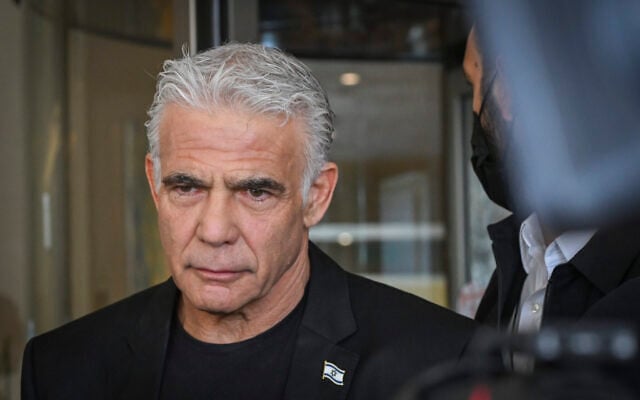
In the statement, the No. 2 in the B’Yachad party adds that there is no such thing as a perfect government, and “there are no perfect coalition agreements… so yes, we will make compromises. It is impossible to form a government without painful compromises. We likely won’t be able to achieve all our goals or fulfill every single promise within the next six months — but a government will be formed.”
His remarks echo similar comments made by Yashar party chief Gadi Eisenkot when he accepted the mandate on Sunday to attempt to form the next coalition, noting that not every party would be able to fulfill their campaign promises.
Arab parties and UTJ said to discuss possible cooperation amid coalition talks
The Kan public broadcaster reported Thursday that Ra’am and Joint List leaders have been in regular contact with senior UTJ officials, with the latter sharing updates on their negotiations with Eisenkot’s bloc.
According to the report, Ra’am leader Mansour Abbas has urged UTJ leaders to open talks with the bloc on legislation regulating Haredi military service. He argues that such negotiations could give a more lenient draft arrangement legitimacy across political camps and help UTJ become a kingmaker.
UTJ chairman Yaakov Asher has also reportedly spoken several times in recent days with Abbas and Joint List No. 2 Ahmad Tibi.
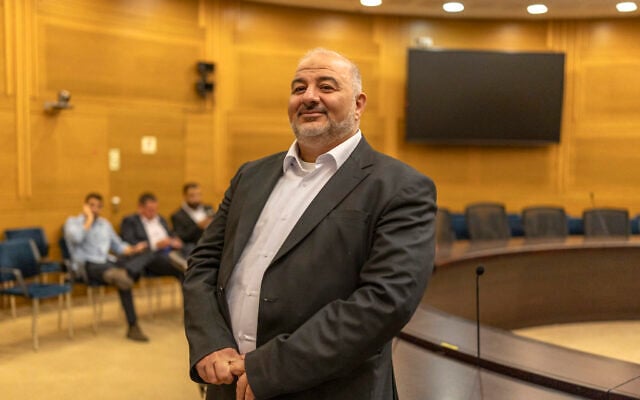
The Arab parties have not been asked to support UTJ’s position on military service, though they may be asked to abstain in Knesset votes if cooperation develops, Kan said.
The parties have also discussed potential common ground on freezing the so-called Kaminitz Law, which eases the state’s path toward destroying illegal building, despite the difficulty of obtaining building permits in Arab towns. Freezing the law is reportedly one of the Joint List’s demands of Eisenkot’s bloc, and UTJ has not ruled out supporting it.
Report: Freshman Likud MK Bardugo helped shape Netanyahu’s attacks on Arab parties
Haaretz reported Thursday that New Likud MK Jacob Bardugo, a longtime confidant of Netanyahu, has expanded his influence since joining the party, becoming a central voice in the premier’s political consultations and urging him to take a more aggressive approach to challenging the election results.
Bardugo, a former Channel 14 commentator who received a reserved spot at No. 11 on the Likud slate, now attends Netanyahu’s political consultations and visits the Prime Minister’s Office almost daily, often without an appointment, according to the report.
Haaretz said Bardugo pressed Netanyahu to go all-in on unproven claims that the election had been stolen by the Arab parties, and proposed Likud-backed demonstrations calling for the vote to be annulled. One attendee at a meeting during election week describes Bardugo as being in a “frenzy” as Netanyahu and his advisers debated whether to launch such a campaign.
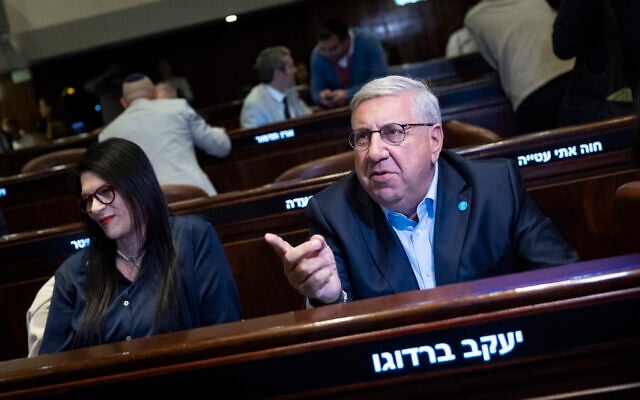
“He wanted to run a Trump campaign,” the source said, referring to the election-fraud claims US President Donald Trump made after losing to Joe Biden in 2020.
Bardugo’s influence was also evident in Netanyahu’s speech to lawmakers on Tuesday, after the new Knesset was sworn in, Haaretz said. The address included inflammatory remarks against Arab lawmakers and differed sharply from the shorter draft prepared by Netanyahu and his advisers.
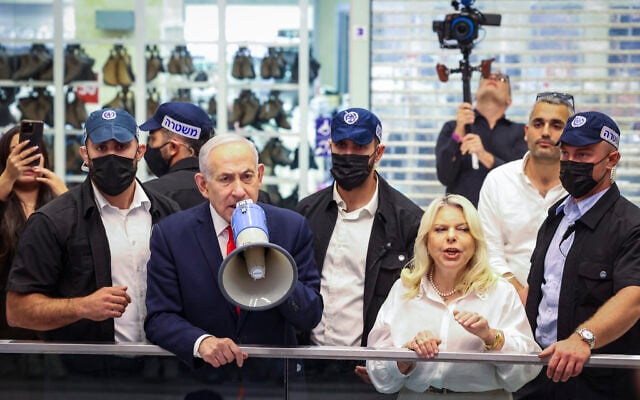
Sources in Netanyahu’s office told Haaretz that Bardugo and Netanyahu’s wife, Sara, entered the caretaker prime minister’s room before he gave the altered speech. Sara also reportedly attends between a third and half of the meetings of Netanyahu’s political consultation group, the report says.




The Times of Israel Community.