Eisenkot tasked with forming government, vows ‘creative and unconventional’ path to ‘emergency’ coalition
Yashar leader says 'all of us will need to compromise' in speech that doesn't name Netanyahu, invites members of Likud and Religious Zionism to join him
Gadi Eisenkot formally received the mandate on Sunday to form the next Israeli governing coalition, and vowed to pursue “creative and unconventional” pathways to assembling what he termed a “national emergency government.”
Eisenkot’s nomination was expected, after 67 of the incoming Knesset’s 120 members asked President Isaac Herzog to give him the opportunity. Now, after a ceremony Sunday at the President’s Residence, the leader of the centrist Yashar party will have up to six weeks to form a government that, he has pledged, will unseat Prime Minister Benjamin Netanyahu and usher in a new era for the country.
“Israel is in a challenging and fateful state of emergency,” Eisenkot declared near the beginning of his remarks. He pointed to active combat on multiple fronts, Israel’s plummeting international standing among allies and adversaries alike, and what he termed “one of the most vulnerable moments Israeli democracy has ever known.”
“If we continue in the present situation, we risk descending to dark places, to a point of no return from which it will be very hard for us as a society and country to come back from,” he said. “Therefore, there is great urgency for new leadership, leadership that you can look in the eyes and trust, whose concerns will always be Israel’s welfare and Israel’s security.”
Eisenkot acknowledged that success is far from guaranteed. The parties endorsing him are split into a Jewish-led bloc of 48 and an Arab-led bloc of 19. While the Arab parties have vowed to support an Eisenkot-led government, or to refrain from voting against it, members of the Jewish bloc have said they will not join a government that relies on the Arab factions’ support. Talk has mounted of Eisenkot swearing in a minority government, or of joining forces with Haredi parties, which have long been allies of Netanyahu.
Eisenkot did not indicate which direction he would pursue in the talks. But he said his coalition is open to any party that accepts his principles. He appealed directly to members of Netanyahu’s Likud party — though not Netanyahu himself — as well as the far-right Religious Zionism party.
He also rejected the possibility of a repeat election. That would follow if he fails; if Netanyahu, who commands 46 MKs, is then given 28 days of his own and fails too; and if at least 61 MKs cannot agree on a third candidate within a final 21 days.
“With the mandate entrusted to me here today, I will lead the establishment of a national emergency government,” Eisenkot vowed. “This will require creative and unconventional political acts. Israel does not have the privilege of wasting time or repeating endless rounds of elections. The challenges are too urgent.”
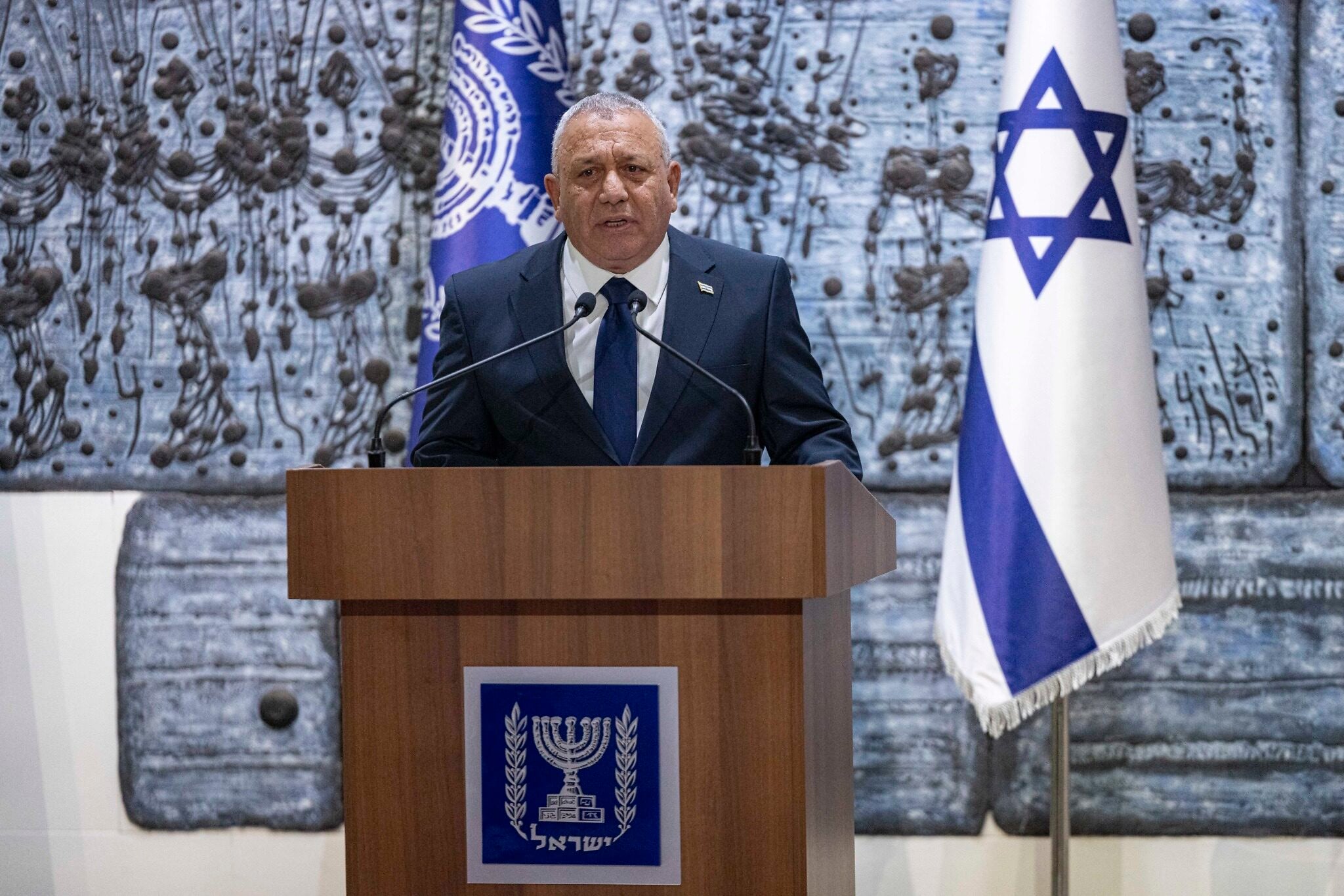
Referencing the fractious Knesset, he said that he is not “deluding” himself, and that he knows Israel is in its “most complicated and sensitive political situation since the state’s establishment.”
Eisenkot added, “No one will be able to fulfill all the [campaign] promises they made, and all of us will need to compromise. That is also leadership — to know when to decide and set priorities.”
Herzog urges ‘most stable government possible’
Delivering the mandate to Eisenkot, Herzog urged him to form a stable and lasting government to meet the “immense challenges” Israel faces.
“The State of Israel needs a stable government that can meet them over time,” the president said. “This is the time to reach out, to do everything for the unity of our people, and to strive for the best and most stable government possible for the people of Israel, which yearns for it.”
Herzog has raised the possibility of a unity government that would bring Eisenkot and Netanyahu together, including during his consultations with parties prior to tapping Eisenkot to form a coalition. But Eisenkot has pledged not to serve in a Netanyahu government, and Netanyahu has not indicated that he is willing to step aside for Eisenkot to be prime minister.
Herzog noted that Eisenkot received the “clear and unequivocal support” of a majority of Knesset members on the question of who has the best chance of forming a government, while acknowledging that Likud remains the largest party, with 27 seats.
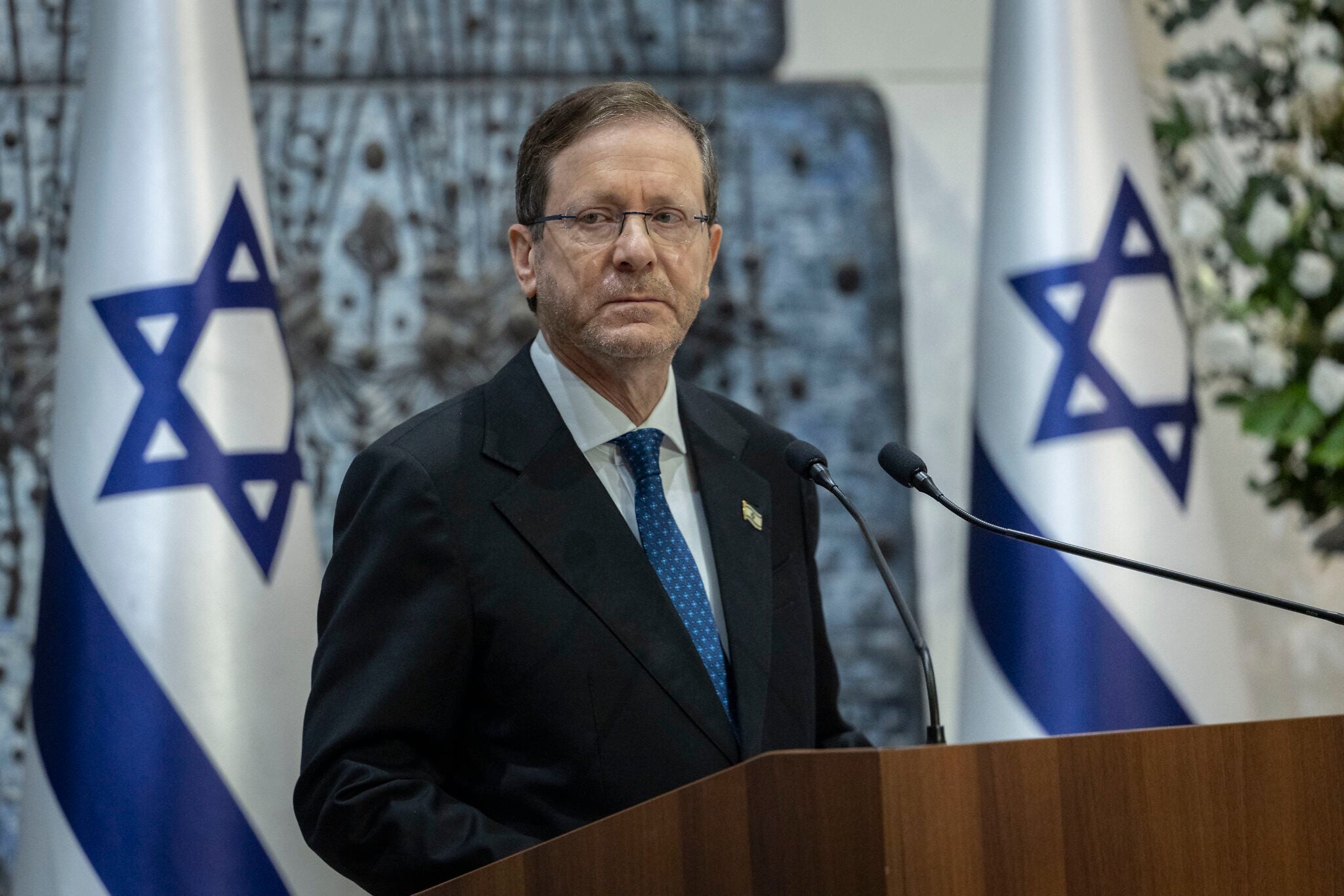
He said Eisenkot must establish a government that serves all Israelis, whether they voted for the outgoing government or for the bloc of parties that opposed it.
“I expect you to do everything in your power to establish a government that will serve the entire people, those who supported it and those who did not, and that will be a responsible and decent address for all sectors, faiths, ways of life, and worldviews,” Herzog said.
Earlier in the speech, he took an implied shot at lawmakers who delegitimized the Arab parties, saying that his consultations “reminded us all that every citizen of Israel has an equal voice, from every side, every view, every way of life, and every faith.”
Eisenkot appeals to Likud, warns against delegitimizing vote
In his speech, Eisenkot also slammed rhetoric delegitimizing the election results, a clear reference to rhetoric from Netanyahu and his allies claiming the election was “stolen” by Arab parties, which they have termed “terror supporters.”
“The campaign of delegitimization against democracy and the growing mistrust of state institutions, fueled daily, brought us to an extremely dangerous point.”
But he also reached out to Likud and Religious Zionism, urging them to accept the four principles he has laid out for his coalition: committing to Israel as a Jewish and democratic state, accepting the values of the Declaration of Independence, instituting mandatory national service for all, and recognizing Hamas as a terror group and committing to its destruction.
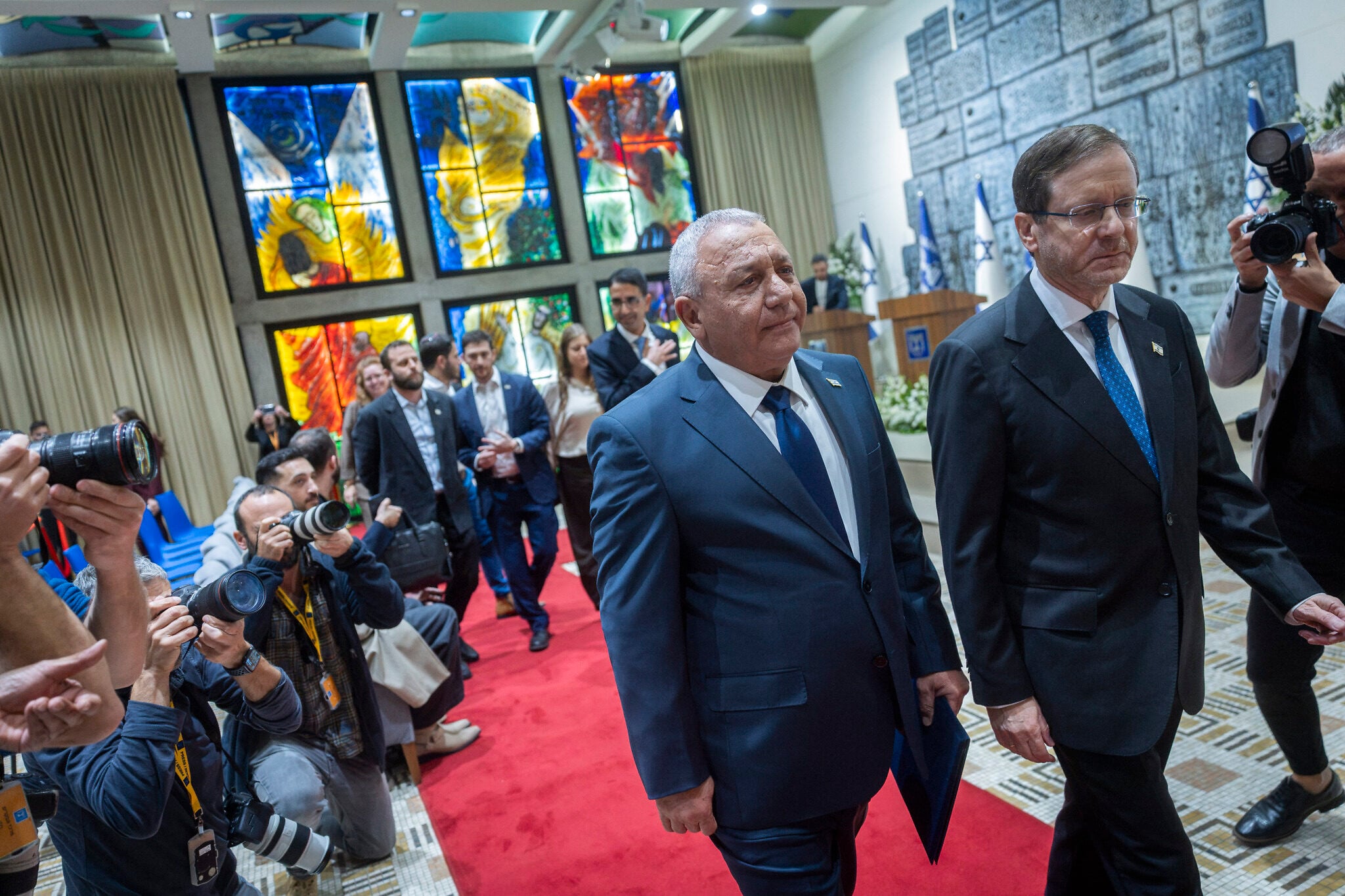
“To all parliamentary factions and elected representatives: My door is open and my hand is extended, wholeheartedly and willingly, to anyone who understands the gravity of this moment and is prepared to take courageous action for the State of Israel,” Eisenkot said.
He refrained completely from naming Netanyahu in the speech, but he took a jab at the incumbent’s Saturday night call for a “unity” government anchored by the premier’s current hardline right-wing coalition.
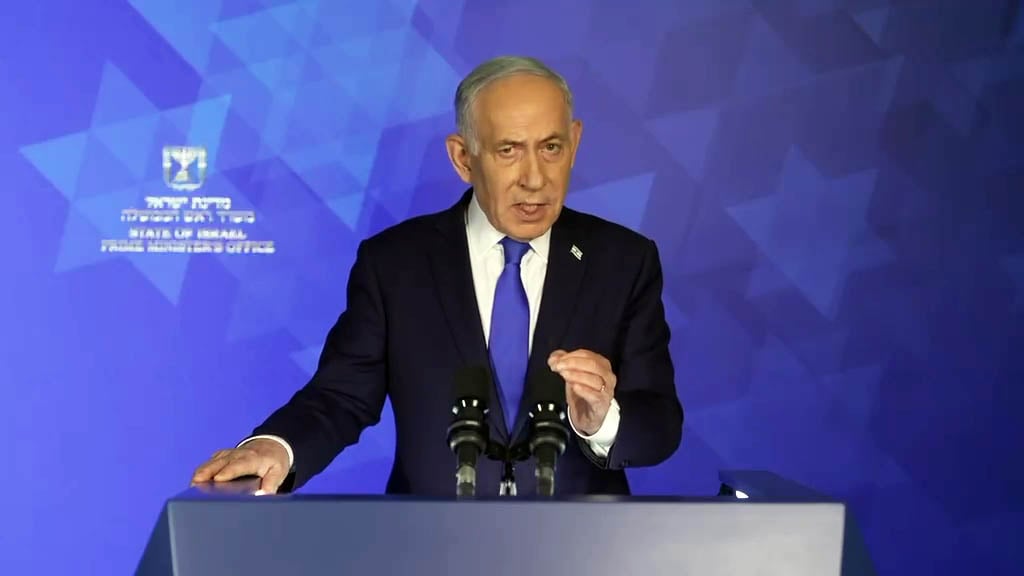
“For me, unity is neither a political bargaining chip nor an empty gimmick, but a supreme value that embodies genuine partnership. If members of Likud and Religious Zionism truly believe that this is a time for unity, as they declared before the president, I cannot imagine any reason why they would not come forward and support a government under my leadership and the principles I have laid out,” Eisenkot said.
He did not mention National Security Minister Itamar Ben Gvir’s far-right Otzma Yehudit. Yashar No. 2 Yoram Cohen has previously ruled out a coalition with the party.
Eisenkot also appeared to direct a warning at his prospective coalition partners, amid disagreements with Yisrael Beytenu chairman Avigdor Liberman over the composition of the next government.
“Anyone who tries to torpedo the formation of a government for personal rather than substantive reasons will be remembered by history as someone who failed to save Israel at a time of emergency,” he said.
Liberman, who is due to meet with Eisenkot tomorrow, has denied trying to thwart an Eisenkot-led government, and said he is no longer seeking to be prime minister.
Eisenkot pledged to navigate the political challenges ahead with patience, humility, and composure, and with a “deep commitment to a Jewish, democratic, egalitarian, liberal, and secure Israel.”