El-Sayed’s win changes the conversation on Israel — and Israel’s relationship with US Jews
The Michigan Democrat's victory elevates an opponent of Israel to the Senate, showing that his politics can win in a battleground state — and that the majority of Jewish voters will go along
Just four years ago, if a US Senate candidate had said it was “unfortunate” that Jewish voters wouldn’t accuse Israel of genocide, it would have likely driven weeks of headlines.
The same goes for the prospect of an aspiring senator who vowed to block offensive arms sales to Israel.
On Tuesday, both such candidates — Maine’s Troy Jackson and Texas’s James Talarico — won their races, part of the Democrats’ sweep of the US midterm elections. Yet their comments hardly registered, because both were far from the most extreme Democratic critic of Israel to win election.
That title goes to Senator-elect Abdul El-Sayed of Michigan. His positions have been covered exhaustively during a bruising primary and general election: He constantly accuses Israel of genocide and says US tax dollars shouldn’t be spent to “drop bombs on other people’s kids” — a reference to US military aid.
He has disparaged the very idea of a Jewish state, and has said Israel is not a US ally. He has said money is the only reason a Democrat who “believes in human rights” would support Israel. In a recent interview, he scoffed at the idea of limiting a Palestinian state to the West Bank and Gaza, suggesting Palestinians should get parts, or all, of Israel proper.
“We want our taxes spent here, for schools here, and healthcare here, and infrastructure here. We don’t want our money sent to do apartheid, or genocide, or war,” he said in his victory speech early Wednesday morning.
El-Sayed is far from alone in his views. As the Democrats took control of the House and Senate in a ringing slap at US President Donald Trump, a group of vocal far-left Israel critics won their House races. More broadly, the Democratic Party has grown far colder to Israel than it once was.

But El-Sayed’s entry into the Senate, in particular, poses fresh risks for Israel, placing him in a position of influence that can have concrete effects on US foreign policy and the direction of Democratic politics. It may also signal a shift in Israel’s relationship with US Jews, who have continued to vote for Democrats despite the controversies over Israel policy.
What one senator can and can’t do
Throughout much of the campaign, some Jewish Democrats advocated voting for El-Sayed because he would grow the Senate Democratic caucus and vote in lockstep with the party on nearly every issue. In this hyper-partisan era, individual senators have less power, and often less independence, than they once did. That’s all the more true now that the Democrats will hold a comfortable majority of at least 54 seats in the 100-seat Senate, their largest in 12 years.
Moreover, while El-Sayed campaigned against aid to Israel, Trump stole much of his thunder when he announced on Tuesday that the US would be ending such aid a year early, starting in 2027.
Nor will he be able to single-handedly halt weapons sales to Israel, which are the purview of the president. Members of Congress can speak out against such sales, and the House and Senate can theoretically block arms deals with a two-thirds majority. But that’s never happened, and El-Sayed is unlikely to be a bipartisan bridge-builder on the issue.
So what can El-Sayed achieve on his own? If he makes it onto the Senate Foreign Relations Committee, he will be one of just 22 members, usually closely split between the majority and minority. That’s the committee that handles a lot of the legislation that pertains to Israel, from reviewing arms sales to allocating aid to imposing sanctions. It also vets ambassadorial nominees.

He may not be the deciding vote on many issues. But he’s also not the only Democratic critic of Israel in the Senate, and he could organize his colleagues to oppose pro-Israel measures, or to impose sanctions on West Bank settlements or the country as a whole. If he can create a Democratic anti-Israel group in the Senate, it could act as a pivotal bloc with outsize influence on the issue.
In addition, in the past, a single senator, Republican Rand Paul, was able to use parliamentary procedure to delay an aid bill — a clear example of one lawmaker imposing his views on legislation. That procedural tool still exists, and while there may be no more Israel aid to block, El-Sayed could be able to bring it to bear on other Israel-related bills in the future.
Modern US history has also been replete with individual senators taking leading foreign policy roles, including relatively recent examples such as the late Lindsey Graham, John McCain and Joe Lieberman. They met with foreign leaders, crafted legislation and advised presidents on policy. They also all happened to be outspoken supporters of Israel, unlike El-Sayed.
So will El-Sayed be able to stop Israel from buying US arms? Not by himself. But could he persuade his party to support an arms sales ban, or use it as a bargaining chip in negotiations with Trump? Possibly.
Is El-Sayed the future?
Still, El-Sayed hasn’t taken office yet, and for all we know he may devote his energies to health care and campaign finance reform, two of his central issues. He may choose to leverage his influence on any number of topics that are not Israel.
But his win — especially given the language he’s used and the company he’s kept — has already had an impact.

El-Sayed showed that an avowed opponent of Israel can win in a swing state that voted for Trump two years ago; that an anti-Israel campaign can beat tens of millions of dollars spent against it; that it can win despite refusing to disavow an alliance with Hasan Piker, the far-left, anti-Israel streamer who campaigned with El-Sayed, and recently compared Jewish voters in Michigan to the Ku Klux Klan.
When it comes to Israel, El-Sayed’s win has shifted the Overton window — a term describing the range of acceptable political discourse. It suggests that it is now politically acceptable in the US Senate to openly question whether Israel should even exist, andthat it is politically acceptable to refuse to say whether Israel or Iran is more of a threat to the American people.
If stances like that can win in a bellwether state like Michigan, it tells Democratic candidates for president that they may serve as a winning message nationally as well.
The 2028 campaign is due to kick off at any moment. An El-Sayed run is unlikely, but with the war in Iran still festering, and Gaza relatively fresh in people’s minds, contenders will be looking for Middle East foreign policy messages that can excite their base without alienating Democratic and independent voters more broadly. Especially given that the vast majority of Democrats dislike Israel, presidential hopefuls may look to the winning Michigan candidate for inspiration.
El-Sayed and the Jewish vote
El-Sayed’s win may have shifted one more factor that Israelis scrutinize: the Jewish vote.
US Jews have voted in large majorities for Democrats for about a century, and most American Jews support Israel’s existence as a Jewish state, even if they object to its prime minister and many of its policies.
Until recently, these stances didn’t present a contradiction at the ballot box. Most Democratic officials were pro-Israel, so Jews could vote their liberal values while also feeling confident that their representatives and senators supported Israel’s existence and safety.
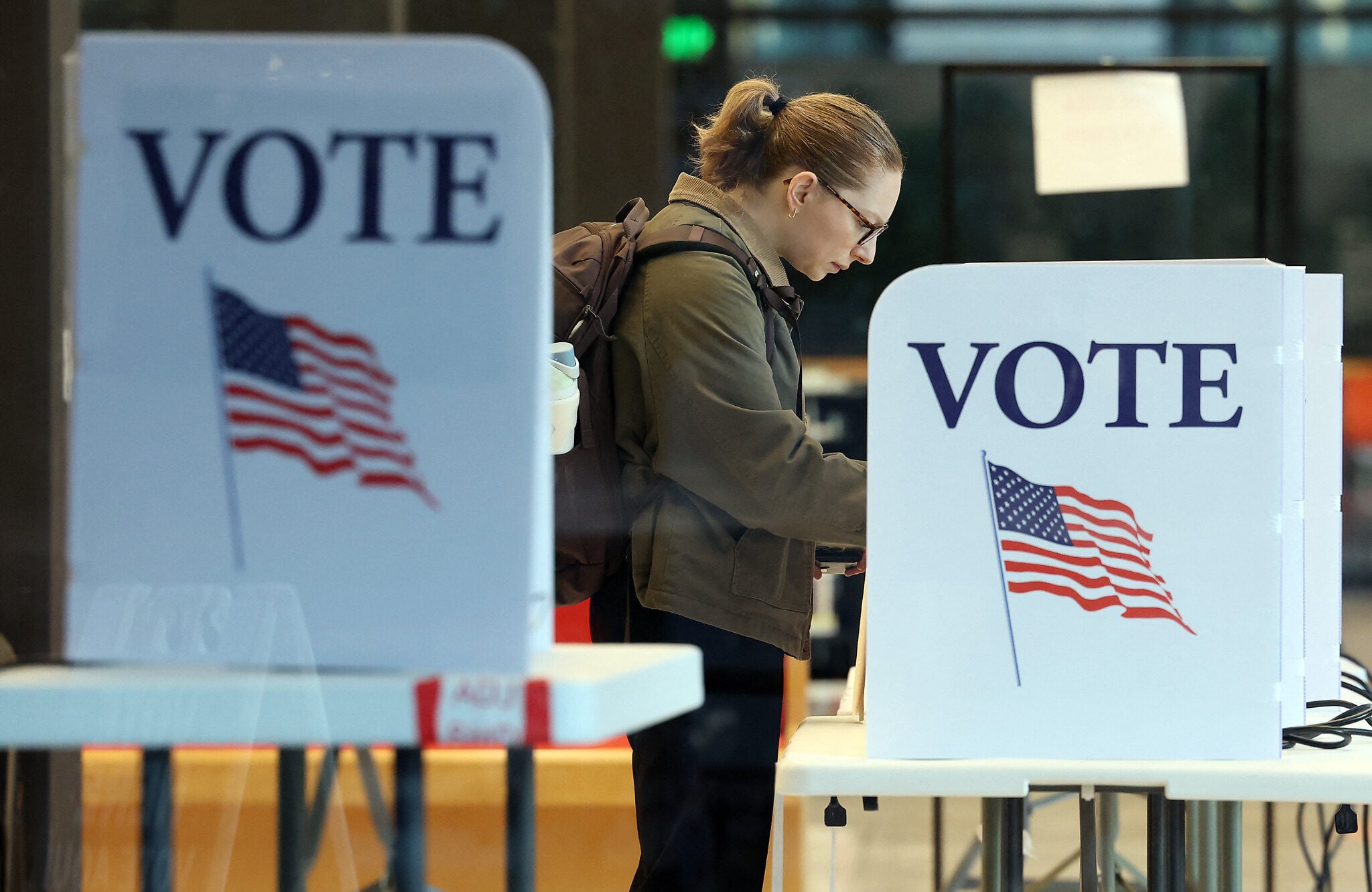
This year, in Michigan, Jewish voters had to choose. Their options were a pro-Trump Republican who supports Israel, and a progressive Democrat who opposes the country. Early returns suggest that the vote was close, but that El-Sayed won a slim majority of Jewish voters — 57 percent.
This indicates that such margins may be the future of the Jewish vote, closer to a 50-50 split than the 80-20 ratios Democrats have historically counted on. But the result also indicates — to voters as well as politicians — that for the majority of Michigan Jewish voters, being the most anti-Israel Senate candidate in America is not disqualifying.
Jews in states across the country have begun to face choices like this, and they are due to multiply in the future as Democratic candidates begin to listen to their anti-Israel rank and file. If this race becomes the norm, Jewish Democrats will face an uncomfortable choice: abandoning their party, abandoning support for Israel, or sitting the election out.
Many Democrats will inevitably choose the party. And for Israel, that means that the rift between the Jewish state and the world’s largest Jewish community will only grow wider.