Election committee chief instructs Shin Bet to probe suspicion of foreign influence on vote
Security agency said to provide Sohlberg with info on possible Qatari campaign to sway Arab vote; Likud decries 'stolen' election, Eisenkot warns against delay in swearing in Knesset
In a political bombshell, it was revealed Thursday that Central Elections Committee chair Justice Noam Sohlberg has asked the Shin Bet to investigate “serious suspicions” of foreign interference in Tuesday’s election, with Hebrew media reporting suspicions that Qatar had sent significant funds to Israel to influence the Arab vote.
“Serious suspicions have been brought to my attention regarding improper influence on the elections — exerted through funding provided by foreign entities acting against Israeli interests,” Sohlberg wrote in a letter to Zini dated Wednesday.
“While I cannot attest to the substance of these suspicions, it is my view that — given they involve foreign entities — there is an obligation to investigate them thoroughly,” he said.
Several outlets, including Channel 12 and Ynet, reported that the information was given to Sohlberg by the Shin Bet.
“This is an investigation opened in the past two weeks based on solid intelligence information,” an unnamed security official told Kan news. “We understand that there is something problematic, and we are investigating it seriously to fully extract all the information. In the coming days, things will become clear.”
Near-final election results on Thursday showed the bloc supporting Prime Minister Benjamin Netanyahu winning 53 seats in the 120-seat Knesset, with the Zionist opposition at 48, and Arab parties at an unprecedented 19.
The revelation of Sohlberg’s letter led to immediate allegations by coalition parties that the election had been “stolen.” Opposition leaders called for a thorough investigation, but warned against any political attempt to use the claim to illegitimately influence the election results, so long as the suspicions have not been substantiated.

The suspicions that sparked Sohlberg’s call for a probe did not appear to relate to significant irregularities in the voting process itself, or the election results, but specifically, the potential involvement of a foreign influence campaign behind the scenes.
In the wake of Sohlberg’s letter and in light of claims by Netanyahu and his allies, acting CEC director general Dean Livne rejected on Thursday afternoon allegations of widespread voter fraud as baseless, reiterating that the vote was conducted lawfully and that to the best of the committee’s knowledge, there was no evidence of systematic irregularities.
“The Knesset elections were conducted lawfully. The integrity of the elections at polling stations was rigorously safeguarded, and to the best of our knowledge, there is no basis for allegations of systematic violations of election integrity,” Livne wrote in a letter to Yesh Atid MK Vladimir Beliak, who sits on the committee.
Livne said the request by Sohlberg for a Shin Bet investigation concerned classified intelligence that warrants further examination, and that the information had not yet been verified.
Mobilizing Arab voters by illegal means?
Sohlberg, in his letter, instructed Shin Bet chief David Zini “to do everything in your power to investigate these suspicions, utilizing the authority of the Shin Bet to uncover evidence that either substantiates or refutes them. Only in this way can we ensure public trust in the electoral process and the integrity of the democratic procedure.”
The Supreme Court judge asked to be presented with any findings within a week.
Hebrew media outlets, citing various sources in the security establishment and the CEC, said Qatar was suspected of having engaged in an effort to mobilize Arab voters by illegal means, sending significant funds to Arab organizations to influence turnout and voting. The channels used to ostensibly send funds to the organizations closely resembled those used to send money for terrorism in the past, Channel 12 said.
The network also said the Shin Bet had been following the information for several days and had waited to see the planned illegal action would be carried out, after which it informed Sohlberg.

Appearing to contradict Channel 12, unnamed officials told Ynet and the Kan public broadcaster that the alleged electoral interference by Qatar was on a far smaller scale than other reports would suggest.
“It’s a much smaller affair than is being made out. It’s not something that hasn’t happened in the past — it’s just that here it crossed a certain threshold of evidence that requires an investigation,” the source, described as “nonpolitical,” told the Ynet news site.
Unnamed sources who were updated on the details of the Shin Bet investigation into the alleged electoral fraud also told Kan that the suspicions being examined are relatively small in scope.
Only two days ago, on election day, Zini had said: “It can be confidently stated to the citizens of Israel that the elections are monitored and conducted in a proper and inspiring manner.”
Israel Police Commissioner Danny Levy said in a statement Thursday morning: “Any complaint received and any suspicion of committing an offense related to the purity of the elections will be examined and investigated thoroughly and impartially.
“We will not allow anyone to harm the purity of the elections and the democratic process. In the event of any suspicion of committing an offense, the police will act resolutely to investigate the truth and bring those involved to justice, without exception.”
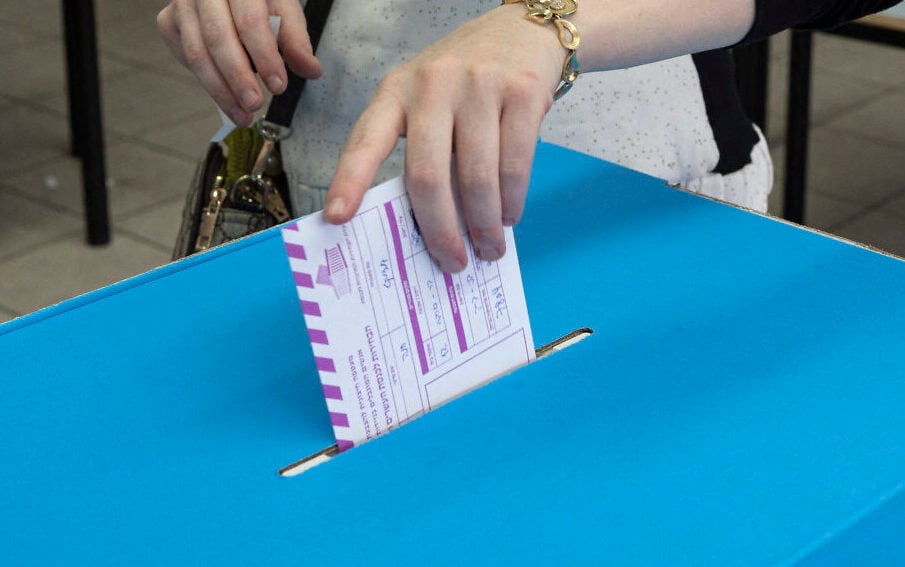
Turnout among Israel’s Arab community was notably high Tuesday, with Ra’am and the Joint List, the two predominantly Arab parties, poised to win a record 19 seats between them, surpassing the previous high of 15, in 2020.
This result, if it holds through the final counting of ballots, would put Arab parties in a potential kingmaker position, as both Netanyahu’s bloc and the Jewish-led parties opposing him are far from achieving a Knesset majority. At the same time, most Zionist parties have ruled out allying with the non-Zionist Arab parties.
After the polls closed on Tuesday, Likud claimed that the election was “stolen by Arab parties,” echoing statements Netanyahu made during the vote, and demanded a “thorough investigation” into alleged fraud or foreign interference, claiming the “use of illegal voter mobilization software” and noting the arrest of three Ra’am operatives for alleged bribery on election day.

Four more Ra’am activists were arrested Thursday morning on suspicion of involvement in the same alleged bribery scheme, which the party has denied. It was unknown whether the arrests were tied to the broader suspicions revealed on Thursday.
Shortly before Sohlberg’s letter to Zini was revealed on Thursday, police rejected Likud claims of voter fraud, with a police source telling media that election day “passed with very few irregular incidents concerning the integrity of the election, even when compared to previous elections.”
“It should be emphasized that there is no investigative- or intelligence-based supporting evidence for the claims,” the source said.
Hebrew media had reported ahead of the voting that Likud planned to challenge results from Arab locales and claim the election was “stolen” if Netanyahu did not win, with the party drawing up in advance a number of complaints and fraud allegations.
Likud: Probe shows no Zionist party should partner with Arab factions
After news of the probe broke, Likud issued a statement warning of an attempted “Islamization of Israel.”
“After it was revealed that foreign entities tried to take over the Knesset, it is clear that no Zionist party should cooperate with Ra’am and the Joint List, replace the Knesset speaker through votes bought for cash, and form a government that is dangerous to Israel,” the party said.
The opposition bloc doesn’t have the 61 votes necessary to form a government on its own, but there has been speculation it could attempt to partner with the two Arab parties or form a minority government with their support. (Analysts view such a bid as a long shot at any rate, due to the staunch opposition of many in the opposition parties to allying with non-Zionist factions.) There has also been speculation of an opposition attempt to vote in a new Knesset speaker to replace Likud’s Amir Ohana, relying on the Arab parties’ seats, even before the formation of a new government.
Calling the new scandal “Ra’amgate,” Likud repeated the charge that Arab parties “stole the elections in Israel.”

The alleged push by foreign states to influence the vote is “an attack on democracy,” Likud said, “whose purpose is to lead to a foreign takeover of the Knesset, the Islamization of Israel, and the overthrow of right-wing rule in order to lead to a retreat and defeat of the IDF in all arenas — and primarily Iran.”
The statement notably excluded naming Qatar as the alleged culprit of interference, despite the widespread reporting on the matter in Hebrew media. Netanyahu’s office has been marred by investigations into several of his close aides, who are alleged to have received millions of shekels for public relations work for Qatar while working in the Prime Minister’s Office.
Yashar leader Gadi Eisenkot, whose party leads the opposition bloc with 21 seats according to near-final results, and is second only to Likud which has 26, warned Thursday against politically exploiting allegations of foreign interference to delay the swearing-in of the next Knesset.
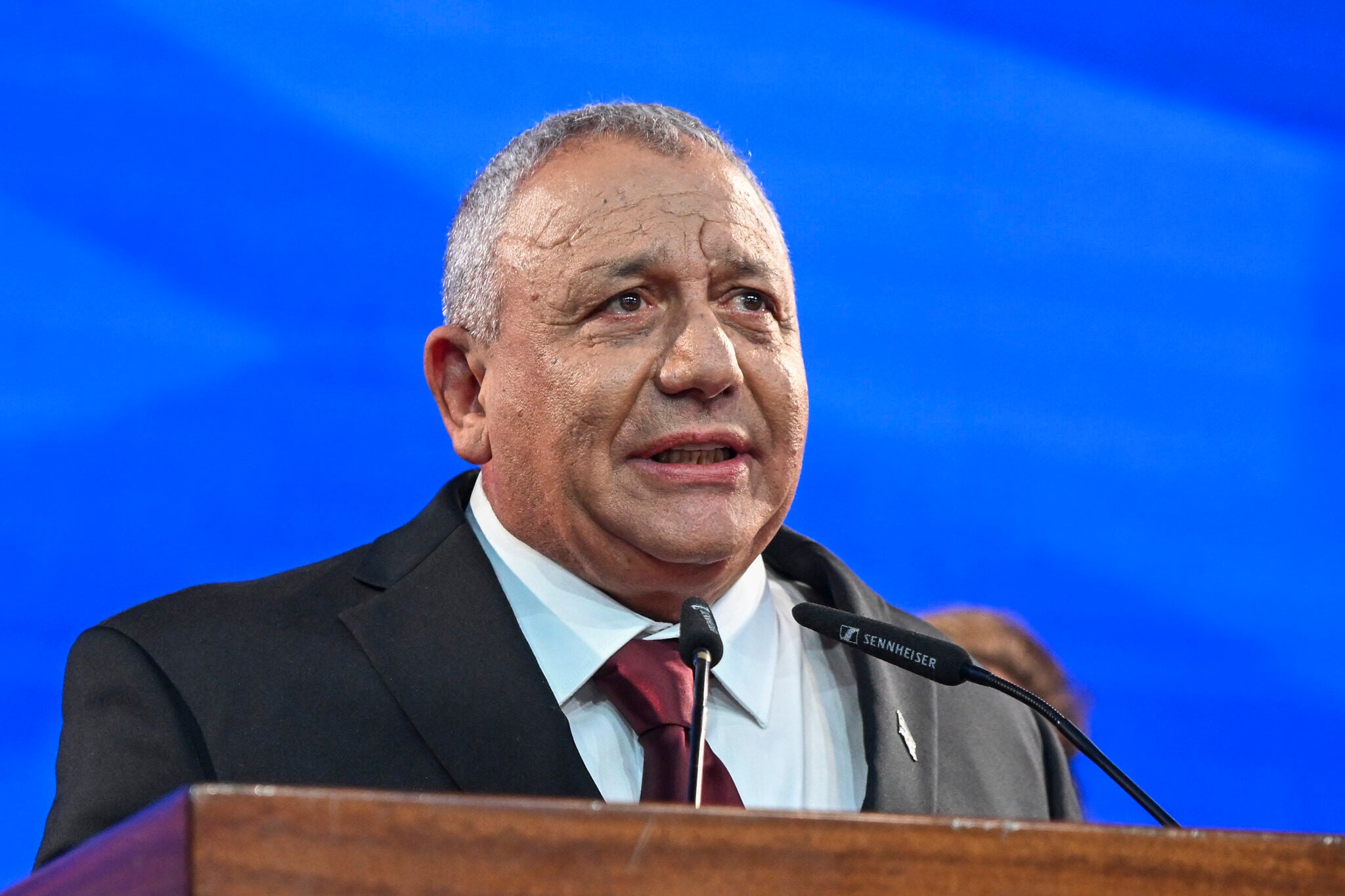
“Israel must do everything in its power to safeguard the integrity of the elections against any attempt at interference, spin or manipulation, and thoroughly investigate every complaint,” Eisenkot said.
“At the same time, political actors must not be allowed to exploit the situation to influence the date of the swearing-in of the 26th Knesset,” he said.
The new Knesset is expected to be sworn in on November 10.