Elections cause political earthquakes in both Israel and US… and between them
How far will Netanyahu go in contesting the results * What is Zini up to? * Eisenkot's least bad options * An end to military aid and, maybe, to military sales?
The results of the October 27 election were certified as scheduled on Wednesday and presented to President Isaac Herzog. That, in turn, set in motion the next stage of the process for choosing a new government, with Herzog hosting representatives of the 11 parties that made it into the new Knesset to hear their recommendations for whom he should task with the immensely challenging job of putting together a coalition. The opposition’s prime candidate for the task, Gadi Eisenkot, is almost certain to get the most recommendations, and thus to get the nod for Herzog.
Prime Minister Benjamin Netanyahu attempted to halt this process in its tracks, claiming repeatedly, from the morning of the vote itself, that the elections had been “stolen.” Netanyahu, his Likud party and his coalition partners have cited investigations into voter fraud and foreign interference, alleging that both were significant factors in the unprecedentedly high turnout in the Arab community. Likud’s legal representative on the Central Elections Committee, and the outgoing coalition’s political representatives on the Committee, argued to the last moment that the results should not be certified since those investigations are ongoing.
But the chair of the CEC, Supreme Court Justice Noam Sohlberg, made clear that the CEC is obligated by law, “unequivocally and without qualification,” to certify the results within eight days of the vote. Speaking to the CEC on Wednesday morning, he acknowledged the allegations “concerning the integrity of the electoral process,” and noted that the outgoing coalition parties have a right of appeal — apparently to the Jerusalem District Court. But, in further remarks when presenting the results to Herzog, he insisted that even if the allegations being investigated are confirmed, “the extent of their possible impact is limited.”
On Sunday, Sohlberg had stressed that “the claim that the evidence currently before us could overturn the election results as a whole is incorrect. Israeli citizens went to the polls this past Tuesday in record numbers. They expressed their views, and those views will be respected.” Even if the suspicions are substantiated, “this would not undermine the integrity of the electoral process or the election results as a whole.”
Netanyahu’s failure to thwart certification emphatically does not mean he has accepted the election results, which saw his 68-strong outgoing coalition losing its majority and falling to 53 seats in the incoming Knesset. Likud’s representatives abstained in the CEC votes ratifying the results, and in symbolic evidence of that ongoing refusal to accept them, coalition representatives on the CEC, with the exception of the Likud’s lawyer, boycotted the ceremony at the President’s Residence at which they were presented.
The head of the Shin Bet, David Zini, a Netanyahu appointee who has said that he accepted the position because of his ability to be “loyal to the elected leadership,” appears to be operating at intermittent odds with Sohlberg as regards the investigations, in which his agency has been playing a central role.
In a statement given to the CEC after the committee had ratified the results, the Shin Bet said it had gathered intelligence pointing to widespread foreign funding and influence operations involving “thousands of people and possibly more.” Sources in the law enforcement system told Haaretz they were not familiar with any claims to that effect.
Zini was last week reported to have updated Netanyahu about aspects of the Shin Bet’s election investigations before informing Sohlberg. The agency has also been issuing contradictory statements and information on its efforts to investigate several Arab party leaders and MKs regarding election fraud.
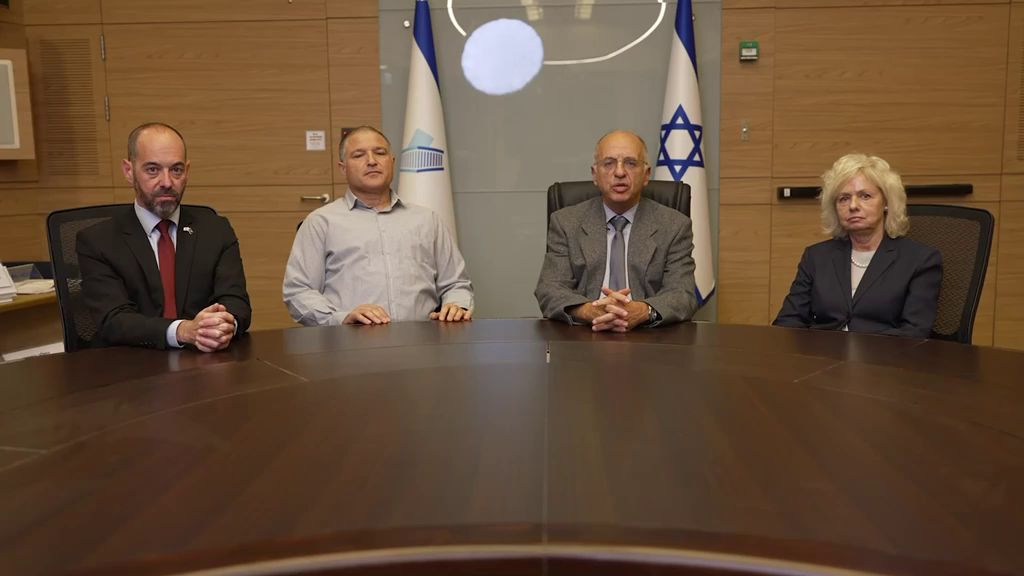
Nonetheless, Zini was quoted later Wednesday as having assured Sohlberg that he will follow “to the letter” the instructions of the attorney general in the probe of suspected foreign interference, and “won’t let the country go up in flames.”
On Sunday, Zini had sat alongside Sohlberg when the CEC chairman reiterated in a video message that the election was “conducted properly.” Sohlberg noted that his remarks reflected the positions of Zini and Attorney General Gali Baharav-Miara. Zini did not indicate dissent.
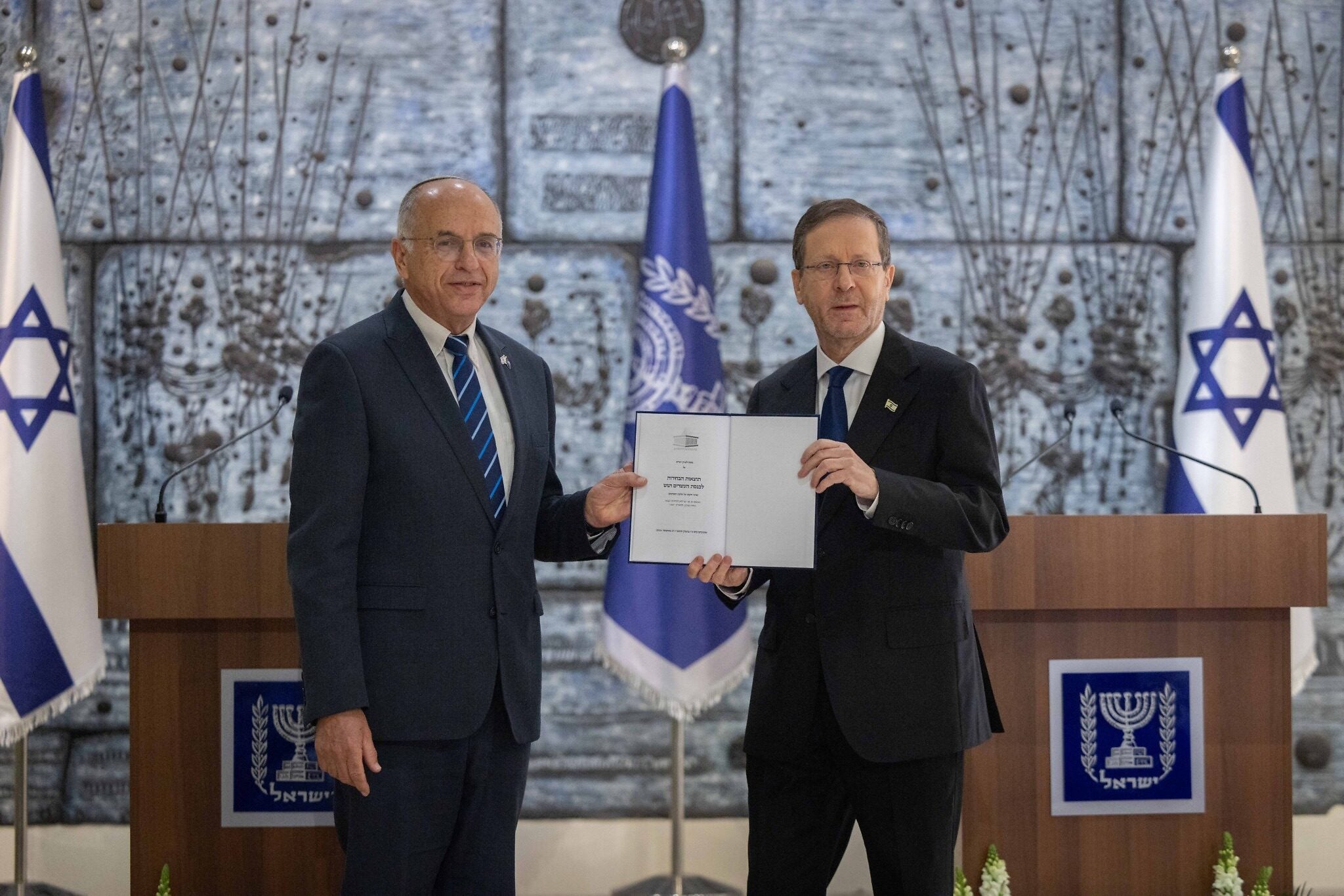
Delivering the election results to Herzog, Sohlberg warned, “In recent days, we have heard voices trying to cast doubt on the election results and to undermine their legitimacy. This is a real danger… One of the foundations of democracy is the ability to have a peaceful transfer of power. This stems from the understanding that the will of the electorate obligates us all.”
For his part, Herzog noted that Wednesday marked the 31st anniversary of the assassination of prime minister Yitzhak Rabin, and invoked it as a warning “of what can happen to us when disagreement turns into hatred, and when political rivalry turns into violence.” He urged Israel’s citizens “to extend a hand, even amid a bitter dispute that tears us apart in too many areas. The election is over,” he declared.

Many things are unclear about how Israel’s political process will unfold in the coming days and weeks. But it seems certain that Netanyahu will not easily concede the legitimacy of the results, not easily accept Herzog’s definitive summation.
The question now is how far Netanyahu will go with his claim of stolen elections, how far his supporters will go, and whether Israel is heading to some kind of iteration of the January 6, 2021, storming of the US Capitol.

Eisenkot’s narrow options
Netanyahu’s coalition lost its majority, but Eisenkot did not win enough seats to easily build one of his own. Or even to do so uneasily.
The four Jewish-led opposition parties won only 48 seats, and all but the Democrats are adamantly opposed to bringing either of the two Arab parties, which won 19 seats, into a governing coalition, or relying on those parties’ votes, from outside, in order to swear in a minority government.
What Eisenkot has said he intends to do is act as quickly as possible to utilize the anti-Netanyahu parliamentary majority — 67 Knesset seats to 53 — to advance essential legislative changes.
Eisenkot’s plan is to oust Likud’s Knesset speaker and, if and when he gets Herzog’s mandate, to take over the crucial Arrangements Committee — and thus to gain control over the Knesset agenda. Once that is done, he would presumably move to cancel laws politicizing the selection of judges and diluting the powers of the attorney general, which are set to take effect with the incoming Knesset. Advancing and passing laws to establish a state commission of inquiry and to ensure the drafting of most members of the ultra-Orthodox community — key stated priorities of Eisenkot’s — would likely present a far more complex legislative challenge.
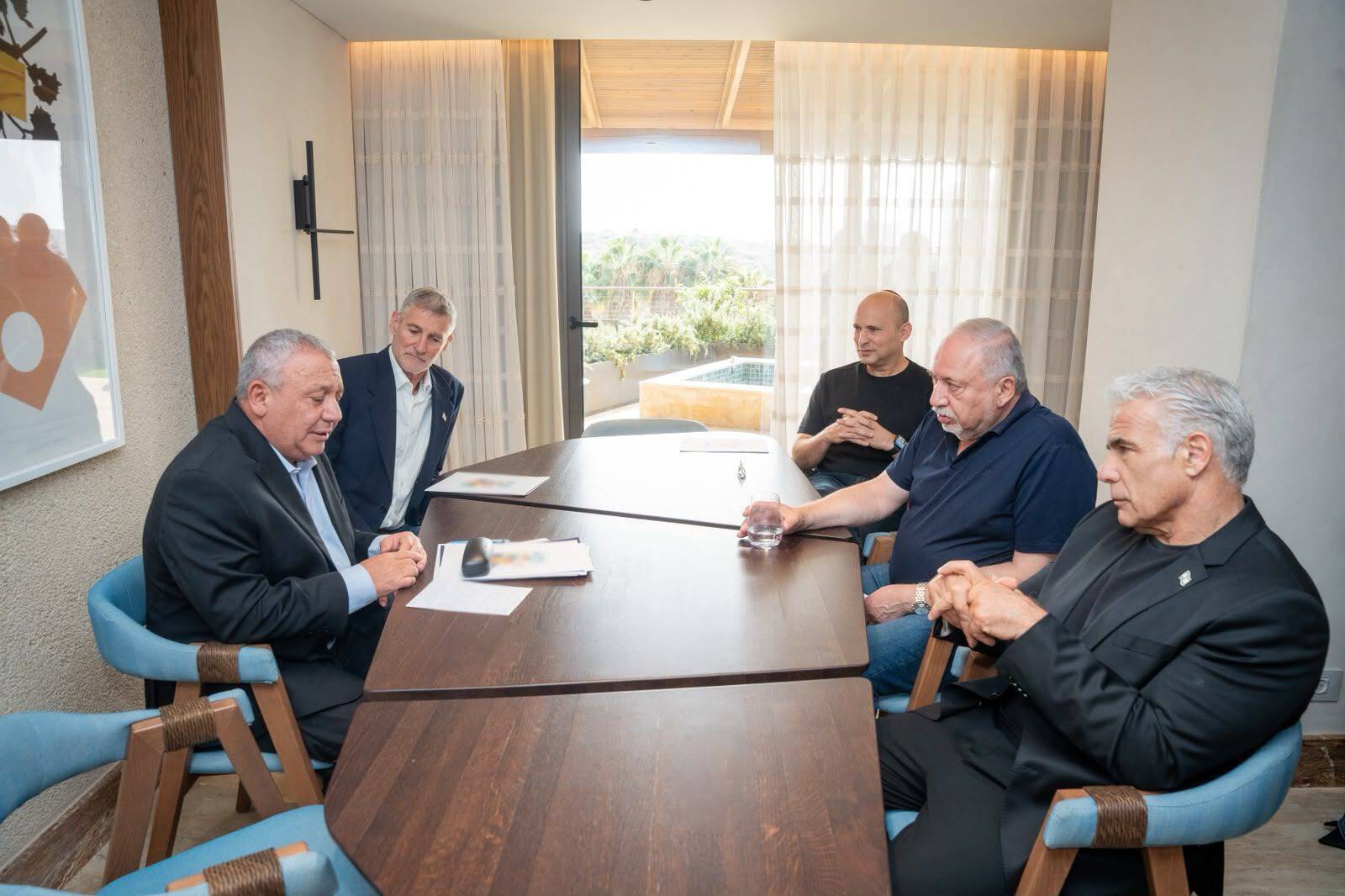
If tasked with forming a coalition, Eisenkot would have a maximum of six weeks to do so. If he failed, Herzog would likely give Netanyahu the opportunity. By around December 22 at latest, therefore, Eisenkot would have to try to swear in a majority or a minority government.
A partnership with Netanyahu is beyond unlikely. Eisenkot’s least bad prime ministerial options, therefore, would appear to involve cutting an improbable deal with the seven-strong United Torah Judaism party, which is ostensibly fed up with Netanyahu for failing to pass a law enshrining Haredi exemption from military service.
It is exceptionally hard to see how Eisenkot, who is committed to ensuring broad Haredi enlistment, and UTJ, which is committed to the very opposite, could find sufficient common ground for the UTJ to agree to abstain in a vote on an Eisenkot-led government, much less to vote in favor. And, again, three of the four anti-Netanyahu Jewish-led parties — including Eisenkot’s Yashar, and with Avigdor Liberman’s Yisrael Beytenu the most strident — have said they do not want to build a government reliant on the Arab parties.

All of which means that, without a radical redraft of core campaign positions in the opposition bloc, Eisenkot’s prime ministerial prospects look slim. Netanyahu’s may not be any better unless he can trigger a revolt in the opposition camp. Therefore, another round of elections would appear the likeliest consequence of these ones — assuming, that is, Israel’s democracy survives intact until then.
Military aid, and military sales, now in question
The US midterms marked a stunning reset in American politics. Their impact is an earthquake for Israel too.
The Democrats now control both houses of Congress, and among the new arrivals are politicians profoundly hostile to Israel.
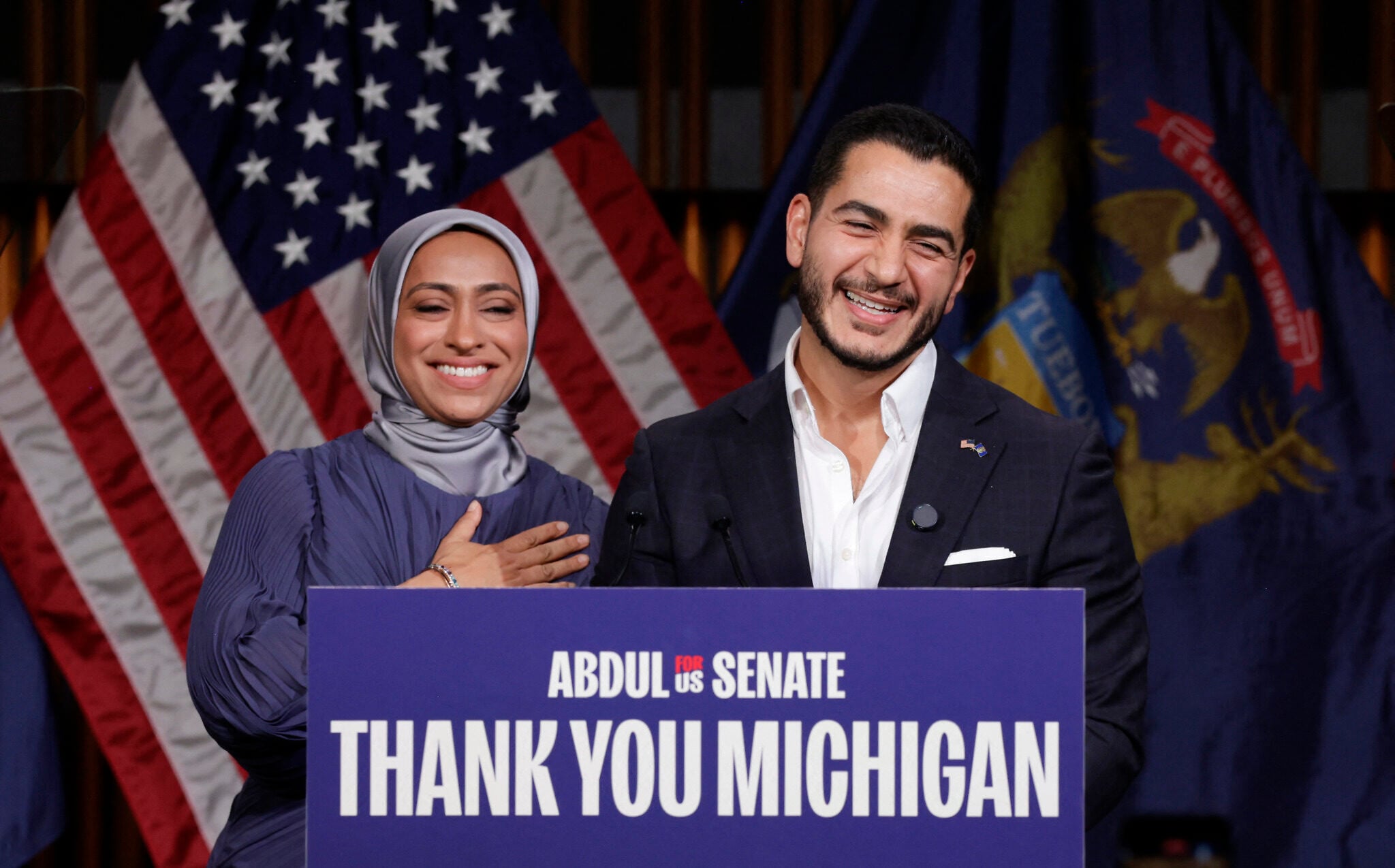
Abdul El-Sayed, the first Muslim American to serve in the Senate, campaigned on opposition to US backing for Israel’s war in Gaza, notably including an end to US military support. In his victory speech, amid shouts of “Free Palestine,” he declared, “They try to call you hateful if you believe that Palestinian kids should get to grow up in the land of their forefathers without being martyred by our tax dollars… We don’t want our money to be sent to do apartheid or genocidal war.”
Election day also brought a bombshell courtesy of US President Donald Trump, who announced that he and Netanyahu have a “deal” under which US military aid to Israel, worth almost $4 billion a year, will come to an end two months from now, at the end of 2026.
Netanyahu has repeatedly talked up the ostensible imperative to end Israel’s reliance on such aid. Less than two weeks ago, he warned that multibillion-dollar weapons packages from Washington “won’t keep coming.” “If you think we will continue receiving what I twice secured — which is tens of billions of dollars in American aid for the defense budget — prepare yourselves and get used to [the fact that it won’t happen anymore] because America has changed. Not because Israel has [changed]. It’s over, and it will be over. It’s just a matter of time,” Netanyahu said in a TV interview.
But if the prime minister anticipated so sudden a cessation — the current US-Israel memorandum of understanding on the issue does not expire until the end of fiscal 2028 — he evidently did not give the defense establishment advance warning.
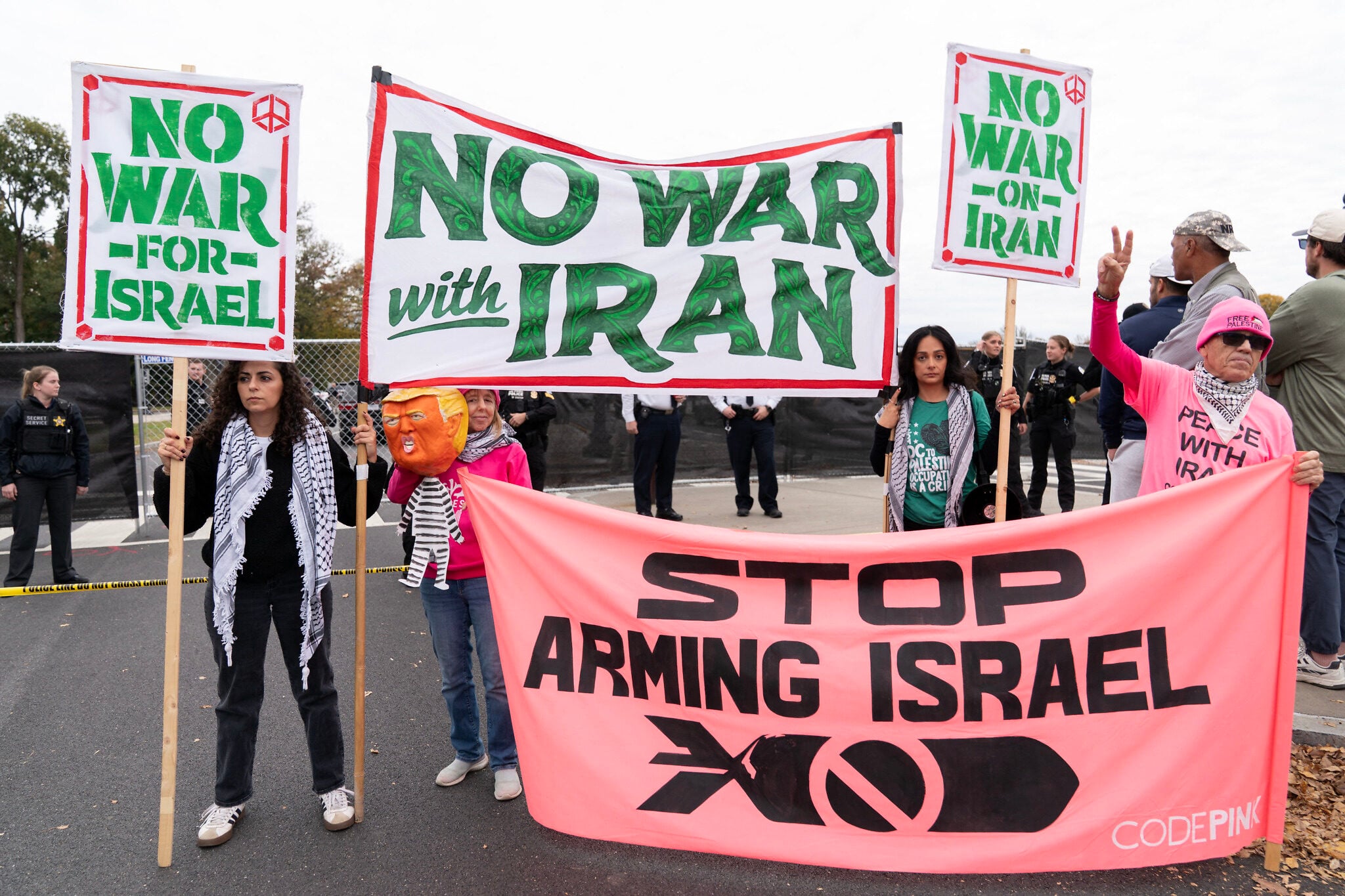
The fact that Trump announced the move — whether or not it comes to pass — on midterm election day, in the hope that it would bolster Republican support and reduce the party’s losses, underlines how far Israel’s star has fallen not only with the Democrats, whom Netanyahu wrote off long ago, but with the Republicans, in whose basket he placed all of Israel’s eggs.
When Mike Huckabee, one of the most passionately pro-Israel ambassadors ever, a man who endorses an Israel of biblical dimensions, condemns settler extremist violence against Palestinian civilians in the West Bank as “Jewish terrorism,” and protests the failure to effectively tackle it, you know that you are alienating even your closest friends.
According to Pew polling, 60% of all US adults hold an unfavorable view of Israel, up nearly 20 points since 2022. According to Gallup, more Americans sympathize with Palestinians than Israelis. According to Pew, again, 80% of Democrats and Democratic-leaning independents hold an unfavorable view of Israel. All of that plainly impacted America’s elections.

The question the Israeli defense establishment will be asking itself after the midterms is not only whether and when US military aid to Israel will come to an end, but whether US military sales to Israel, essential to Israel’s defense, will survive the new American political landscape.
Like all Israelis, the defense establishment will also be asking where America’s political shift leaves the unfinished US and Israeli business with the Iranian regime and its nuclear program. Unless Netanyahu tries again to initiate conflict, the answer to that question lies solely with Trump. And his vice president, JD Vance on Wednesday cited the desire to end the Iran war, and to “change our relationship to Israel,” as two of the four prime reasons why “a lot of Trump 2024 voters were angry and planning to vote for Democrats.”
—
This Editor’s Note was sent out earlier Wednesday in ToI’s weekly update email to members of the Times of Israel Community. To receive these Editor’s Notes as they’re released, join the ToI Community here.