Exhibit brings visitors back to Tel Aviv’s Shalom Meir Tower
Pop-up event fills empty office high-rise's raw, industrial space
A six-day art exhibit held in a long-dilapidated urban landmark has created a distinctly Tel Avivian experience, melding artworks and architecture in a historic building.
The exhibit, titled “HaMivne” or “The Structure,” is open from December 24 to 29 in a raw, industrial interior of Shalom Meir Tower, parts of which have stood empty for the last decade, after former commercial tenants left.
The pop-up show is free, with registration required through its website and availability limited. The site is open from 4 p.m. or 6 p.m. to 11 p.m. each night.
Shalom Meir Tower, usually known simply as Shalom Tower, was Israel’s first skyscraper, completed in 1965, and for decades was the tallest building in the Middle East. It was named after the father of the builders, Mordechai, Moshe and Binyamin Meir of the Meir Brothers construction company.
The concept for the temporary exhibit came from the Mivne real estate group, which now owns this section of the tower.
“It’s their building, it’s theirs to flaunt, and they put this idea together,” said Ariel Kotzer, a trained architect who is the art director of the exhibit.
The 34-floor building, sitting on the corner of Herzl and Ahad Ha’am Streets, is at a central location in Tel Aviv that harkens to the city’s earliest roots, as Shalom Tower connected nearby Neve Tzedek, the first neighborhood built outside Jaffa, to the rest of the expanding city.
The building’s wall-to-ceiling windows on the first floor create an instant connection between the exhibit and the Tel Aviv street, said Kotzer.
Each one of the three floors used for the exhibit is empty of interior walls, offering 800 meters (2,625 feet) of space for the artworks, many of which fill their allotted space.
“I wanted pieces that clicked into the place and the architecture and became part of it and vice versa,” said Kotzer, who views the exhibit as a kind of biennale, the large-scale exhibits held every two years, most famously in Venice.
It was Kotzer and curator and art collector Sivan Sebbag Zelensky, who selected the 20 participating artists — some well-known, others less so — setting their 21 artworks up on the first three floors of the tower, with each artist giving expression to the term “structure.”
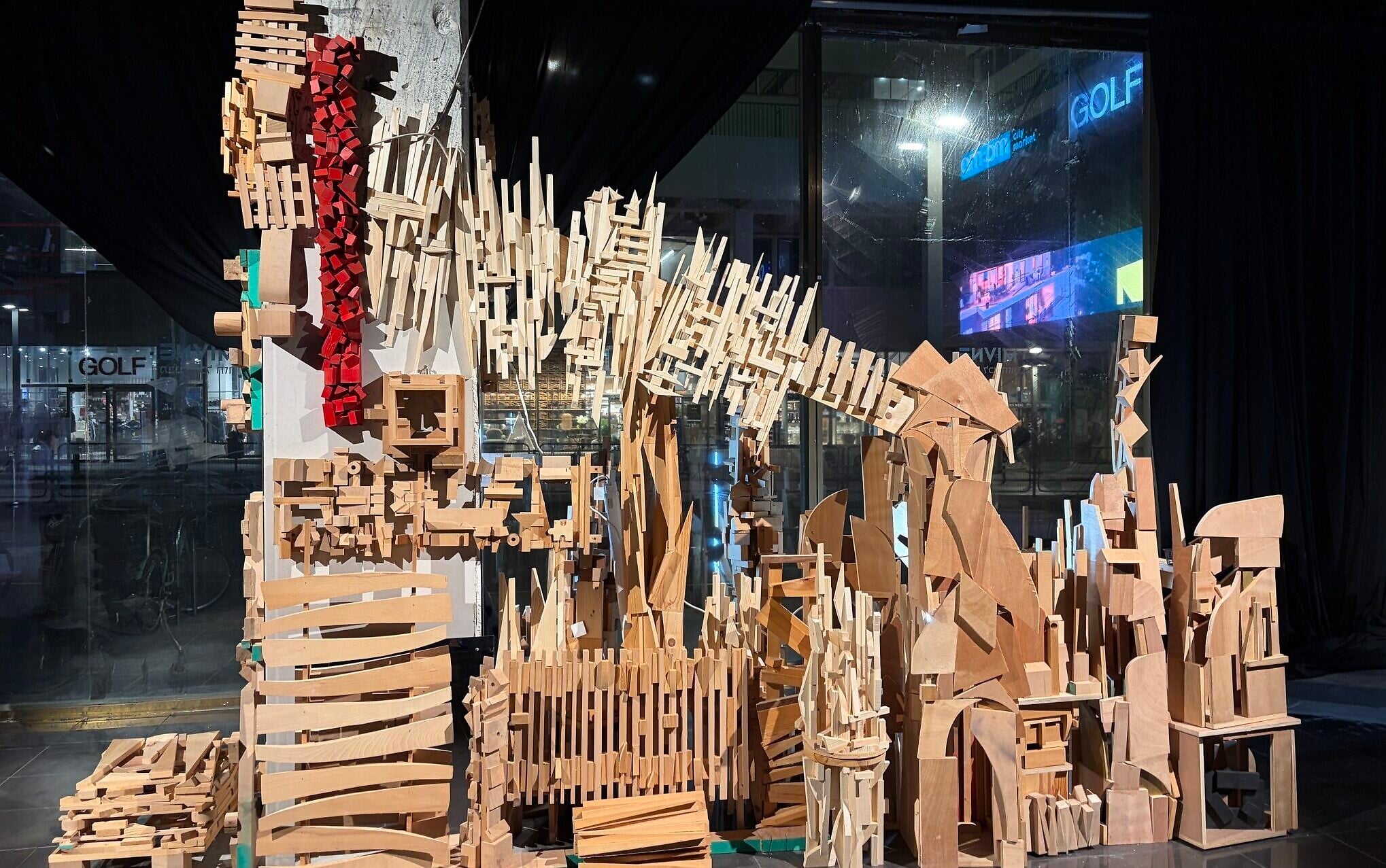
There is Soly Bornstein Wolff’s construction site sculpture, made from scraps of wood gathered from Tel Aviv carpentry shops, and Alma Schneor’s glittering castle of colored plastic shapes that reflects a kaleidoscope of shades on the wall.
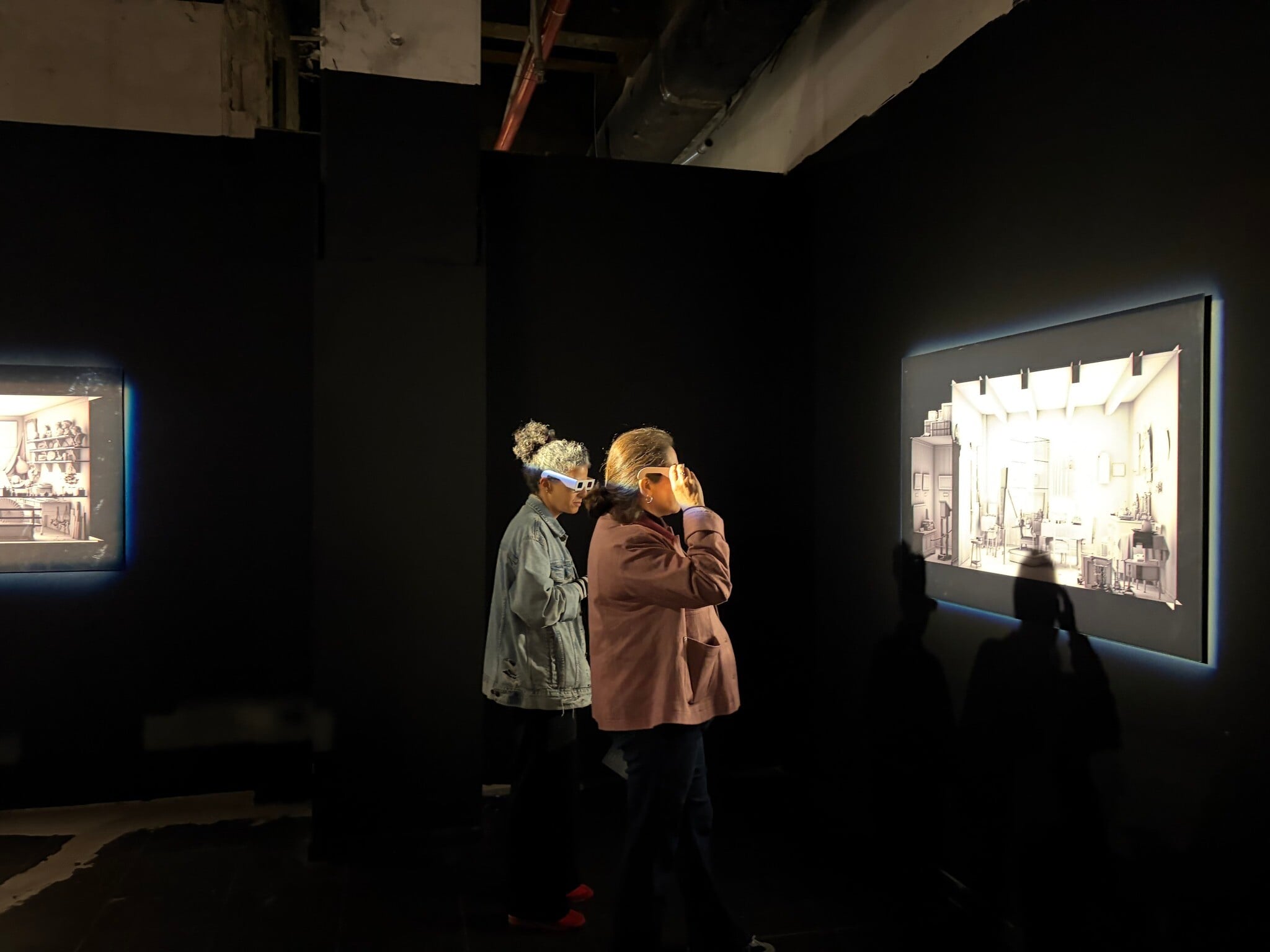
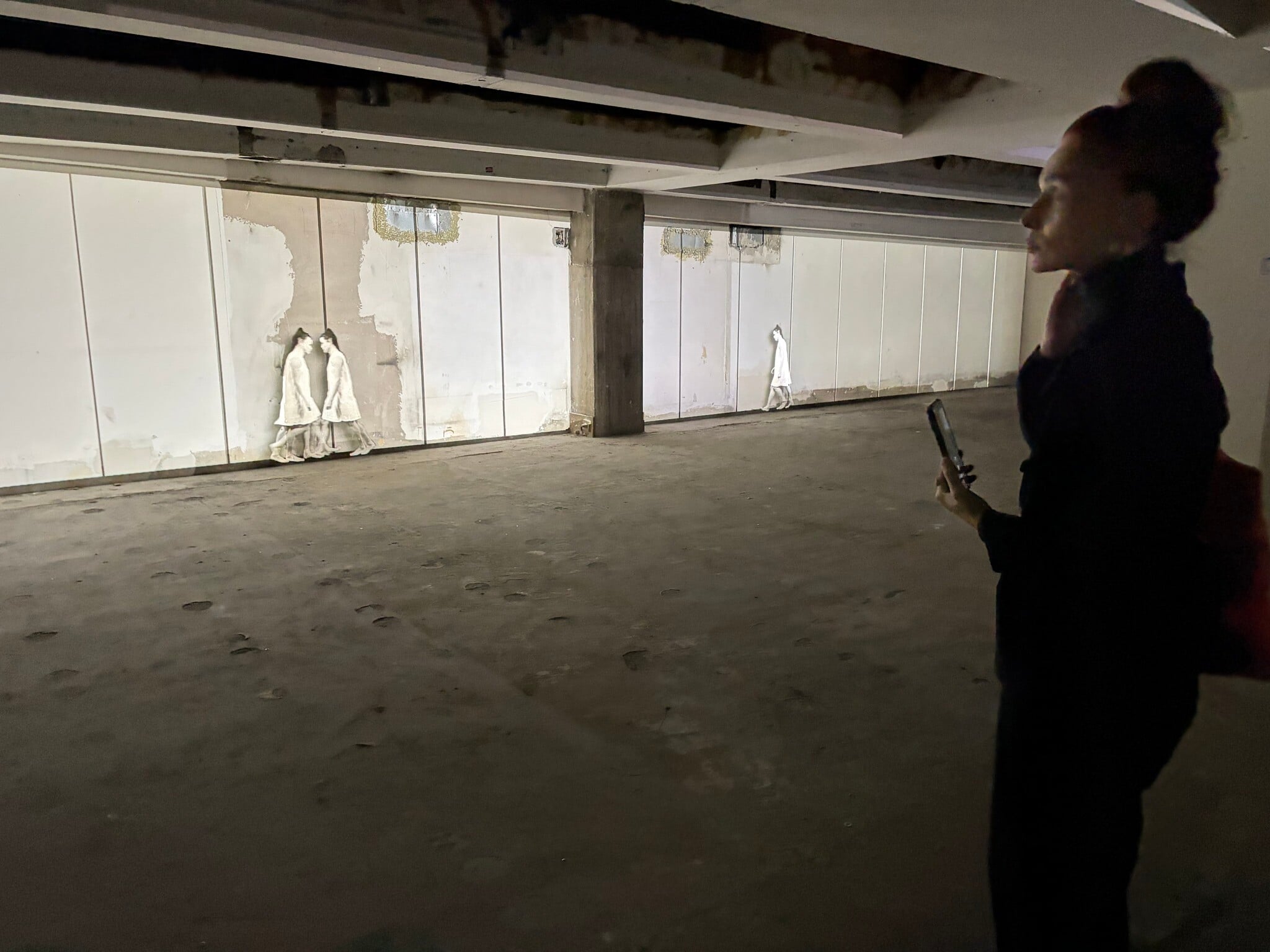
Visitors can don 3D glasses to view Maya Zack’s video art installations, and also gather in one long gallery to watch identical figures move in and out of immense cement barriers in Ronen Sharabani’s “Checkpoint” video, which eerily blends into the raw cement walls of the gallery.
There are other videos as well, including Dari Zuron’s “Temporary Space,” a quietly humorous AI-assisted video in which a swimmer dives into what appears to be a pool of water inside a construction site dumpster, and video artist Meirav Heiman’s work “Fine,” a four-minute film of a family of four sitting down to what appears to be a Shabbat dinner only to have an unknown disaster from above transform the tranquil moment into complete chaos.
Heiman told The Times of Israel when the video was first released that it suggested the terror and fear of the October 7 attacks.
The trauma experienced by Israeli society since October 7 is present in different works in “The Structure,” said Kotzer. Still, it’s a more subjective encounter, reliant on every visitor’s viewpoint of each work.
“You can’t live within this time and space and not have [October 7] affect you,” he said. “But when you meet a piece of art, it’s a meeting of you and that piece. Different people come in and see it, and they may see something I don’t.”
Kotzer is hopeful that “The Structure” will remain open for at least a few more days beyond the current schedule, given the public’s interest and Mivne’s generosity in sponsoring the event.
“I think we need as much culture as we can get,” said Kotzer. “And there are plenty of empty spaces out there, not just in Tel Aviv.”