Haredi draft exemption marching ahead, but contentious bill still faces uphill battle
With rebel MKs possibly withholding support, legislation is set to advance out of committee but may be slow to face Knesset vote, putting ultra-Orthodox parties in a bind over budget
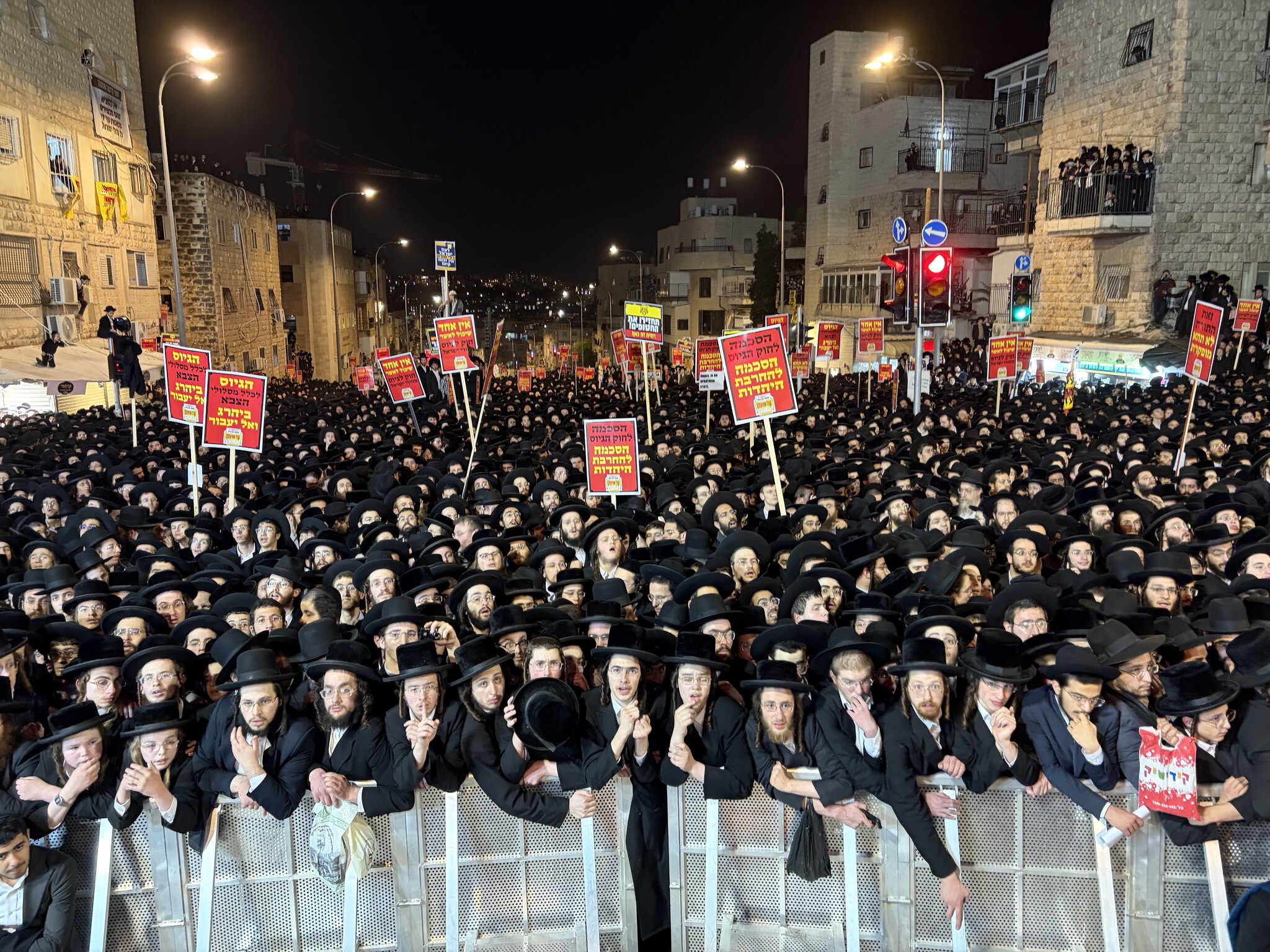
Addressing the government during its weekly meeting on Sunday, Cabinet Secretary Yossi Fuchs told ministers that the government’s ultra-Orthodox draft regulation bill could be sent to the Knesset plenum in the next few weeks, paving the way for the final two votes before the controversial legislation becomes law.
But despite the backing of Prime Minister Benjamin Netanyahu, the future of the bill — which introduces measures aimed at increasing military conscription among members of the Haredi community but ultimately enshrines continued exemptions for full-time yeshiva students — is still very much up in the air.
In the end, its fate, and potentially that of Netanyahu’s government, is likely to rest on three groups: the Knesset’s ultra-Orthodox parties, the far-right Religious Zionism party, and a small group of Likud rebels who have expressed public opposition to a measure they and other critics believe will be ineffective in increasing Haredi conscription to any meaningful degree.
Some 80,000 ultra-Orthodox men aged between 18 and 24 are currently believed to be eligible for military service, but have not enlisted. The Israel Defense Forces has said it urgently needs 12,000 recruits due to the strain on standing and reserve forces caused by the war against Hamas in Gaza and other military challenges.
For the past two years, the Haredi leadership has pushed for a law keeping its constituency out of the IDF, after the High Court ruled that decades-long blanket exemptions from army duty traditionally afforded to full-time Haredi yeshiva students were illegal. Since then, coalition lawmakers, dependent on Haredi support to keep them in government, have struggled to find a formulation that could win ultra-Orthodox backing while also meeting demands for the community to share in the burden of mandatory military service.
The latest version of the bill, introduced by Foreign Affairs and Defense Committee chairman Boaz Bismuth (Likud) has come under fire from IDF brass, the attorney general, and a wide array of other critics, who have objected to it on the grounds that it is full of loopholes and will not increase Haredi enlistment.
Among them are a small but significant number of coalition MKs who have vocally pilloried the bill, including Likud MKs Yuli Edelstein and Dan Illouz, New Hope’s Sharren Haskel and Religious Zionism’s Moshe Solomon, Michal Woldiger and Ofir Sofer.
Sofer, who also serves as immigration minister, held a press conference last month to announce that he would “vote against this law, even if it means the prime minister will fire me.”
The disunited Haredim
The bill is supported by Shas’s 11 MKs, but the seven lawmakers of the other ultra-Orthodox party, United Torah Judaism, are split. The UTJ political alliance comprises Degel HaTorah, which controls four seats and backs the bill, and the three-seat Agudat Yisrael faction, which is opposed.
Including Shas but not UTJ, the coalition currently holds 60 out of the Knesset’s 120 seats. Should Agudat Yisrael’s MKs join the rest of the opposition, and the coalition rebels hold firm in opposing the measure, the bill could very well fail to pass its final two readings.

Agudat Yisrael has expressed opposition to any legislation containing sanctions against yeshiva students, no matter how toothless. But it remains unclear how deep or how firm the opposition to the bill within the coalition is, and Netanyahu has a reputation as a sly political operator able to defuse such challenges.
He showed his prowess at finagling things in his favor again this week by bringing in Agudat Yisrael MK Yisrael Eichler as deputy communications minister, which entails Eichler giving up his Knesset seat. The move paved the way for the return of Degel HaTorah MK Yitzhak Pindrus to the Knesset, securing a fourth “yes” vote from UTJ on the bill and weakening faction unity.
In early December, Haskel claimed that she had counted at least 10 definite opponents of the legislation within the coalition. According to Channel 12 this month, the number of opponents is down to eight, and some political insiders believe that many of them are likely to back down and will end up toeing the coalition line despite their reservations.
A source with direct knowledge of the matter told The Times of Israel that some coalition rebels have been subjected to threatening calls and are under pressure to reverse course.
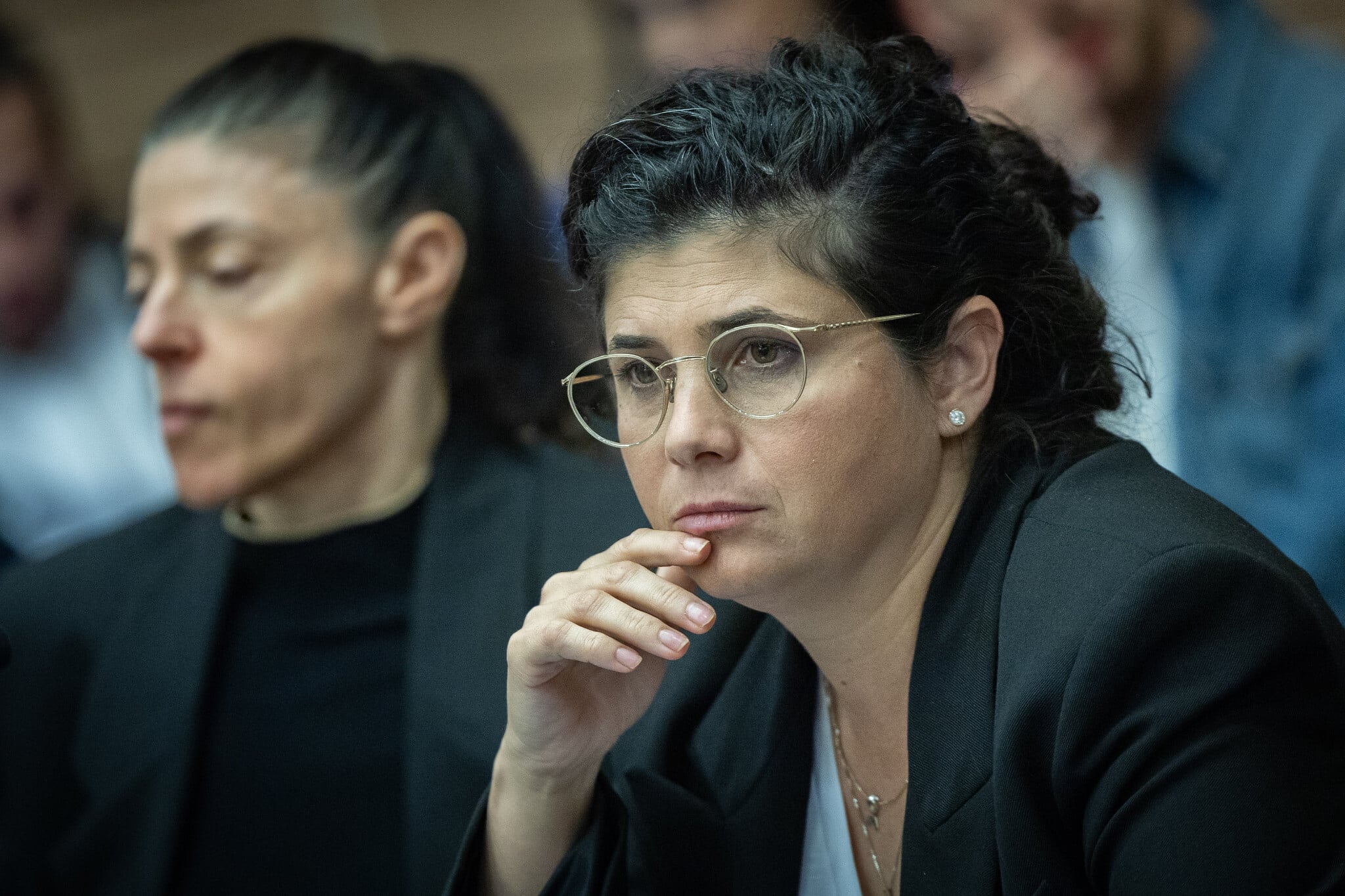
On Monday, Finance Minister Bezalel Smotrich again declined to say how he or his Religious Zionism party would vote on the legislation, which he has previously said requires revisions.
Despite the significant, though not uniform, opposition to the bill with the party, Smotrich said that Religious Zionism would only make a decision after the committee finishes its deliberations and presents a revised bill.
One coalition MK who spoke with The Times of Israel appeared to believe that Smotrich’s party, which has previously denied agreeing to vote in favor, is likely to fold in the end, supporting a slightly modified but functionally identical bill, saying that “most of them will vote in favor and maybe one more of them will defect.”
Another, however, took an opposite tack, stating that Smotrich was “in real trouble” because some of his MKs “seem to be determined not to support the bill.”

Smotrich, for his part, told reporters that he believed that the Haredim have a vested interest in keeping the coalition in power as well as a clear interest in passing a budget, an issue the ultra-Orthodox parties have tied to that of conscription.
Speaking with The Times of Israel this week, a coalition source said that it was “too early” to tell if the law had enough support to pass its final two readings.
A coalition MK, who spoke on condition of anonymity, agreed, saying that there was only a “1-2 vote difference” between the two sides.
The bill is currently in markup in the Knesset’s Foreign Affairs and Defense Committee, but is expected to advance within two weeks, according to Fuchs. However, it won’t come up for a vote until the coalition leadership is confident it can pass.
It’s “doubtful we will see the plenum voting in two weeks,” the coalition source said.
Follow the money
Despite warning that they would not support the 2026 state budget until the coalition passes its controversial bill exempting yeshiva students from military service, both Shas and Degel HaTorah plan to vote in favor of the budget in its first reading in the coming days, Hebrew media reported on Sunday.
But the two Haredi parties will withhold their support in the next votes on the budget until the IDF draft bill’s legislative process is completed, according to Channel 12 news.
Smotrich submitted the 2026 state budget to the Knesset this week, with its first reading expected to be held Monday.
Knesset Legal Adviser Sagit Afik informed lawmakers on Sunday that a first reading of the budget must be held by next week because at least two months must pass between the first and second readings of the budget, the latter of which must be held by the end of March.
Under the law, if the government fails to pass the budget by the end of March, the Knesset will automatically dissolve, triggering early elections three months later. Elections are currently slated to be held by late October.
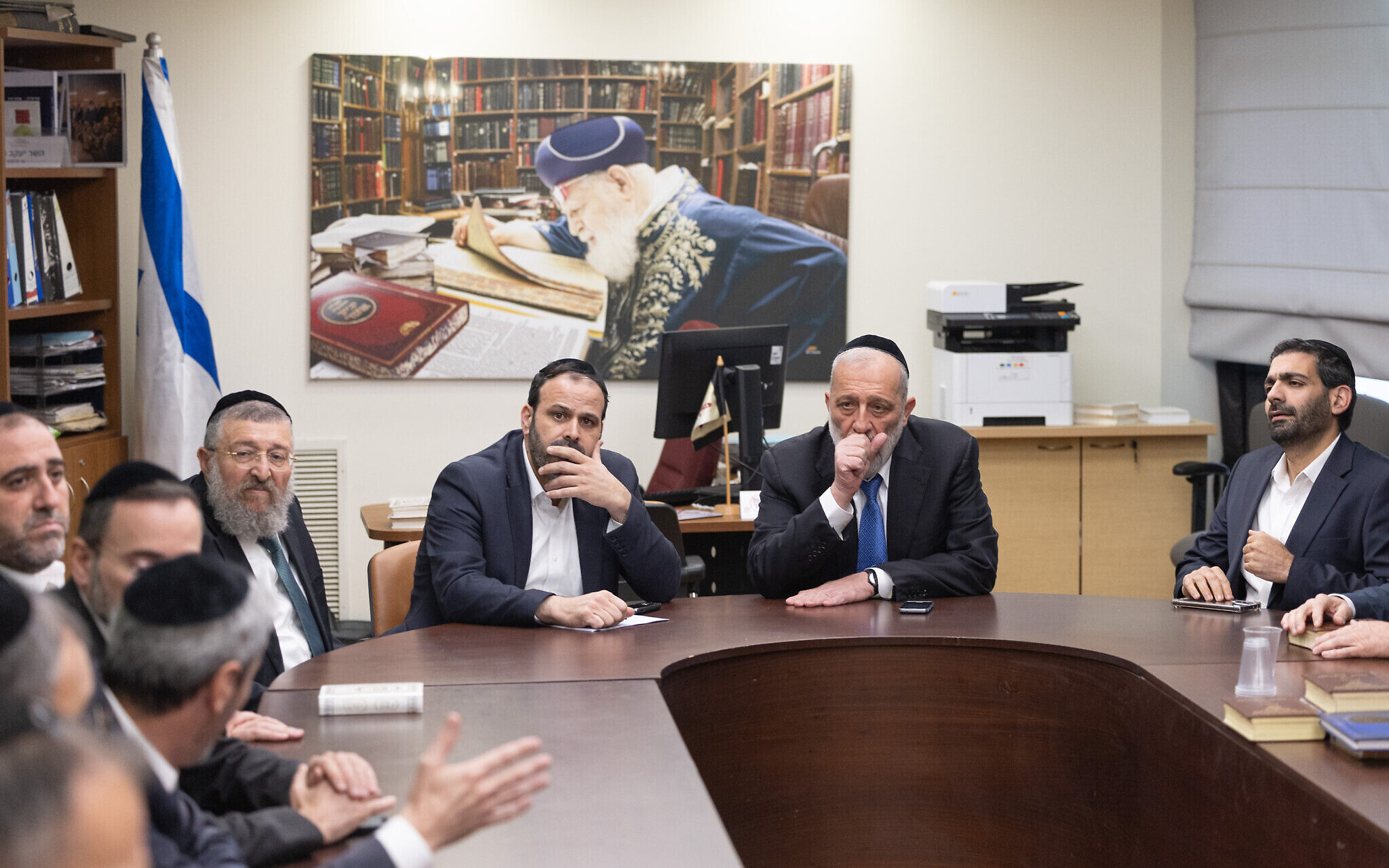
According to the ultra-Orthodox news site Emess, Shas chairman Aryeh Deri has expressed doubt that Netanyahu’s coalition will actually bring the IDF draft bill for its second and third readings in the Knesset before the budget is passed. During their weekly faction meeting on Monday, according to Emess, Deri predicted to the MKs of his party that they would “vote in favor of the first reading [of the budget] and then in the end there will be no [conscription regulation] law and they will tell us to come and pass a budget and then [they will] dissolve the Knesset [anyway].”
“In my opinion, that’s where we are going,” he said, slamming Netanyahu’s Likud party for not pushing harder for the IDF bill.
While most Likud MKs are expected to vote in favor of the bill, few members of the party have turned out to speak in favor of the draft legislation during the ongoing deliberations in the Foreign Affairs and Defense Committee.
“If 10 Likud MKs came every day and contended with the opposition, everything would look different,” Emess quoted Deri as saying.
The comments signal that Deri could be willing to tank the budget, and the coalition, if he thinks the Haredi parties are being given the runaround for an bill that Netanyahu won’t bring to a vote.
Shas and UTJ have backed down from previous threats to oppose the budget due to the Haredi community’s reliance on government funding, watering down the credibility of such threats.
But given the importance they have placed on the IDF regulation bill, with community members being arrested for draft dodging and ongoing sanctions on state education earmarks stemming from the 2024 court ruling, this time they may be serious.

“I believe [Netanyahu] will not pass the law. He is stringing the ultra-Orthodox along, and I have a feeling they know it,” Yesh Atid MK Moshe Tur-Paz, an opposition member of the Foreign Affairs and Defense Committee, told The Times of Israel.
But Tur-Paz predicted that the Haredi parties would be bought off and could back the budget even if chances of turning the draft regulation bill into a law remain a mirage.
“That’s what he’s trying to do, pass a budget without a conscription law. Let’s see how strong they will stand” when he gives them “billions” in taxpayer funds, he said.