Haredi protesters rage against draft as leaders weigh coalition deal with Eisenkot bloc
Three yeshiva students jailed for failing to enlist; former MK Gafni said working to block a deal with anti-Netanyahu camp
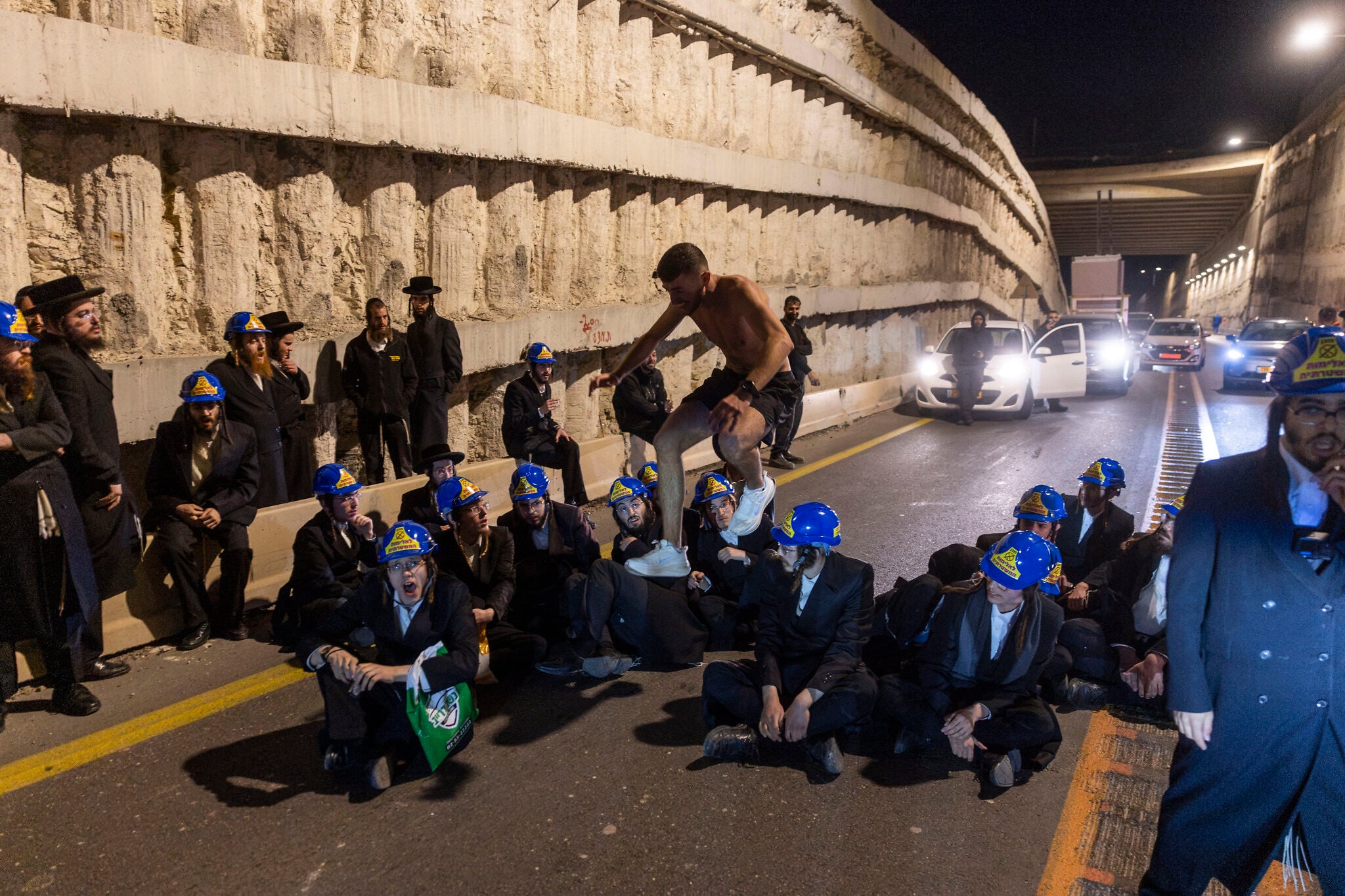
Dozens of Haredi protesters blocked a road outside Beit Shemesh and the light rail on Jerusalem’s Jaffa Street on Wednesday evening, footage showed, reportedly in protest after the military detained yeshiva students who failed to enlist for mandatory service, as ultra-Orthodox leaders simultaneously were weighing coalition talks centered on resolving the status of draft-dodging students.
Police said officers declared both protests illegal and used force to disperse rioters.
Haredi news outlet Kikar HaShabbat reported that the protests followed the arrest of three students from an ultra-Orthodox yeshiva in Jerusalem, who were arrested on Route 90 while driving back from the Dead Sea overnight Monday-Tuesday.
The three were sentenced to 20 days in military prison after police found they had standing draft orders, according to the site. The reason they were stopped in the first place was unspecified.
The protests were the latest in a series of demonstrations over the arrest of Haredi draft dodgers. On November 1, ultra-Orthodox protesters clashed with police officers near the Mea She’arim neighborhood in Jerusalem over the arrest of a draft dodger.
Days earlier, on October 29, hundreds of Haredi men blocked Route 4 near Bnei Brak in another protest over the arrest of a draft evader, with three protesters arrested and three police officers wounded.
ירושלים: צומת הרחובות שרי ישראל – יפו נחסם ע"י מפגינים חרדים שיצאו עם קסדות הגנה מאלימות שוטרים. pic.twitter.com/uGzrywZ27v
— זירת החדשות (@ZiratNews) November 11, 2026
Rioters also threw a stone at i24 reporter Shany Weitzman, hitting her in the head, and attacked i24 photojournalist Nadav Abbas with a metal rod, according to police and the outlet.
Haredi leaders weigh coalition deal
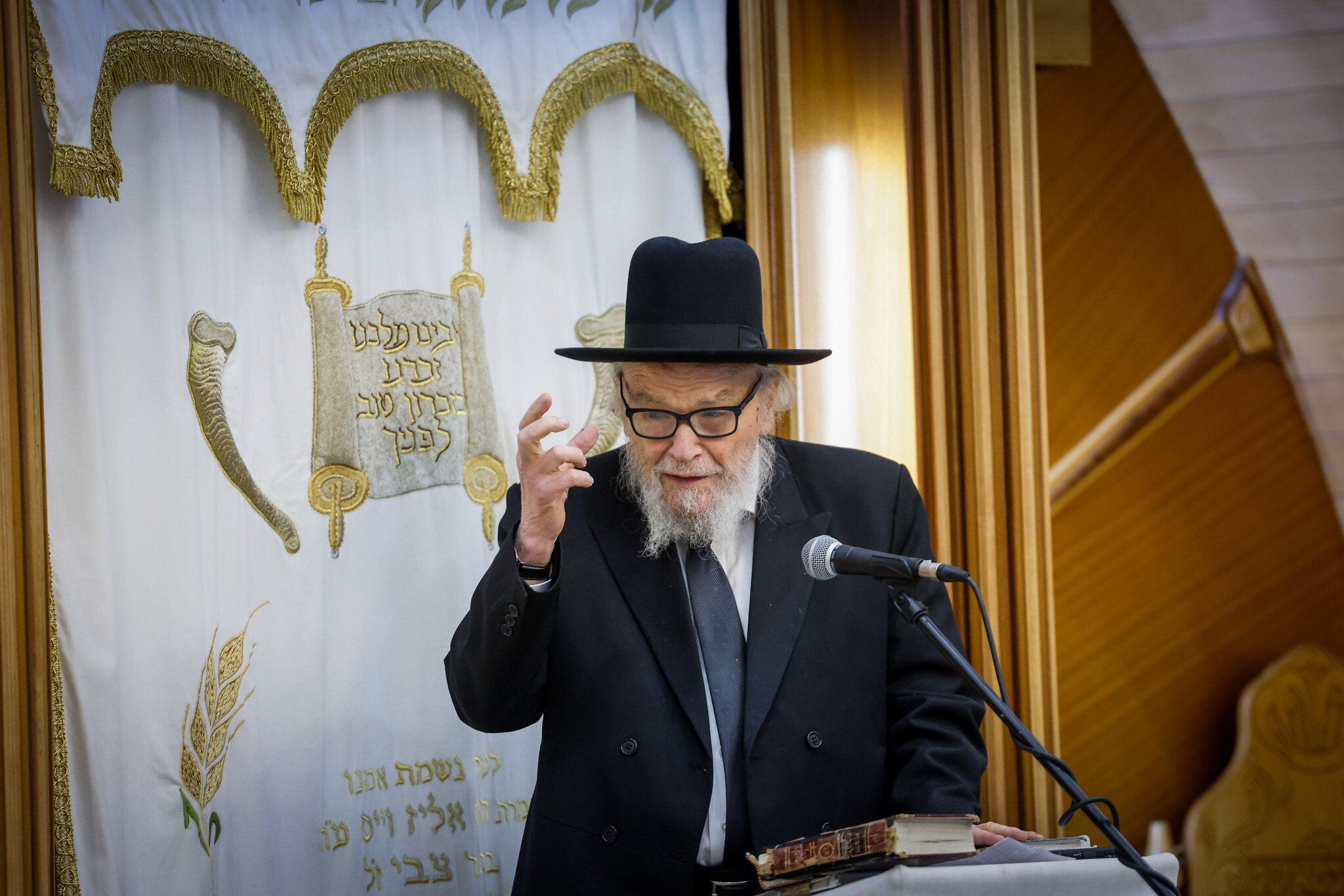
As the protests unfolded, Channel 12 reported that senior Haredi leader Rabbi Moshe Hillel Hirsch authorized ultra-Orthodox representatives to open negotiations with the bloc led by Yashar chairman Gadi Eisenkot over the possible formation of a government.
According to the report, Hirsch’s top priority is securing the legal status of yeshiva students currently considered draft dodgers, coming in ahead of restoring funding or reversing financial sanctions on Haredi institutions. “The most important thing right now is for the yeshiva students to be legal,” Hirsch said when asked about the possibility of reaching an agreement with Eisenkot’s bloc over the military draft issue.
But Hirsch expressed skepticism that a deal could be reached, saying, “I don’t see it as very realistic that we can reach agreements with Eisenkot,” but added: “If we can, it is possible to go with Eisenkot.”
Channel 12 also reported that United Torah Judaism MK Yaakov Asher met Wednesday in the Knesset with Yisrael Beytenu chairman Avigdor Liberman, as efforts continued to formulate a draft-law compromise acceptable to both Haredi leaders and parties in the anti-Netanyahu bloc. The sides said no formal negotiations were underway.
Kan news reported that Moshe Gafni, a former MK and formerly the head of the Degel HaTorah faction within UTJ, is working behind the scenes to stop his party from joining the anti-Netanyahu bloc in a government led by Gadi Eisenkot.
According to Kan, Gafni has held a series of conversations inside and outside the party in recent days in an effort to prevent the Haredi factions from reaching an agreement.
His successor, Asher, is said to be the leading force within Degel HaTorah pushing for cooperation with Eisenkot’s camp.
Gafni was removed as Degel HaTorah leader ahead of the October election, after nearly four decades in the Knesset, with Asher replacing him as head of the faction.

Senior rabbinic leader Dov Lando said at the time that the party’s slate needed to be “refreshed,” but reports indicated the shakeup was also driven by internal disagreements over the party’s political direction and its failure to secure legislation broadly exempting Haredi men from military service.
New UTJ lawmaker voices different position
Meanwhile, new United Torah Judaism MK Eliakim Stark voiced a series of positions that diverged from those of most of his party members, including supporting the study of secular subjects at schools, backing ultra-Orthodox soldiers, and encouraging mass employment alongside Torah studies.
Unlike most of his colleagues, Stark lived abroad, in Belgium, until the age of 16, and is familiar with the ultra-Orthodox way of life outside Israel, which includes having a job alongside Torah studies as well as studying math, English, and other secular subjects in school.
In an interview with Channel 13, Stark said that as an MK, he wants to care for “hundreds of thousands of young Haredim who yearn for employment opportunities,” acknowledging that the ultra-Orthodox community in Israel has grown to the point that its effect on the national economy cannot be ignored.
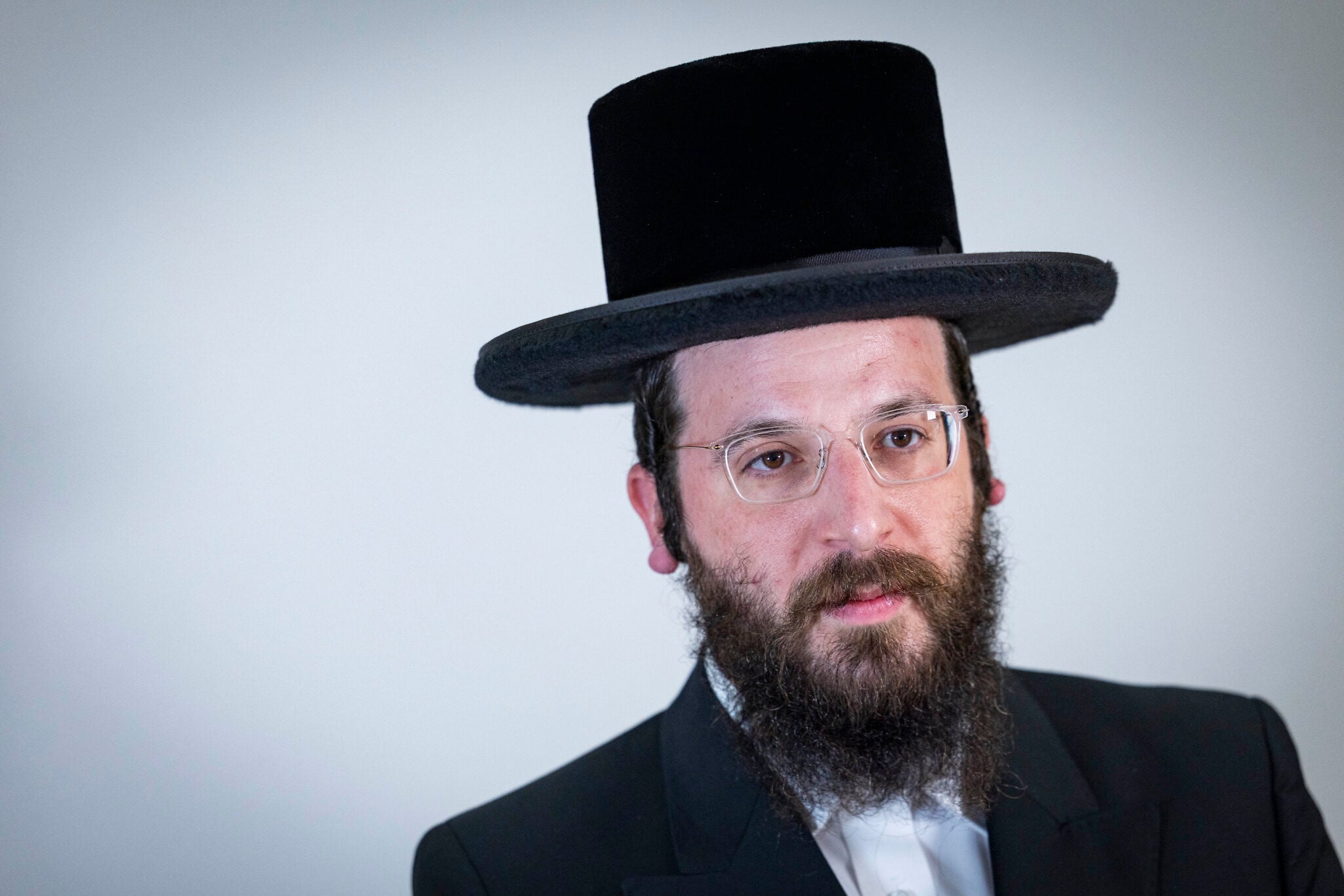
“We have to help them. There will be thousands, if not tens of thousands, more families earning a living,” he said.
Asked about core curriculum in schools, which most ultra-Orthodox leaders reject, Stark said: “If there are Haredim who want to study core subjects, they must be given the opportunities in a way that is adapted to the ultra-Orthodox community. I think this is the main challenge, for the state to understand that instead of re-educating the Haredim, it needs to enable and give them the opportunities.”
Stark belongs to the Belz Hasidic sector, whose spiritual leaders have endorsed schools that teach core subjects and taken a relatively lenient stance on military enlistment.
Stark said the thousands of ultra-Orthodox soldiers must be given assistance with whatever they need, adding that senior ultra-Orthodox leaders have told him as much. He declined to elaborate, saying that actions in this regard that are done in private are far more effective than those done publicly, which can draw backlash.
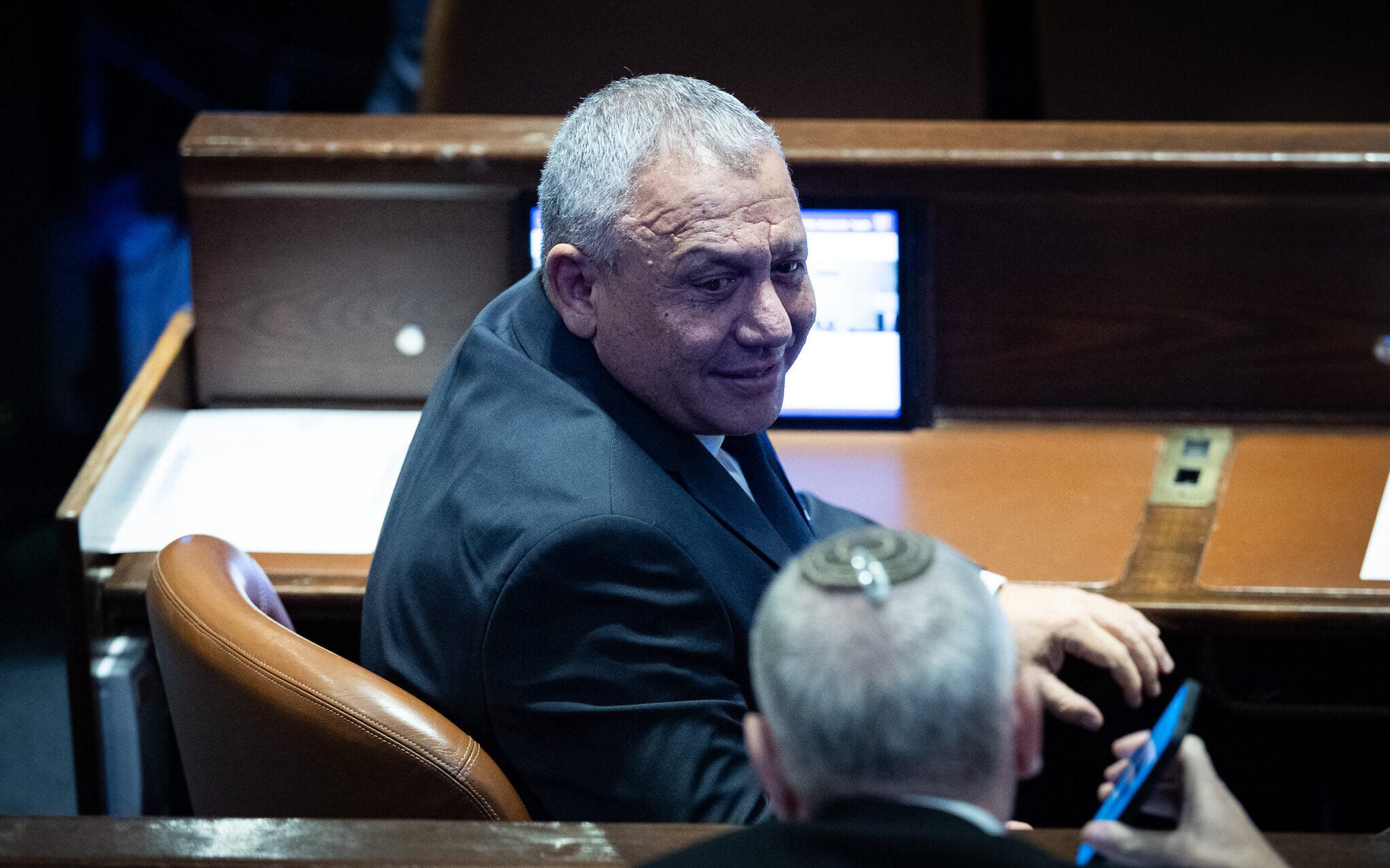
Amid negotiations between his party and the bloc led by Yashar party leader Eisenkot, Stark said cooperation with anyone in the Knesset, including the Arab-led parties, is legitimate for the Haredi parties if it could work in their interest.