Netanyahu-Eisenkot unity talks said to collapse, no further meetings planned
Senior Likud officials assail Eisenkot after meeting; Yashar leader also huddles with Naftali Bennett as he looks to finalize a coalition agreement; ultra-Orthodox draft reported as main sticking point
Prime Minister Benjamin Netanyahu and Yashar chairman Gadi Eisenkot met for some two hours on Sunday on a possible unity government, after which talks reportedly ended without progress and with no further meetings planned. Eisenkot was said to remain committed to the partners in his bloc and later huddled with Naftali Bennett.
Following the apparent collapse in talks, senior Likud figures lashed out at Eisenkot — who has been tasked with forming a government — and warned his prospective partners against joining a coalition led by him.
Likud and Yashar said in a joint statement that the meeting at Tel Aviv’s Kirya military headquarters, which began with a security briefing before turning to the potential formation of a national unity government, was “businesslike” and that “both sides were seeking to bridge the substantial gaps between them.”
However, no future talks were planned and persistent gaps remained between the sides, and Eisenkot told Netanyahu that he remains committed to his partners in the bloc that ran on ousting Netanyahu, Channel 12 news reported. Eisenkot reportedly said that Likud and its allies would be welcome to join the government after its formation, if they accepted its guiding principles.
According to reports, one of Netanyahu’s closest confidants, former strategic affairs minister Ron Dermer, joined the meeting with Eisenkot at the conclusion of the defense update.
On Saturday night, Netanyahu announced that he was willing to serve second as premier in a rotation agreement with Eisenkot, whereupon the latter gave Likud 24 hours to reach a coalition deal. According to the Ynet news site, Netanyahu was demanding to remain prime minister for an unspecified period before the rotation agreement takes effect in order to oversee a potential security operation involving Iran — a condition Eisenkot has reportedly rejected outright. Netanyahu was reported to have repeatedly pressed US President Donald Trump to renew strikes on Iran.
Likud slams Eisenkot
A source close to Netanyahu tried to blame the collapse on Eisenkot, telling Channel 12 that “today it has become clear that Eisenkot is not interested in a national unity government.”
That was followed by several senior Likud officials publicly assailing Eisenkot and warning prospective partners away from him.
Culture Minister Miki Zohar issued a warning to United Torah Judaism, the ultra-Orthodox party that was formerly allied with Netanyahu but is now in talks with Eisenkot.
“If they go with Eisenkot in light of his improper conduct, it will mark a complete severing of ties with the right,” he said.
Likud’s Education Minister Yoav Kisch, meanwhile, said that “a government that relies on only one side of the political spectrum will once again drive the other side into the streets, deepen the divide and increase hatred,” even though the parties set to join a prospective Eisenkot-led government identify with the right as well as the left. The coalition could also include the ultra-Orthodox UTJ and the Arab-led Ra’am party.
In a particularly inflammatory post on X, Communications Minister Shlomo Karhi shared an AI-generated image depicting Arab lawmakers Ahmad Tibi and Mansour Abbas with sinister facial expressions, setting fire to an Israeli flag using a Hanukkah candle handed to them by Eisenkot. The winter holiday begins Friday evening.
אייזנקוט, החלטת למכור אותנו למהללי השאהידים? ערב חג החנוכה אתה רוצה לכבות את נר ישראל? השתגעת? כל זמן שהנר דולק אפשר לתקן – תתעורר! pic.twitter.com/wcWLrY62bl
— ????????שלמה קרעי – Shlomo Karhi (@shlomo_karhi) November 29, 2026
“Eisenkot, have you decided to sell us out to those who glorify martyrs? On the eve of Hanukkah, do you want to extinguish the light of Israel? Have you gone mad?” Karhi wrote, in an apparent reference to Eisenkot’s efforts to form a government with the backing of Arab lawmakers.
Progress with Bennett
Eisenkot made major strides toward forming a government without Netanyahu last week, signing coalition agreements with Avigdor Liberman’s Yisrael Beytenu and Yair Golan’s Democrats in the wake of last month’s inconclusive election. He has not yet signed an agreement with Bennett’s B’Yachad.
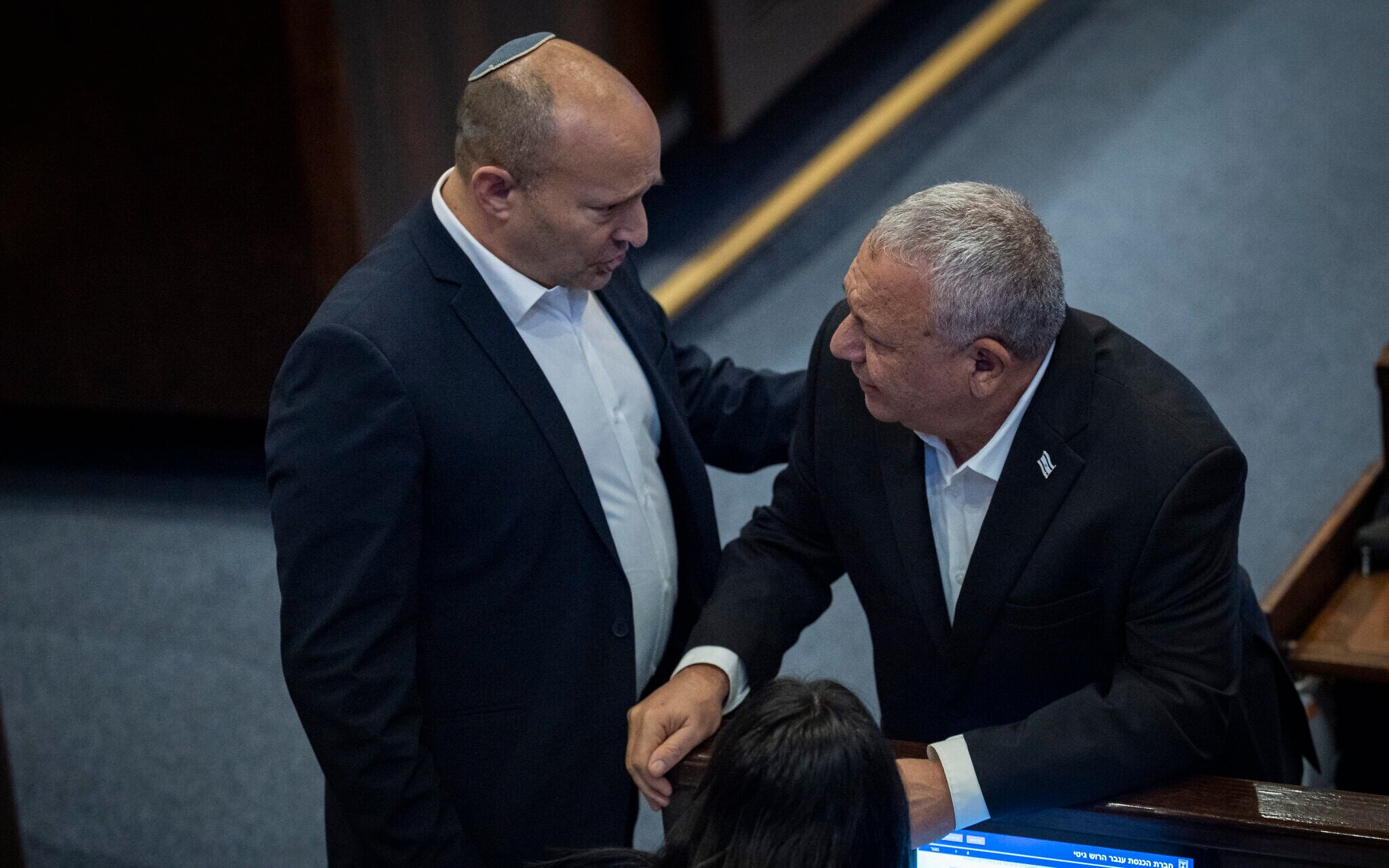
Negotiations between Yashar and B’Yachad were held for more than three hours on Sunday, simultaneously with the talks with Likud, and with the issue of ultra-Orthodox military conscription remaining a key sticking point.
Eisenkot and Bennett later met face to face at the Dan Acadia Hotel in Herzliya for direct coalition talks. The talks reportedly ended after one hour.
Bennett, the sole party leader in Eisenkot’s bloc to have advocated for a unity government with Likud, remains opposed to granting sweeping military draft exemptions to ultra-Orthodox yeshiva students, a key demand of United Torah Judaism in its negotiations with Yashar.
Even with Bennett’s B’Yachad, Eisenkot’s four-party bloc holds only 48 seats, well short of a 61-seat majority. To fill the gap, Eisenkot can either rely on the support of the two Arab-led parties, the two ultra-Orthodox parties, or some mixture of the four.
Reports have indicated he intends to swear in a government backed by the Haredi United Torah Judaism (UTJ) party and the Arab-led Ra’am. A Channel 13 report claimed that he had been planning to announce on Saturday night that he had mustered a viable coalition, and that this prompted Netanyahu’s offer; previously, the Likud leader had backed a unity partnership that would have him as its initial prime minister.
Eisenkot has reportedly previously pledged to Liberman and Golan that he will not attempt to form a unity government with Netanyahu without their approval.
Bennett had been holding direct talks with Dermer in recent days, according to Ynet.
Bennett’s position is not universally shared within his own party — B’Yachad No. 2 Yair Lapid has publicly expressed his opposition to sitting in a government with Netanyahu. Golan also rejected Netanyahu’s offer as a trick, warning that Likud was trying to prevent Eisenkot’s so-called change bloc from swearing in a new government without Netanyahu.
Ultra-Orthodox conscription an obstacle
Sources close to Bennett reported significant progress in talks with Yashar on Sunday but said he is insisting on seeing a framework for Haredi military conscription before potentially signing a final coalition agreement.
The issue of Haredi military conscription remains a key obstacle to the formation of such a government, with Bennett opposing blanket draft exemptions for yeshiva students and apparently resisting the inclusion of the ultra-Orthodox parties in the prospective coalition as a result.
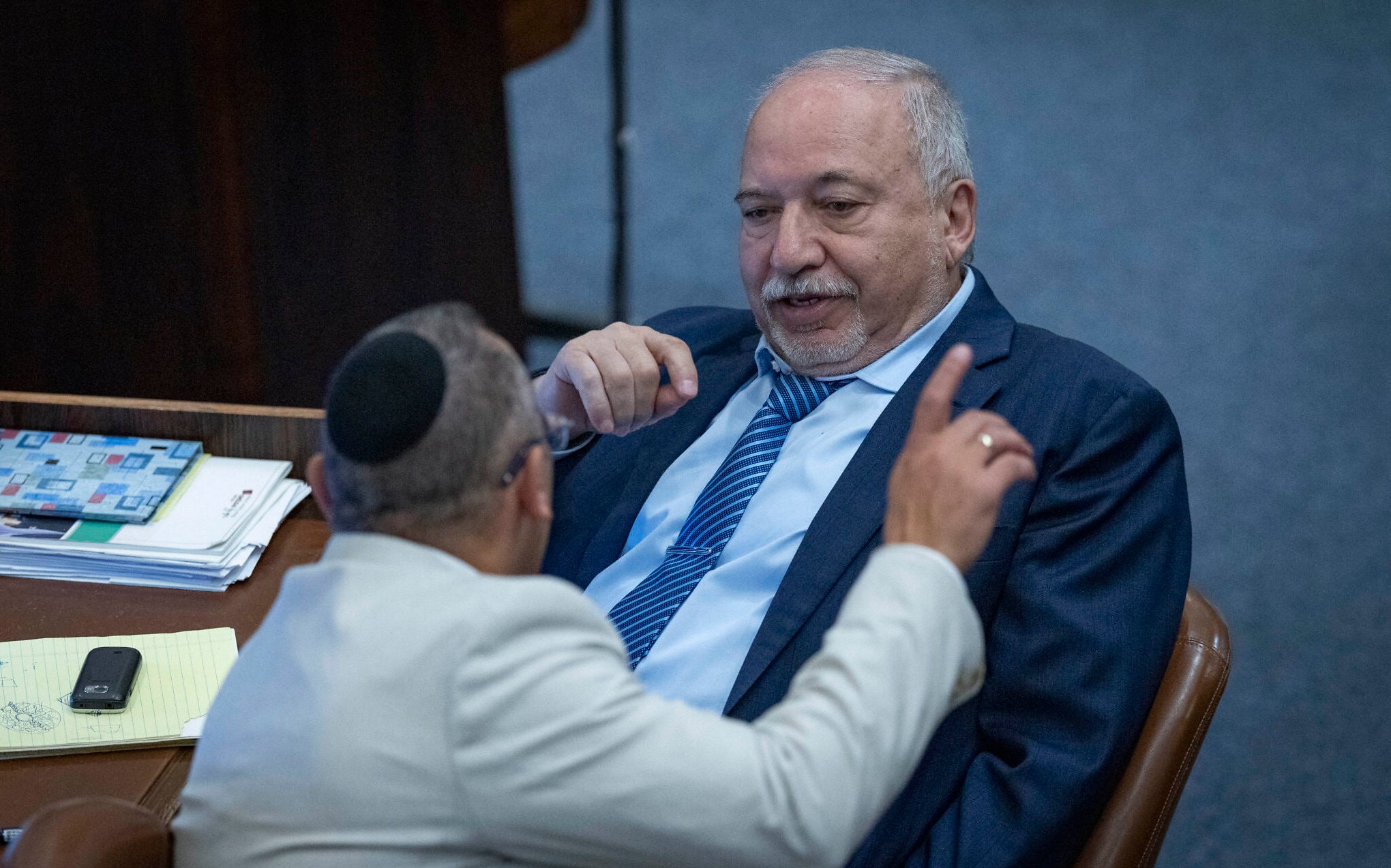
Liberman on Sunday questioned why Bennett believed in the sincerity of Netanyahu’s offer to Eisenkot, noting that Bennett had dismissed a similar proposal from Netanyahu in 2021.
“Naftali, you didn’t believe him then, why do you believe him now?!” Liberman wrote on X, alongside a video from May 2021 in which Netanyahu said he offered Bennett the first turn as prime minister.
Netanyahu made the offer to Bennett as his mandate to form a government was about to expire. Bennett dismissed it, saying Netanyahu was seeking to pin his own failure to form a government on Yamina, the now-defunct party Bennett chaired at the time.
Netanyahu’s mandate expired without a government, and then-president Reuven Rivlin subsequently tasked Yair Lapid, who at the time chaired the Yesh Atid party, with forming one; Lapid and Bennett later formed a coalition, with Bennett serving as prime minister first in a rotation premiership.
Additionally, B’Yachad MK Eitan Ginzburg on Sunday accused Netanyahu of only seeking unity when his grip on power is threatened, in contrast to his party leader’s openness to the offer.
“The wisdom of unity is in pursuing it when you are strong, not when you are weak,” Ginzburg told Likud MK Moshe Saada during a meeting of a special Knesset committee discussing the repeal of the outgoing government’s law weakening the attorney general’s powers.
“Only when he is weak, only when his government is about to be taken away from him, does he remember unity,” Ginzburg said of Netanyahu, adding that his calls for unity “came after the election, not before.”
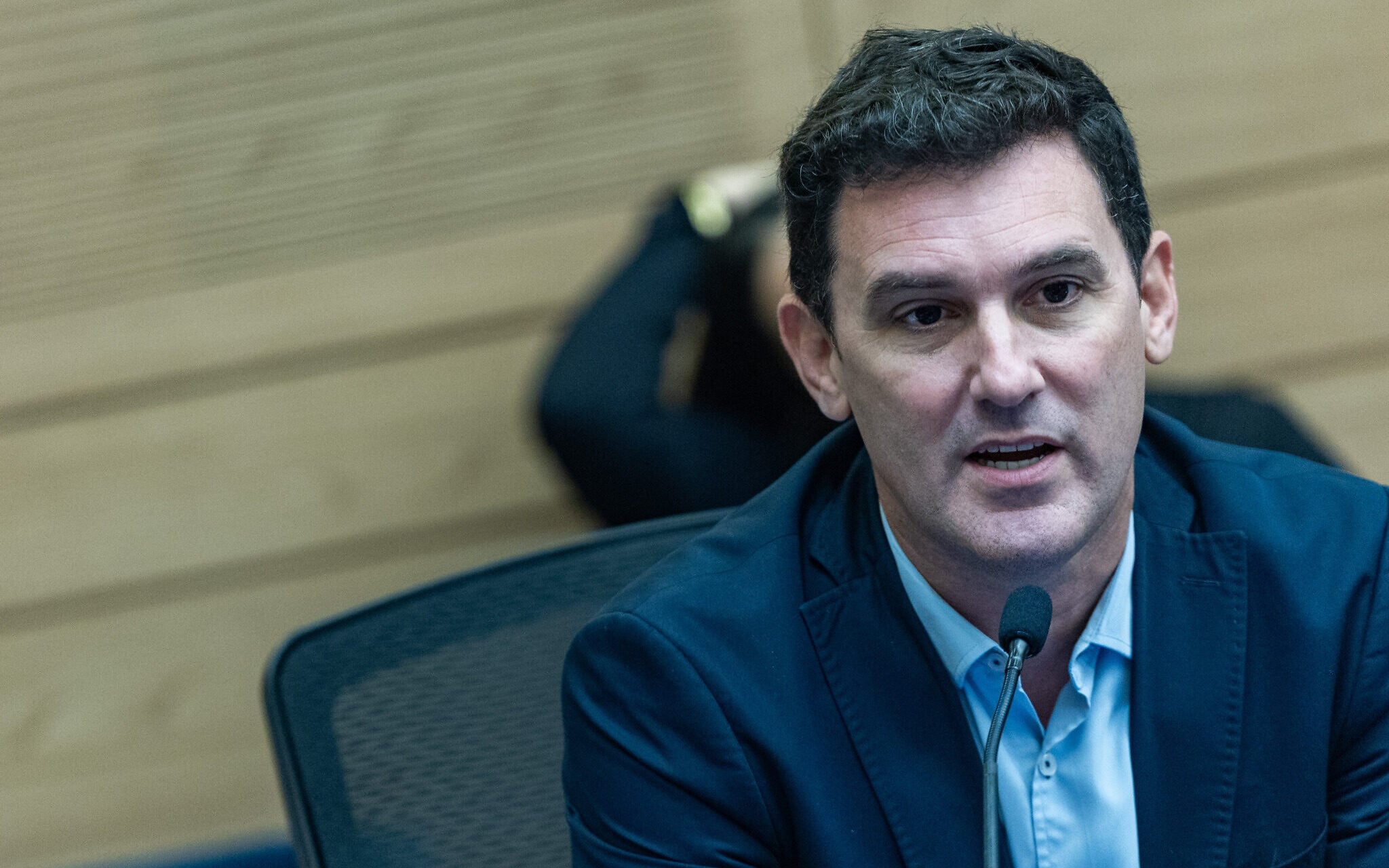
Ginzburg stressed that his party’s support for unity, unlike Netanyahu’s, does not stem from political necessity.
“When we as a party say that unity is important for Israel, we are not saying it from a position of weakness,” he said. “We are saying it from a position in which we have another alternative.”
Separately, Zehut chairman Moshe Feiglin, whose party ran jointly with Finance Minister Bezalel Smotrich’s Religious Zionism, said in a video statement his faction supported a unity government to heal the “division and rift in the nation,” but said it would only serve in the government if it received a senior position that would allow it to influence Israel’s security policy.
Without such a position, Feiglin said his party “will support it from the outside only.”
Preparations to swear in an Eisenkot government
Meanwhile, Yashar faction leader MK Roy Folkman asked the faction leaders of B’Yachad, Yisrael Beytenu and the Democrats, as well as the Arab-majority Ra’am and Joint List parties, to ensure the full attendance of their lawmakers through next Monday, December 7, amid ongoing efforts by Eisenkot to form a government.
“I ask that you ensure there are no vote-pairing arrangements or trips abroad through next Monday, inclusive. We are making special preparations for the coming week,” Folkman wrote in a letter to the faction leaders, referring to the parliamentary practice whereby lawmakers on opposing sides agree to sit out votes to offset each other’s absences.
Folkman did not elaborate on what those “special preparations” entail, though the request lends credence to reports that Yashar was preparing for the possibility of calling a vote to swear in a new government in the coming days.
Times of Israel staff contributed to this report.