On the hunt for the ‘magical thing’ that is the authentic NY bagel
If they know where to look, even out-of-towners can enjoy the Big Apple staple: dense, chewy, and with a slightly crunchy shell. A guide to the bagel perplexed
NEW YORK (AP) — Found at street carts and bodegas, diners and supermarkets, nowhere is the bagel more ubiquitous than New York City.
So exactly what makes a New York City bagel good and, more importantly, where can an eager out-of-towner find The Big Apple’s finest offerings?
Here are a few suggestions for those on a quest for the best:
BLACK SEED BAGELS
These two-year-old entries are rolled by hand, boiled in honey water and baked in wood-fired ovens at three downtown Manhattan locations. They’re smaller and flatter than many of the humongous, puffy bagels around today. Black Seed is the brain child of Noah Bernamoff, who hails from Montreal, and Matt Kliegman, a native New Yorker.
The idea was to bring a touch of the Montreal bagel to New York. So what makes the Big Apple the bagel capital?
“It’s the millions of Jews that have lived and passed through the city and ultimately have taken its cultural foodstuffs to other parts of the country and the world,” said Bernamoff.
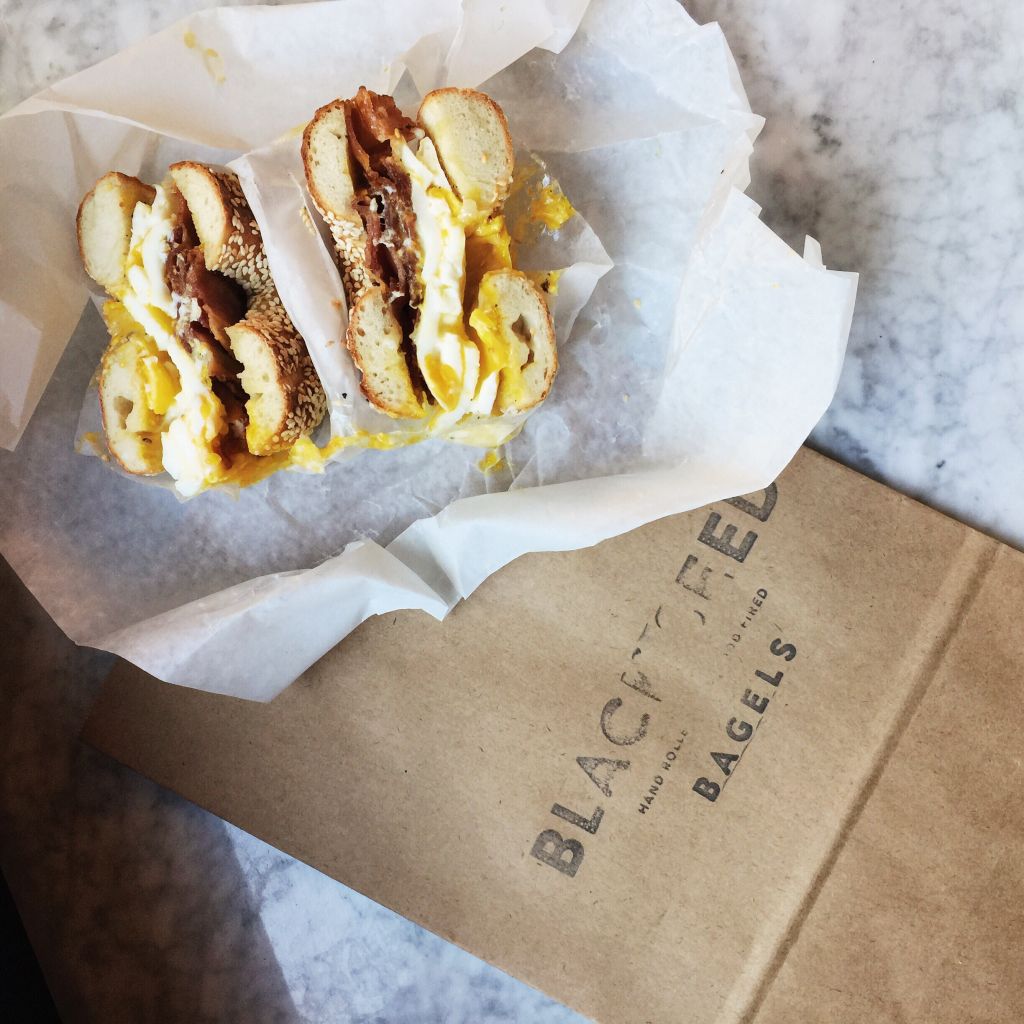
There’s no salt in their bagel dough, and using honey water instead of barley malt when kettle boiling is a Montreal tradition. And there’s no yeast.
Like other top shops, the bagels are all natural. Bernamoff considers 99 percent of the bagels in New York “poorly made,” whipped up in large commissary factories in the outer boroughs.
“They’re not very fresh. It’s round bread with barely a hole in the middle,” he said.
The two have tapped into the artisinal trends shaping foodie culture overall.
“A New York bagel purist may not appreciate our bagels,” Bernamoff said. “Because they’re baked in a wood-burning oven the exterior can be somewhat, not crispy but snappy, kind of burnished, so some people think the bagels are over-baked, but they’re not.”
If you’re in search of a cinnamon raisin or a blueberry bagel, go elsewhere.
Locations: 170 Elizabeth St., 200 Vesey St. and 176 First Ave. in the East Village.
https://www.blackseedbagels.com/
ESS-A-BAGEL
This business has been around for nearly 40 years and has one location at the moment, in Midtown, though they’re opening a second shop farther south on the East Side near their original spot close to Stuyvesant Town, said Melanie Frost, the chief operating officer.
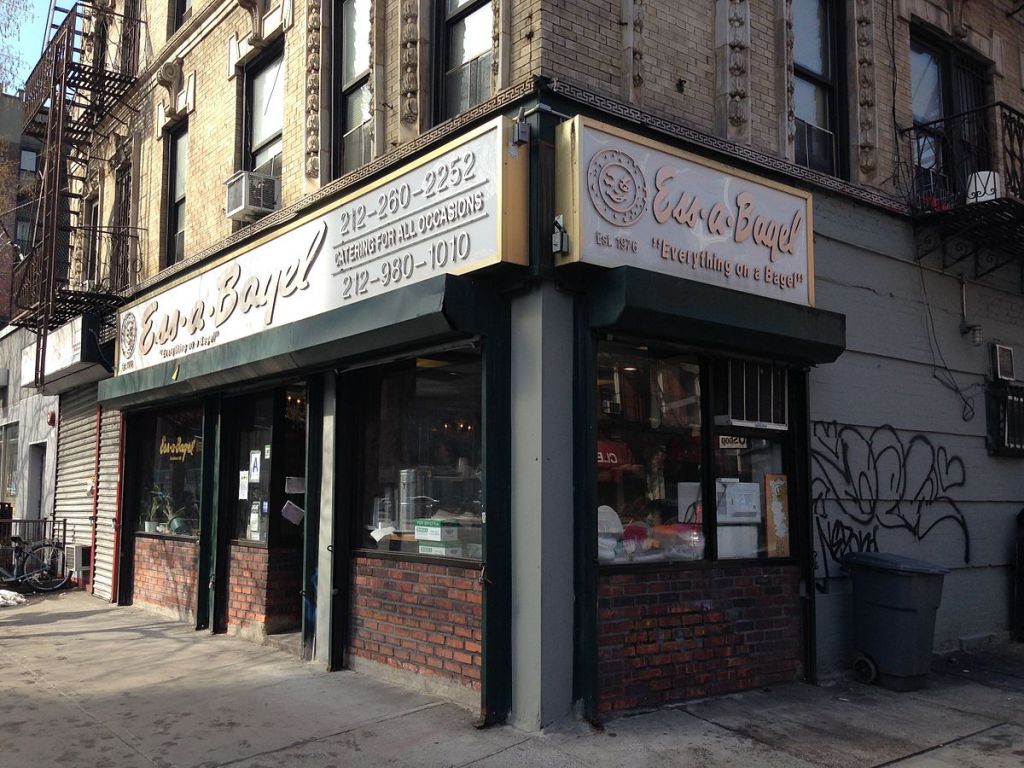
Her late aunt, teacher Florence Wilpon, co-founded Ess-A-Bagel after Florence’s brother, Aaron Wenzelberg, lost his lease on a doughnut shop and needed a new venture.
“She combed the papers and found a bagel shop and said, eh, bagels, doughnuts. They both have holes. We’ll figure it out,” Frost laughed.
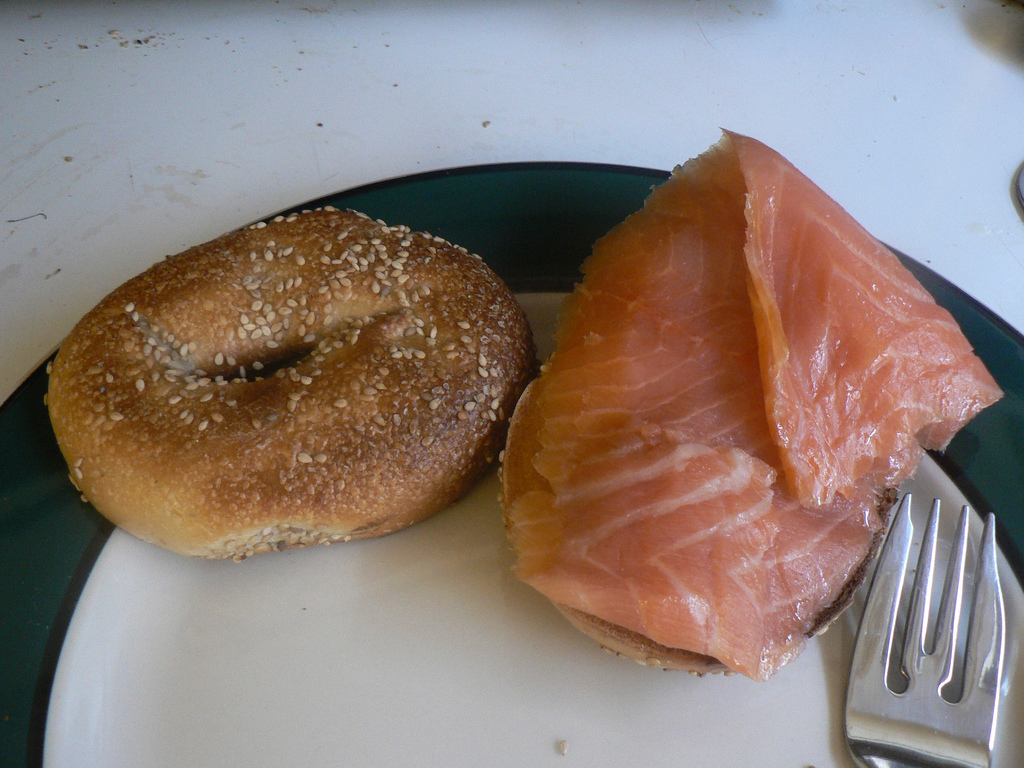
Now, Frost and her mother, Muriel Frost, are in charge. Their workers also hand roll. The holes are small but the bagels are big. The large size is somewhat of an accident after the family found a baker who shared his recipe, Frost said.
“They put them in the oven and for whatever reason they rose and became these huge bagels, but they worked,” she said.
Are tourists bagel-schooled?
“I think a lot of them don’t necessarily understand the menu,” she said.
Like Black Seed and other hot bagel spots, lines in the mornings and on weekends can be long.
Location: 831 3rd Ave.
KOSSAR’S BAGELS & BIALYS
Take a trip to the Lower East Side for a taste of 1800s Bialystok, Poland. The neighborhood is where people from the old country settled with their local bread, called a bialy and eaten at every meal. Bialys are bagel cousins, sort of, and this is one of the oldest bialy houses in the city.
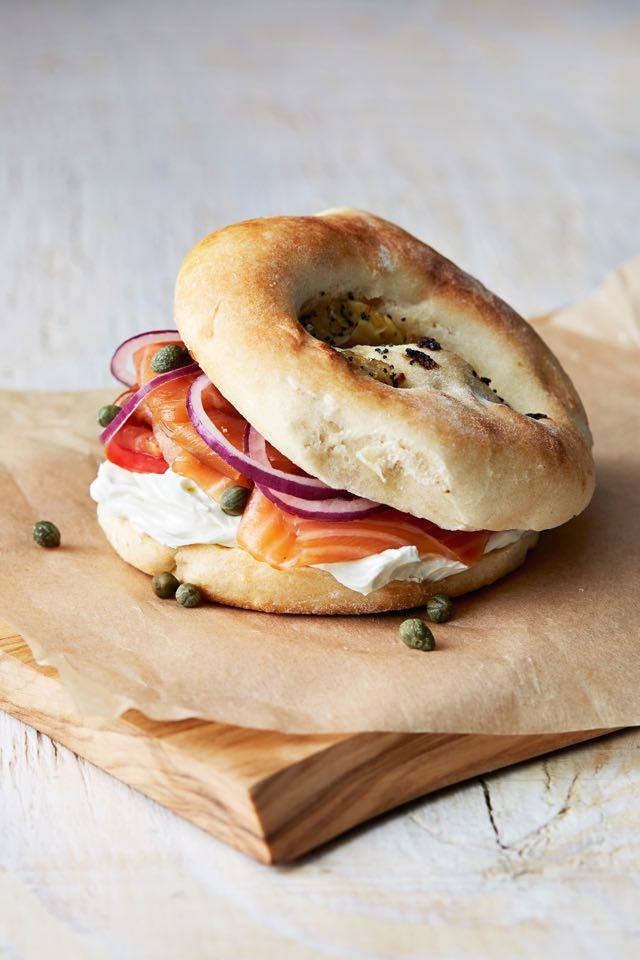
So what’s the difference? A bagel contains malt or some form of sugar. Bialys have no sugar. Bagels are more dense and are boiled. Bialys go straight into the oven. Bialys are flatter and often topped with grated onions.
Kossar’s does bagels, too, under the watchful eye of owners who bought the place in 2013. One, David Zablocki, is a classically trained French chef who went in search of an old-school baker when he was testing recipes.
“A New York bagel is really a magical thing,” he said, “partly because of the water and the mineral content we have in the water. It is also the fact that we have some of the oldest recipes. There was a bagel union up until 1973 here in New York. Those trade secrets were really passed down over and over and are still alive today.”
Kossar’s bagels are baked on burlap-covered wood planks that have been soaked through in water. Other makers do that, too, but some use stainless steel forms. Zablocki said the wood helps the bagels achieve a crispy bottom and nicely browned top.
The shop, which still sells more bialys than bagels, is a stop on many guided bus tours.
Sandwich options at Kossar’s include an inverted grilled bagel stuffed with schmear with the insides out. Among his schmears is a cream cheese made with borscht.
Location: 367 Grand St.
ABSOLUTE BAGELS
These Upper West Side bagels consistently earn raves for owner Sam Thongkrieng.
The 70-year-old arrived from Thailand in 1979 and soon sampled his first bagel. He remembers his order: a plain bagel, toasted, with butter.
Thongkrieng, who had worked as a cook back home, trained at Ess-A-Bagel before opening Absolute.
He had some stiff competition in the neighborhood from the well-established H&H Bagels, which closed in its original iteration back in 2012.
Now, with other closings, he’s got the territory pretty much to himself. This is a no-nonsense bagel environment. No small talk. You’re in, you’re out.
Thongkrieng said he considers his bagels, also hand rolled on site, softer and a tad crispier than other traditional fare. And he serves egg bagels, unlike other shops. In fact, they’re one of his top sellers.
“They taste like a Chinese bun, sort of,” he said.
Location: 2788 Broadway
Bite-sized facts
Once the largest bagel maker in the city and among the largest in the world, making roughly 80,000 bagels a day and shipping around the globe, H&H Bagels closed amid a high-profile bankruptcy, tax case and jail sentence for owner Helmer Toro. Under different ownership, there’s an H&H Midtown Bagels East at 1551 2nd Ave.
Zabar’s, the gourmet goods, grocer, deli and food bazaar on Broadway at 80th Street, is on the tourist track and sells a heck of a lot of bagels, using a proprietary recipe general manager Scott Goldshine said was at least 30 years old.
“They come to us three-quarters baked according to our recipe and then we finish it over here,” he said.
Exactly where are Zabar’s bagels made? It’s one of NYC’s biggest mysteries. Well, no more. Since 1998, they’ve been made in the Bronx — Hunts Point to be exact — by Davidovich Bakery, said Marc Fintz, the bakery’s director of business development. Before that, H&H had the honors.
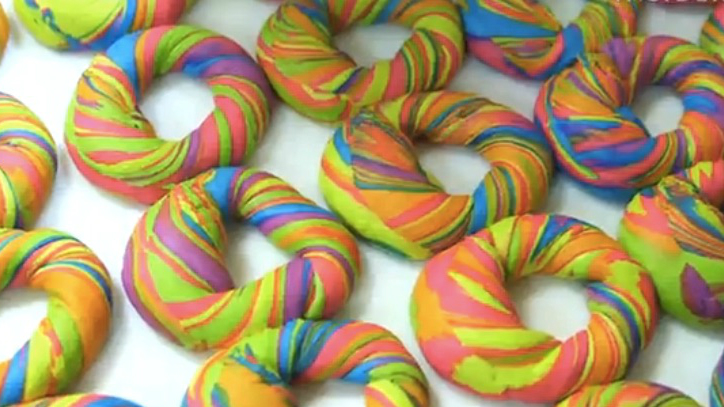
Another bagel entry has grabbed attention recently. It’s a “rainbow” bagel made by The Bagel Shop in Williamsburg, Brooklyn, using swirls of dough dyed in bright Play-Doh colors at $3.95 a pop. The recommended schmear for what is billed as the world’s most beautiful bagel? A super-sweet Funfetti cream cheese.