Sharp rise in explosive attacks, fire bombs in 2014
An IDF demolitions officer in the West Bank points to a ten-fold increase in the number of IEDs planted last year
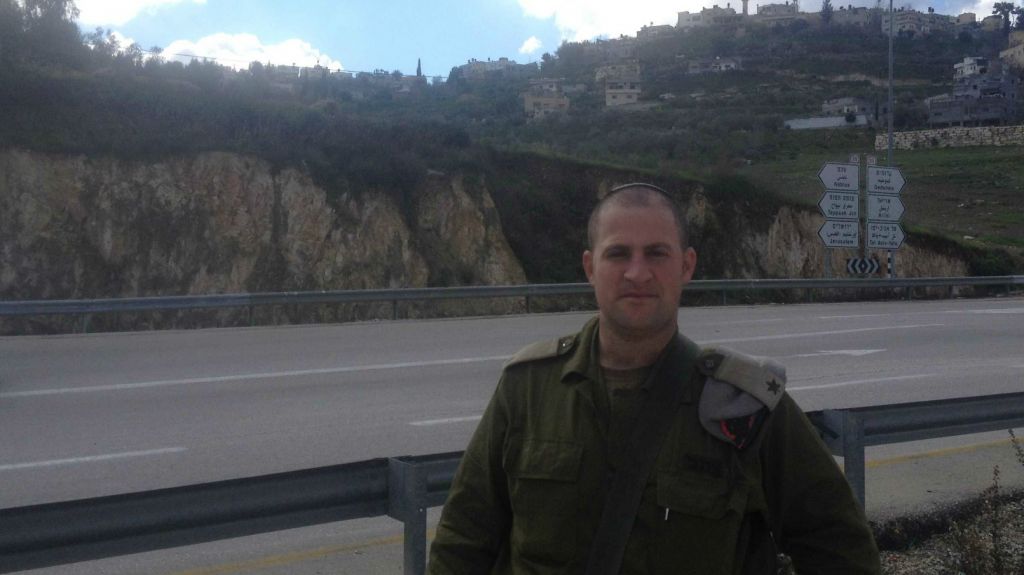
The army has detected a sharp increase in the number of roadside explosive devices deployed by Palestinians in the West Bank over the past year, an IDF officer said during a recent tour of the region.
The rise, amounting to 20 IEDs — improvised explosive devices –during 2014 as opposed to two the year before, is part of an across-the-board uptick in violence that included an increase in Molotov cocktails, vehicular attacks, stone-throwing and demonstrations in the West Bank.
“The level of sophistication is not very high,” said Maj. Irad Hershkovitz, the demolitions officer of the Shomron Regional Brigade. “It’s not Yahya Ayyash. It’s not the Second Intifada. But there has been a very significant rise.”
More concerning than the number of attacks, he said, is the shift in focus. Early in the year, there were several explosive devices laid for army troops on the road leading up to the Mount Ebal military post. Hershkovitz called those attacks “less worrying,” saying that the troops travel in armored vehicles and can routinely check the road for explosive devices.
Recently, though, citizens have become the targets in the region, he said. Multiple devices have been placed on the gate and road leading to the old settlement of Homesh, which was evacuated during the 2005 Gaza Disengagement but remains a site of pilgrimage to those who wish to return.
On August 31, shortly after seven in the morning, an improvised device, linked to a timer, exploded at Rechelim Junction, south of Nablus; two minutes later, an additional device, called identical to the first one, exploded nearby at Jit Junction. Six minutes after that, another device exploded several meters down the road from the junction. “Both were timed and meant to target civilians,” Hershkovitz said.
He described the IEDs as generally having a metal casing in which the explosive material is housed, a watch or a cellphone timer, and often some sort of additional metal such as bolts for shrapnel.
On October 10, a large can once used for olives but later filled with gunpowder and studded with bolts went off at Rechelim Junction. Since then, Hershkovitz said, the army has worked to raise citizen awareness of the threat and sends trackers to different hitching posts and bus stops twice daily to inspect for IEDs.
Primarily, though, he said that the army is countering the threat by making nightly arrests, sometimes of dozens of suspects.
“The solution is the waves of arrests that we do,” he said, noting that the army is active in Area A, which is under full Palestinian control, and within the refugee camps surrounding Nablus. “There is not a night in which a few Palestinians are not arrested,” he said. “Nothing else can be done. That is what stops the wave of terror.”
He said he is not closely involved in the security cooperation between Israel and the Palestinian Authority but that the situation “is pretty chilly,” and that there is “a sort of disconnect because of the political stuff.”
Earlier this week the army released figures regarding other forms of attacks against Israeli civilians. In 2014, there were 367 Molotov cocktails thrown at civilians, as compared with 275 during the previous year and as few as 94 in 2010, the army’s weekly Bamahane magazine reported.
Additionally, there were 29 attempts at vehicular attacks in 2014, a sharp rise from the six attempted during the previous year; a slight increase in stone throwing, from 2,462 to 2,742; and a pronounced increase in the number of demonstrations in the West Bank, from 2,672 to 4,390.
The army divided the year into three parts – pre Operation Brother’s Keeper, launched in June in order to find the three abducted and murdered Jewish teens; during it and the subsequent, 50-day campaign in Gaza; and after the Gaza operation ended. The bulk of the violence occurred during the two operations, in the West Bank and Gaza.
“During Operation Protective Edge [in Gaza] there was a rise in all parameters,” a Central Command officer told Bamahane. “Since the operation there have been ups and downs and we still have not reached the pre-Operation Brother’s Keeper period, but we’re starting to return to a normal situation.”
The officer attributed the rise in Molotov cocktails and, though he did not mention it, IEDs, to a dearth of more sophisticated arms. “The trend points to a large weapons gap that the Palestinians have,” he said, “and the Molotov cocktails” — and the IEDs — “are their solution.”
comments