The writing is on the wall, again
The election campaign is turning toxic. The prime minister, who insists he played no role in the incitement that created the poisonous climate prior to the assassination of Yitzhak Rabin, needs to urgently internalize the lessons of 1995
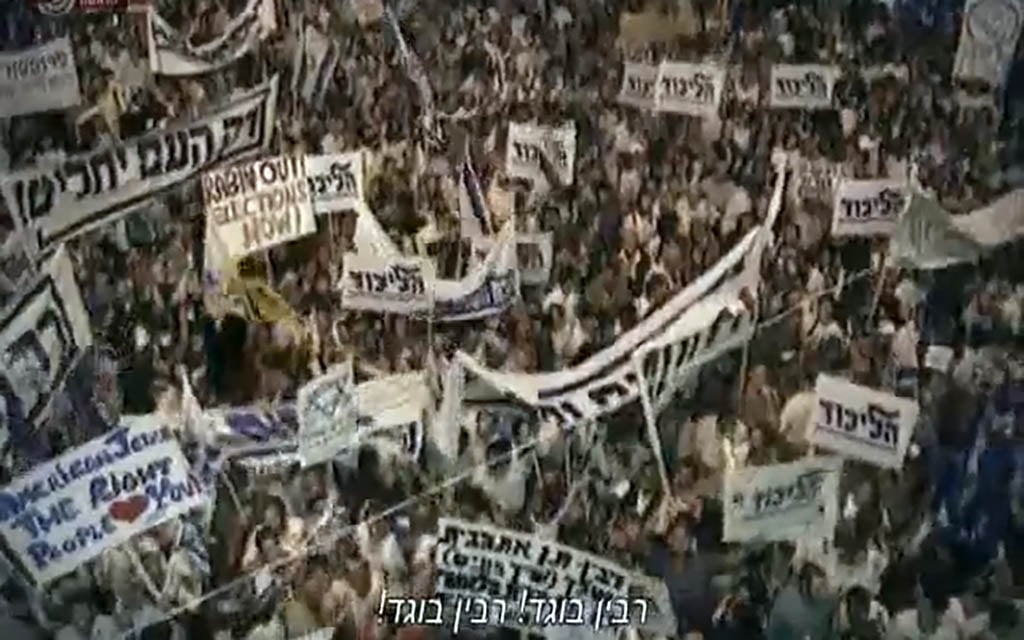
On October 5, 1995, the day the Knesset narrowly ratified the Oslo II accord with Yasser Arafat’s PLO, Likud opposition leader Benjamin Netanyahu addressed a rally from a hotel balcony in Jerusalem’s Zion Square, where he denounced prime minister Yitzhak Rabin’s government for purportedly capitulating to the Palestinians and vowed to prevent any redivision of Jerusalem.
Beneath him in the crowd of tens of thousands, participants chanted “Rabin is a traitor,” “Rabin is a murderer,” and “Death to Rabin,” and posters doctored to show Rabin in SS uniform and Rabin in a keffiyeh were circulated. Contemporaneous reports say Netanyahu raised his hand to try to quiet the chanting.
The rally is widely regarded as the apogee of incitement against Rabin, who was assassinated by Jewish extremist Yigal Amir in Tel Aviv one month later.
In a Knesset speech 10 years ago at the annual ceremony marking Rabin’s assassination, then opposition leader, now president, Isaac Herzog asserted a direct cause and effect: “We are here today because in 1995, on that accursed balcony in that square, in those marches with that incitement, those words were fired that found the murderer, who turned them into bullets fired into the back of the prime minister of Israel, and into the back of our democracy,” he said. “You didn’t intend it,” Herzog said, “but you also didn’t prevent it.”
Netanyahu has always bitterly denied inciting against Rabin, and rejected any notion of responsibility for the murder.
In an interview with this writer in 2015, Rabin’s daughter Dalia, with extreme care and nuance, put it like this: “Netanyahu rode this wave of opposition by nationalist religious Zionism, and took it under his wing. They have this divine command of not giving up any inch of the holy land, that they see as sacred, and put the value of an inch of land higher than that of human life. [Netanyahu] took that under his wing and made politically cynical use of it.”
Thirty-one years after the assassination, six weeks before what will be arguably the most consequential election in Israeli history, campaign rhetoric is escalating, and Netanyahu, who first came to power in 1996, months after Rabin was shot dead, is again at its heart.
His Likud party is campaigning against his main rival, Gadi Eisenkot, with the allegation that the Yashar opposition leader intends to form a government “reliant on the Muslim Brotherhood and the anti-Zionist Arab parties” — with the incendiary Muslim Brotherhood reference an allusion to the Ra’am party’s roots in the Southern Islamic Movement. (Ra’am, under its leader Mansour Abbas, was an integral part of the 2021-22 Bennett-Lapid government, having been wooed in vain by Netanyahu. The Northern Branch of the Islamic Movement in Israel is outlawed; not so the Southern Branch.)
Desperately deflecting any and all responsibility for the catastrophe of October 7, 2023, Netanyahu has taken to falsely claiming that Israel’s security chiefs deliberately chose not to wake him hours before the Hamas invasion, even though “all the signs were there” that Hamas was about to attack. His wife Sara has falsely insinuated that opposition Democrats party leader Yair Golan, a former IDF deputy chief who rushed to fight at the Gaza border on October 7, had advance knowledge of the attack — a conspiracy theory implying betrayal at the heart of the security establishment.
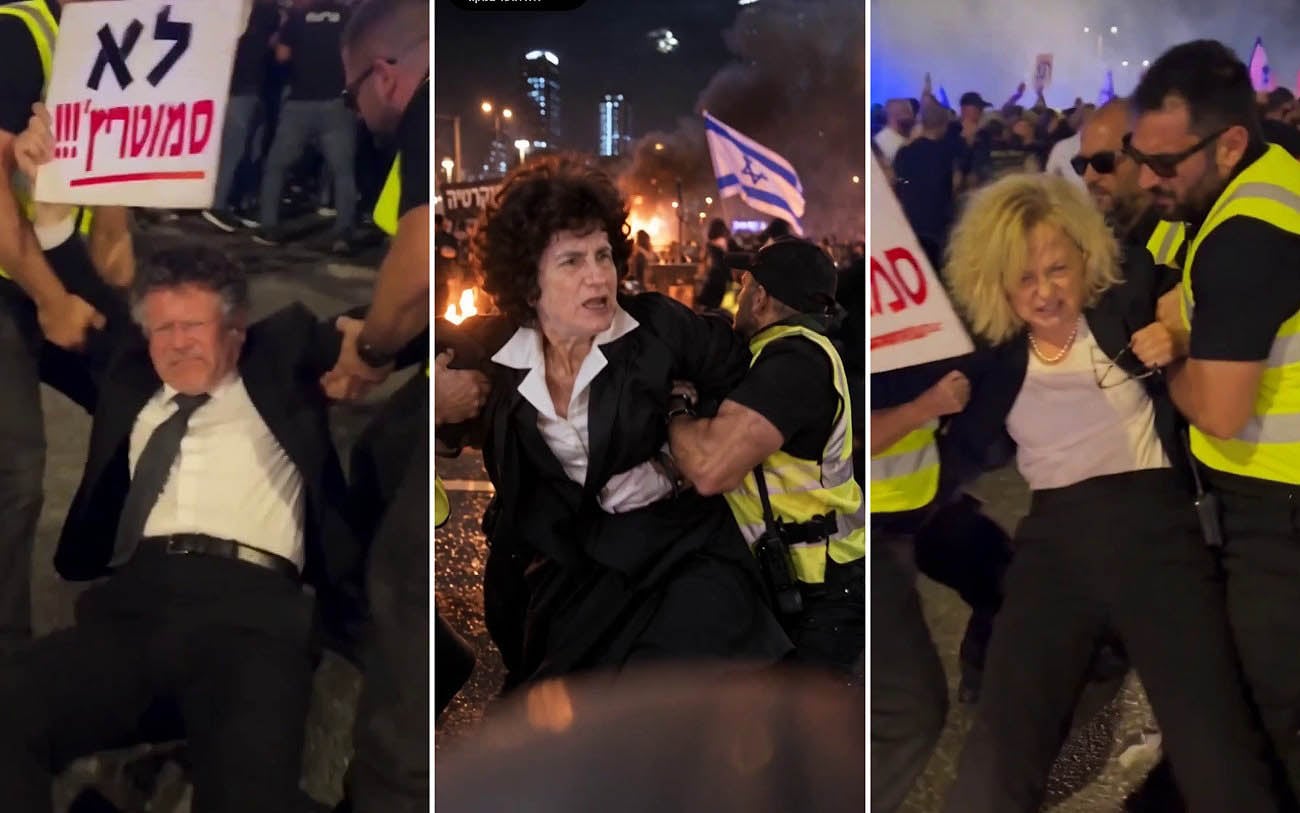
Netanyahu’s outgoing coalition partner, the Religious Zionism party of Bezalel Smotrich, struggling in the polls, on Tuesday issued an AI-generated video in support of its radical program to subjugate the judiciary to the political leadership, showing the attorney general, the president of the Supreme Court and another Supreme Court justice being dragged away by security personnel from an imagined anti-Smotrich protest.
In one of the most divisive and inflammatory comments of the campaign to date, dragging the IDF into the heart of partisan politics, Amichay Eliyahu, an outgoing minister from the far-right Otzma Yehudit party, declared, also on Tuesday, that Israelis who have participated in mass anti-government protests should not be allowed to enlist as combat soldiers, claiming that they wouldn’t rush into the fight when necessary.
“I don’t want to draft someone from Kaplan to enlist in combat [duty],” Eliyahu said at an event in a Tel Aviv high school, referring to Kaplan Street, the central site of mass protests against the government and some of its legislation in recent years. “In the end, they won’t storm into battle,” he charged, prompting cries of outrage, including from parents of soldiers who have fallen in battle.
All Israeli elections are hard-fought, and these are taking place in the shadow of October 7 and ongoing consequent conflict on multiple fronts, with Netanyahu unique among Israel’s political and military leaders on that day not to have resigned or been dismissed, and resisting the establishment of a state commission of inquiry that would establish what went wrong and who bears responsibility.
The outcome of the October 27 vote may not be definitive. As things stand, most polls show neither the pro- nor the anti-Netanyahu blocs getting a majority of seats, with two Arab parties, Ra’am and the Joint List, holding the balance of power. That could, in turn, trigger protracted maneuvering as the rivals strive to somehow muster a ruling coalition, or a resort to fresh elections; Israel held five elections in less than four years between April 2019 and November 2022.
Whatever the result, whenever it comes, it will engender a colossal sense of anger, bitterness, and despair among many of those on the defeated side, with almost inevitable allegations of foul play.
Imagine large numbers of deeply committed supporters of Netanyahu, assured for months by the TV station they rely upon that he will win reelection, and warned relentlessly of the acute dangers to Israel of his ouster, discovering that they have lost. How are they going to react? To dispute the election? Many of them would surely do that. Netanyahu himself might do so. To resort to violence? The danger is that a minority might do that, too
Add to the combustible mix the fact that the pro-Netanyahu Channel 14, whose TV news is Israel’s second-most popular after Channel 12, has been continually assuring its viewers that the Netanyahu-led bloc of parties is heading to a clear Knesset majority — giving it 62-64 seats in the 120-member Knesset, about 10 seats more than most other pollsters find.
(The discrepancy revolves almost solely around Netanyahu’s own Likud, which Channel 14 shows as the biggest party at 31-33 seats; most other polls put it in the low 20s, with Eisenkot’s Yashar slightly ahead or level. Channel 14’s polls are conducted by Next Data, a firm registered last year by a representative of the station’s owner and controlled through his holding company, according to a Haaretz report disputed by Channel 14. The published results give a sample size and date but do not provide a margin of error or details of how respondents were surveyed. They are analyzed on air by Shlomo Filber, an adviser to Next Data. Filber is a former Communications Ministry director general who turned state’s witness against Netanyahu in the prime minister’s corruption trial but retracted core parts of his account when giving evidence in court.)
Imagine large numbers of deeply committed supporters of Netanyahu and his outgoing far-right coalition partners, assured for months by the TV station they rely upon that he and his coalition will win reelection, and warned relentlessly of the acute dangers to Israel of his ouster, discovering that they have lost.
How are they going to react? To dispute the election? Many of them would surely do that. Netanyahu himself might do so. (Trump in 2020, with its appalling January 6, 2021 consequences, inevitably comes to mind.)
To resort to violence? The danger is that a minority might do that, too.
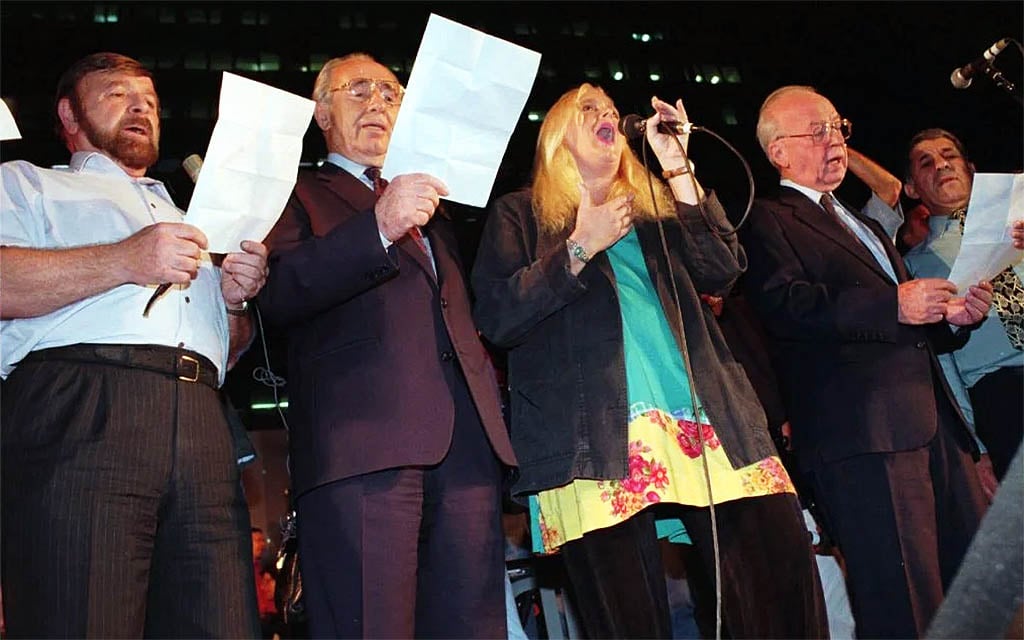
Netanyahu is adamant that he played no role in the incitement against Yitzhak Rabin three decades ago, incitement that created a toxic climate amid which an Israeli prime minister was gunned down by one of his own citizens. That’s a dubious claim. A decade ago, the then-opposition leader, now state president, asserted, “You didn’t intend it, but you also didn’t prevent it.”
Netanyahu does not appear to have learned that lesson. He needs to do so urgently now, because the writing is on the wall, again.
—
This Editor’s Note was sent out earlier Wednesday in ToI’s weekly update email to members of the Times of Israel Community. To receive these Editor’s Notes as they’re released, join the ToI Community here.