Trump says Iran wants deal but terms unacceptable; Vance sidesteps question on his approval of war
VP maintains his 'job is to support' decisions by the American president, who acknowledges the conflict cost Republicans in midterm elections but says he'd 'absolutely' do it again
US President Donald Trump said Friday that Iran wants to reach a deal to end the war but has yet to offer acceptable terms, while US Vice President JD Vance declined to say whether he would have authorized the US strikes on the Islamic Republic that Trump insists were necessary to prevent it from acquiring a nuclear weapon.
“They want to make a deal, but they don’t want to make a deal that’s acceptable to me,” Trump told reporters during a White House press conference.
“We want to make a real deal, not a fake deal,” he said, accusing Iran of misleading the US for decades.
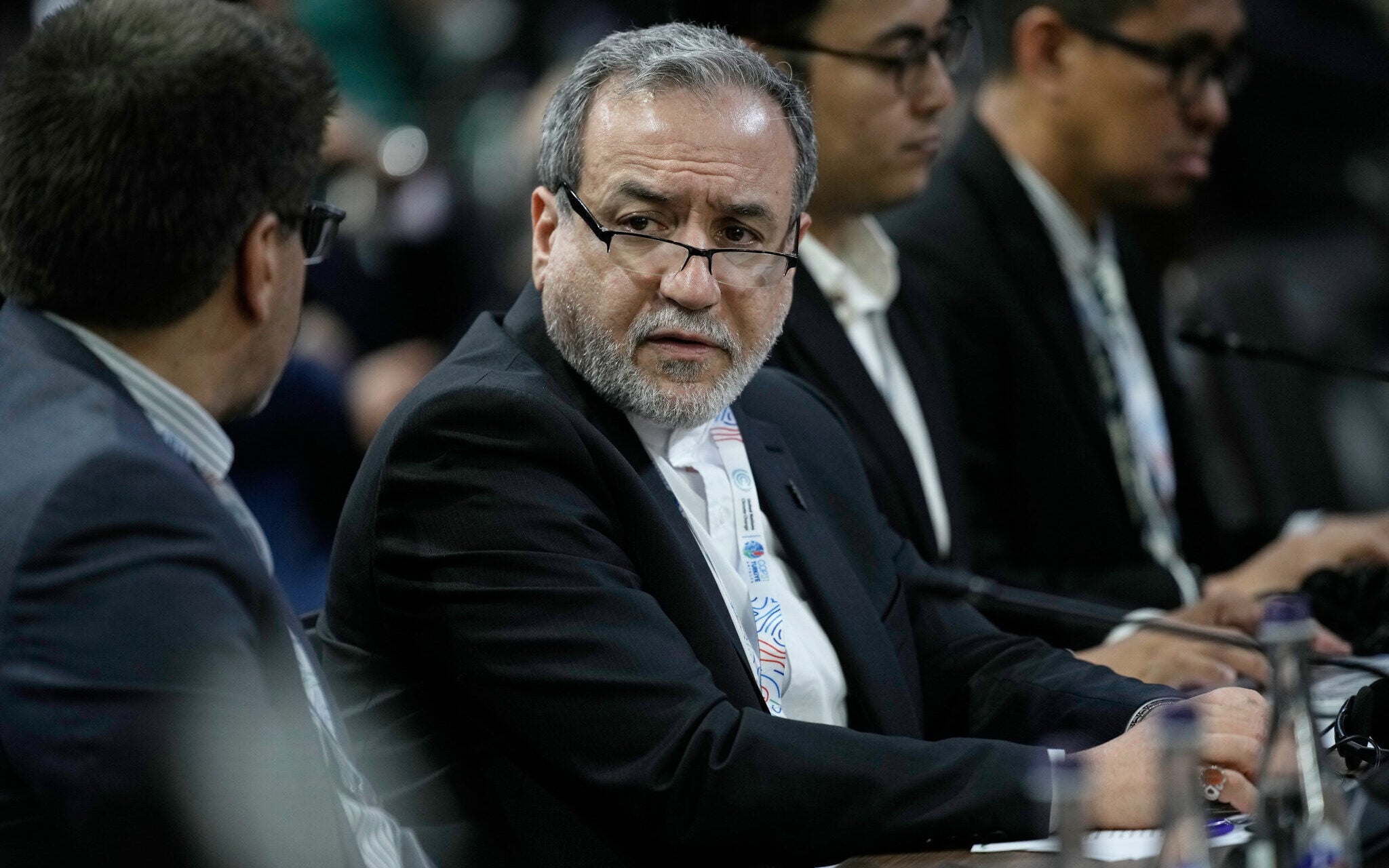
Iranian Foreign Minister Abbas Araghchi, meanwhile, reiterated to an Iranian newspaper that Tehran’s red lines in negotiations included enriched uranium not leaving the country, but he believed “a fair solution” could be reached.
He added that Iran was seeking “an agreement that would ensure there was no further war,” which he said his country still had hope could be achieved through diplomacy.
Araqhchi said Iran wanted guarantees the US was serious about negotiations before proceeding further and had discussed with mediators the form and nature of confidence-building measures.
The comments from Trump and Araghchi came amid renewed speculation about another US-Israeli offensive against Iran, with the US president weighing whether to resume major strikes while facing political fallout at home from the nearly nine-month conflict.
Trump’s Republican Party was hit by sweeping losses in this month’s midterm elections on November 3, as Democrats won control of both chambers of the US Congress.
Anger over the war with Iran, which has caused fuel prices to surge in the United States, has been seen as a key factor pushing voters away from Republicans.
Asked Friday at the press conference with Trump whether the war was worth the Republican losses, Vance did not directly answer. Instead, he emphasized his support for Trump’s decisions.
“The goal of keeping Iran from getting a nuclear weapon is absolutely what we need to be doing,” Vance responded. “It’s the biggest state sponsor of terrorism. If they had a nuclear weapon, they would use it as leverage, or they would attack and kill thousands, hundreds of thousands, potentially of innocent people.”
“And I think the president is the one who makes the decision, and the president has said he would do it again. And my view is that my goal is and my job is to support the president of the United States,” he added.
Following the midterms, Vance suggested in a post on X that the Iran war and the US relationship with Israel contributed to Republicans’ election losses.
Asked about Vance’s earlier assessment of the election losses, Trump said the vice president’s statement was fine, “except I would have had one other thing, that if we were asked … ‘Would you do it again?’ And absolutely, the answer is yes.”
“It was a very accurate statement (by Vance),” Trump said as the vice president stood behind him. “The war drove up prices.”
“People that work for me, they have a right to their opinion,” Trump continued. “But I say, I know the Iranians, and, frankly, they’re crazy.”
Vance has long opposed the war and acted as Washington’s main emissary for peace talks, brokering a short-lived provisional truce over the summer that quickly fell apart.
In recent weeks, he sent personal correspondence to hardliners in Tehran to restart negotiations. But Trump called off the engagements shortly after Vance published his post-campaign assessment, telling the vice president to focus on domestic policy.
Trump has given mixed signals about whether Washington will launch another offensive. In an interview with Reuters on Thursday, he indicated he would defer a decision until after the beginning of next year, saying, “We’ve got time.”
While Trump vacillates between reaching a diplomatic end to the conflict and pursuing escalation, Prime Minister Benjamin Netanyahu has reportedly been pushing Washington to join Israel in a renewed air campaign against Iran, potentially lasting four to seven days, according to reporting by the New York Times and Axios this week.
The conflict has continued at a far smaller scale since the US and Israel launched strikes on Iran in late February, prompting Tehran to choke off the Strait of Hormuz, a critical waterway for energy transit. The blockage has wreaked havoc on the world economy, causing energy costs to soar.
In response, the US military imposed a naval blockade on Iran and has been working to help shield oil tankers transiting the Strait of Hormuz from Iranian attacks in an effort to restore energy flows toward pre-war levels.
Times of Israel staff contributed to this report.