Trump’s success is not being Obama, but he still really wants peace
President's visit was historic in many ways, but the lack of explicit policy statements does little to clarify how he plans to reach the ultimate deal
In many respects, Donald Trump — the impulsive populist — is the exact opposite of his predecessor Barack Obama, the calculating, liberal and composed intellectual. This difference was on stark display during Trump’s visit to Israel this week.
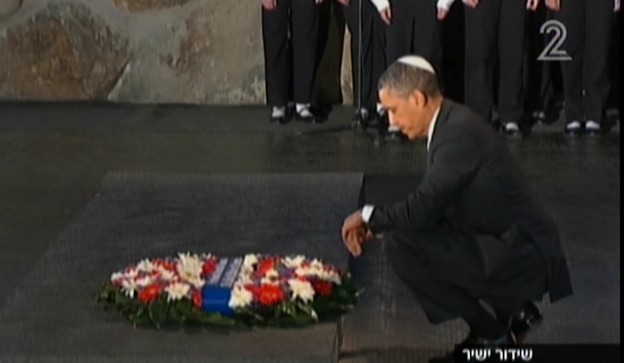
After visiting the Yad Vashem Holocaust Museum in Jerusalem in March 2013, Barack Obama wrote the following statement in the guestbook: “We are ever mindful of the incredible human cost of the Holocaust — an evil unprecedented in the annals of history. And yet we recognize, through this place, the triumph of the Jewish people and the human spirit, and vow to be ever vigilant in preventing such horror from ever happening again.”
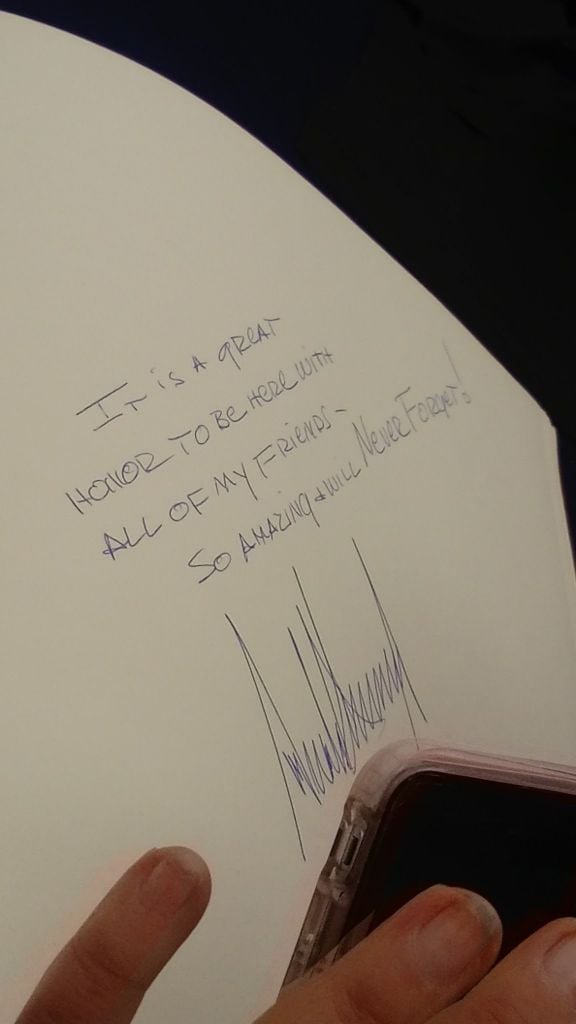
Trump’s guestbook entry Tuesday had a somewhat different vibe. “It is a great honor to be here with all of my friends,” it read. “So amazing + will Never Forget!”
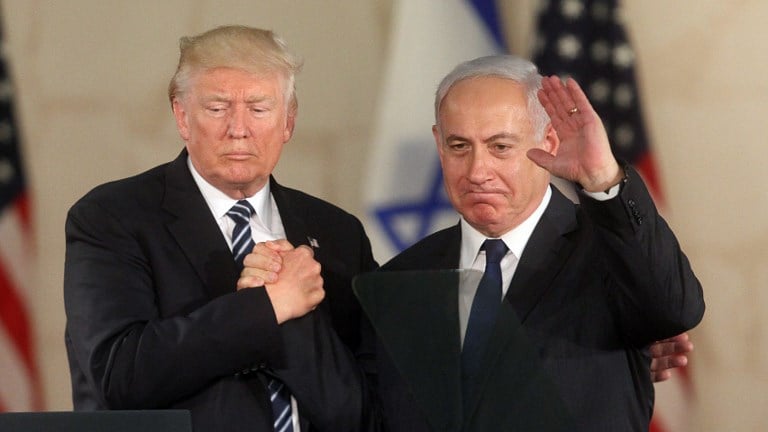
From Yad Vashem, the president rushed to the Israel Museum to deliver an address that was billed as the political centerpiece of his first-ever visit to the Holy Land. The speech was warmly welcomed by senior members of the Israeli government, who noted that Trump vowed Iran will never obtain a nuclear weapon, condemned Hamas and Hezbollah, talked about Israeli children who have to hide from terrorists’ rockets, and even cited Theodor Herzl, the founder of political Zionism.
Four years ago, Obama had said pretty much the same things in a speech held at Jerusalem’s International Convention Center. He also denounced Hamas and Hezbollah, promised to prevent a nuclear Iran, and recalled meeting children in Sderot who were “fearful that a rocket would land in their bedroom simply because of who they are and where they live.” He also referred to Herzl — in fact, he took the time to lay a wreath at his grave, which is standard fare for state visits but which Trump decided to skip.
Of course there were sharp distinctions between the two presidential speeches. Trump did not call for the establishment of a Palestinian state or urge Israel to cease settlement construction. Israeli right-wingers cheered these omission as a victory, while left-wingers warned that, sooner or later, the White House will have no choice but to realize that the two-state solution is the only realistic path to peace. Trump, they added, also did not announce moving the US Embassy to Jerusalem or recognize the city as Israel’s capital.
So what did Trump actually say?
Trump said the “ties of the Jewish people to this Holy Land are ancient and eternal” and reaffirmed Washington’s unwavering support for Israel. “I stand in awe of the accomplishments of the Jewish People, and I make this promise to you: My administration will always stand with Israel,” he declared.
The centerpiece of Trump’s address was reserved for his quest for peace; he mentioned the word “peace” over a dozen times.
But as opposed to Obama, who came to Israel after four years in the White House, Trump did not arrive here with clearly enunciated policies. He made no effort to outline the contours of a possible deal, save for vague references to an alliance against violent extremism that would include Israel and Arab states.
“Diverse nations can unite around the goal of protecting innocent life, upholding human dignity, and promoting peace and stability in the region. My administration is committed to pursuing such a coalition, and we have already made substantial progress during this trip,” he said, without elaborating.
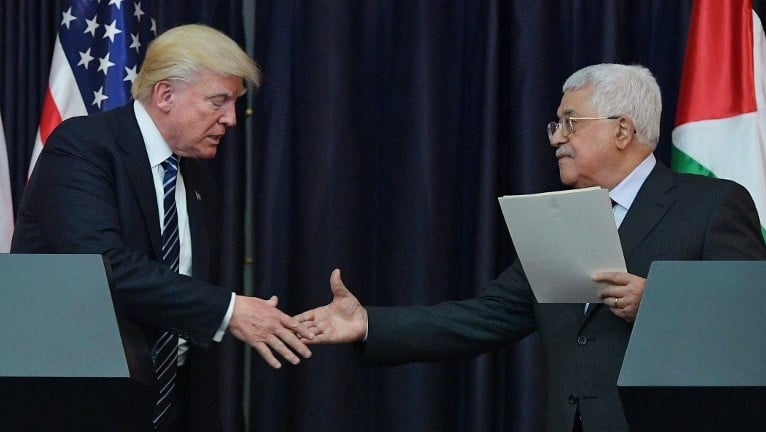
Prime Minister Benjamin Netanyahu has long spoken about an Arab-Israel detente preceding Israeli-Palestinian peace, but a comment Trump made in Bethlehem Tuesday appears to suggest that the president does not subscribe to this so-called inside-out approach. “I also firmly believe that if Israel and the Palestinians can make peace, it will begin a process of peace all throughout the Middle East,” he said, standing alongside Palestinian Authority President Mahmoud Abbas.
Like he did Sunday at a summit in Saudi Arabia, at the Israel Museum Trump used strong religious motives in his bid to boost peace and reconciliation. (Since we’re counting, in Riyadh, he mentioned the word “God” nine times, in Jerusalem 11 times.) He lectured about Jerusalem revealing the “longing of the human heart to know and worship God” and entreated his listeners to pray for peace.
“Let us dream of a future where Jewish, Muslim and Christian children can grow up together and live together in trust, harmony, tolerance and respect,” he implored.
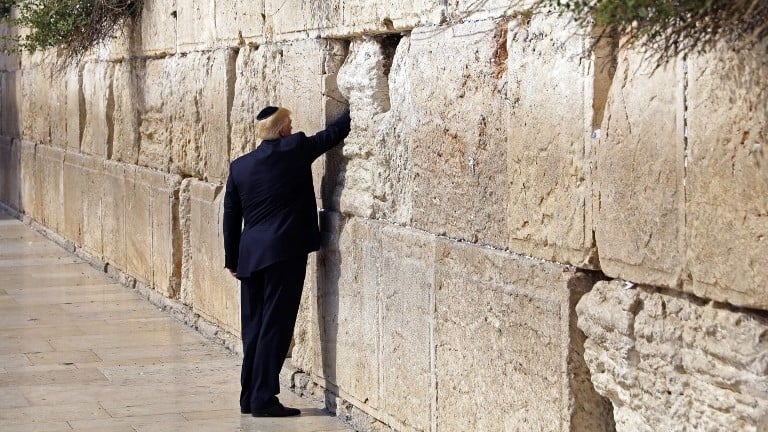
In the coming days Israeli politicians and pundits will endlessly dissect the president’s 28-hour trip to Israel and the Palestinian territories. In many respects, it was truly a historic visit. It marked the first time a US president came to Israel during his first trip abroad. It opened with the first direct public flight from Saudi Arabia to Israel. And during it, a sitting US president for the first time visited the Western Wall.
But it did precious little to nail down the specifics of Israeli-Palestinian rapprochement, besides making clear to Jerusalem and Ramallah that the president truly, deeply, wants to reach peace.
comments