West Bank olive harvest, an annual flashpoint, presses ahead amid obstacles and violence
In recent years, Palestinians have reported being prevented from harvesting their olives, which causes them severe economic harm; this year, attacks have already been reported
Abd al-Halim Mansour, a resident of the West Bank village of Deir Istiya, farms year-round. For most of the year, he works in his family-owned orchards, where they grow various kinds of fruit trees, including lemons. But every fall, his focus turns to olives.
Mansour owns 500 olive trees, and October and November are when the small green fruits are harvested and pressed into olive oil.
It’s also when violence against Palestinians has historically been most rife, with every year seeing attacks by extremist settlers on villagers making their way into the groves to harvest the olives. Reaching the trees often brings Palestinians into closer proximity to settlers than normal, resulting in fraught and often violent confrontations.
In recent years, Israeli authorities have responded to what they euphemistically term “friction” by issuing closed military orders on the olive groves, ostensibly barring access for settlers, Palestinians and Israeli or foreign activists who traditionally come out to help harvest the fruits and protect the farmers. In reality, critics say, the orders are often only enforced against one side, and it’s not the settlers, stymying the harvest.
This year, with settler violence and settlement expansion reaching unprecedented levels, there are fears that such restrictions will be more widespread than ever, making the annual harvest not only fraught with danger but also potentially impossible for many farmers.
“The army wants less unrest, but it has only one tool — to push the Palestinians back as much as possible,” said Ksenia Svetlova, a former Zionist Union Knesset member who closely follows developments in the West Bank.
She described the army’s message as “Don’t harvest, and let’s be done with this whole thing.”
“They don’t officially say, ‘Don’t go out,’ but Palestinians in Area A are already encountering problems [trying to harvest] this year,” she said, referring to the part of the West Bank where the Palestinian Authority has civil and security control and where Israelis are supposed to be banned from entering. In the other parts of the West Bank, where the Israeli military has authority and where settlements and outposts dot the landscape, the situation is liable to be even worse.
According to Peace Now, as of August 2026 there were 390 outposts –unauthorized, often tiny, settlements — in the West Bank, 65 of which were established this year and more than 240 since 2023, bringing settlers into closer proximity to areas where Palestinians harvest their olives.
“It looks like this is going to be a difficult year [in terms of our ability to harvest]. I hope we’re wrong, but there is concern that it will be a difficult year,” said Mansour, pointing to a settler outpost farm established several hundred meters from his trees in the Deir Istiya area, west of Ramallah.
Beyond the violence, curbs on the harvest can have deep ramifications for the ailing Palestinian economy, with olives making up a key portion of the West Bank’s GDP.
“The olive industry is considered the backbone of the [Palestinian] agricultural sector and constitutes a source of livelihood for most villages in Judea and Samaria — more than 100,000 families, comprising over 500,000 people,” Israel’s Civil Administration, the body responsible for civilian affairs in the West Bank, wrote in a document published ahead of this year’s harvest.
Mansour’s 500 trees can produce roughly 80 15-liter jerrycans of olive oil, he told The Times of Israel, which accompanied him on the first day of the harvest late last week.
Standing on a ladder and picking olives from a tree, Mansour estimated that selling the oil produced from all his trees this year could bring in a total of around NIS 64,000 ($20,900) — equivalent to more than 20 average monthly salaries in the Palestinian Authority territories.
But he has no certainty that he will manage to complete the harvest before trouble begins.
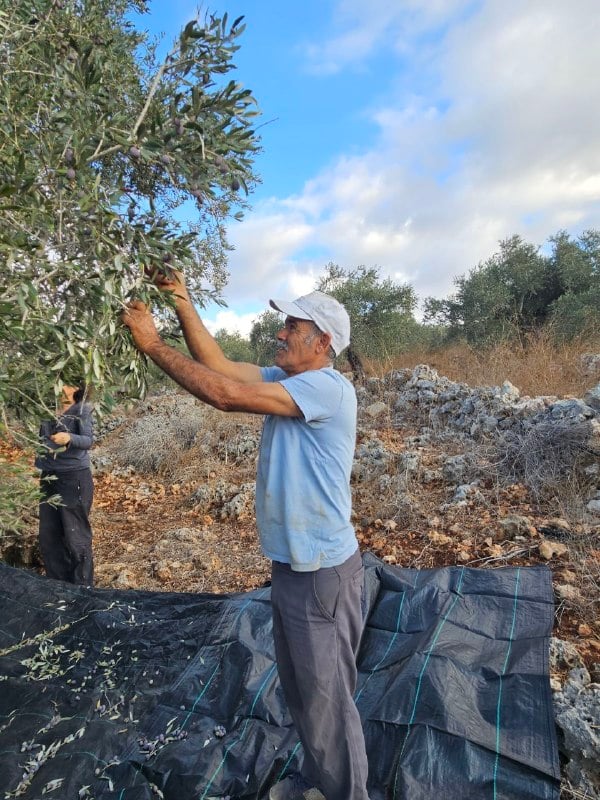
Mansour’s first day of harvesting passed without incident, but less than a week into what is considered the harvest season, reports of attacks on villagers by settler extremists elsewhere have already become a daily occurrence.
“There’s a new outpost here that was established a few months ago, and there’s a settler there who controls the entire area. He can come over to us and call the army [to remove us from the area],” Mansour alleged. “About 40 percent of the trees belonging to residents of the village are near him. I hope the harvest passes [peacefully].”
No access
Among the hardiest crops, olive trees need far less attention than many others, able to thrive on whatever rain the Mediterranean climate provides.
Many Palestinian farmers visit their groves only a few times a year, with the main work taking place in autumn. Farmers and groups of helpers leave their villages and travel to wherever their groves are located, spending the days beating or shaking loose the ripe fruit, which is gathered in nets spread beneath the branches.
When these groves are near settlements, Israelis may view the sight of Palestinians on land where they are rarely present as a security threat, leading to clashes.
In the last few years, as extremists have widened their footprint across the West Bank, more and more groves have been put within proximity of settlers primed to see any movement by Palestinians as an encroachment to be met with force.
“As every year, the enemy is expected to exploit the proximity to communities and settlement points to carry out terror attacks and violent provocations,” prominent far-right settler activist Elisha Yered wrote on social media ahead of this year’s harvest.
He called on the military to preemptively ban Palestinians and the activists who come to help them, terming them “provocateurs and anarchists.”
“The security establishment is asleep on the job and only wakes up when these rioters are already knocking on the doors of residents of the farming and hilltop outposts, forcing them to defend themselves with their bare hands,” he added.
Palestinians and activists offer a different view, describing incidents in which well-armed extremists, often backed by the army, confront Palestinians and activists attempting to harvest olives in groves near settlements or outposts.
Under Israeli law, Palestinians must be allowed to harvest land that is established as being privately owned by them. Under Civil Administration procedures, agricultural areas are divided into two categories: those where Palestinians can harvest freely, and those where prior coordination with the Civil Administration is required because of their proximity to a settlement or military base.
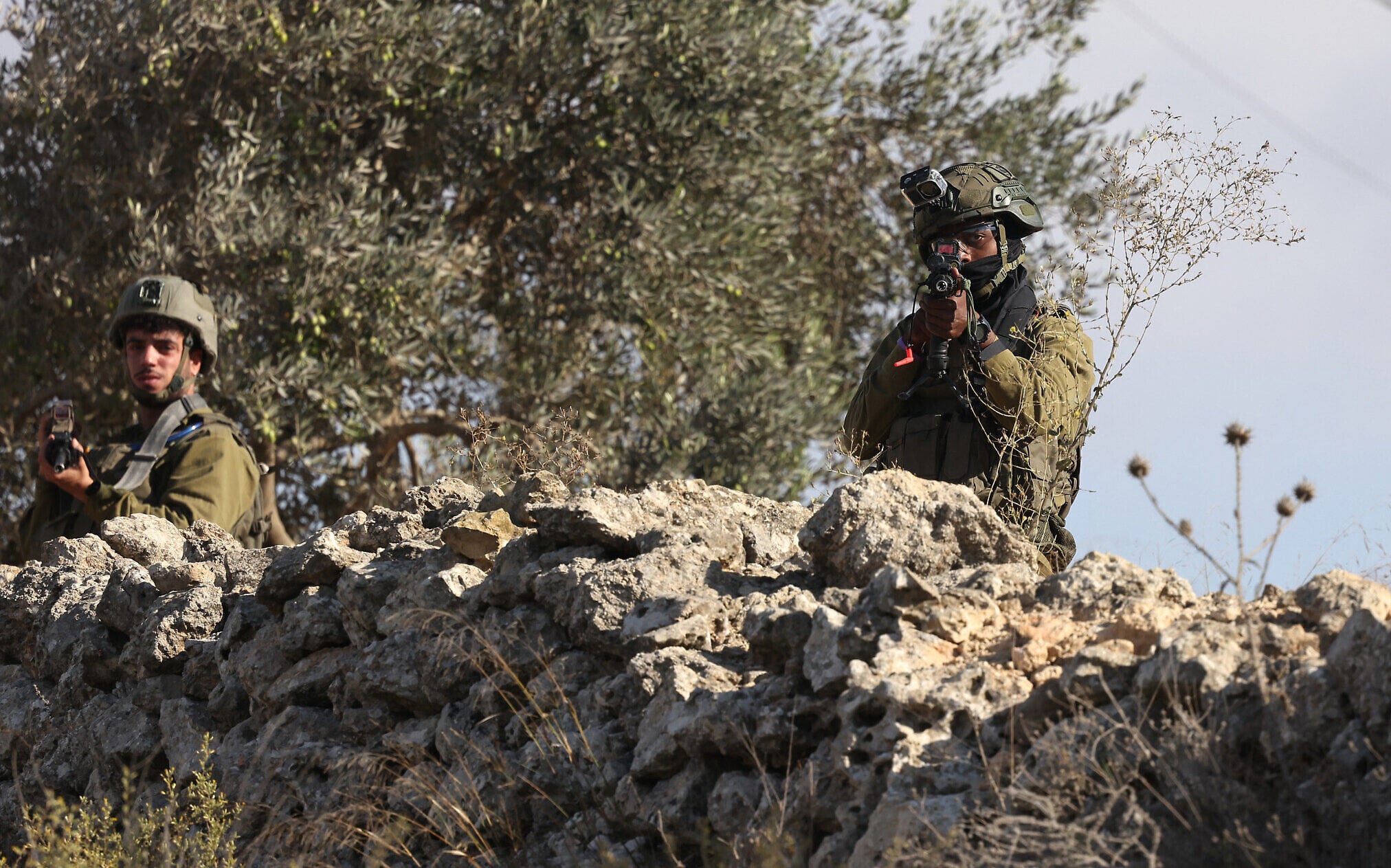
In the latter areas, the Civil Administration designates specific days on which Palestinians are permitted to access the land and informs them of those dates. Landowners whose groves require prior coordination are supposed to be notified by the Civil Administration.
Because Israel has never completed a comprehensive land survey in the West Bank, many plots do not have a definitively established legal status.
At the start of each olive harvest season, the Civil Administration publishes online a map showing the areas where prior coordination is required. The map released for 2026 includes 737 plots where coordination is required or where Israelis are banned from entering, over 70 more than the previous year.
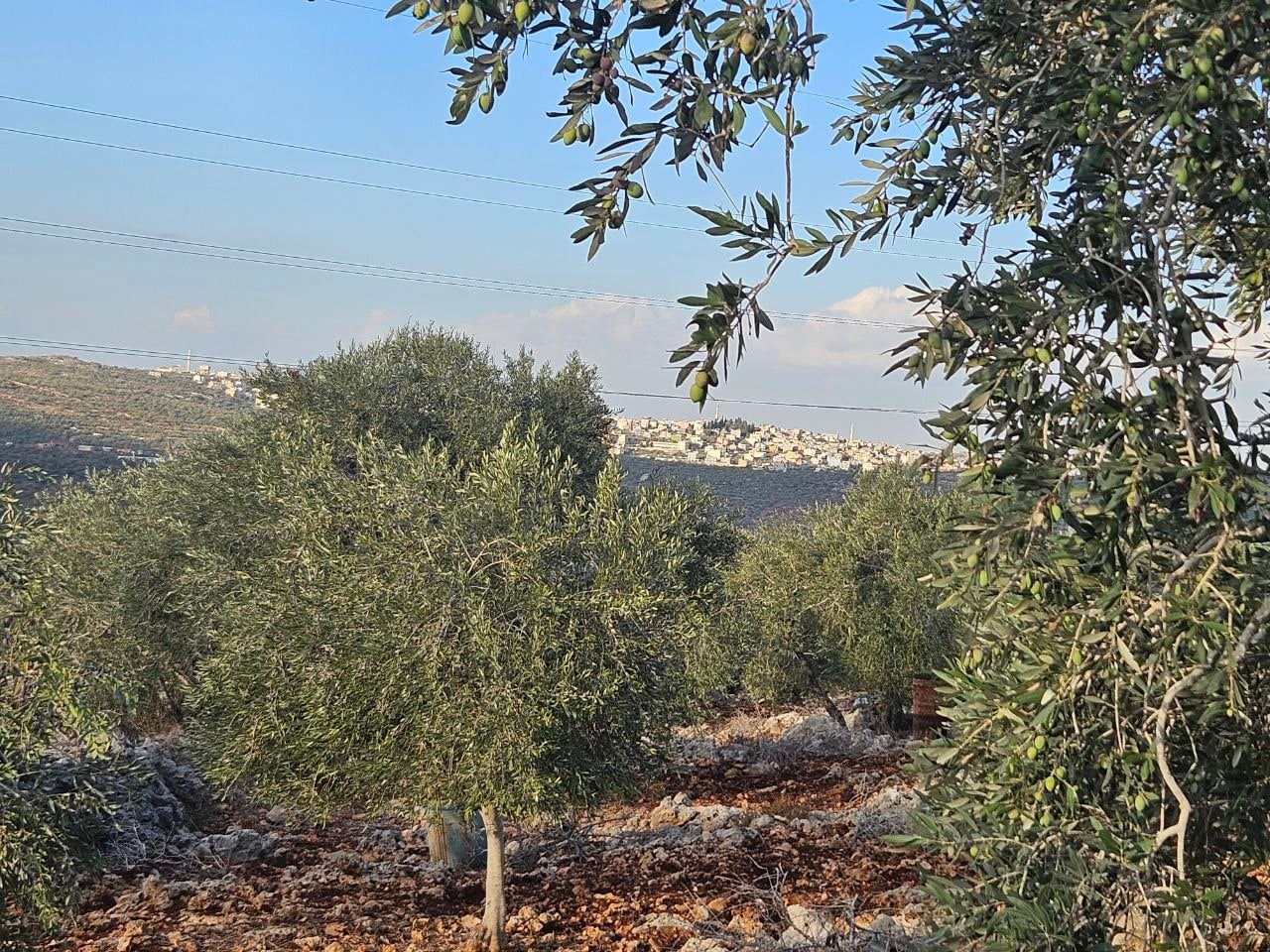
The army may also issue closed military zone orders restricting access to plots, though those are supposed to be temporarily imposed as a means of keeping settlers and Palestinians away from each other.
“Every year, the IDF works to ensure a safe and orderly olive harvest for farmers,” the IDF said in a statement. “In cases where the harvest is disrupted, troops are instructed to take the necessary measures to allow it to continue without interference. Security forces oversee the harvest in areas where security coordination is required in order to maintain the safety and security of the area and its residents.”
In recent years, and particularly since the Hamas invasion of October 7, 2023, many Palestinians have said that such procedures exist only on paper, with soldiers or settlers forcing them off land they own, often violently, including areas where prior coordination is not required.
At the end of the 2025 olive harvest season, the UN Office for the Coordination of Humanitarian Affairs said it had documented 86 settler attacks that left 112 Palestinians injured. According to the UN, 80 incidents were recorded during the equivalent period in 2024, leaving 50 Palestinians injured.
These complaints come amid widespread uprooting of olive trees across the West Bank by the IDF in recent months, which the military says is being carried out for security reasons.
Fares al-Dik, a resident of Kafr ad-Dik, told The Times of Israel that he has been unable to reach 550 olive trees he owns north of the village, spread across two plots, for the past four years.
Until October 7, 2023, he said, he had been able to access the land and harvest the trees without interference. Although the plots are relatively close to the settlement of Leshem, he said prior coordination had not been required, and residents of the settlement had seen him harvesting there and knew him. The 2023 olive harvest season was cut short midway through.
“The last time I reached the land was on October 5, 2023. I tried to get there later that year, but soldiers stopped us before we reached it [and told us we weren’t allowed to approach]. They said, ‘This is a closed military zone.’ The following year, in 2024, neighbors of mine [who own an adjacent plot] went there, and soldiers came and removed them before they managed to harvest, saying it was a closed military zone.”
Al-Dik has not attempted to return to the land since then, fearing that he could be detained or harmed, but he suspects that the restriction remains in place.
In recent years, a fence and gate have been erected around the plots, though it is unclear by whom. He did not receive any notification from the Civil Administration that prior coordination was required to harvest in the area.
The IDF said in response that the area was being managed “in accordance with the situational assessment. The village is not under closure, residents are able to enter and leave the village, and olive harvesting is permitted in the area.”
Al-Dik said he has documents establishing his ownership of the land and that the ownership itself is not in dispute.
“The question isn’t whether the land is ours; it’s that ‘you’re not allowed to go there,’” he said.
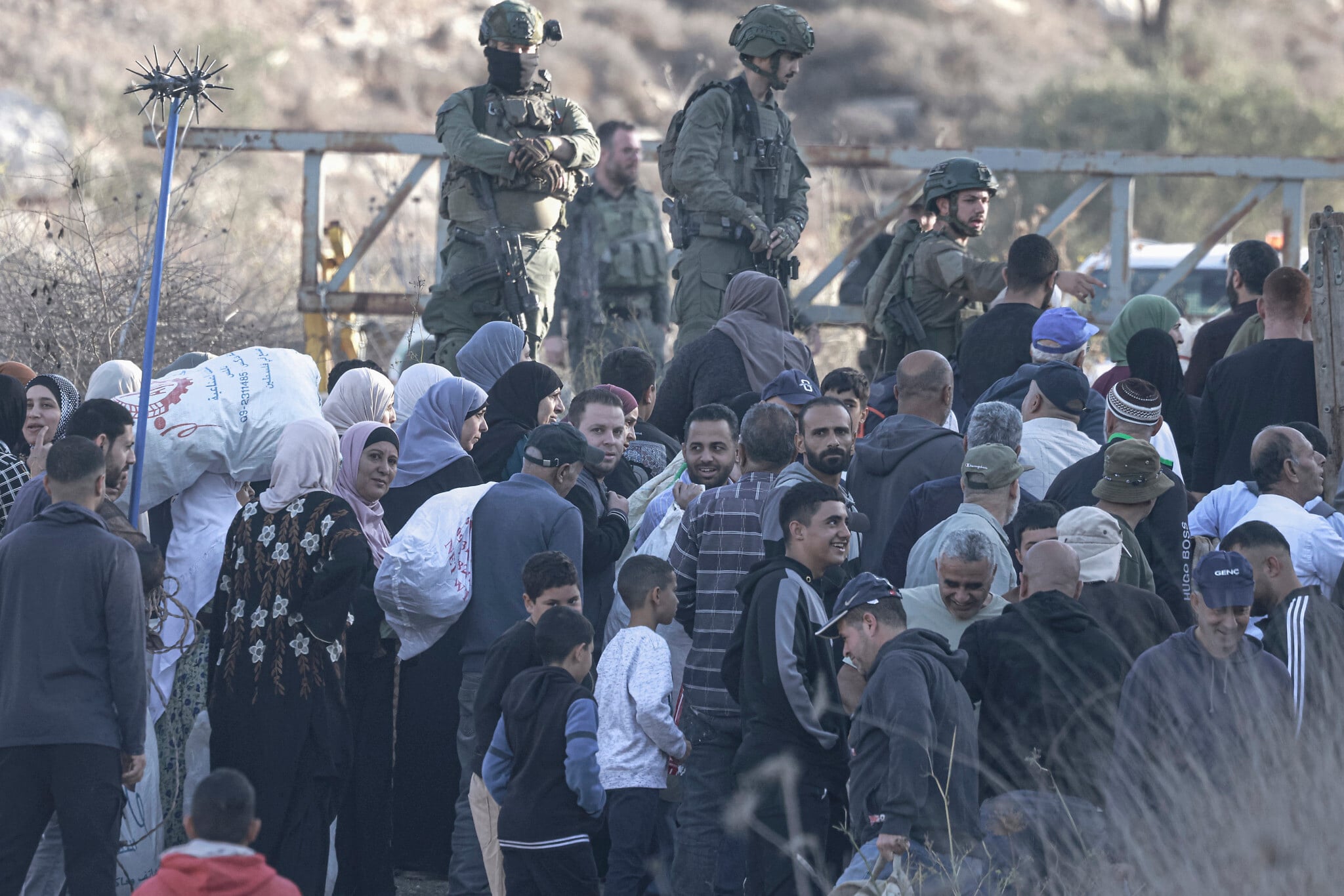
According to al-Dik, many of the roughly 6,000 residents of his village face similar difficulties and have been unable in recent years to reach olive trees they own around the village, either because soldiers have prevented them from doing so or because of settler attacks.
“There’s an area southwest of the village where an outpost was established in 2024. Whenever a [Palestinian] farmer approaches, he [the settler at the outpost] sends a drone toward him, and settlers arrive on ATVs and force him out,” he said.
Millions in losses
Residents of six villages in the southern Hebron Hills have sought to quantify the losses they say they have suffered in recent years as a result of being denied access to their land.
Since 2023, they have been pursuing a High Court petition over what they describe as the systematic prevention, by soldiers and settlers, of access to agricultural land largely planted with olive trees.
In the petition, filed with the assistance of Haqel, an organization that assists Palestinian farmers, the petitioners estimated that the direct losses resulting from their inability to access some 16,000 dunams (4,000 acres) of land between 2023 and 2025, not including this year, amounted to nearly NIS 14 million ($4.6 million) in lost income from olive oil and other field crops.
They estimated the indirect losses — resulting from their inability to carry out necessary agricultural work, causing damage to the trees — at more than NIS 8 million ($2.6 million), bringing the total losses to NIS 22 million ($7.2 million).
The ownership of the land in question is not disputed, and Israelis have been barred from entering most of it under a closed military zone order issued some 15 years ago, following incidents in which Israelis trespassed on the land and used violence against Palestinians.
Nevertheless, the residents say that for the past four years, soldiers have repeatedly turned them away when they attempt to enter their land, while on occasions when they have managed to gain access, they have been attacked by settlers.
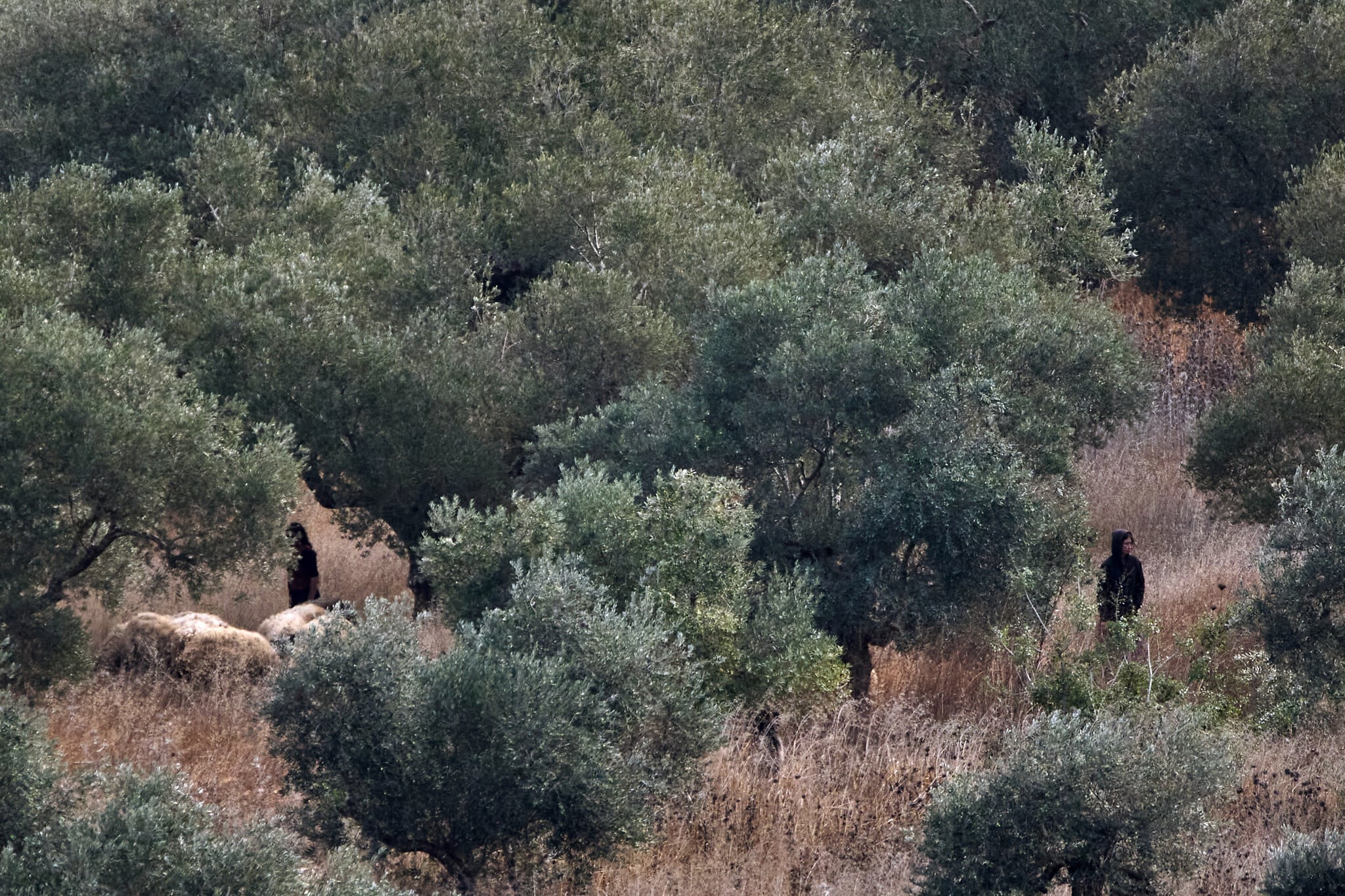
Last year and again this year, the Civil Administration also required residents to coordinate in advance in order to harvest olives on most of the land, even though the areas are adjacent to Palestinian villages and were not subject to an order requiring such coordination before 2025.
According to Kamar Mashraki-Assad, an attorney who represents the petitioners, when coordination was granted last year and specific days were designated for residents to enter and harvest their olives, access was extremely limited: It was permitted in only two areas out of the entire expanse, for roughly two hours, with restrictions on the number of residents allowed to enter and a ban on bringing in equipment such as pruning shears.
The Civil Administration did not respond to requests for comment.
The IDF said that “The case is known and is being discussed in court. As a general rule, when a report of a confrontation is received, IDF troops are dispatched to the scene to disperse those involved and restore order.”
One of the petitioners is Nasser Nawaj’ah, head of the Susiya village council, who owns roughly six dunams (1.5 acres) of olive groves located just 400 meters (a quarter of a mile) from his home.
Although he can see the trees from his house, he has been unable to reach them since October 7, 2023. A few days after the Hamas attack on southern Israel, he tried to access the grove but was stopped by soldiers. He said he has made several more attempts since then, only to be turned away by members of the local security squad, which is made up of settlers who live in the area.
At the same time, he alleges, settlers have been entering his land and stealing olives from his trees.
“I see settlers stealing. In previous years, we waited for coordination to be allowed in, and we saw settlers stealing olives right in front of our eyes. In one case, I even called the police,” Nawaj’ah said.
He recalled that a responding officer told him that the trees were on land that had been designated part of the Susya archaeological site, an area with significant Roman and Byzantine ruins that Israel expropriated from the village in the 1980s.
“What archaeological site?” he asked. “These are 40-year-old trees that my grandfather planted. This is my land — I’ve been tending it for years!”
According to Mashraki-Assad, state representatives in the High Court proceedings have sought to downplay the scale at which Palestinians are being kept from their land.
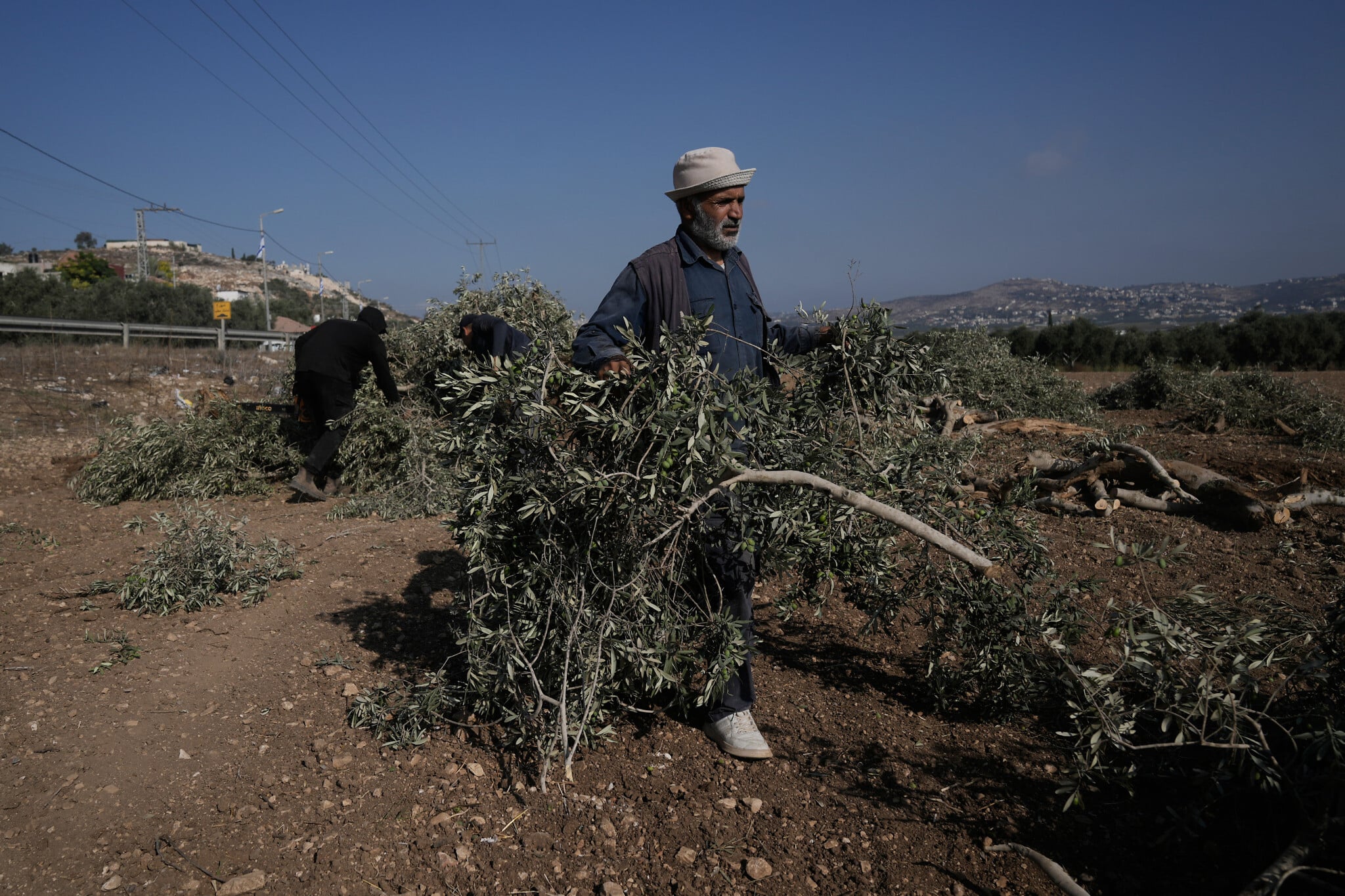
“The state says, ‘They have the right to be allowed in,’ but for the past three years it has been saying, ‘There are mishaps here and there.’ It’s trying to portray this as isolated mishaps, to downplay it.”
The petition remains pending, and the court is expected to issue a decision soon on allowing the farmers access to the land for the harvest. Mashraki-Assad, however, is pessimistic.
“This isn’t heading in a good direction. I don’t think we’ll manage to harvest [this year],” he said.
The plot thickens
A particularly troubling message that could indicate the difficulties farmers will face this harvest season was relayed to Palestinians in Deir Istiya by the Civil Administration: Israeli and foreign activists would not be allowed to help Palestinians harvest their olives.
Village council head Izzat Mansour told The Times of Israel that the Palestinian District Coordination Office — the body through which messages from the Civil Administration are relayed — informed residents that, in two olive-growing areas, farmers should not arrive with “volunteers,” and that if they did, the area would be declared off-limits.
Aviv Tatarsky, who heads a group of Israeli activists that has been helping Palestinians in Deir Istiya with the harvest for the past 16 years, told The Times of Israel: “The ban has no legal basis whatsoever, and we have no intention of complying with it.”
“If the Palestinians see that they can harvest on their own and that they aren’t attacked, then they don’t need us,” he said. “Unfortunately, it’s very clear what will happen when farmers try to harvest alone, so sooner or later they’ll call us.”
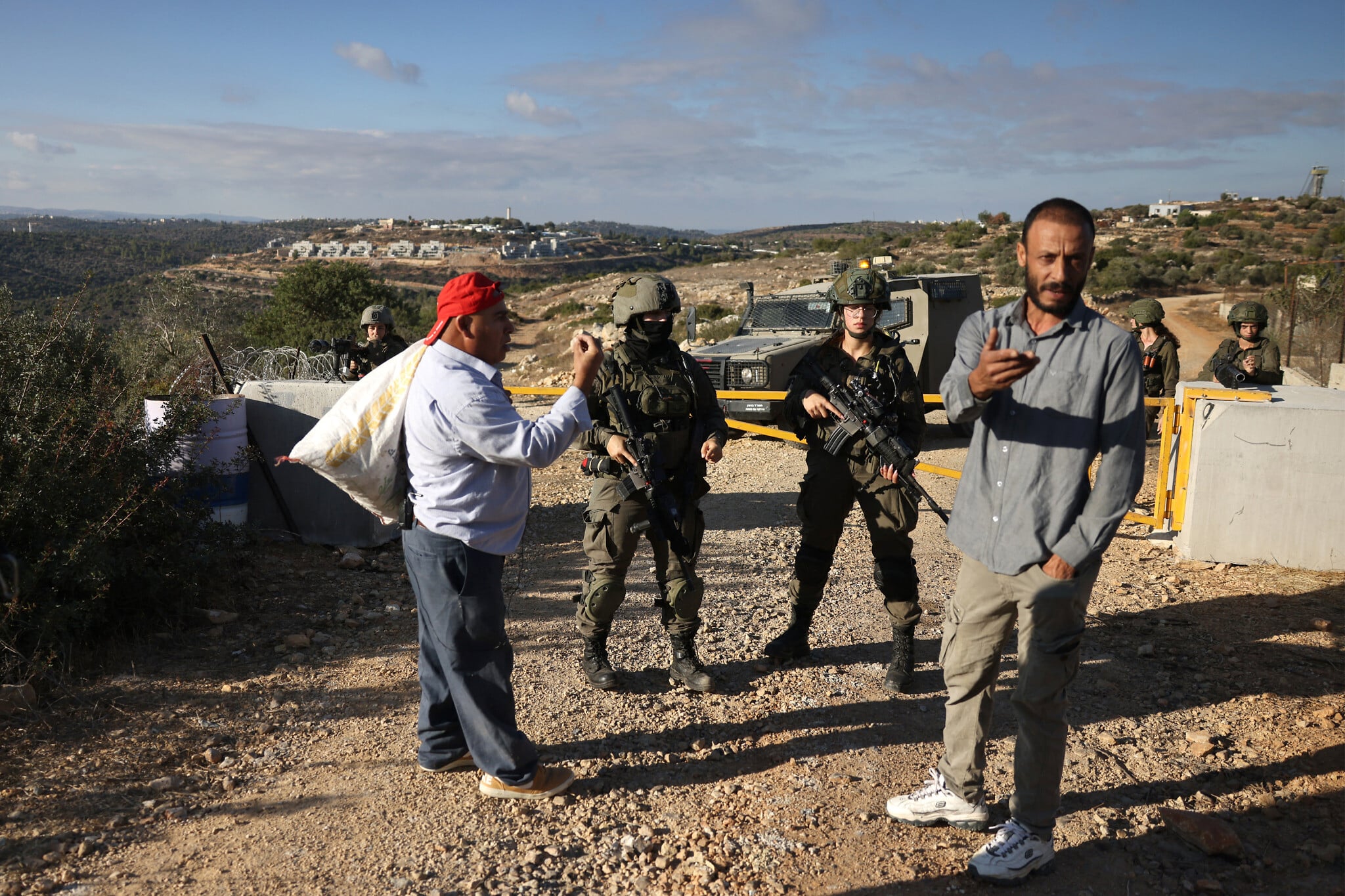
It is unclear what grounds were given for the directive. There is no legal prohibition on Palestinians accessing their land accompanied by people who do not own the property. The Civil Administration declined to respond to a Times of Israel request for comment on the matter.
However, settlers and right-wing politicians have in the past portrayed activists who show up to aid the harvest as provocateurs who should be expelled.
On October 2, Yered wrote on social media that “dozens of foreign anarchists arrived in the past hour under the cover of the olive harvest,” and tried to approach homes in an illegal outpost.
Police said later that four foreign activists were referred for a hearing before the Population and Immigration Authority as part of proceedings to deport them from Israel following a “friction incident” in the same area. According to police, they “were questioned on suspicion of disturbing the peace and being present in a closed military zone.”
With Israel heading into an election, there are fears that right-wing politicians keen on burnishing their security and pro-settler bona fides could try to pressure security agencies to ignore settler violence while adopting a stricter line toward Palestinians and activists. That includes Likud’s Israel Katz, who is defense minister, Religious Zionism leader Bezalel Smotrich, who controls the Civil Administration in the Defense Ministry, and Otzma Yehudit head Itamar Ben Gvir, whose ministry includes the police.
Svetlova, who hailed from the dovish side of the political spectrum, told The Times of Israel that protective-presence activists assisting Palestinians “are all concerned that it’s going to become even more violent, precisely because we’re heading into an election.”
“My sense is that there is a desperate attempt here to escalate the situation and trigger an eruption of terrorism in the West Bank,” she warned.
Several incidents of violence and of Palestinians being removed from their land have already been reported as the harvest has gotten underway.
“We’re only in the first days of the harvest, but the feeling is that this year is going to be much worse,” Tatarsky said.
On October 3, soldiers and settlers were filmed removing Palestinians from privately owned land near the village of Beita, south of Nablus. The Civil Administration confirmed to The Times of Israel that prior coordination was not required to access the land.
An armed settler can be heard telling the Palestinians and activists accompanying them in Hebrew, “This area is closed.” In footage from the scene, Israeli activists can be heard telling soldiers, “This isn’t a coordination area. We’re allowed to be here,” and demanding to see an order declaring the area a closed military zone. One of the soldiers responds by firing a smoke grenade.
The IDF told The Times of Israel: “IDF troops were dispatched to the area of the community of Itamar following a report of friction in the area. Before the troops arrived, members of the community’s security team were dispatched to the scene. A security team member who was present fired into the air in order to distance those involved, with no injuries or damage reported. Upon arriving at the scene, the troops dispersed the confrontation using riot dispersal means.”
The IDF did not address the fact that the Palestinians were permitted to be in the area.
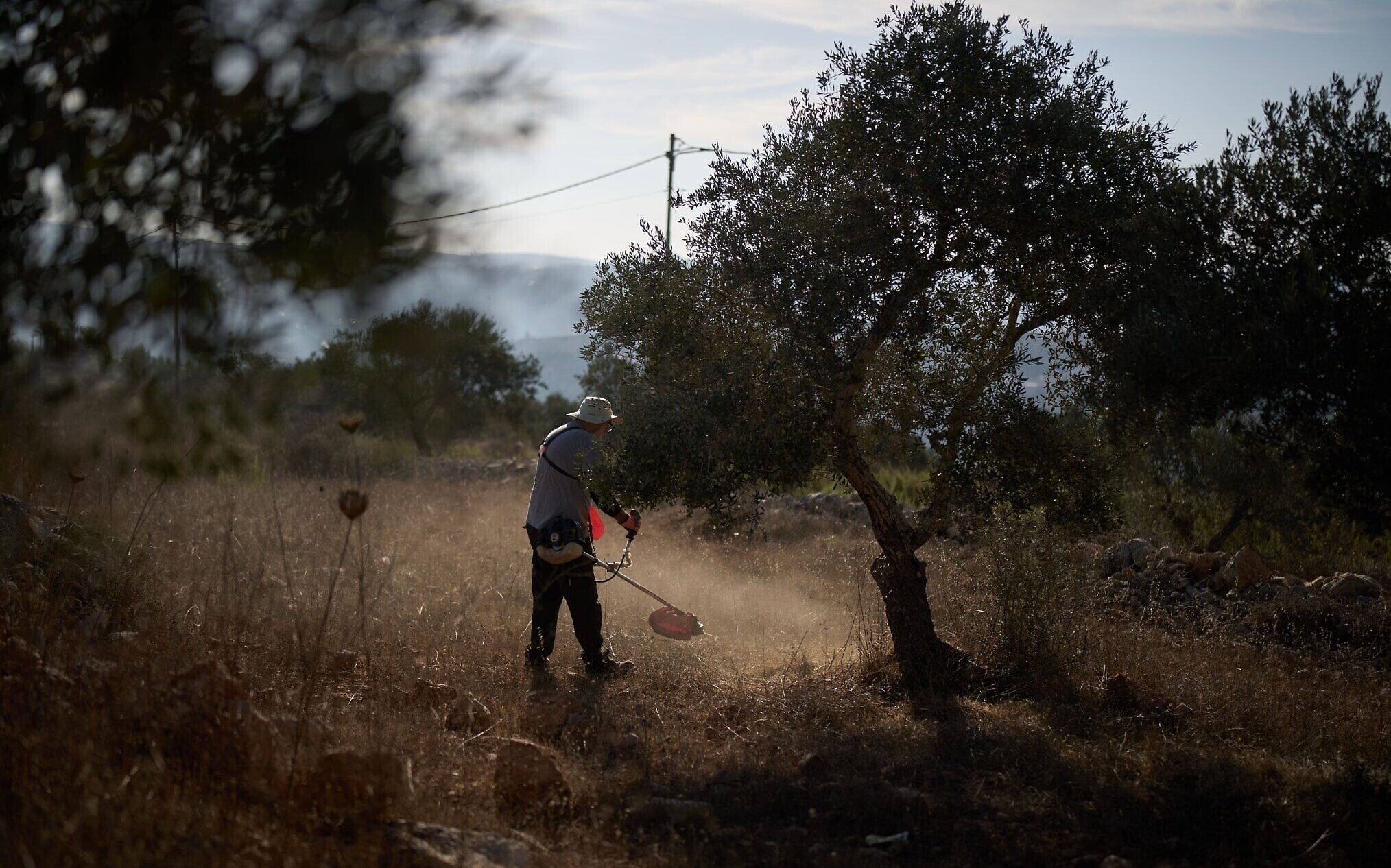
The following day saw an even more serious incident, when settlers violently attacked olive harvesters near the village of Osarin, also south of Nablus.
The Palestinian Red Crescent reported that five people were injured. Footage from the scene shows more than 10 settlers entering the village and vandalizing vehicles. Police said an investigation had been opened into the incident; no arrests are known to have been made so far.
Tatarsky explained why, in his experience, the presence of activists during the olive harvest is important.
“There are still places where [our presence] restrains the settlers, and the army can’t just come and remove people for no reason — they have to issue a closed military zone order. They only do that when activists are there. If you [an activist] persist, farmers do manage to harvest — at least some of their olives.”
Svetlova accused the government of seeking to escalate tensions in the West Bank, pointing to its reaction to a deadly Palestinian terror attack on the eve of Yom Kippur at a spring near a settlement last month.
“Incidents like these can be used as a pretext to announce more settlements and impose further restrictions [on Palestinians]. And if there are more cases of Palestinian terrorism, it will be possible to impose further restrictions on people leaving their communities and on movement, which is already severely restricted in the West Bank,” she said.
Al-Dik is now facing a third consecutive year in which he cannot reach his trees, which he said used to produce between 110 and 140 liters of olive oil a year.
Asked about the future of the olive harvest, he said: “The future depends on the Israeli government. We Palestinians are a secondary factor; we don’t make the decisions. What determines the future is the nature of the government. I hear the statements by Ben Gvir and Smotrich — they talk about migration [of Palestinians], about more settlements. The future will be difficult with a government like this one.”