Yashar, Likud meet for unity talks as Eisenkot bloc moves to assert control over Knesset
Anti-Netanyahu bloc prepares to replace Knesset speaker and begin reversing judicial overhaul legislation, even as coalition talks remain deadlocked
Negotiating teams from Gadi Eisenkot’s Yashar party and Prime Minister Benjamin Netanyahu’s Likud met on Sunday to discuss a potential unity government, as the Knesset geared up for a consequential week amid a deadlock in negotiations to form a new government.
Ahead of the talks, Yashar denied an Army Radio report that it was considering offering Likud a rotation agreement contingent on Eisenkot serving first as prime minister, telling The Times of Israel that the only proposal on the table was for Likud to join a government led by Eisenkot.
Netanyahu, meanwhile, reportedly dropped his demand to lead a rotation government for the first time on Saturday, in an apparent show of flexibility.
Eisenkot’s coalition-building efforts were taking place against the backdrop of the first full week of the 26th Knesset, and as his bloc prepared to start legislating its agenda in parliament.
Among the key items scheduled for the upcoming week is a vote on Tuesday called by the Eisenkot-led bloc to replace Knesset Speaker Amir Ohana with Yashar MK Matan Kahana.
The Yashar-led bloc is also preparing to install new chairs of two powerful parliamentary panels — the Foreign Affairs and Defense Committee and the Finance Committee — on Monday and begin advancing legislation to reverse the judicial overhaul as early as Wednesday.
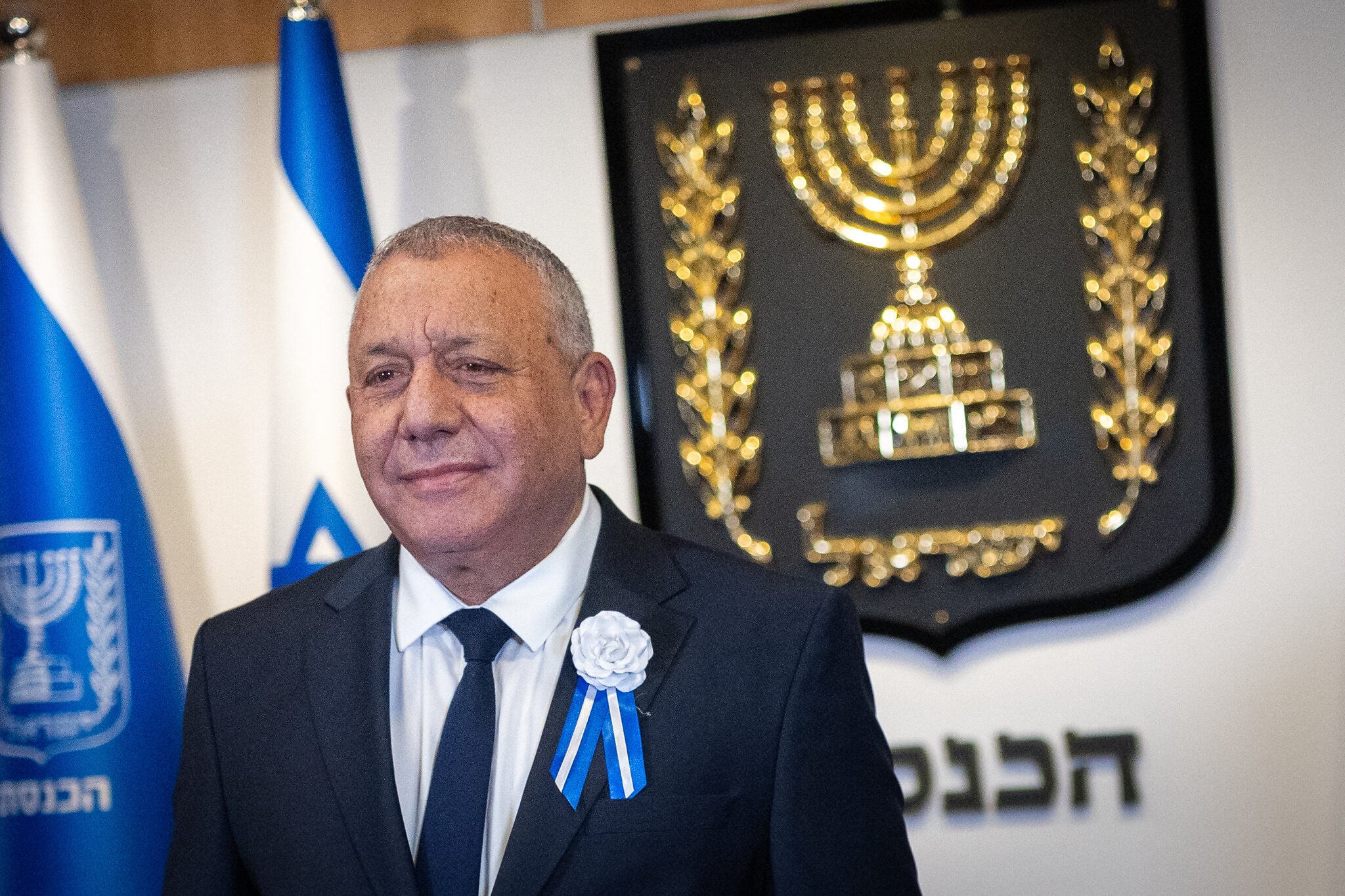
The moves mark the first major parliamentary tests for Eisenkot’s bloc since Netanyahu lost his majority in last month’s election, allowing the parties seeking to replace him to begin to assert control over the Knesset despite their failure so far to put together a governing coalition.
The week’s developments could also prove pivotal for coalition negotiations, with the ultra-Orthodox parties facing mounting pressure to choose sides as Eisenkot seeks to secure their support for a government.
Unity talks with Likud
Amid the Eisenkot-led bloc’s push to repeal controversial legislation from the past four years, representatives from Yashar and Likud were meeting at the Dan Accadia Hotel in Herzliya on Sunday afternoon to discuss a potential unity government.
Yashar was represented by MK Chili Tropper and Yoav Horowitz, a former Netanyahu chief of staff-turned-Eisenkot ally. Likud sent faction chair MK Ofir Katz and Michael Rabello, Netanyahu’s former personal lawyer.
Yashar had also asked Likud to include freshman MK Elisha Madan, though it was unclear whether he ended up joining the talks.
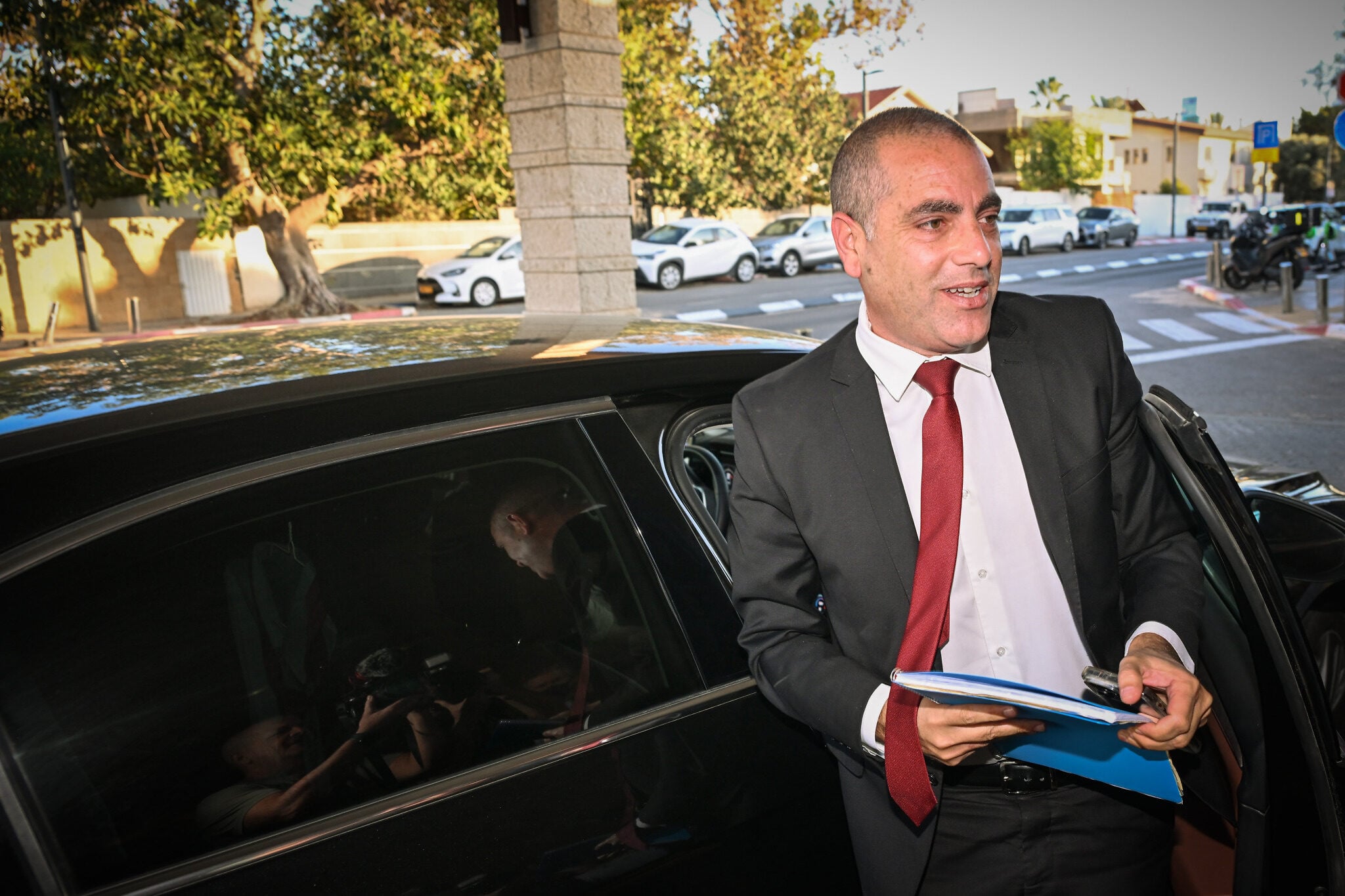
Shalom Shlomo, a confidant of B’Yachad chairman Naftali Bennett, was also reportedly in attendance.
Reports ahead of the talks in Herzliya claimed that Eisenkot was insisting on serving as prime minister in the event of a potential unity government with Likud.
Yashar reiterated that any party seeking to join an Eisenkot-led government must accept his four founding principles: recognition of Israel as a Jewish and democratic state; acceptance of the Declaration of Independence; mandatory military or civilian service for all; and recognition of Hamas as a terrorist organization, alongside a commitment to dismantling its military and governing capabilities.
Prospective partners must also “separate from extremists,” the party said, without specifying whom it meant. The condition appeared to refer at least in part to far-right Otzma Yehudit leader Itamar Ben Gvir. Yashar has previously said its government would be open to Likud and Religious Zionism lawmakers willing to accept its four principles.
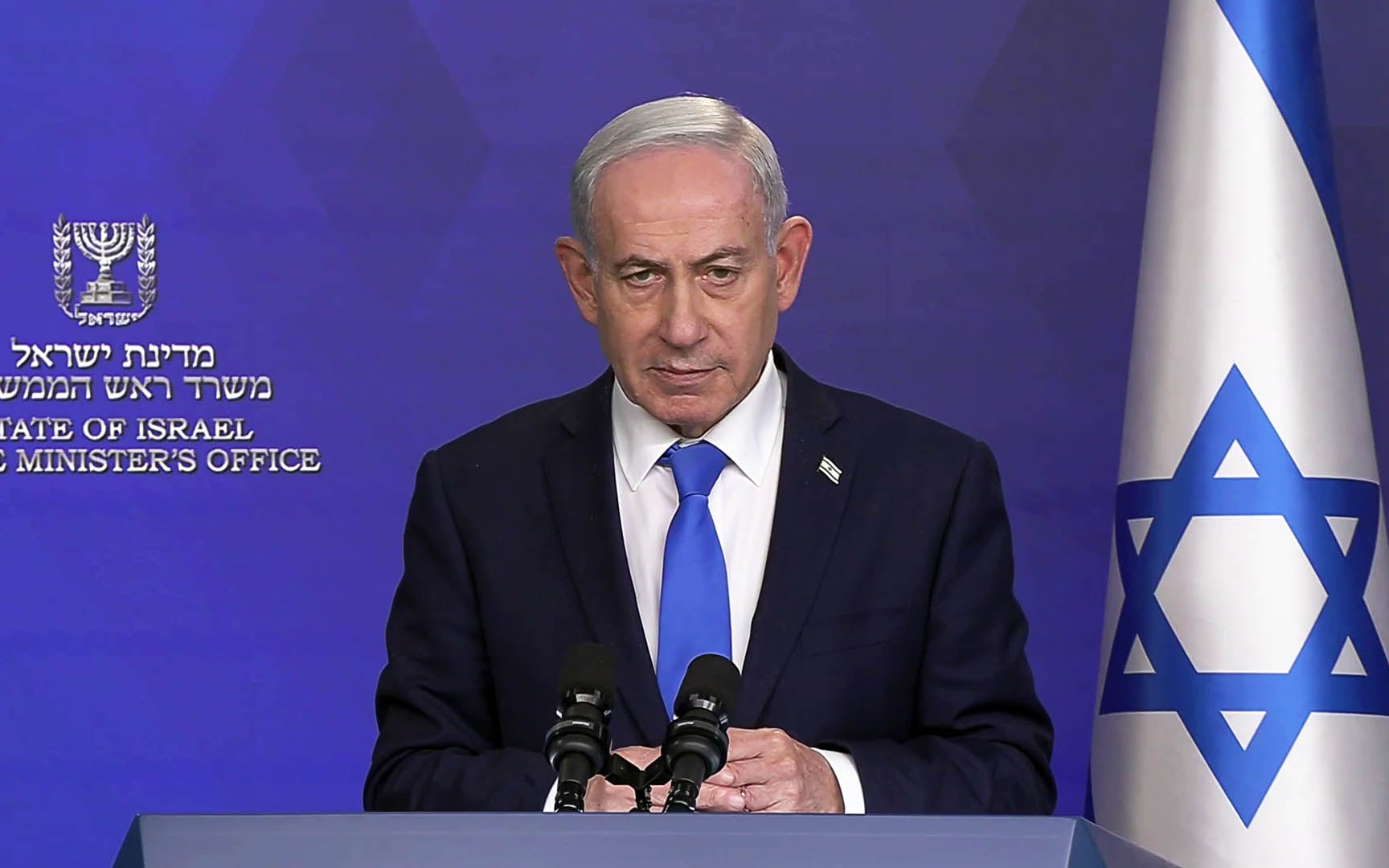
Eisenkot has repeatedly insisted that Netanyahu is unfit for office, poses a danger to the country and must leave politics. Even the prospect of Netanyahu serving under Eisenkot as a minister would represent a dramatic departure from the latter’s previous position, though it is highly unlikely that Netanyahu would agree to serve in a government headed by anyone but himself.
The talks may therefore be aimed less at reaching an agreement with Netanyahu, who is unlikely to accept Eisenkot’s terms, than at demonstrating that Eisenkot has made a genuine effort to form a unity government before turning to other options, including a coalition with the ultra-Orthodox parties or a minority government supported by Arab-majority parties Ra’am and the Joint List.

As the talks in Herzliya got underway, footage from outside the hotel showed a truck parked by activists with a billboard reading “67 mandates voted for change” and “Gadi, you don’t do business with scorpions.”
The sign referred to remarks by Yashar MK Merav Cohen during the party’s consultation with President Isaac Herzog earlier this month, in which Cohen likened Likud to the scorpion in a fable that persuades a frog to carry it across a river, then stings it midway, dooming them both; the scorpion explains that stinging is simply in its nature.
מפגן מול פגישת צוותי המו"מ של ישר והליכוד: "גדי, לא עושים עסקים עם עקרבים!"
פעילים ופעילות מתנועת ״דרכנו״ הציבו משאית עם מסכים ועליהם קריאה לא להשתתף בממשלת אחדות עם נתניהו, כאשר ברקע נשמעים דברי איזנקוט מהתקופה האחרונה שלפיהם "נתניהו חייב ללכת הביתה, הוא האחראי העליון ל-7… pic.twitter.com/WtumWg8iXF
— חדר מלחמה (@waroomisrael) November 15, 2026
Eisenkot is also courting the ultra-Orthodox United Torah Judaism party, whose support could prove crucial to forming a government after Yisrael Beytenu leader Avigdor Liberman ruled out joining a coalition reliant on Arab parties. According to Channel 12, Eisenkot secretly met last week with UTJ chairman Yaakov Asher.
Netanyahu, meanwhile, is pressing UTJ to oppose the appointment of Yashar’s Kahana as Knesset speaker, setting up Tuesday’s vote as an early test of the ultra-Orthodox party’s willingness to cooperate with Eisenkot’s bloc.
UTJ has yet to commit to either side, with its position on the speakership potentially serving as a bargaining chip in coalition talks, where military exemptions for yeshiva students remain a key obstacle.
The Eisenkot-led bloc has enough votes to elect Kahana with the support of the Arab parties, but backing from UTJ could allow some Joint List and Ra’am lawmakers to abstain.
Speaker vote and judicial overhaul repeal on agenda
The parliamentary agenda begins Monday, when Liberman and B’Yachad MK Liran Avisar Ben Horin are set to officially assume their posts as chairs of the powerful Foreign Affairs and Defense Committee and Finance Committee, respectively.
The first major test comes Tuesday, when lawmakers are scheduled to vote on replacing Ohana, a close Netanyahu ally, with Kahana as Knesset speaker.
If the Eisenkot bloc succeeds in replacing Ohana, it will begin advancing legislation as early as Wednesday to repeal the previous government’s judicial overhaul laws, which, among other things, increased political influence over the committee that appoints judges, and weakened the authority of the attorney general, including by allowing the government to ignore the attorney general’s legal opinions.

Yair Golan’s Democrats party announced on Sunday that it reached an agreement with Yashar under which a representative of the left-wing party will chair the special Knesset committee tasked with repealing the legislation. The committee is set to be established later this week.
“This is the beginning of the process of repairing the damage,” Golan said in a statement. “We will repeal the judicial overhaul and strengthen democracy to ensure that what happened here over the past four years can never happen again.”
According to the party, the bills will be exempt from the usual 45-day waiting period before private members’ legislation can be brought to the Knesset for a preliminary reading, allowing lawmakers to advance them quickly amid the possibility of another election if coalition negotiations fail.
The bills must still pass a preliminary reading in the plenum, followed by three additional readings, with committee deliberations in between, before becoming law.