
|
|

|
Dear Times of Israel Community, Prime Minister Benjamin Netanyahu has sometimes tiptoed close to acknowledging a degree of personal responsibility for the failure to prevent the monstrous October 7 Hamas invasion. But questioned and cajoled in numerous press conferences and interviews in the more than seven months since, he has ducked and dived and, ultimately, refused to simply say: It happened on my watch. As prime minister, I had a more complete view than anybody else of the military, intelligence, political and diplomatic realities regarding Gaza, Hamas, and the looming catastrophe. I personally controlled all the levers of power that, if activated, would have prevented it. And, therefore, I bear prime responsibility for failing to do so. No, he hasn’t said any of that. 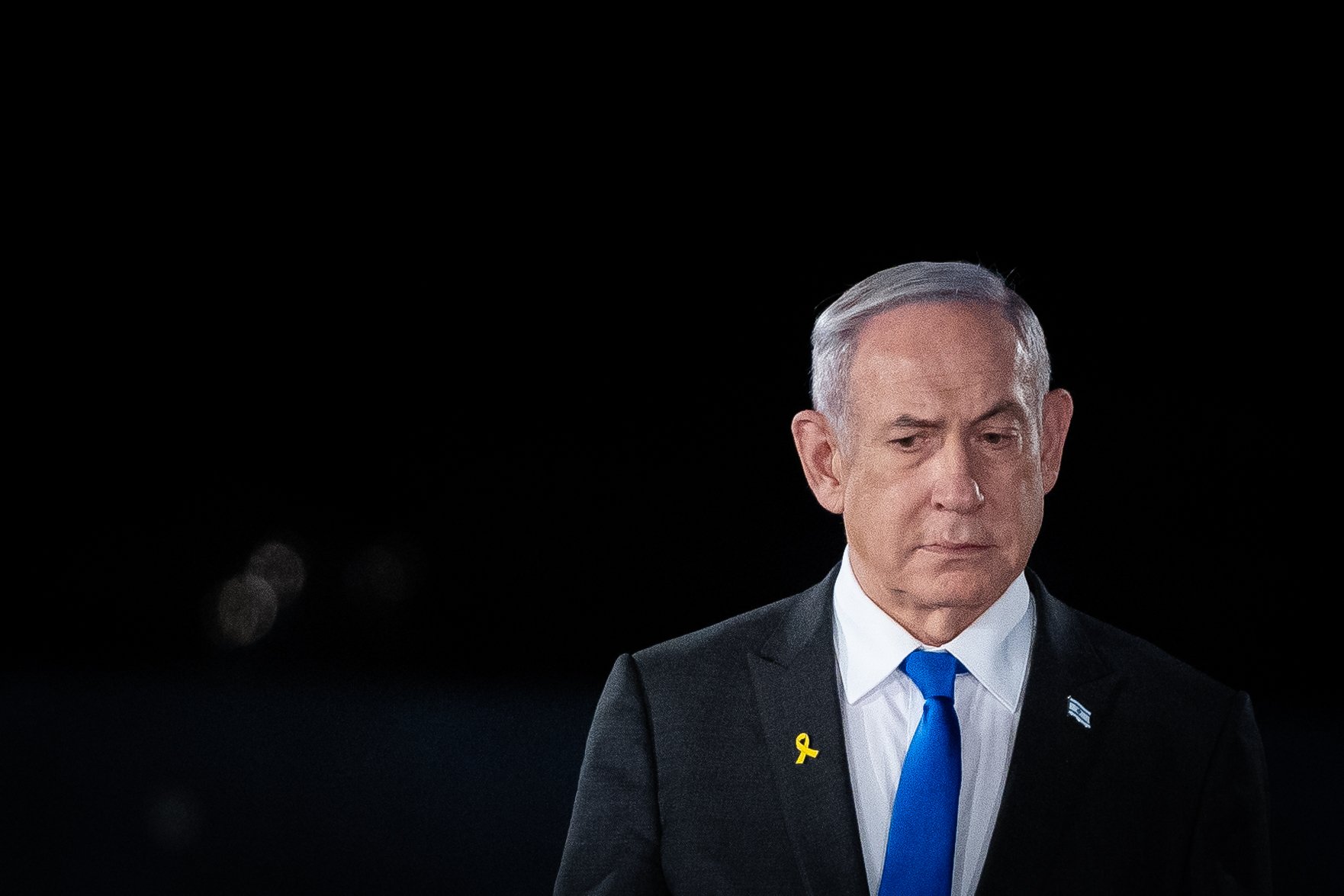 And neither, by extension, therefore, has he said that he recognizes he ought to step down when he feels it is safe for Israel that he do so. Insistently hanging on, indeed, he refuses even to seek a renewed mandate from the public by setting a date for advanced elections — otherwise due in October 2026 — and brands the very demand for early elections as tantamount to treason, because Hamas wants to see Israel plunged into a bitter election campaign. Nevertheless, as someone who doubtless believes that he loves this country, he needs to quit or at least face the electorate. It’s the only way to begin to heal Israel. (Not incidentally, as an incumbent who helms a mighty political machine, he’d be best placed to set the tone and, in contrast to past toxic campaigns, keep election battles on the relative high ground.) In his desperate scrabble to regain power at the end of 2022, Netanyahu set up a coalition that brought racists and thugs into the heart of his government. He presided over the rending of Israeli society by attempting to subjugate Israel’s independent judiciary to the will of that government. He (temporarily) fired the defense minister who correctly warned that the national divide over judicial “reform” had come to constitute a tangible threat to Israeli security. Prime minister for 13 and a half of the 17 years since Hamas seized power in Gaza in 2007, he oversaw the strategic funding by Qatar that allowed Hamas to train and arm a terrorist army. As Hamas prepared to invade, emboldened by Israel’s disunity, he failed to recognize the growing danger. Consequently, even in the last few weeks and days, he did not demand what would have been relatively straightforward military measures — including the mobilization of adequate troops — to avert the catastrophe of October 7. Since then, he risks compounding all those failures by refusing to develop a strategy for non-Hamas governance of Gaza, and thus leaves the IDF currently facing what Chief of Staff Herzi Halevi recently reportedly told him is the “Sisyphean task” of having to “launch campaigns again and again” in areas where Hamas has been ousted, as the terrorist-government attempts to move back in and rebuild its infrastructure. He has confused, dismayed and in some cases alienated allies with an incoherent and at times indefensible stop-start policy on the flow of humanitarian aid into Gaza.  Israel’s vital ties with the US are fraying as President Joe Biden, who thoroughly mistrusts him and has long argued that his hard-right coalition is profoundly dangerous to Israel, has evidently lost faith in his conduct of the war. Biden is now talking publicly about withholding certain weapons without which, Gaza aside, Israel cannot fully battle against Hezbollah if conflict at the northern border escalates further. Netanyahu has picked public fights with the US administration over its vision of a reformed Palestinian Authority taking a key role in Gaza, and over its calls to at least open a path toward Palestinian statehood and potential peace with Saudi Arabia, rather than minimizing the public daylight and working assiduously to find a consensual approach. Israel’s capacity to tackle the false genocide allegations at the International Court of Justice in The Hague, and other lawfare battles at the International Criminal Court and beyond, are undermined by the extremist rhetoric and declared goals of that far-right swath of his coalition. The pyromaniacal idealogues he mainstreamed and has dared not confront provide endless fodder for the would-be Israel-destroying activists and their stooges on university campuses in the US and worldwide, and complicate the laudable efforts to counter those forces. The chronic ineptitude of the public diplomacy directorate he oversees at the Prime Minister’s Office deprives supporters of Israel of basic factual tools, and real-time information, to more effectively argue Israel’s case. Hamas is a pernicious, amoral enemy, and its ostensible “ceasefire” terms, as I have written in the past, are in fact a program for ending the IDF campaign in Gaza, setting the West Bank alight, and releasing a minimal number of the 128 hostages it still holds from October 7. But Netanyahu has long since lost the confidence of many of the families of the hostages that he is doing everything reasonably in his power to bring them home, and lost the confidence of at least some members of Israel’s own negotiating team, too. His tone-deaf Independence Day pre-recorded video to the nation — complete with stirring music and footage inevitably including his wife (a ubiquitous unelected presence) — at a state ceremony which prime ministers have traditionally not addressed at all, underlined his disconnect from much of the public and from much of the national mood. He continues to fuel fundamental inequality and bitter friction in the nation whose unity he purports to champion by refusing to take the elementary step of requiring military or national service for all its citizens.  In a Facebook post on Monday, Tehila Friedman, who served all too briefly as an MK in 2020-21 and delivered a maiden speech to the Knesset four years ago whose prescience has to be reread to be believed, described her current concerns for Israel with terrible elegance: “I approach this Independence Day like a birthday party for somebody beloved and very ill. Recognizing how precious he is, deeply fearful that the sickness will defeat him, and hoping for his complete recovery.” Friedman went on to write that “Happiness is to want what you have. Hope is to want something else. We have to see the good because that gives us the strength to keep going. We have to see the bad because that gives us the strength to change.” Friedman, a centrist, issued no demand for political change in her diagnostic post. But I do. Whatever he may believe, and whatever the sycophants with whom he now largely surrounds himself may tell him, Netanyahu is not the cure for the internal divides that for years have weakened Israel, but rather the prime cause. And he is not the physician to heal today’s ailing Israel, but rather the single most culpable Israeli in bringing our country, at its 76th birthday, to the precarious condition Friedman describes. It was he who had sought and won the position of greatest national responsibility, and thus had the most effective means to prevent the barbaric Hamas invasion. At the very, very least, it is past time — 222 days past time — for Netanyahu to stop the ducking and diving, acknowledge that responsibility, and, if he is not prepared to leave public life of his own volition, then set the date to face the political judgment of the nation that entrusted him with its safety. The recovery of our “beloved and very ill” Israel depends upon it. —
Israel Story: Mother, pastry chef, and new IDF widowOur podcast partners at Israel Story continue to bring you ‘Wartime Diaries,’ remarkable voices and stories of Israel during these unprecedented times. On the latest episode of this special series, we hear from Amit Halivni Bar-Peled, who shares her identities as a mother, a pastry chef, and widow of fallen soldier Yuval Halivni — killed on October 9, 2023.
** Israel Story is produced in partnership with The Times of Israel.
What Matters Now to Haviv Rettig Gur: What is antisemitism, really?On this week’s episode of our ToI podcast What Matters Now, ToI’s senior analyst, Haviv Rettig Gur drills down on the history and present manifestations of the oldest hatred, and how the day commemorating its most terrible application continues to unite Israelis.
🔔 Be sure to subscribe to What Matters Now on Apple Podcasts, YouTube, Spotify, or wherever you listen to podcasts.
Docu Nation: ‘Probation Time’ launches tomorrowOur Israeli documentary film series Docu Nation — exclusively for The ToI Community — allows you to stream specially curated, outstanding Israeli films, then join a live discussion with the films’ creators. With four more award-winning, inspiring films coming up, it’s not too late to register. Our next film, ‘Probation Time,’ will begin streaming for five days tomorrow, Thursday, May 16. The live discussion with its director will take place this Sunday, May 19.
** If you already registered for Docu Nation, you’ll receive a link to view ‘Probation Time’ by email tomorrow. Have a question about the series? Email us. Have a technical issue? Email Docu Nation tech support.
🙋 Have something to share?We’d love to hear it! Join the discussion on our active ToI Community Facebook group. Keep tabs on new content and events on our Community Page. And please don’t hesitate to write to us with any suggestions, issues or questions. Thank you for your continued support of our independent journalism. ~ The Times of Israel Team
|



|
You are receiving this email because you are a member of The Times of Israel Community. If you would like to stop receiving community updates, please click below to unsubscribe.
|