AG’s office to High Court: State not doing enough to crack down on Haredi draft evaders
Defense Minister Katz has yet to hold a discussion on 'expanding the basket of enforcement tools' such as sanctions, court filing asserts
In a filing to the High Court of Justice on Tuesday, the Attorney General’s Office asserted that while the IDF has significantly increased efforts to enlist members of the ultra-Orthodox community, including by sending out 54,000 conscription orders over the last month and substantially increasing enforcement against draft dodgers, it was “essential” that the state do more to increase sanctions and deny more benefits to evaders.
“This issue, which is the responsibility of the government, has not yet been addressed,” the Attorney General’s Office stated.
Responding to a petition calling on the state to comply with a 2024 court ruling and recruit members of the previously exempt Haredi community, the state’s filing said that “the authorities must act, using the tools at their disposal…as well as adding additional enforcement tools.”
Last June, the High Court ruled that the government must draft ultra-Orthodox yeshiva students into the military, since there was no longer any legal framework to continue the decades-long practice of granting them blanket exemptions from service.
According to the Attorney General’s Office, it is critical to “expand personal enforcement measures” and deny economic benefits to draft evaders because the powers available to the army are currently “insufficient” to fill its ranks “in accordance with current security needs.”
Such measures, which have been suggested to the defense establishment by the Attorney General’s Office, Finance Ministry and other government ministries over the past several months, “are within the authority of various government bodies” and “can be promoted immediately, without the need for legislation,” the filing added — noting that Defense Minister Israel Katz “and the government have not yet held a discussion to examine the possibilities for expanding the basket of enforcement tools.”
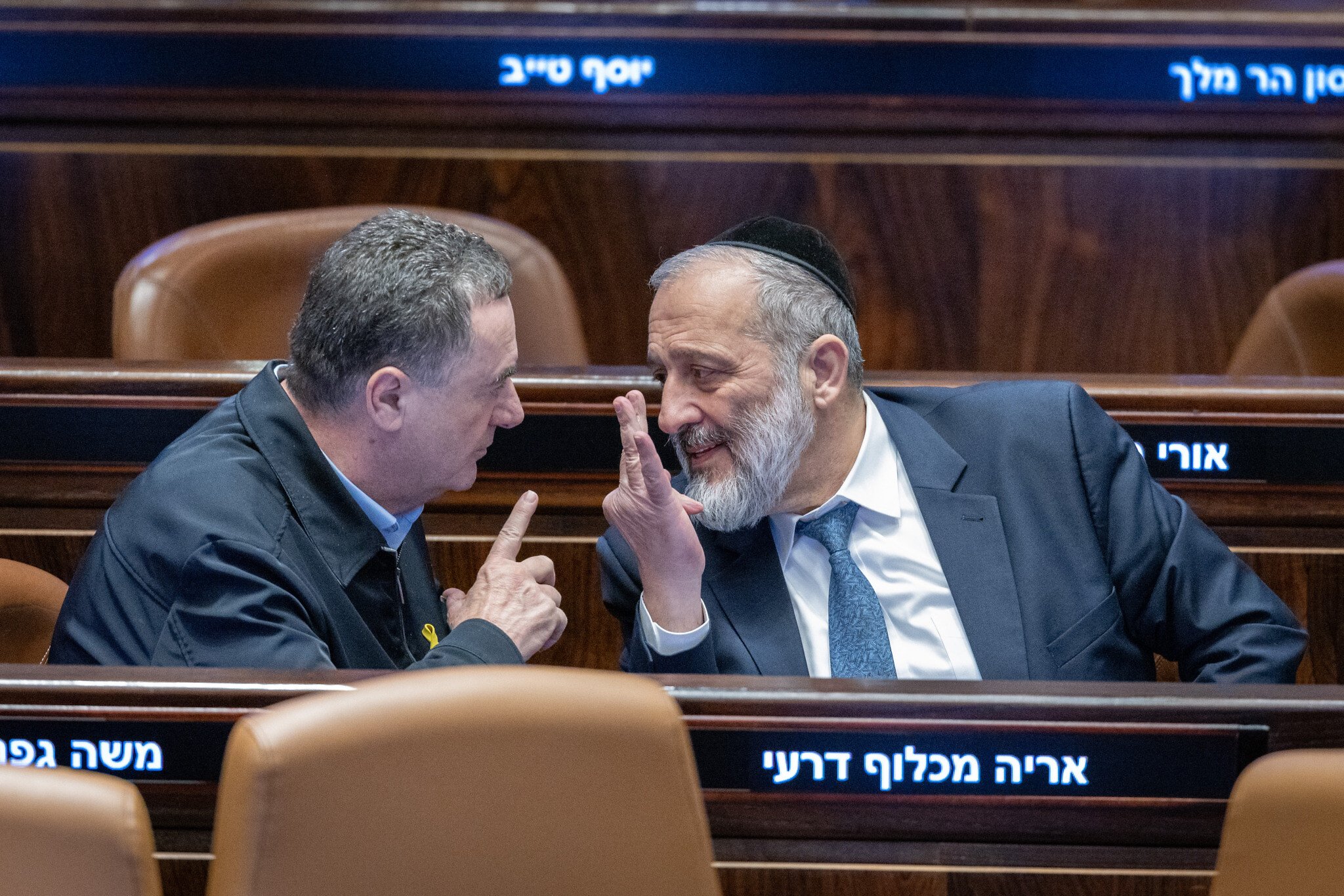
Despite tens of thousands of enlistment orders being sent to Haredi men, the IDF has fallen short of its goal of 4,800 recruits during the 2024-2025 draft cycle, with only 1,539 out of 24,000 summoned last year actually reporting, the court filing stated.
Some 80,000 ultra-Orthodox men aged between 18 and 24 are currently believed to be eligible for military service, but have not enlisted. The Israel Defense Forces has said it urgently needs 12,000 recruits, due to the strain on standing and reserve forces amid the ongoing war against Hamas in Gaza and other military challenges. Overall, around 2,700 Haredim in total joined the army over the past year.
Arrests and demonstrations
Last month, the Attorney General’s Office released a letter detailing the military’s new plan to increase enforcement against draft evaders and called on Defense Minister Katz to promote the expansion of additional sanctions “through administrative tools, without the need for legislation.”
It stated that the increased enforcement was slated to begin on July 25. Under the new guidelines, recipients of an initial draft order will have two and a half months to report to an enlistment center before receiving a so-called tzav 12, barring them from leaving the country and subjecting them to arrest during any encounter with the police.
There would also be greater enforcement at border crossings and checkpoints throughout the country, with increased coordination between the military and Israel Police, it added.
Since then, while arrests have been made, mass evasion has continued, with some Haredi communal leaders declaring that it was “forbidden to go to any military framework,” even those established to accommodate an ultra-Orthodox lifestyle.
In its filing today, the Attorney General’s Office said that despite increased enforcement, the sheer number of Haredim who refuse to enlist means that “significant resources” will be required in the push to change this.

It noted that the “widespread public opposition” to conscription within the Haredi community — which manifests in frequent demonstrations outside recruitment offices — is posing a “very significant challenge” to recruiting its eligible members.
The few arrests made so far have sparked protests throughout the country in which demonstrators blocked traffic and caused property damage.
“Due to this opposition, the absolute majority of the population is not cooperating with the recruitment authorities,” the Attorney General’s Office said.
It added that certain “elements within the Haredi population” have been organizing in a “systematic and institutionalized manner to encourage the non-reporting of any Haredi” called up by the army, which “undermines the success of recruitment efforts.”
Political backlash
While the IDF has been working to crack down on evasion, the Knesset’s ultra-Orthodox parties, Shas and United Torah Judaism, have been pushing hard for the passage of a bill enabling most ultra-Orthodox males to continue to avoid military conscription or other national service.
Last month, UTJ quit the coalition after being presented with a copy of a proposed enlistment bill prepared by then-Knesset Foreign Affairs and Defense Committee chairman, Yuli Edelstein, which it argued had violated the terms of a supposed compromise reached in June. They were quickly followed by Shas, which, while quitting the government, has remained part of the coalition.
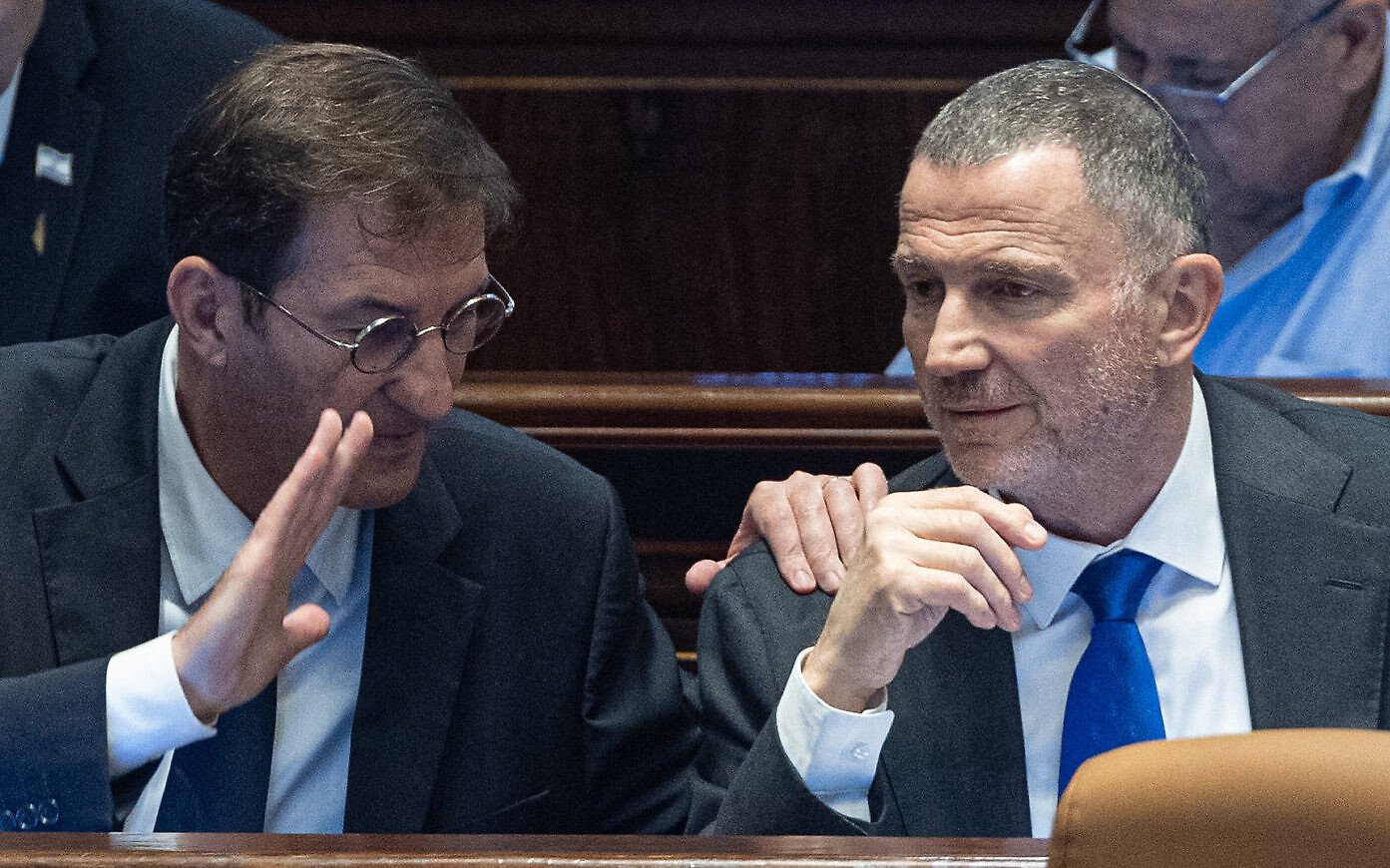
To mollify the Haredim, the coalition on Monday replaced Edelstein with fellow Likud MK Boaz Bismuth, who has said he will hold meetings with both reservists and ultra-Orthodox representatives.
According to the Ynet news site, Bismuth intends to submit a new draft of the bill within weeks and hold discussions on it during the current Knesset recess to advance it when the parliament reconvenes in October.
Edelstein’s bill would have imposed harsh sanctions on draft evaders, including the revocation of drivers’ licenses, a ban on flying abroad, a prohibition on applying for civil service jobs, no government subsidies for purchasing an apartment, and cancellations of discounts on public transportation, National Insurance payments, and electricity bills.
Haredi media outlets condemned Edelstein for his proposal, calling it “draconian” and comparing the veteran lawmaker’s enlistment push to the Soviet Union’s efforts to stamp out Judaism.

The Haredi newspaper Shacharit ran a front-page image of Edelstein with the headline “the face of evil” on Tuesday morning.
In a recording published by the ultra-Orthodox Behadrei Haredim website on Monday evening, senior UTJ lawmaker Moshe Gafni could be heard telling party members not to discuss Edelstein’s ouster to distance themselves from the matter.
Asked if Edelstein’s ouster made the passage of a bill acceptable to the Haredim more likely, Motti Babchik, a senior adviser to United Torah Judaism chairman Yitzhak Goldknopf, told The Times of Israel that “I don’t think there’s anything to be done.”