

MK Bismuth elected to head key defense panel, push through Haredi draft exemption law
Knesset lawmakers oust Foreign Affairs and Defense Committee chair Yuli Edelstein, who calls his dismissal ‘the final nail in the coffin of the conscription law’
 Add ToI as a Preferred Source on Google
Sam Sokol is a former political correspondent at The Times of Israel. He was previously a reporter for the Jerusalem Post, Jewish Telegraphic Agency and Haaretz. He is the author of "Putin’s Hybrid War and the Jews"
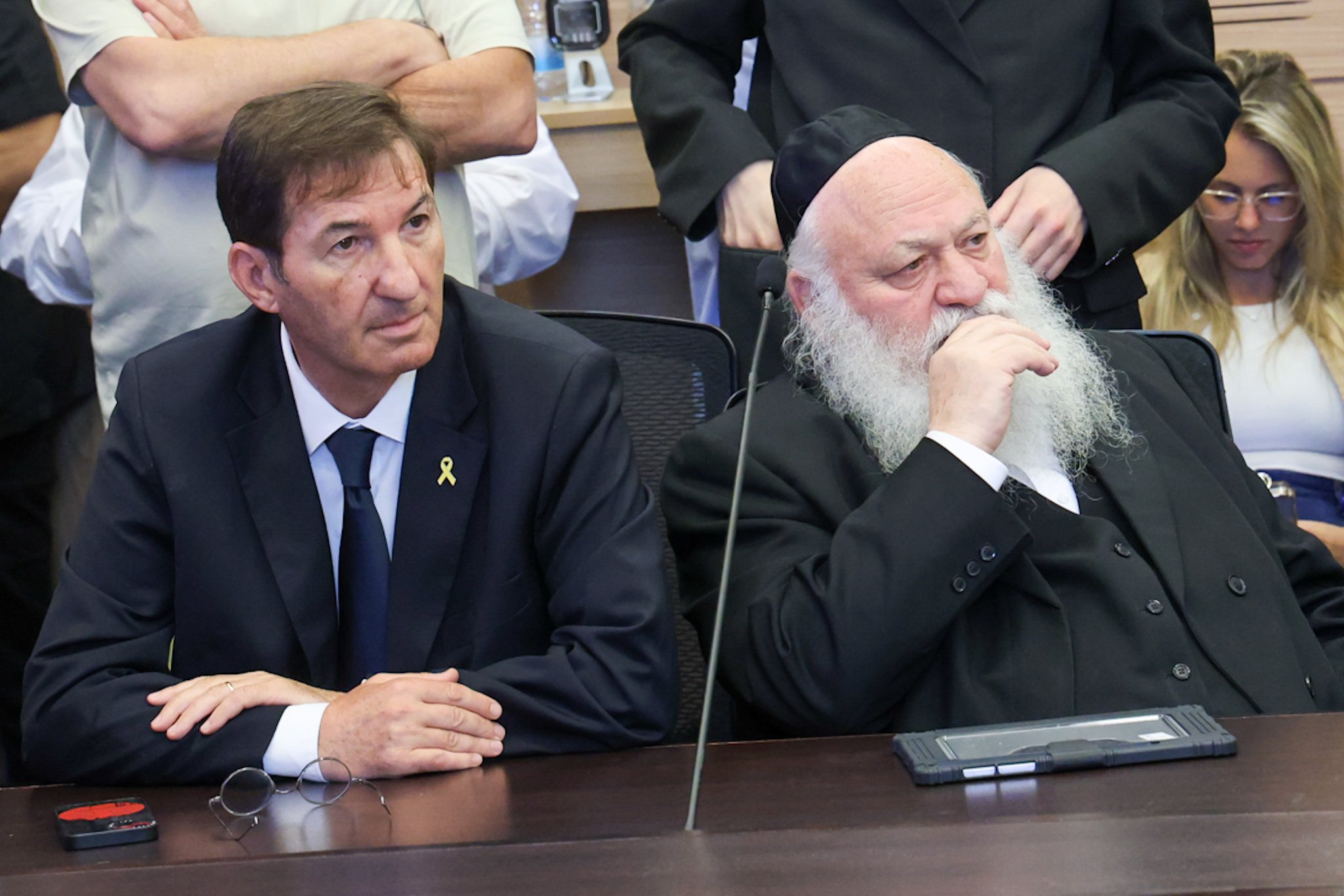
Lawmakers on the Knesset Foreign Affairs and Defense Committee voted 9-7 to appoint Likud MK Boaz Bismuth as their chairman on Monday afternoon, officially pushing out former chairman Yuli Edelstein in a move designed to end an impasse over legislation on military draft exemptions for the ultra-Orthodox community.
The vote came less than an hour after the Knesset House Committee voted 10-4 to recommend Bismuth to take over the powerful parliamentary panel, and just under two weeks after his Likud faction voted nearly unanimously to back Bismuth for the position.
The choice of Bismuth, a longtime member of the committee, generated immediate condemnation from the opposition, with Opposition Leader Yair Lapid claiming that his appointment had been orchestrated by the Knesset’s ultra-Orthodox factions “so that they could evade military service.”
Bismuth faces a stark choice between “going down in history as someone who sacrificed Israel’s security for cheap and self-serving politics” or standing his ground and refusing to sell out the troops, Lapid declared.
Benny Gantz’s Blue and White-National Unity party called Edelstein’s removal an “unprecedented and dangerous step,” while former prime minister Naftali Bennett posted on X that “the government of draft dodgers declared war today against the fighters, reservists, and their families.”
Prime Minister Benjamin Netanyahu had been under growing pressure from within Likud to oust Edelstein, after the two Haredi parties, Shas and United Torah Judaism, last month bolted the government, blaming the lawmaker for his attempts to advance a version of the bill that would guarantee significant draft quotas and sanctions for evaders.

Both factions accused Edelstein of declining to honor a compromise reached in June as part of a last-ditch effort to prevent them from bolting the government ahead of Israel’s attack on Iran’s nuclear program. Under the terms of the agreement, most ultra-Orthodox males would continue to avoid IDF or other national service.
The Haredim have been pushing hard for the passage of legislation enabling most ultra-Orthodox males to continue to avoid military conscription or other national service, in the wake of last year’s High Court decision that such exemptions are illegal on equality grounds.
Stymied in their quest to pass a bill enshrining their exemptions in law, the Haredi community’s spiritual leaders have dug in, eschewing compromise and declaring that it is “forbidden to go to any military framework.”
Some 80,000 ultra-Orthodox men aged between 18 and 24 are currently eligible for IDF service, but have not enlisted. The IDF has said it urgently needs 12,000 recruits, due to the strain on standing and reservist forces in the ongoing war against Hamas in Gaza and other military challenges. Currently, only around 1,800 Haredim enlist annually. About 2,700 enlisted over the past year, far short of the IDF’s goal of 4,800.
A secret bill revealed
Less than an hour before the House Committee was slated to vote on Monday morning, Edelstein finally shared his draft conscription bill with members of the Foreign Affairs and Defense Committee, who, unlike the Haredim, had not had an opportunity to review the legislation.
Edelstein has held the revised bill close to his chest, discussing it with both the public and members of the committee in general terms, but not sharing its contents.
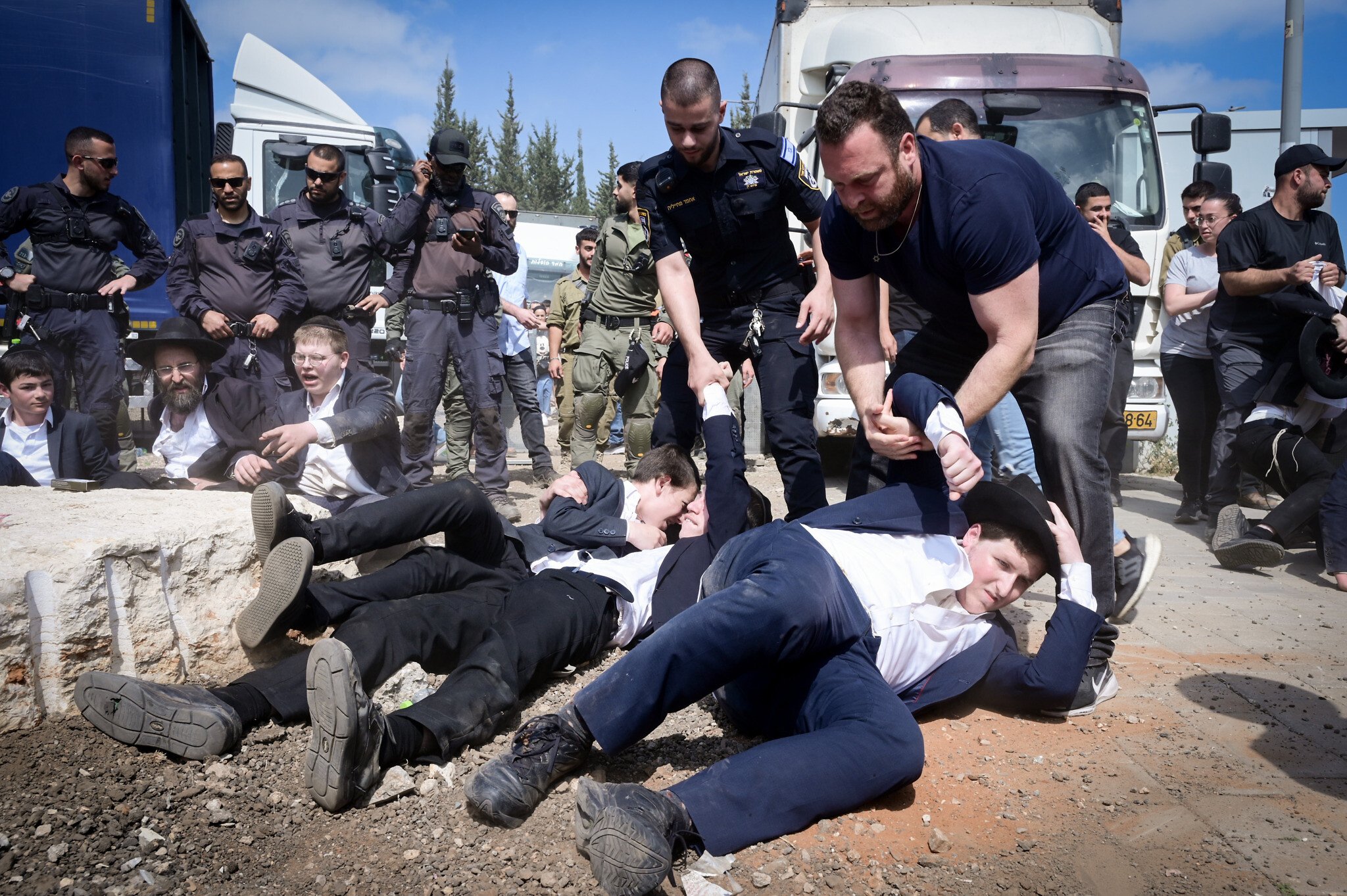
According to Edelstein’s draft, 5,760 Haredim would be required to enlist in the first year following the bill’s passage, rising to 6,840 in the second year, 7,920 in the third, 9,000 in the fourth and 9,500 in the fifth. After the fifth year, the number of conscripts would be determined by the defense minister with the approval of the Foreign Affairs and Defense Committee, but would not fall below 9,500.
Draft dodgers would be subject to sanctions including the revocation of drivers’ licenses, a ban on flying abroad, a prohibition on applying for civil service jobs, no government subsidies for purchasing an apartment, and cancellations of discounts on public transportation, National Insurance payments, and electricity bills.
The final nail
Addressing the House Committee, Edelstein took credit for having “single-handedly prevented” the passage of a “draft evasion law” and blamed the Haredi leadership for blocking “a fair conscription law.”
Appointing Bismuth in his place “will not change anything,” he insisted ahead of the vote, stating that the move would only lead to chaos in light of the fact that the IDF has launched an enforcement operation [against draft evaders].”
“Today’s vote is the final nail in the coffin of the conscription law,” Edelstein declared.
“Remember the date — 10th of Av, 4th of August,” he said. “If the vote goes ahead, the Knesset will no longer be the same.”
Lawmakers on both sides of the aisle, including Edelstein’s defenders, argued on Monday that the veteran lawmaker had taken too long to formulate the bill, with House Committee chairman Ofir Katz complaining that there had been no forward motion on the bill for the past two months, creating a political crisis.
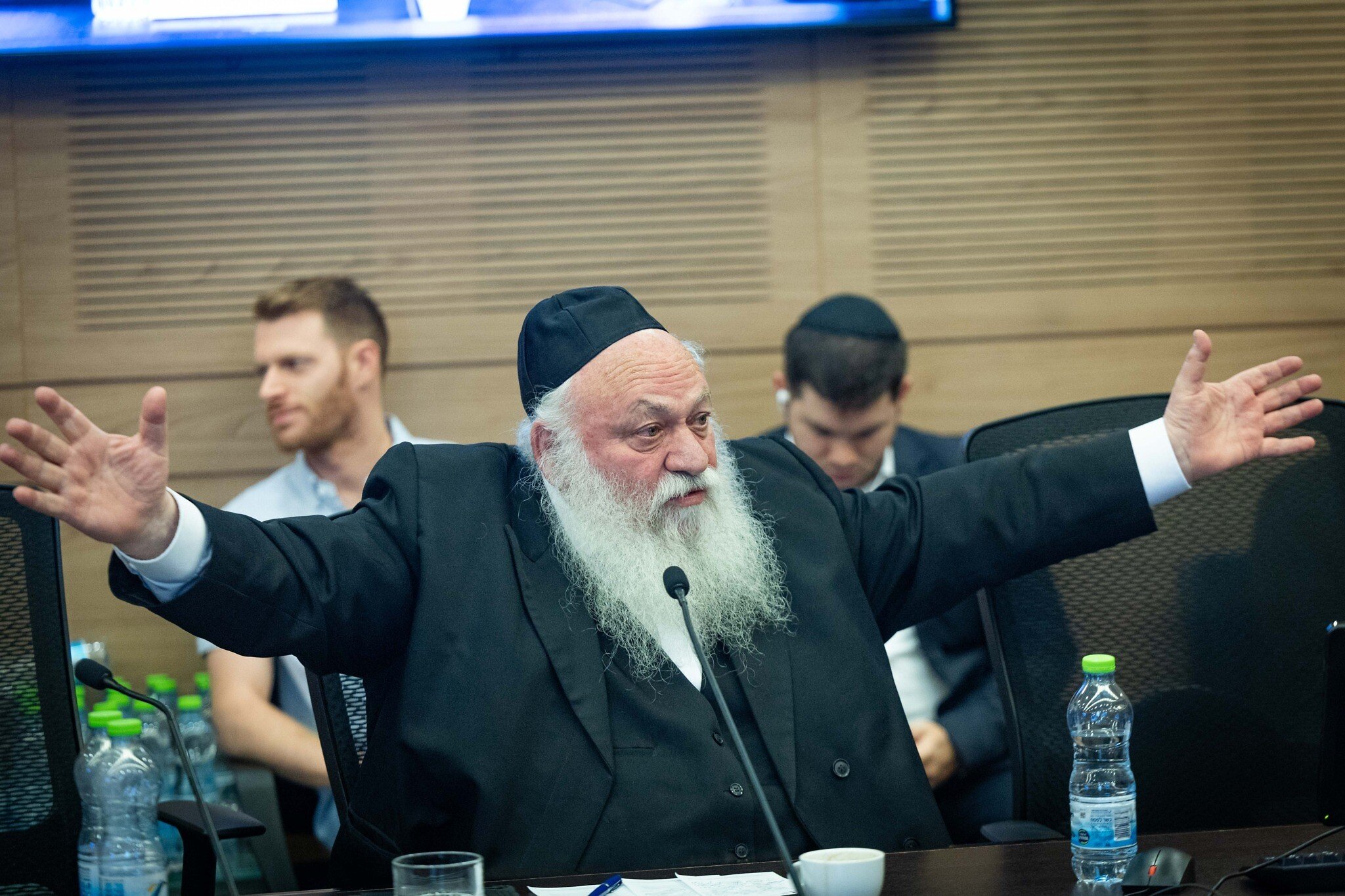
“I was in at least 38 discussions on the conscription law, and after all the discussions we asked when the law would be. It was promised that it would take a short time and it did not happen,” said Shas MK Yinon Azulai.
UTJ chairman Yitzhak Goldknopf, meanwhile, insisted that the Haredim were trying to defend Israel’s longstanding religious status quo.
“We didn’t want an ‘evasion law’; we wanted a continuing arrangement in which full-time yeshiva students can continue to study,” he told lawmakers, using a term employed by critics of Haredi MKs’ efforts to pass legislation enabling most ultra-Orthodox males to continue to avoid military conscription or other national service.
“There is no you and there is no we. We are all together in the State of Israel. Everyone serves their part and everyone contributes their share,” he declares, accusing opposition lawmakers of ignoring Haredi contributions to society and arguing that the state and people of Israel are supported and protected by mass Torah study.
Despite the Haredi parties’ vehement opposition to Edelstein, Goldknopf did not vote against him in the House Committee, with a spokesman telling The Times of Israel that “when there is an amended conscription law, he will vote with the coalition again.”
‘Real harm to the legislative process’
Ahead of the vote on replacing Edelstein, Knesset Legal Adviser Sagit Afik called on lawmakers on the Foreign Affairs and Defense Committee to “hold in-depth discussions” in order to handle the issue responsibly, warning that “replacing a committee chair during the deliberations on a bill, certainly at an advanced stage, could cause real harm to the legislative process.”
Other criticism came from the relatives of hostages present at the House Committee hearing. Chaos erupted when Likud MK Tally Gotliv told relatives of Israeli hostages to “shut up.”
“If Hamas hears what you’re saying, they won’t return the hostages,” she said.
Addressing lawmakers, hostage Matan Angrest’s brother Ofir said that he had received a draft order in the mail on Sunday and demanded, “Who am I supposed to fight for? For you, who wouldn’t bring me back if I were kidnapped? For a country that abandons its hostages and its soldiers?”
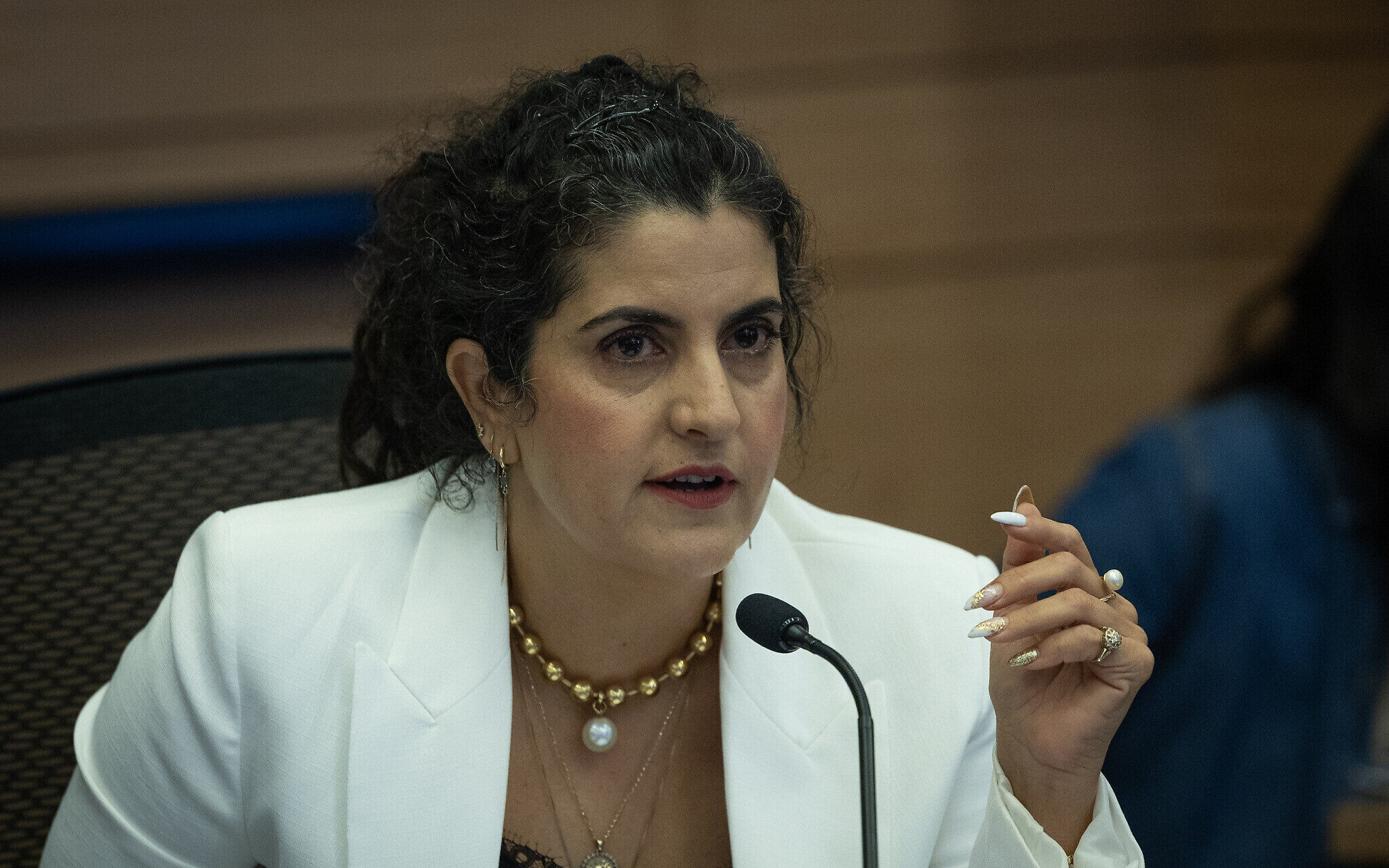
“I want to submit this form that I received yesterday to you,” Ofir said, handing his draft order to Bismuth. “You tell me if I should serve a country that doesn’t bring its soldiers home.”
A call for unity
Addressing the Knesset Foreign Affairs and Defense Committee following his appointment as chairman, Bismuth called for mutual respect and a focus on “what unites us,” as the key panel returns to work on the conscription issue.
In an apparent response to opposition concerns that he will push through a law allowing the ultra-Orthodox community to evade military service, Bismuth stated that he has spoken with the committee’s professional staff and will hold meetings with both reservists and ultra-Orthodox representatives.
“I approach my position with sacred reverence, in a time of war that requires national unity. We must – coalition and opposition – rise to the magnitude of the hour, and act for the people and the country. The enemy does not distinguish between Jewish communities. We are all in the same boat,” Bismuth said.
Ariela Karmel contributed to this report.







The Times of Israel Community.