

Haredi party chiefs slam AG as enforcement against draft evaders slated to increase
Comparing PM to Winston Churchill, mouthpiece for ultra-Orthodox faction warns Netanyahu could lose power for not passing law exempting yeshiva students from mandatory army service
 Add ToI as a Preferred Source on Google
Sam Sokol is a former political correspondent at The Times of Israel. He was previously a reporter for the Jerusalem Post, Jewish Telegraphic Agency and Haaretz. He is the author of "Putin’s Hybrid War and the Jews"

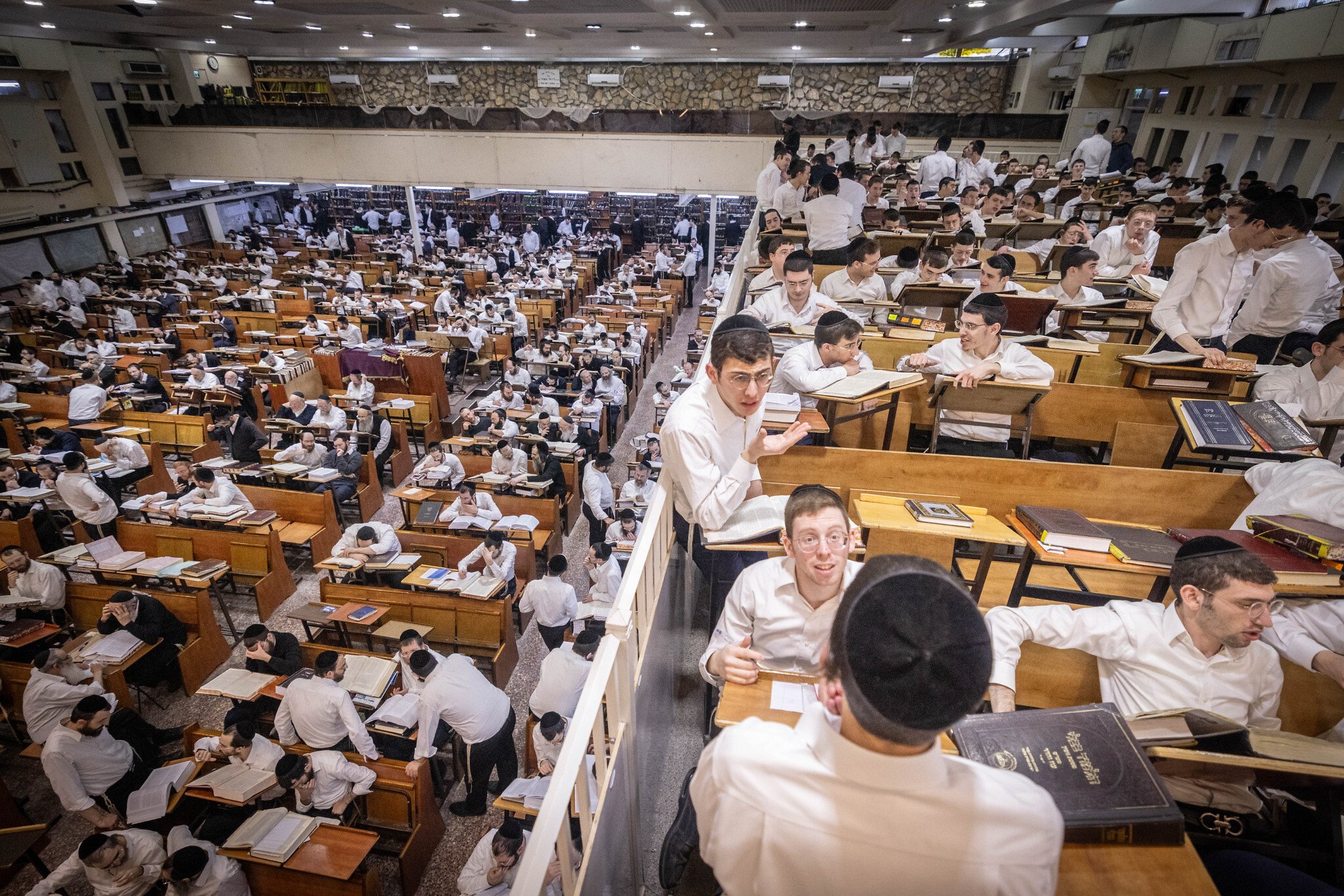
The Attorney General’s Office on Wednesday released a letter detailing the military’s new plan to increase enforcement against draft evaders, eliciting harsh condemnations from representatives of Haredi coalition parties, who indicated they were running out of patience with the government over the delayed advancement of legislation exempting yeshiva students from mandatory army service.
The letter was sent to participants of a meeting held Sunday, which was attended by Attorney General Gali Baharav-Miara, the head of the Israel Defense Forces’ manpower directorate and other senior officials.
It stated that the increased enforcement is slated to begin on July 25. Under the new guidelines, recipients of an initial draft order will have two and a half months to report to an enlistment center before receiving a so-called tzav 12, barring them from leaving the country and subjecting them to arrest during any encounter with the police.
There will also be greater enforcement at border crossings and checkpoints throughout the country, with increased coordination between the military and Israel Police.
Military officials have acknowledged that, in practice, the IDF has not been enforcing the draft orders it sends to Haredim.
“We don’t enforce the draft orders for the ultra-Orthodox enough. There is almost no enforcement of them,” an official told reporters in May.

“We don’t want Military Police battalions to storm Bnei Brak, Modi’in Illit and Beitar Illit,” the official said, referring to three major ultra-Orthodox cities. “We want to increase enforcement, but it’s difficult for us.”
The IDF in May launched a Military Police campaign to detain people who ignored enlistment orders, though it appears that only one member of the Haredi community was arrested during the operation.
Since last summer, 24,000 ultra-Orthodox men have received initial draft notices, although few have reported. An additional 54,000 enlistment orders are to be sent out to members of the Haredi community by the end of July, the IDF has said.
Currently, approximately 80,000 Haredi men between the ages of 18 and 24 are eligible for military service and have not enlisted. The army has stated that it is facing a manpower shortage and currently needs some 12,000 new soldiers, 7,000 of whom would be combat troops. The IDF has said that it will not succeed in meeting its 2024-2025 Haredi conscription targets.
In the letter, the Attorney General’s Office wrote that as part of the new enforcement plan, “proactive, intelligence-driven enforcement operations will be carried out regularly,” adding that in September, evaders will be presented with “a one-time… limited opportunity” to report for service without being arrested.
Due to a lack of jail space to hold those arrested for draft-dodging, new solutions are currently being examined, the letter continued, saying that “the enforcement tools available to the army under existing law are not enough to carry out effective enforcement.”

“It is of great importance to expand the basket of enforcement tools, including the denial of benefits to evaders,” it further asserted, calling on Defense Minister Israel Katz to promote the expansion of such sanctions “through administrative tools, without the need for legislation.”
The Attorney General’s Office “welcomed the progress in formulating the military recruitment and enforcement plan for this year” and stated that an additional meeting on the subject will be held next month.
‘A disgrace and a loss of sanity’
In response to the letter, Knesset Finance Committee chairman Moshe Gafni of the United Torah Judaism party lashed out at Baharav-Miara, claiming she had “declared herself the main fighter against the world of Torah, Torah students and the upholders of the Jewish people.”
“We will not allow a single yeshiva student to be prevented from studying Torah,” he said, adding that the Jewish people have learned from history what happens to people who “tried to prevent the study of Torah, and their end is known.”
Shas party chairman Aryeh Deri likewise slammed Baharav-Miara, stating that “the draconian guidelines issued today by the attorney general against Torah students in the Jewish state are a disgrace and a loss of sanity.”
“The use of extreme measures… against yeshiva students who support the world with their Torah should shock every Jew who loves and respects the Torah. No one can prevent a yeshiva student from diligently studying Talmud,” he said.

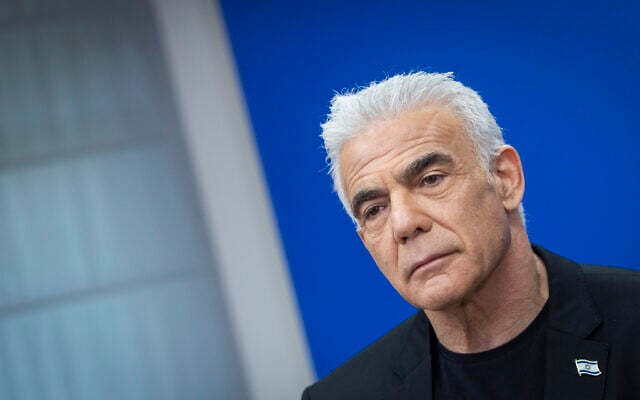
His comments were met with a strong condemnation from Opposition Leader Yair Lapid, who said Deri is obligated to tell yeshiva students that during “an existential war, there is no choice, you must enlist.”
In response, Deri claimed yeshiva students’ studies were leading to miracles and “they make a decisive contribution to Israel’s security,” while accusing Lapid’s voters in Tel Aviv of not enlisting in sufficient numbers.
‘Drunk on victory’
Shas and UTJ are currently boycotting coalition legislation to protest the lack of a bill exempting yeshiva students from military service.
Likud MK Yuli Edelstein, the chairman of the Knesset Foreign Affairs and Defense Committee, was widely expected to present lawmakers with a copy of a watered-down compromise bill regulating the conscription of yeshiva students this week.
Edelstein agreed to the accommodation with the Haredim in June as part of a last-ditch effort to prevent them from voting for a bill to dissolve the Knesset.
The bill was supposed to have been ready last month, but was delayed by the war with Iran. However, though the conflict ended June 24, Edelstein has still not presented the full compromise draft to Haredi lawmakers, who hope to pass it into law before the conclusion of the summer legislative session at the end of July.
Yated Ne’eman, the mouthpiece of UTJ’s Degel Hatorah subfaction, issued a stark warning on Wednesday morning that Prime Minister Benjamin Netanyahu may no longer be able to rely on his Haredi partners if they fail to see movement on the enlistment-avoidance issue.
Likening the prime minister to the great British wartime leader Winston Churchill in a front-page editorial titled “Lessons from the past,” the paper noted the British premier “was a great statesman, a respected politician, and a brilliant commander” who foresaw threats others dismissed and “led Britain to victory in the war against the cruel enemy that threatened his country and the world.”
But then, his popularity declined. “Drunk on victory, he underestimated the intensity of the unrest and made empty promises of change. He did not listen to the needs of the exhausted people, and instead of making repairs at home, he sold them victory speeches.”
Months after leading the UK to victory over Nazi Germany, Churchill was voted out of power by a British public seen as more concerned about the postwar future than the achievements of the war, Yated Ne’eman noted.








The Times of Israel Community.