

Coalition pulls all legislation after Haredi parties mutiny over conscription bill
United Torah Judaism party says it ‘will not vote with the coalition’ until presented with an updated draft of a law exempting yeshiva students from military service
 Add ToI as a Preferred Source on Google
Sam Sokol is a former political correspondent at The Times of Israel. He was previously a reporter for the Jerusalem Post, Jewish Telegraphic Agency and Haaretz. He is the author of "Putin’s Hybrid War and the Jews"
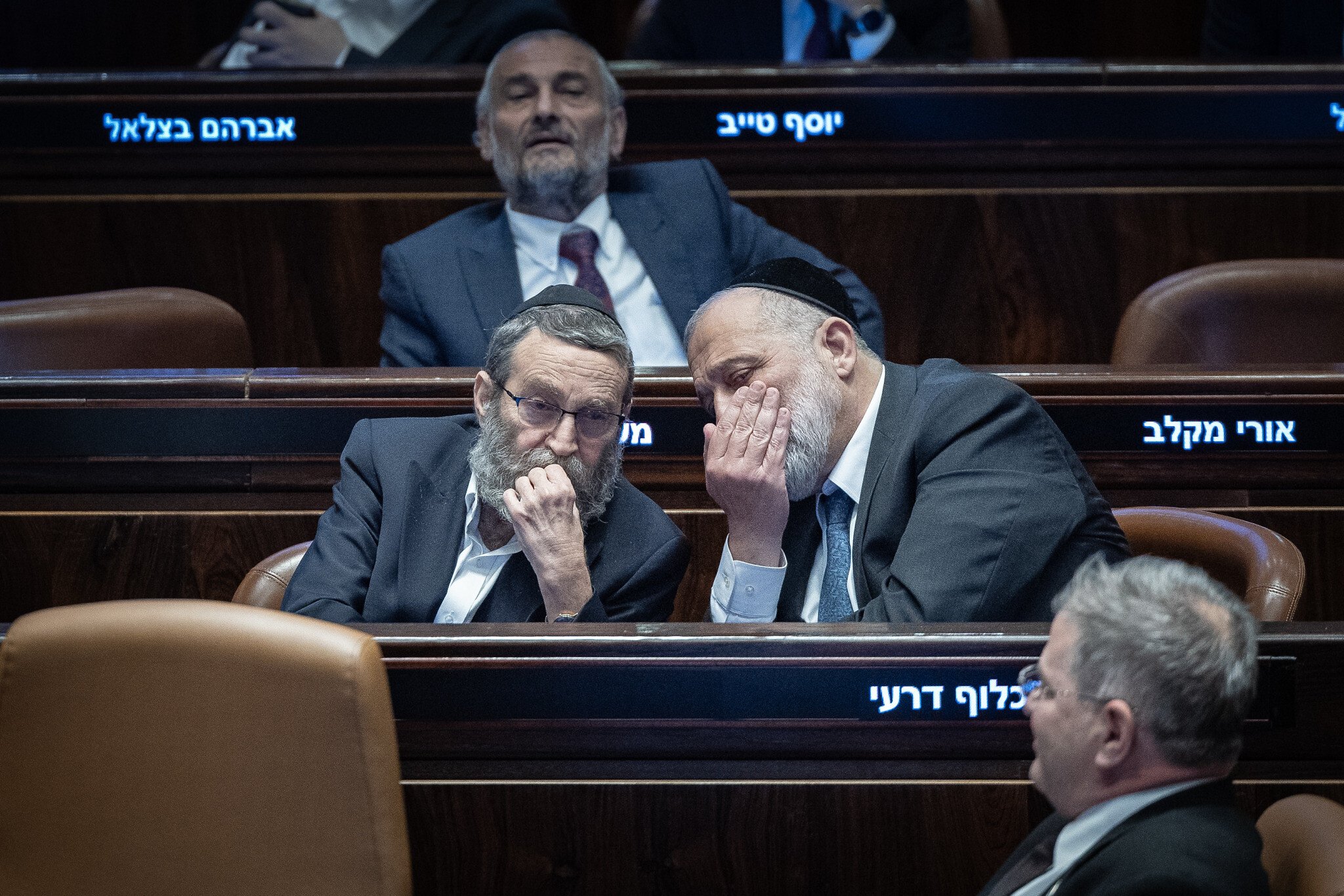
The coalition removed all legislation from the Knesset agenda on Monday after the ultra-Orthodox Shas and United Torah Judaism parties announced they would boycott the day’s plenum session to protest the lack of a bill exempting yeshiva students from military service.
In a statement, the United Torah Judaism party said that “in light of the fact that the draft conscription law has not been introduced to date, contrary to commitments made… it will not vote with the coalition until the draft law is presented.”
Following the move, Prime Minister Benjamin Netanyahu’s ruling Likud sent a message to all party lawmakers stating that they were “free for today” and promising an update regarding “the rest of the week.”
Likud MK Yuli Edelstein, the chairman of the Knesset Foreign Affairs and Defense Committee, was widely expected to present lawmakers with a copy of a watered-down compromise bill regulating the conscription of yeshiva students on Monday.
The bill was initially supposed to have been ready in mid-June, but it was delayed by the war with Iran. However, despite the conflict ending on June 24, Edelstein has still not presented the full compromise draft to Haredi lawmakers, who hope to pass it into law before the conclusion of the summer legislative session at the end of July.
According to reports, the Shas and UTJ parties insisted on seeing a copy of Edelstein’s softened legislation ahead of Netanyahu’s diplomatic trip to the United States — a demand that delayed the prime minister’s departure by several hours on Sunday. Edelstein ultimately met with former Shas MK Ariel Attias on Sunday, but what he presented failed to satisfy the Haredi factions.

Asked about the meeting, a senior UTJ source told The Times of Israel on Monday that Edelstein had presented Attias with “nonsense” and that they were still waiting to see something serious.
Another UTJ source asserted that Edelstein had presented general principles, but has not yet shown them a detailed text of the bill.
According to Haredi media, Shas chairman Aryeh Deri told members of his party in the Knesset on Monday that Edelstein had sought to change elements of the compromise he reached with the ultra-Orthodox factions weeks ago.
Edelstein is “laughing at us,” Haredi sources told Kan radio. “Not only will we not vote on bills, we won’t enter the plenum at all. They tried to tempt us with promoting a law on rabbinical courts — and we refused.”
On Monday’s Knesset agenda was a Haredi-backed bill expanding the authority of rabbinical courts to arbitrate between litigants in civil matters. Lawmakers were also slated to approve the appointment of UTJ MK Yisrael Eichler.
Mounting tensions
The Shas-UTJ decision not to vote with the coalition marks a return to the contentious intra-coalition tensions prior to last month’s Israel-Iran war, when the Haredi parties threatened to topple the government over delays in advancing the controversial legislation.
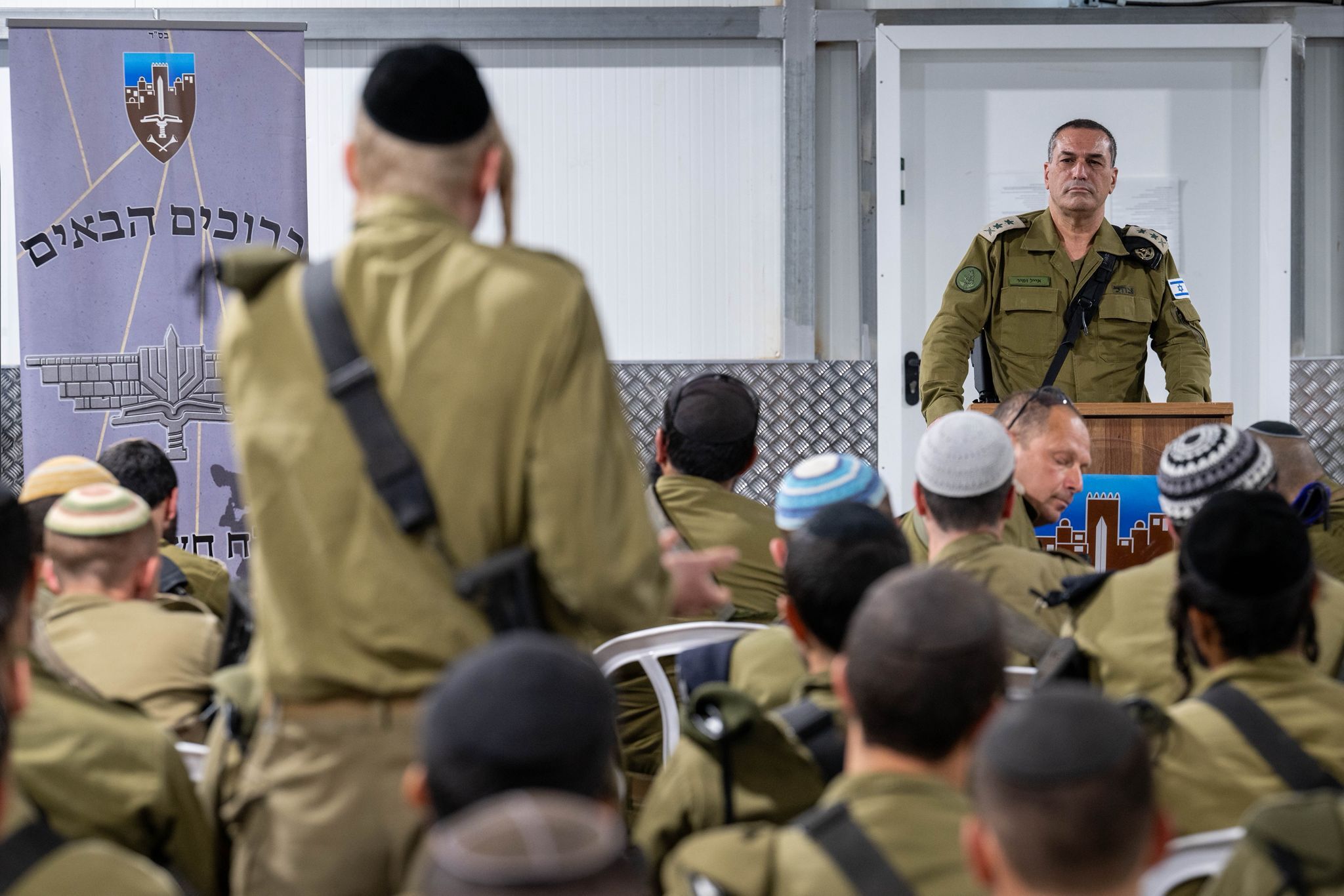
While Edelstein had long pledged to only allow legislation on the matter to pass through his committee if it included sanctions against ultra-Orthodox men who flout enlistment orders, he appeared to back down on some of his demands last month, as part of a last-ditch effort to prevent the Haredim from voting for a bill to dissolve the Knesset.
After reaching an agreement in principle on Edelstein’s compromise terms to head off that crisis, the ultra-Orthodox parties announced on June 12 that “understandings have been reached regarding the principles for the law preserving the status of yeshiva students,” adding that “another few days” were needed to “complete the final version” of the legislation.
The following day, however, Israel launched a series of airstrikes against Iran’s nuclear program, setting off a 12-day war and delaying any discussion of the legislation in the Knesset. Both Edelstein and Deri were informed about the strikes in advance, knowledge that appears to have contributed to their willingness to compromise.
‘Dysfunctional coalition’
After the coalition pulled all bills from the plenum agenda on Monday, Opposition Leader Yair Lapid called for new elections on the basis that the government was dysfunctional and lacked popular backing.
“The coalition has stopped functioning. They don’t have a majority among the people. They don’t have a majority in the Knesset,” he said.
Addressing lawmakers ahead of his Yesh Atid party’s weekly faction meeting in the Knesset earlier on Monday, Lapid slammed Netanyahu for his efforts to pass an “evasion law” exempting Haredi men from military service.
“Before Netanyahu got on the plane, he was only concerned with one thing: another attempt to assure the Haredim of a shameful, disgraceful evasion law, designed for only one thing: that the coalition survive for a few more weeks or months,” Lapid said.






The Times of Israel Community.