Deadly blast on school trip exposes lurking explosive threat after years of war
Despite concerns around unexploded ordnance left across country after missiles stopped flying, questions remain over who's responsible for clearance and whether public awareness has been sufficiently raised
Years of war have left Israel with a potentially extensive and poorly quantified threat from unexploded bombs and other munitions. Despite public-awareness campaigns and clearance operations meant to minimize the lurking threat, a cluster munition found by teenagers on a school hike in a northern Israeli forest exploded Monday, killing a student and wounding two dozen others.
Estimates by Israeli security bodies suggest that there may be potentially hundreds or even thousands of pieces of unexploded ordnance scattered across nearly all of Israel, left there by various rounds of fighting over the years.
During the recent war with Iran, Hezbollah launched several Grad rockets containing dozens of BRB1-type (also known as A-09) submunitions at northern Israel.
The rockets spread the cluster munitions, which often fail to explode on impact, over wide areas. Images from Monday indicated this was the type of ordnance encountered by a group of students and teachers from the ORT Ma’alot school who were hiking the Naftali Mountains Forest scenic trail in the Ramim Ridge area, a route on the Lebanon border that had been approved by authorities.
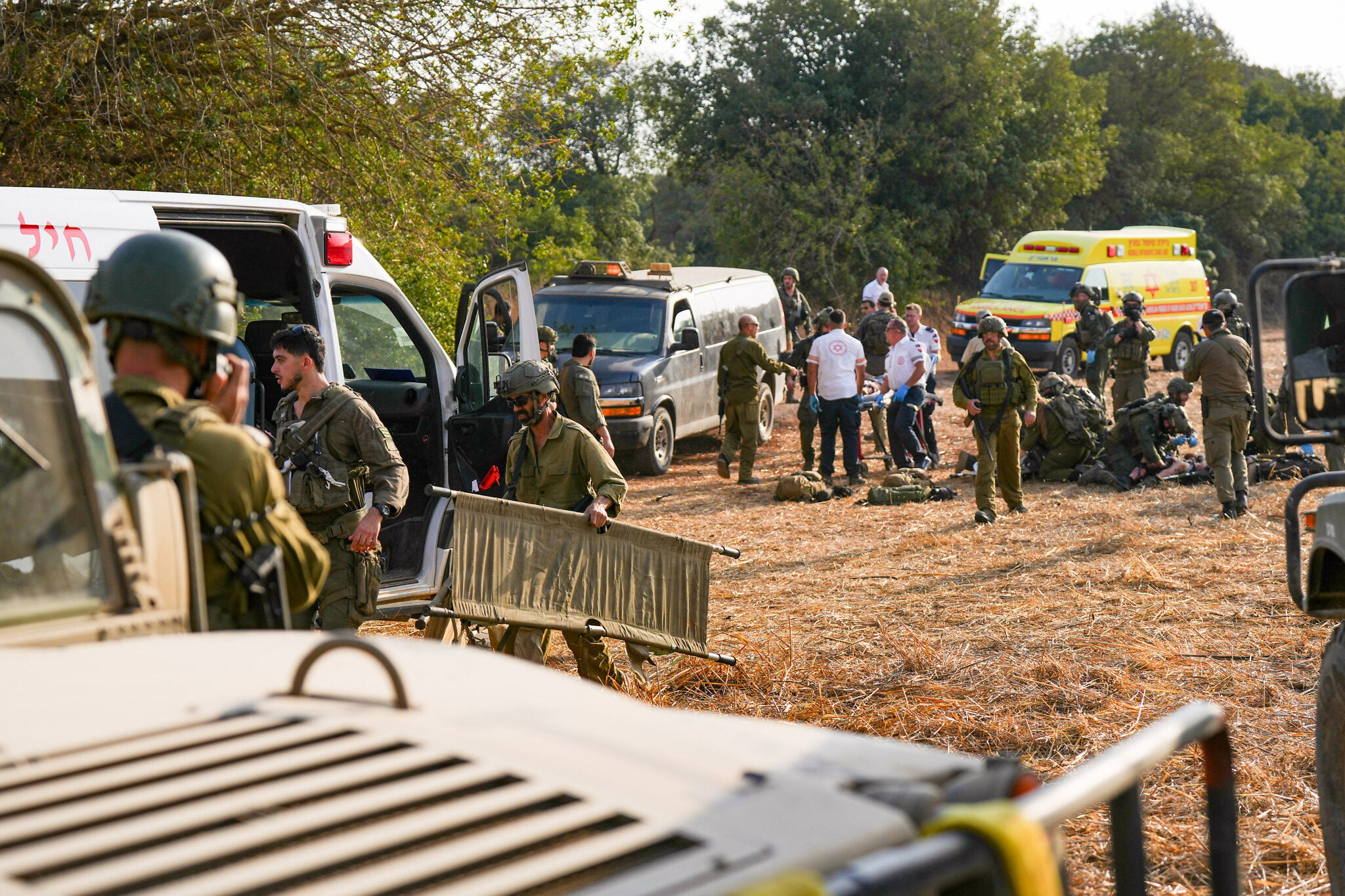
During the walk, one of the students spotted the Hezbollah submunition lying on or near the trail, and picked it up. At some point, the bomblet exploded, killing 9th grader Elazar Yair Wilensky, 13, and wounding 24 other students and teachers, some of them severely.
Aside from Hezbollah, Iran and its Yemeni proxy group, the Houthis, have also launched hundreds of ballistic missiles at Israel carrying cluster bomb warheads in recent years. Some of the submunitions do not explode upon hitting the ground, and they can still pose a danger to anyone who happens upon them, though disasters like Monday’s deadly blast have been rare.
Unlike landmines, which continue to pose a danger in the Golan Heights and West Bank, authorities cannot fence off areas containing unexploded cluster warheads, which may sit unnoticed for years before being found by an unsuspecting victim. There is no reliable way to estimate how widespread the danger is.
Unexploded ordnance can take many forms, and while some may be identifiable as rockets, grenades or conical warheads, others may appear as deceptively harmless as small metal containers in a variety of shapes. The munitions will often bear signs of wear, including dents, cracks, scorch marks or other damage, and could also be rusted. Some may be partially buried in the ground.
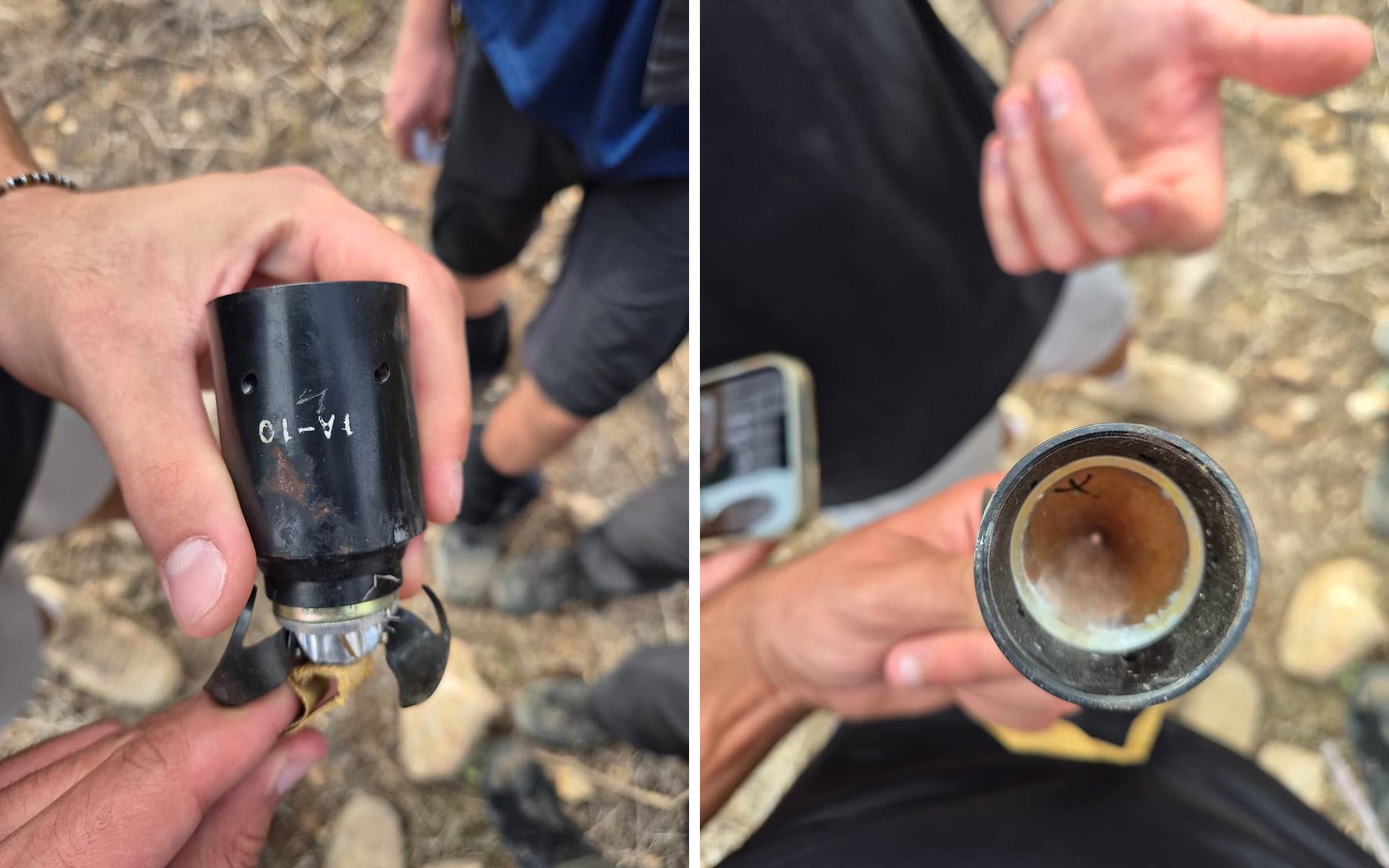
Their explosive power varies widely depending on the munition itself, but even small bomblets from a cluster warhead are capable of causing fatal injuries.
Unexploded ordnance left for decades can still be lethal, and can be triggered with just a light touch or by being picked up, which is why authorities urge those who encounter suspicious objects to keep their distance and report it.
Human rights groups have long campaigned for cluster bombs to be banned due to the random, indiscriminate nature of the threat they pose, unlike other types of munitions that can be used to precisely target combatants or military assets while minimizing harm to civilians.
In the south, munitions, including grenades, left behind from Hamas’s October 7, 2023, onslaught have been found years later in Israeli communities.
Additionally, due to the army’s operations during the war, there is always a risk of troops mistakenly leaving behind weaponry in areas near the border that civilians are later permitted to enter.
Divided responsibility
Monday’s blast is far from the first time that civilians have been killed or injured by unexploded ordnance in recent years.
In August, six foreign workers were injured when an old explosive detonated in an agricultural field near the northern town of Metula, the site of heavy fighting over the past three years.
Similarly, in October 2024, a 27-year-old laborer from Thailand was killed and another worker was wounded when a munition previously fired by Hezbollah blew up in an orchard by the northern community of Kibbutz Yir’on. And in February this year, a Palestinian child was killed and two others were injured by a blast caused by previously unexploded IDF ordnance near a military shooting range in the Jordan Valley.
The responsibility for clearing unexploded ordnance in Israel is divided among three bodies: the Defense Ministry’s National Mine Action Authority, the military, and the police.
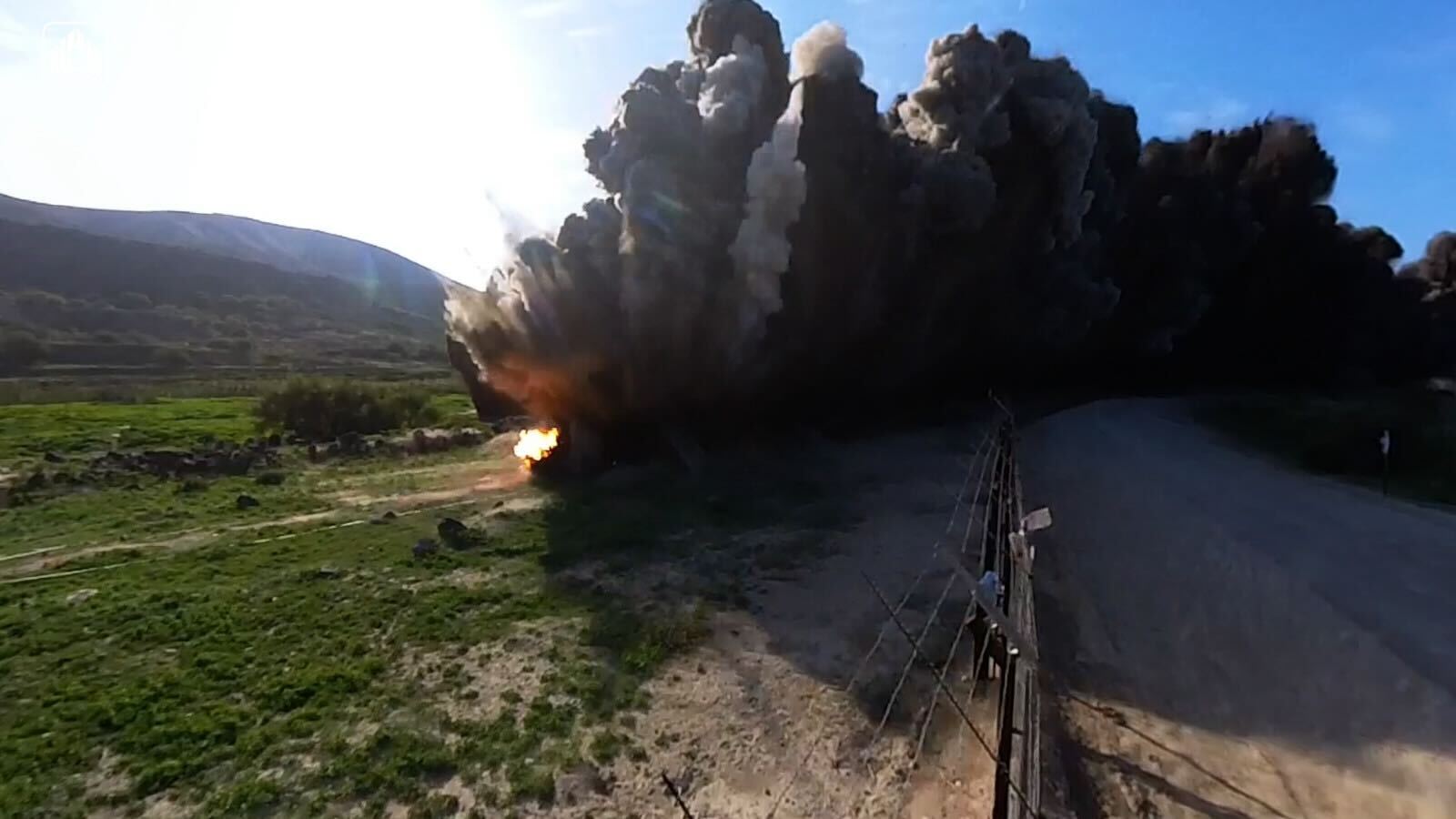
Under the 2011 Law for the Clearance of Minefields and Unexploded Ordnance, the Defense Ministry body is tasked with “planning the clearance of minefields and areas containing unexploded ordnance and carrying out the clearance,” as well as “advancing, planning, and conducting public awareness activities to increase awareness of safe conduct and reduce risks, particularly among populations living in areas adjacent to minefields or areas containing unexploded ordnance, and advising the education system on such awareness activities in educational institutions.”
A document on the authority’s own site defines its purpose as “locating and destroying unexploded and dangerous munitions and/or munitions abandoned in battlefields and training areas.”
Despite this, Army Radio reported on Tuesday that the ministry denied responsibility for the deadly incident, saying that “the authority is not supposed to clear unexploded ordnance resulting from enemy fire — that is the police’s job.”
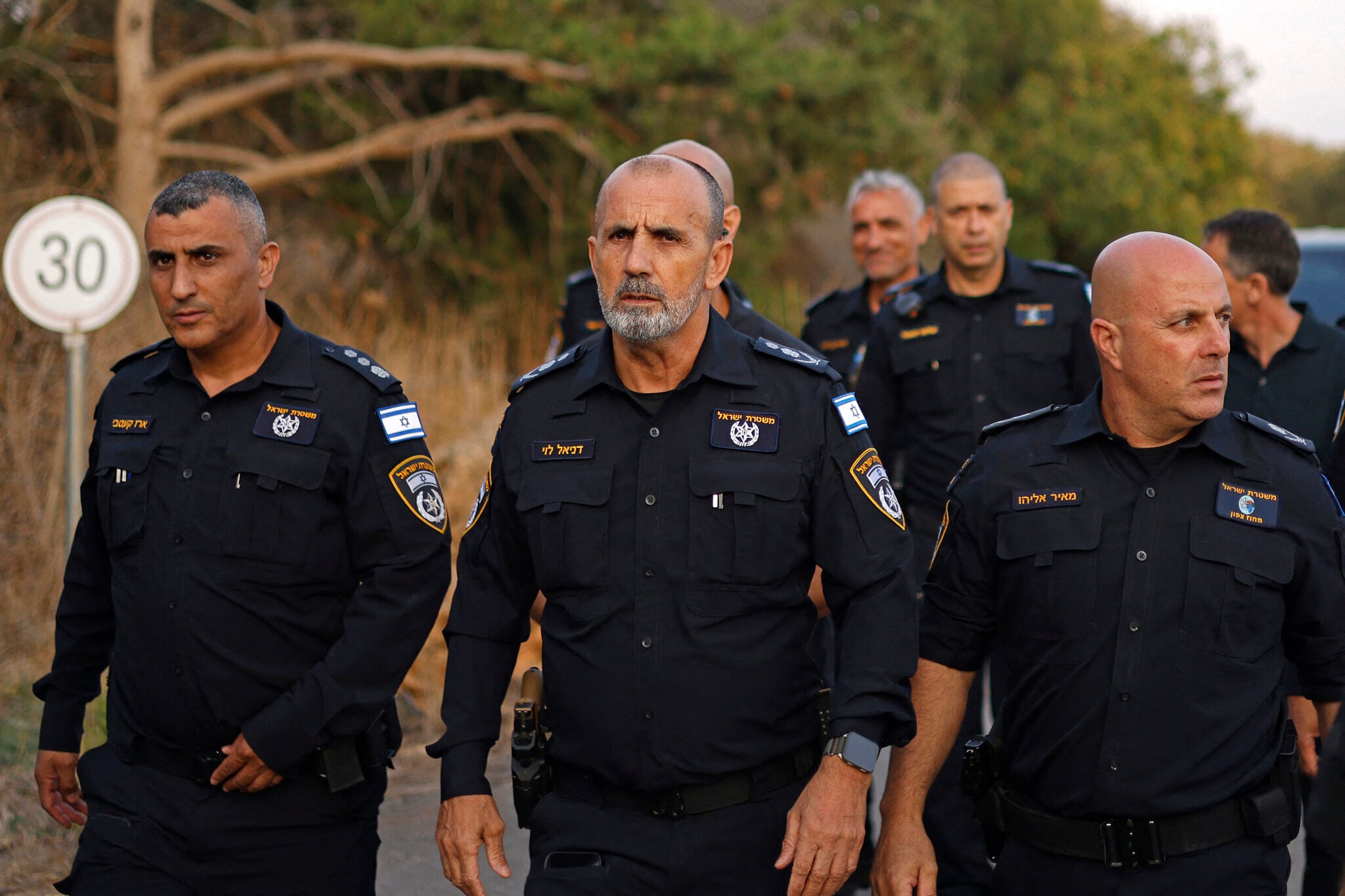
Israel Police Commissioner Danny Levy, who spoke to reporters at the site of Monday’s deadly blast, did not address the question of the police’s responsibility for clearing unexploded ordnance, but said that the school trip had received approval from all the relevant authorities.
On the military’s part, in December 2024, the Israel Defense Forces said it carried out an “extensive operation” in some 40 communities in northern Israel to “clear military equipment, clean waste, and remove unexploded ordnance,” to allow displaced civilians to return to their homes amid a ceasefire with Hezbollah.
However, the IDF did not announce a similar operation following the latest round of fighting with the Lebanese terror group this year.
Trek troubles
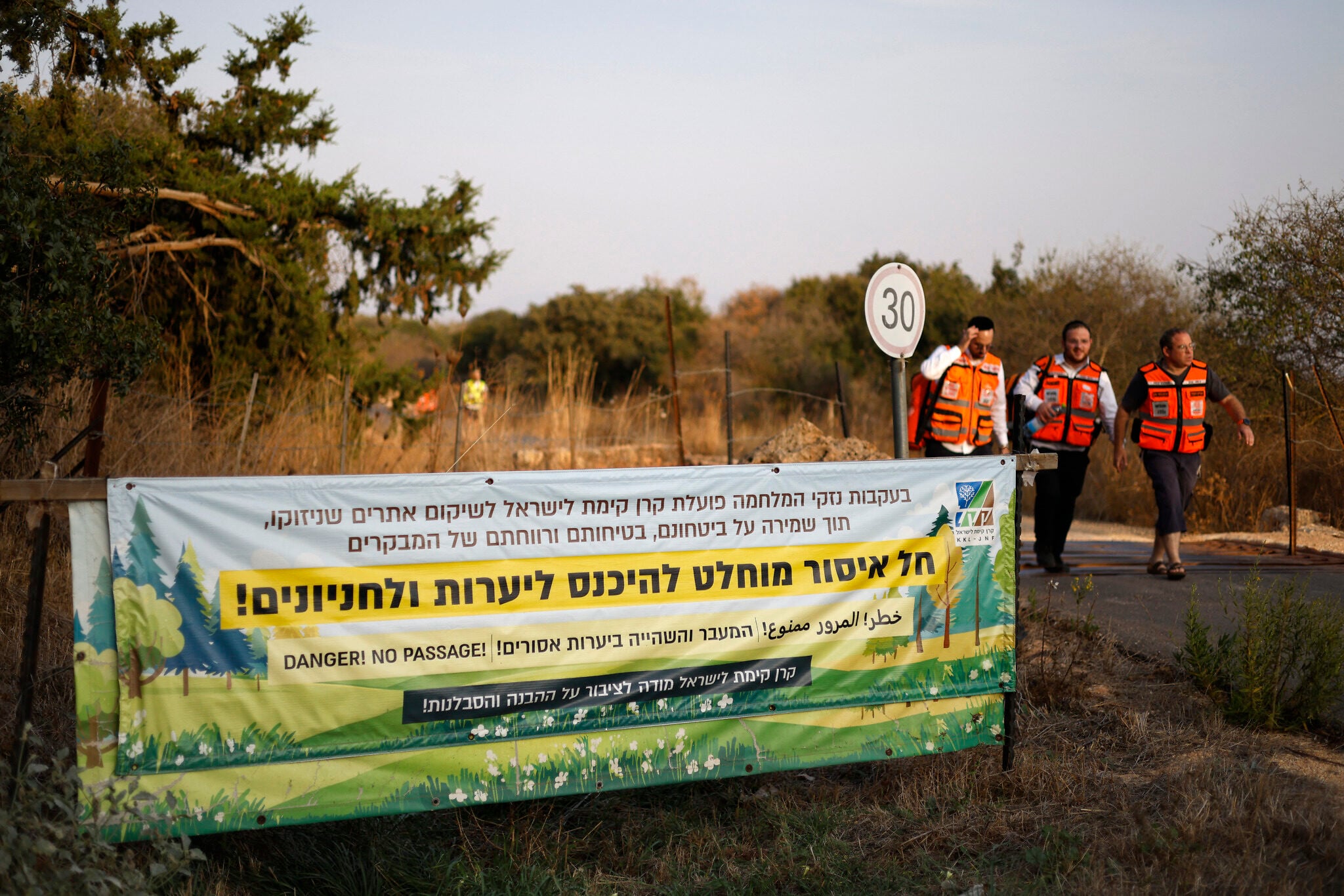
The school hike – a 3-day trip along the Israel Trail – was approved by the Education Ministry, despite a sign posted by the KKL-JNF Jewish National Fund in the area warning of “war damage” and announcing an “absolute ban on entering forests and campsites.”
A similar notice was published on the KKL-JNF website in May 2025.
KKL-JNF chairman Eyal Ostrinsky told Army Radio on Tuesday that the trail was closed, and that he didn’t understand why the Education Ministry had approved the route for the hike. He said that KKL-JNF had previously notified the Education Ministry’s operations room, run by the Society for the Protection of Nature in Israel, that the site was closed.
In a statement, the Education Ministry said the approved route for the hike did not cross into a restricted area, suggesting the group may have strayed off the designated trail.
“As part of the trip approval process, explicit safety instructions were issued, including a strict prohibition against touching missile debris or unexploded ordnance, alongside a directive to report such items immediately,” the ministry said.
The Education Ministry said it was investigating further.
The police and the military said they were also probing the circumstances of the incident, as well as scanning trails along the Lebanon border for any further ordnance.
Danger zone
All three bodies responsible for ordnance clearing have carried out awareness campaigns on the issue, although it remains unclear how much has penetrated the education system or public consciousness.
Army Radio on Tuesday cited Defense Ministry financial documents stating that over NIS 1 million ($325,000) had been spent in the past two years on public awareness activities and campaigns regarding unexploded ordnance, including NIS 750,000 ($245,000) in 2025 and NIS 450,000 ($146,000) so far in 2026.
The documents do not specify how much of the budget was spent on unexploded ordnance awareness activities within the education system, as the mine clearing authority is required to do by law.
The police have, numerous times in the past, during the war and following incidents of unexploded ordnance blasts, issued guidelines to the public instructing civilians to report any suspicious object and not touch them.
The military’s Home Front Command has also issued similar instructions previously.
Following Monday’s deadly incident, the IDF said the Home Front Command would expand a public awareness campaign on the danger of unexploded ordnance.
With an unknown amount of unexploded ordnance, especially in areas that are open to the public for hiking, or fields where farmhands work, and with limited clearance operations, education may be the only effective way to ensure a similar tragedy does not occur.