Feeling largely vindicated by his judges, Netanyahu will battle harder still to retain power
The court torpedoes most of the state prosecution's case, on a day when his political rivals were indicating they were close to mustering a coalition to replace him
The Jerusalem District Court’s stunning pronouncement on Wednesday, more than six years into Benjamin Netanyahu’s trial, that it believes two of the three cases against him do not hold water, and that the parties ought to negotiate a deal on the third, constitutes what the prime minister will consider near-total vindication.
Throughout a process that began with the launch of a probe against him in June 2016 by then-attorney general Avichai Mandelblit, Netanyahu has insisted that the allegations — which were codified in an indictment issued in November 2019, and that saw a serving prime minister in the dock for the first time in May 2020 — were unfounded, the charges fabricated in an attempted “coup” led by police, state prosecutors and political rivals.
The court, in its bombshell declaration, did not intimate any such foul motivations, but it fundamentally questioned the prosecution’s processes and decisions.
The prime minister is not completely in the clear. The judges indicated that they find the allegations of fraud and breach of trust convincing in Case 1000 — in which Netanyahu is alleged to have accepted luxury gifts worth hundreds of thousands of shekels from Hollywood producer Arnon Milchan and Australian billionaire James Packer, in return for various favors and assistance to Milchan in particular. But even in this case, the one that made the most headlines over the years, with its descriptions of tons of cigars and a sea of champagne gifted to the prime minister and his wife, the court recommended moving toward some kind of agreement between the state prosecution and the defense rather than prolonging the trial any further.
Netanyahu’s lawyer Amit Hadad reportedly suggested that the two sides immediately meet to resolve the entire affair, an idea said to have been opposed by both the court and Mandelblit’s successor as attorney general, Gali Baharav-Miara. The state prosecution will need to carefully weigh the court’s stated positions, and examine not only how and why it failed so signally to muster convincing evidence in the two cases the court is minded to dismiss, but also whether it erred drastically in indicting Netanyahu in those cases in the first place.
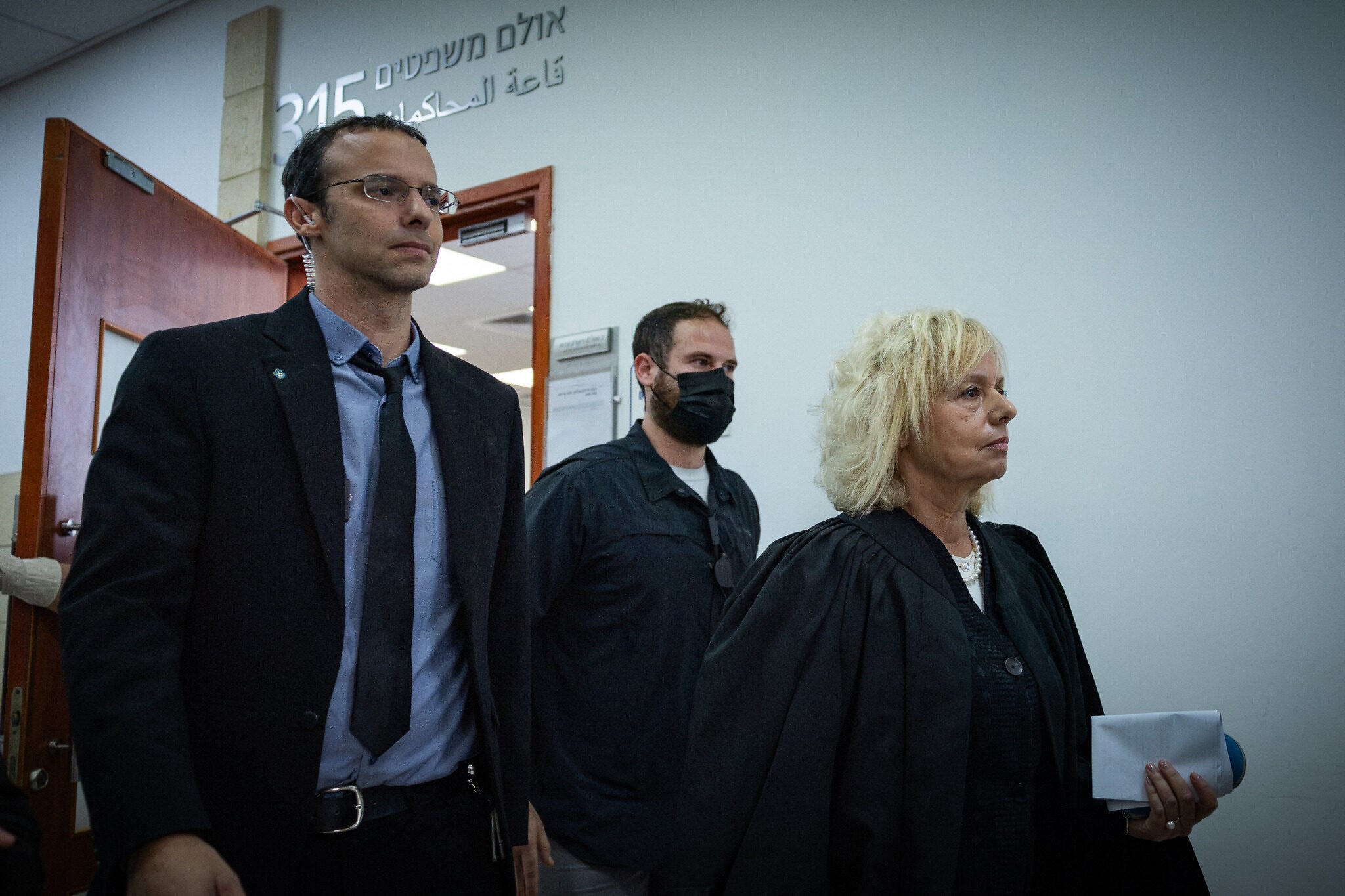
The state prosecution might wonder why it took the court six years to indicate on Wednesday that the allegations in Case 2000, in which the prime minister is alleged to have made an illicit quid pro quo agreement with the publisher of the Yedioth Ahronoth newspaper, do not appear to constitute a crime, but that is indeed the court’s belated conclusion.
Likewise, the state prosecution might bridle at the court’s dismissive stance on the allegations in the most serious of the cases, Case 4000, in which Netanyahu is accused of authorizing regulatory decisions that financially benefited Shaul Elovitch, then the controlling shareholder of the Bezeq telecommunications giant, by hundreds of millions of shekels, in return for favorable media coverage from the Walla news site Elovitch also owned. Here, in a case of wide national significance, Netanyahu faced a charge of bribery as well as the fraud and breach of trust charge common to all three cases. But the court had twice previously made plain that it was unpersuaded by the bribery allegation, and had encouraged the prosecution, in vain, to drop it.
With its charges openly disputed not only by the defendant but by the judges, the state prosecution may be reluctant to give up on its one remaining realistic case by agreeing to a deal in which Netanyahu just might previously have pleaded guilty if spared a conviction carrying the designation of “moral turpitude” (which would require him to step away from public life for seven years). But the prime minister, who has for years resisted pressure for a plea bargain and submitted a pardon request to President Isaac Herzog last November that did not acknowledge any guilt, is now vanishingly unlikely to accept anything but the most favorable terms for ending the proceedings.
Wednesday’s extraordinary developments in Netanyahu’s trial cannot, of course, be separated from Israel’s current political machinations, and the timing is exquisite for the prime minister.
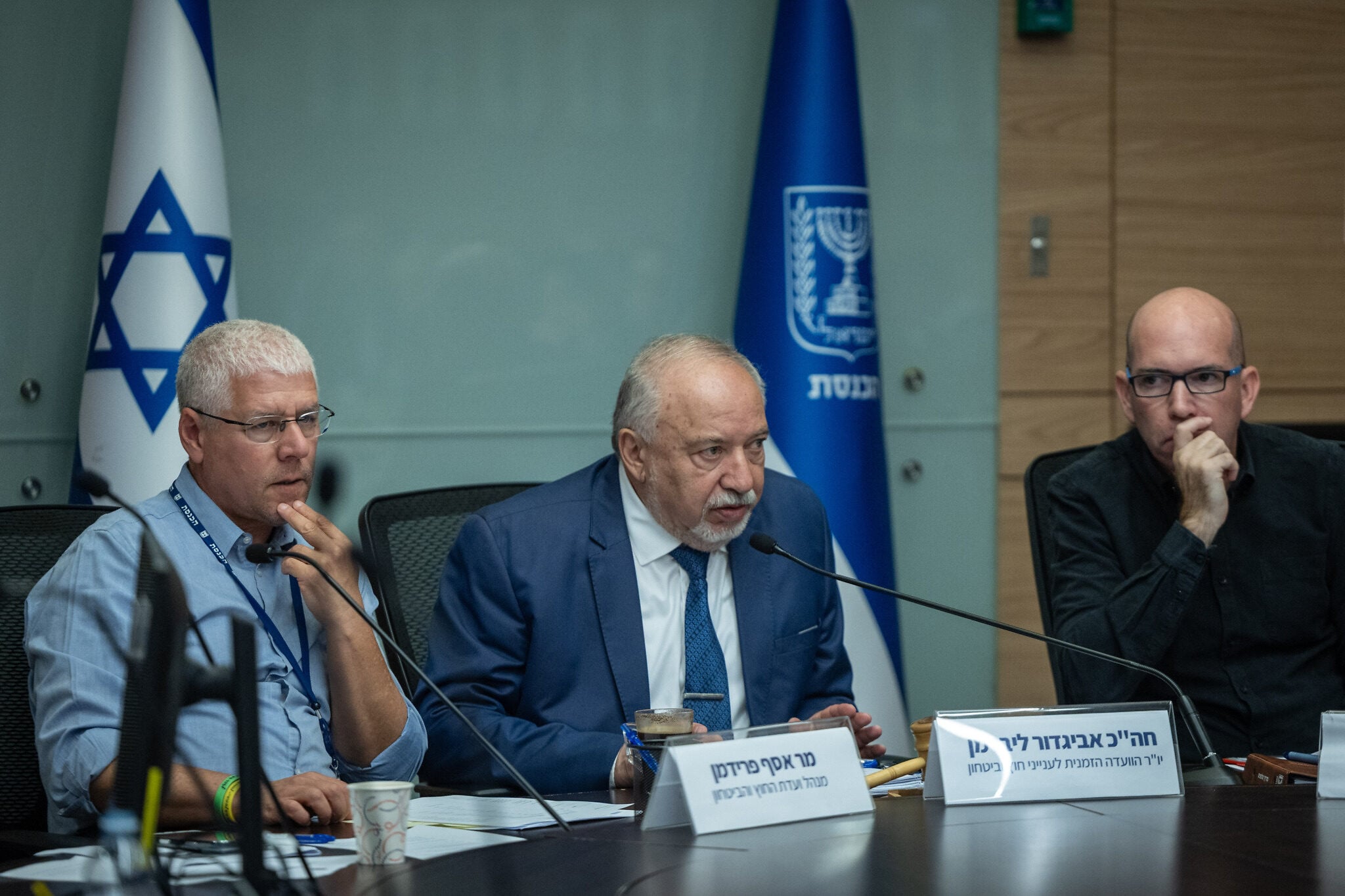
Just as the court was preparing to convene, with Baharav-Miara summoned unprecedentedly by the judges to hear in person the bad news of their recommendations, Netanyahu’s political rivals were intensifying their efforts to muster a coalition to unseat him. Avigdor Liberman, once one of Netanyahu’s closest allies but long since one of his most formidable opponents, was predicting that the anti-Netanyahu Zionist bloc would be able to swear in a government with “a clear Jewish majority” by the end of next week, and an unconfirmed report had it that would-be prime minister Gadi Eisenkot would indeed seek to do so by next Wednesday.
Netanyahu’s massively bolstered legal position does not change the political arithmetic. He lost his majority in the October 27 election, with his outgoing coalition garnering just 53 of the 120 Knesset seats versus the Eisenkot-led bloc’s 48 and the two Arab parties’ 19. But it could change the momentum in the battle to form Israel’s next government.
Eisenkot and Liberman have been wooing one of the two ultra-Orthodox parties, United Torah Judaism, which declined to recommend either Netanyahu or Eisenkot for prime minister in its consultations with Herzog early this month, and which, according to some insiders, has been seriously considering throwing in its lot with the anti-Netanyahu bloc in return for legislation designed to maintain the broad exemption of ultra-Orthodox males from IDF service. Such an alliance, always somewhat improbable, may be even less likely now, as Netanyahu, filled with righteous indignation at his mistreatment by the state prosecution, seeks with renewed energy to draw UTJ back into his fold.
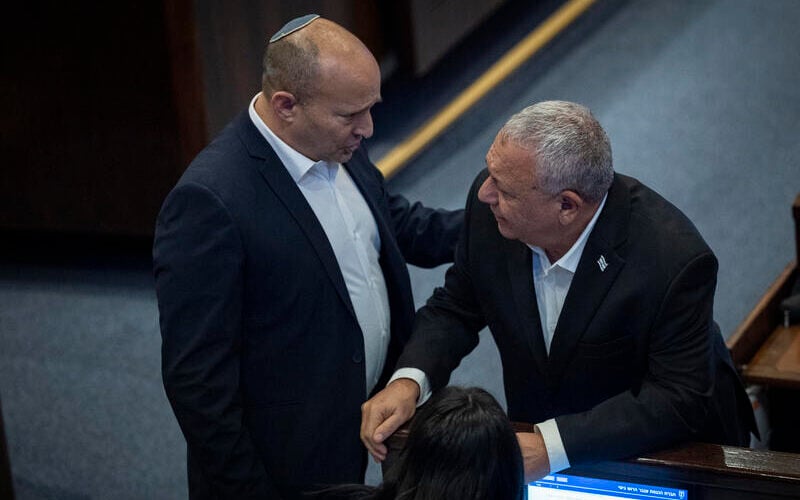
Furthermore, even if Eisenkot has the nerve, will he have the means to swear in a government reliant on at least one of the Arab parties in the face of a rejuvenated Netanyahu, doubtless stepping up his attacks on the legitimacy of a government dependent on those he has branded “terror supporters” and “haters of Israel”? Will all of Eisenkot’s own party — which includes Chili Tropper and two colleagues from a faction strongly committed to a unity government — reliably back such a move? And what of the B’Yachad opposition party, whose leader Naftali Bennett has been publicly urging a unity partnership with Netanyahu’s Likud, provided Eisenkot serves first as prime minister?
Netanyahu and his outgoing coalition spent their four-year term denouncing and demonizing Israel’s judges and seeking to subjugate the judiciary to the political majority. The prime minister might want to internalize and publicly appreciate the evident independent thinking of the panel of judges who on Wednesday humiliated the state prosecution and all but torpedoed most of the charges he has been battling in Jerusalem District Court these past six and a half years. “There are judges in Jerusalem,” he might reasonably proclaim, and pledge to ensure their ongoing independence.
But his most heartfelt practical response is certain to be driven by his triumphant sense of vindication at the near-collapse of his trial and his grievance at the ordeal the law enforcement establishment has put him through. And it will doubtless yield a heightened determination to rally his abiding allies, win back those who may be wobbling, delegitimize the election result, and prevent his opponents from doing what he claims the prosecution sought to do: remove him from power.
—
An earlier version of this Editor’s Note was sent out in ToI’s weekly update email to members of the Times of Israel Community. To receive these Editor’s Notes as they’re released, join the ToI Community here.