Herzog: I’ll work to set up ‘stable’ government, Israel must avoid repeat elections
President warns against having to return to the polls, at a time when 'national challenges are enormous'; Lapid vows no partnership with Netanyahu, slams 'fake' unity governments of the past
President Isaac Herzog said this week that he would do everything in his power to see a “stable” government formed after the coming elections, as current polls show neither the coalition nor the main opposition bloc achieving a majority on its own.
“I will do everything I can to establish a stable government for Israel. But I’ll say more than that: I really, truly will do all I can so there won’t be repeat elections,” pledged the president, in a pre-recorded interview that aired Monday at a conference for the Yedioth Ahronoth newspaper.
“We need to understand that our national challenges are enormous. We need to wait for the results rather than pass judgment, but we must do everything possible to avoid going back to this again and again and again,” Herzog said.
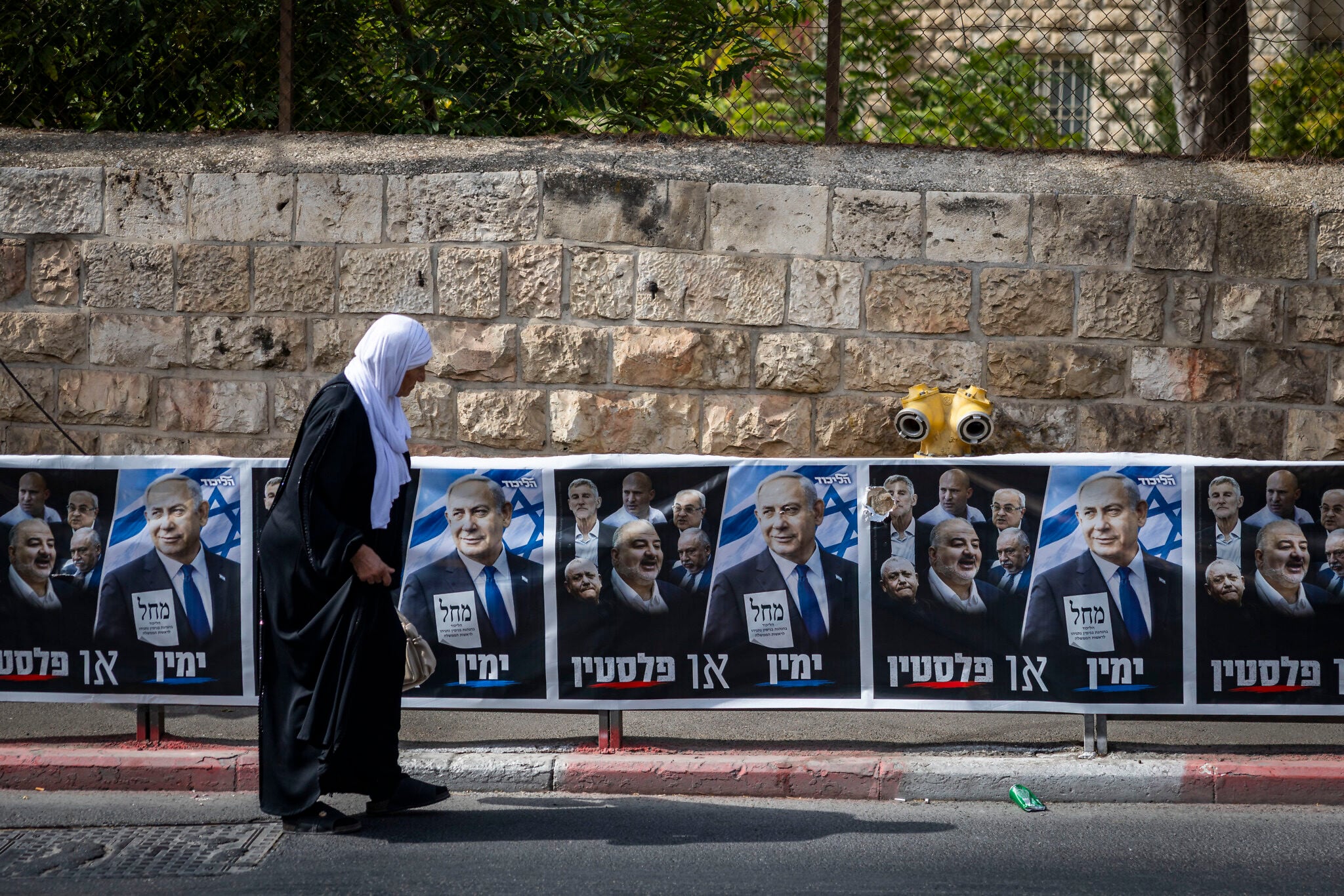
Recent polls show neither the current coalition, nor the main opposition bloc, receiving enough seats in the Knesset to form a government on its own. Parties differ on their willingness to accept support from Arab parties, ultra-Orthodox parties, or Netanyahu in order to reach a majority.
When this has occurred in the past, Israel has been thrown into cycles of repeat votes, including a period from 2019-2021 in which the state held four rounds of elections before forming a government, which itself only lasted until late 2022, when the current coalition was elected.
The president is tasked with asking the candidate who gets the most recommendations from parties after the election to form a government. He can also mediate between factions if there is no clear majority.
Asked about the integrity of the upcoming elections, Herzog voiced faith in the Central Elections Committee, noting that he recently held a joint meeting with the heads of the panel and Israel’s largest tech companies to discuss election security.

Herzog said that he believes everyone will accept the election results, regardless of who wins. He repeated his election season mantra that “elections are not a civil war.”
“Those who aren’t elected, and those who win, everyone must understand that they belong to the same nation, and the one who is elected must also look after the one who isn’t elected,” he said.
Lapid: No “fake ‘unity’ government” with Netanyahu
Opposition Leader Yair Lapid, who is number two on the B’Yachad party slate, posted on X shortly after the interview was published that he would not support “another fake ‘unity’ government.”
He was presumably comparing Herzog’s vision to the emergency coalition formed by Prime Minister Benjamin Netanyahu after the Hamas-led October 7, 2023, attack, or the 2020 unity government Benny Gantz formed with Netanyahu, which collapsed.
“I very much hope President Herzog will not try to push for another fake ‘unity’ government, in which Netanyahu would once again deceive his partners and bring more and more disasters upon Israeli citizens with the votes of people who voted to remove him from power,” Lapid wrote.
“We won’t participate in this, and I call on the rest of the parties in the bloc to announce ahead of time that they won’t be part of such a government,” he said.
The post came a day after, on Sunday, B’Yachad chair Naftali Bennett was criticized for remarking that, if Netanyahu were to accept the party’s “core tenets,” he could sit in a government with them. The ex-prime minister said the line, which drew laughs from the audience, was a joke, and pledged not to sit with the current premier “in any formation.”
Around the same time as Lapid’s post, Democrats leader Yair Golan shared a clip from a recent interview in which he, similarly, urged opposition party chiefs to pledge, in writing, that they would not sit with Netanyahu, whom he called an “inciter, liar, crook.”
Blue and White chief Benny Gantz, however, took issue with Lapid’s post, responding: “Lapid is wrong — if a unity government is not formed in the coming elections, and the two sides don’t work together, they will bring upon us the next October 7.”
“Only a Zionist unity government, of both camps, can deal with Iran, with conscription [of the ultra-Orthodox], and with mending the rifts in society,” said the former IDF chief of staff. Neither the Arab-majority parties, nor most of the ultra-Orthodox factions, identify as Zionist.
Gantz has refused to align with either the pro- or anti-Netanyahu blocs throughout his election campaign, but he is polling far below the minimum electoral threshold and is therefore not expected to return to the Knesset.