

Bennett suggests Netanyahu could be part of future government, quickly backtracks
In fresh round of bloc infighting, Eisenkot, Golan, Liberman categorically reject possibility of sitting in coalition with Likud leader, while Gantz is lone voice of support
 Add ToI as a Preferred Source on Google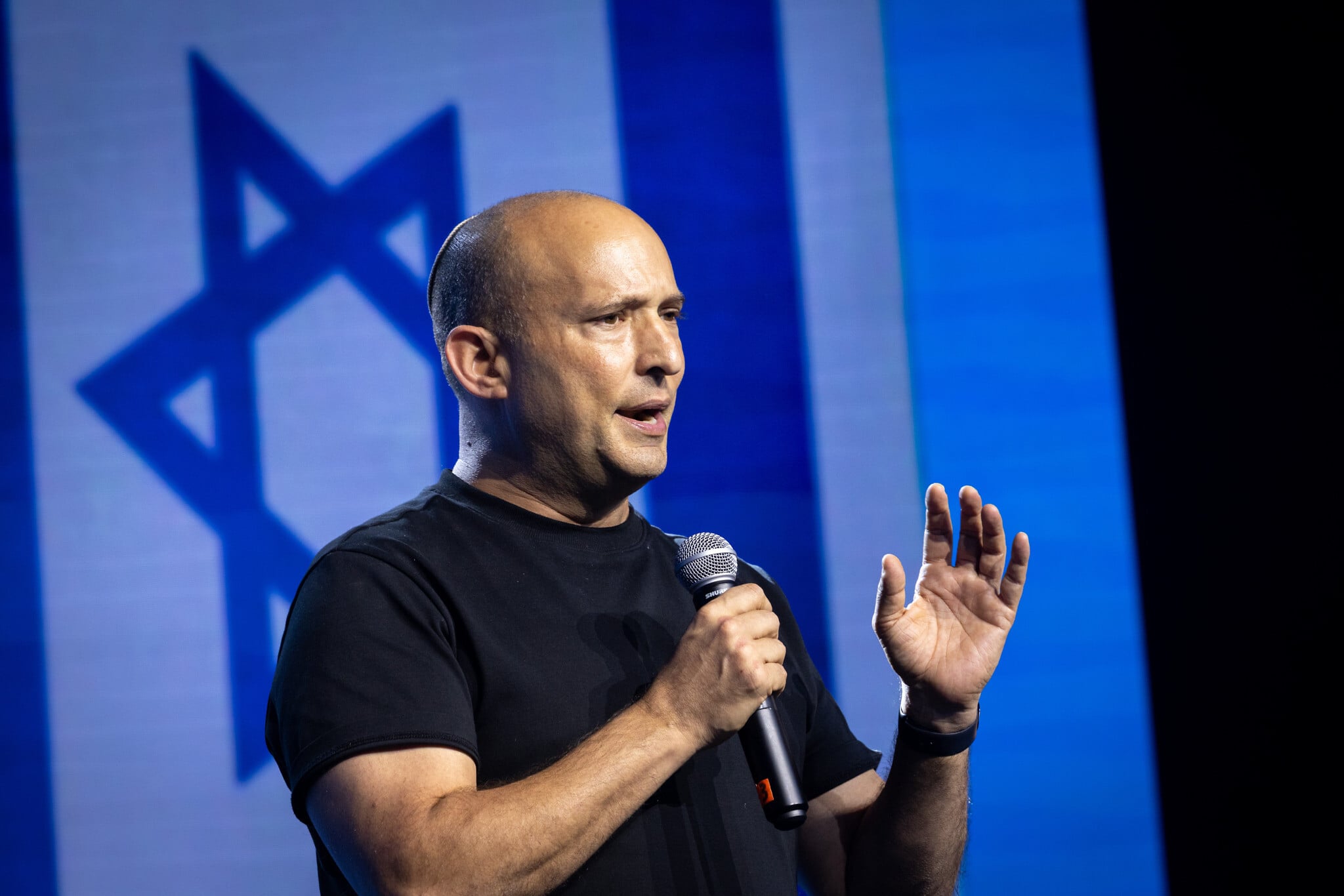
Former prime minister and B’Yachad party chair Naftali Bennett suggested Sunday that Prime Minister Benjamin Netanyahu could be a part of a future government and even receive a ministerial position if he were willing to accept its “core tenets,” before quickly walking back the idea after criticism from his political allies.
Bennett, who was speaking at an event organized by the religious Zionist newspaper HaDor, said that if Netanyahu were to fully accept the policies laid out by the Zionist anti-Netanyahu bloc, he would have “no problem” bringing Likud into the fold.
“If he accepts our policy guidelines — including a state commission of inquiry [into the October 7 attack] — he’s welcome to give me a call,” Bennett said to laughter from the audience.
Asked about the possibility of Netanyahu being elected for another term as prime minister, Bennett suggested that he was perhaps too old for the job now.
“I don’t know if a man nearing 80 has the energy for that,” he quipped.
Bennett’s apparently tongue-in-cheek remarks were met with a cool response from his allies in the anti-Netanyahu bloc, who have categorically ruled out cooperating with the Likud leader.
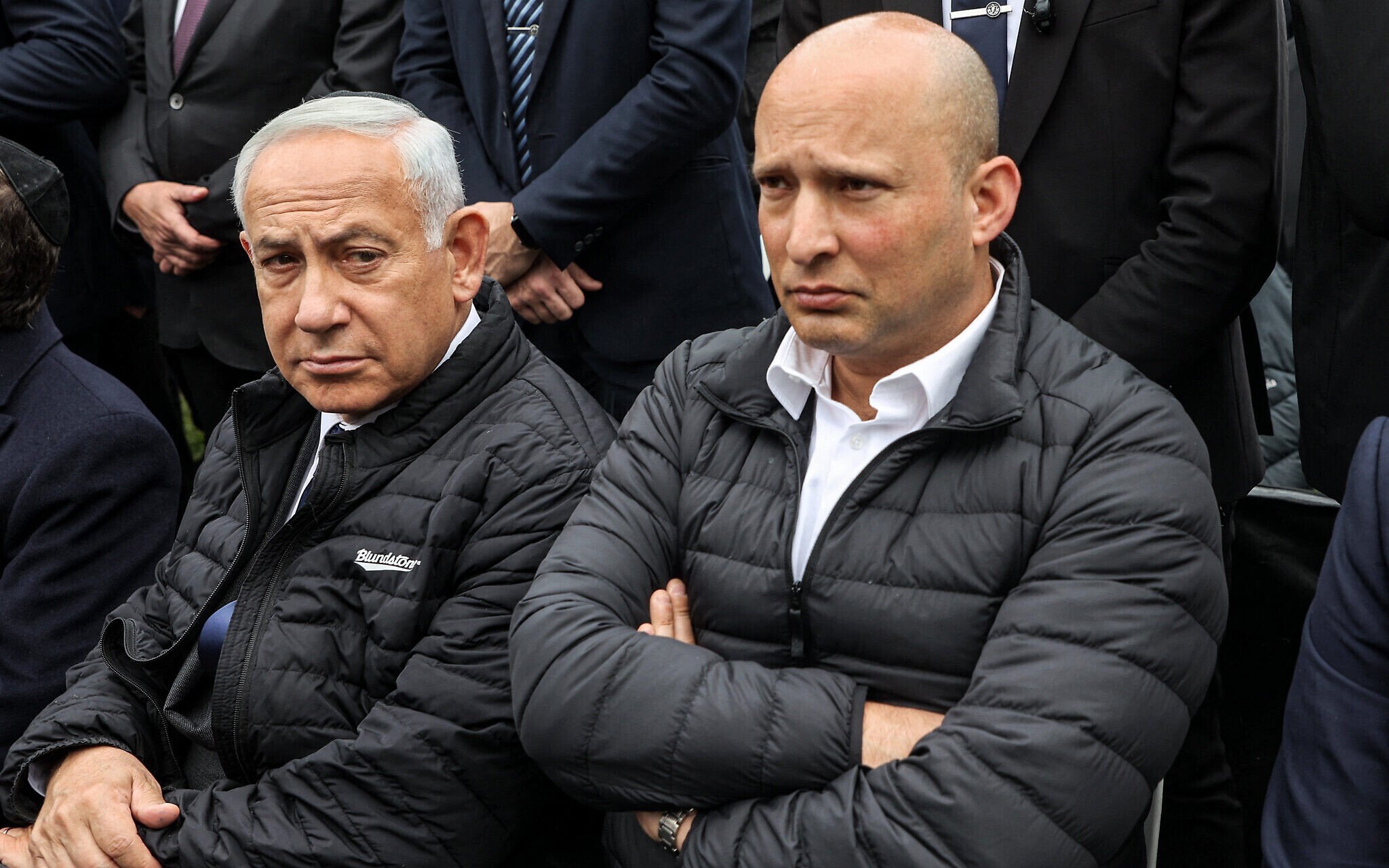
Yashar party chair Gadi Eisenkot, who is polling equal to or slightly ahead of Netanyahu, dismissed the suggestion during his own appearance at the HaDor conference, asserting that “Everyone who was in office [on October 7] is unfit to serve in command and leadership roles.”
Yair Golan, chair of the left-wing Democrats party, similarly ruled out Bennett’s suggestion, declaring that as long as his party has any say in the matter, Netanyahu will not receive a role in government “not as finance minister, not as water minister, and not as a minister without a portfolio.”
And Avigdor Liberman, the hawkish chair of Yisrael Beytenu who has for the better part of a decade refused to entertain the possibility of entering into government with Netanyahu, demanded that his opposition allies do the same.
“I call on my colleagues in the Zionist bloc to make it unequivocally clear: Come hell or high water, we will not sit in a government with Netanyahu,” he wrote on X.

In the wake of the public criticism, Bennett walked back his remarks in a social media post, but suggested “everyone calm down” as he has “said a thousand times” that he will not work with Netanyahu.
“I have said a thousand times that Netanyahu bears direct, personal responsibility for the October 7 massacre, and therefore he must go,” wrote the former leader. “We will not sit with him in any formation.”
“Anyone who watched my remarks today understood that they were intended to illustrate the absurdity,” he added. “After all, Netanyahu opposes universal conscription, a state commission of inquiry and an Israeli constitution.”
The spat over Bennett’s remarks was the latest instance of infighting among the opposition leaders, just two weeks out from election day and less than a month after they signed an agreement to refrain from publicly attacking one another.
Not everyone was a critic, however, and Blue and White chair Benny Gantz came out as a lone voice in support of Bennett’s suggestion.
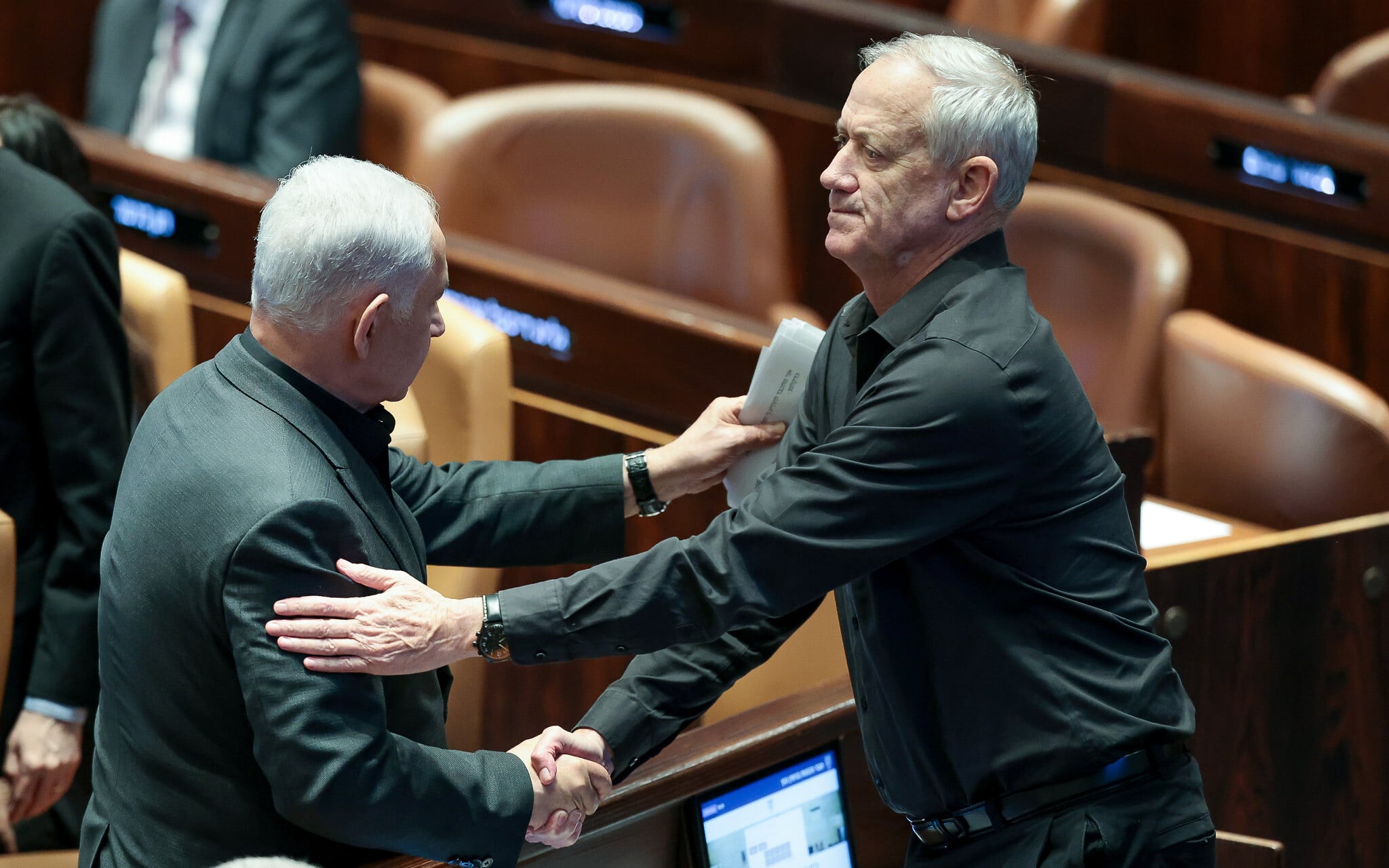
“Anyone who thinks it is possible to return to the experiments that failed prior to October 7 is living in a false reality,” he declared on social media. “Only a Zionist unity government — comprising the Likud and the Zionist majority — will be able to tackle the immense challenges that lie ahead.”
Unlike Bennett, Gantz did not suggest that Netanyahu would have to accept the opposition’s demands in order to receive a seat at the table.
Gantz has refused to align with either the pro- or anti-Netanyahu blocs throughout his election campaign, but is polling far below the minimum electoral threshold and is therefore not expected to return to the Knesset after the October 27 election.
According to the most recent poll by The Times of Israel’s Hebrew sister site Zman Yisrael, which was published Thursday, both the pro- and anti-Netanyahu blocs are currently short of the 61-seat majority they would need in order to easily form a government.
The pro-Netanyahu bloc is polling at 51 seats, while the Zionist anti-Netanyahu bloc — meaning without the Arab-led Joint List and Ra’am — is polling at 55 seats.
Including the Joint List and Ra’am, the anti-Netanyahu bloc reaches 69 seats, according to the poll, but almost all parties have ruled out the possibility of sitting in coalition with them.
Joint List chair Yousef Jabareen suggested on Saturday, however, that his party could provide an electoral safety net that would allow for the formation of a minority government.
Meanwhile a poll published Sunday in the Kan public broadcaster showed the Netanyahu-led bloc pulling ahead to 53 seats compared to 51 seats for the anti-Netanyahu bloc. The survey of 552 respondents — with a margin of error of ±4.2% — predicted 22 seats for Yashar and 20 for Likud.
The poll also predicted that both Ofer Winter’s People of Israel party and Yoaz Hendel’s Reservists party would pass the electoral threshold and receive four seats each. Winter has said he would back Netanyahu, despite being highly critical of him, while Hendel straddles both blocs.
Also Sunday, the ultra-Orthodox Shas and United Torah Judaism parties announced they had signed a widely expected surplus-vote agreement ahead of the election.
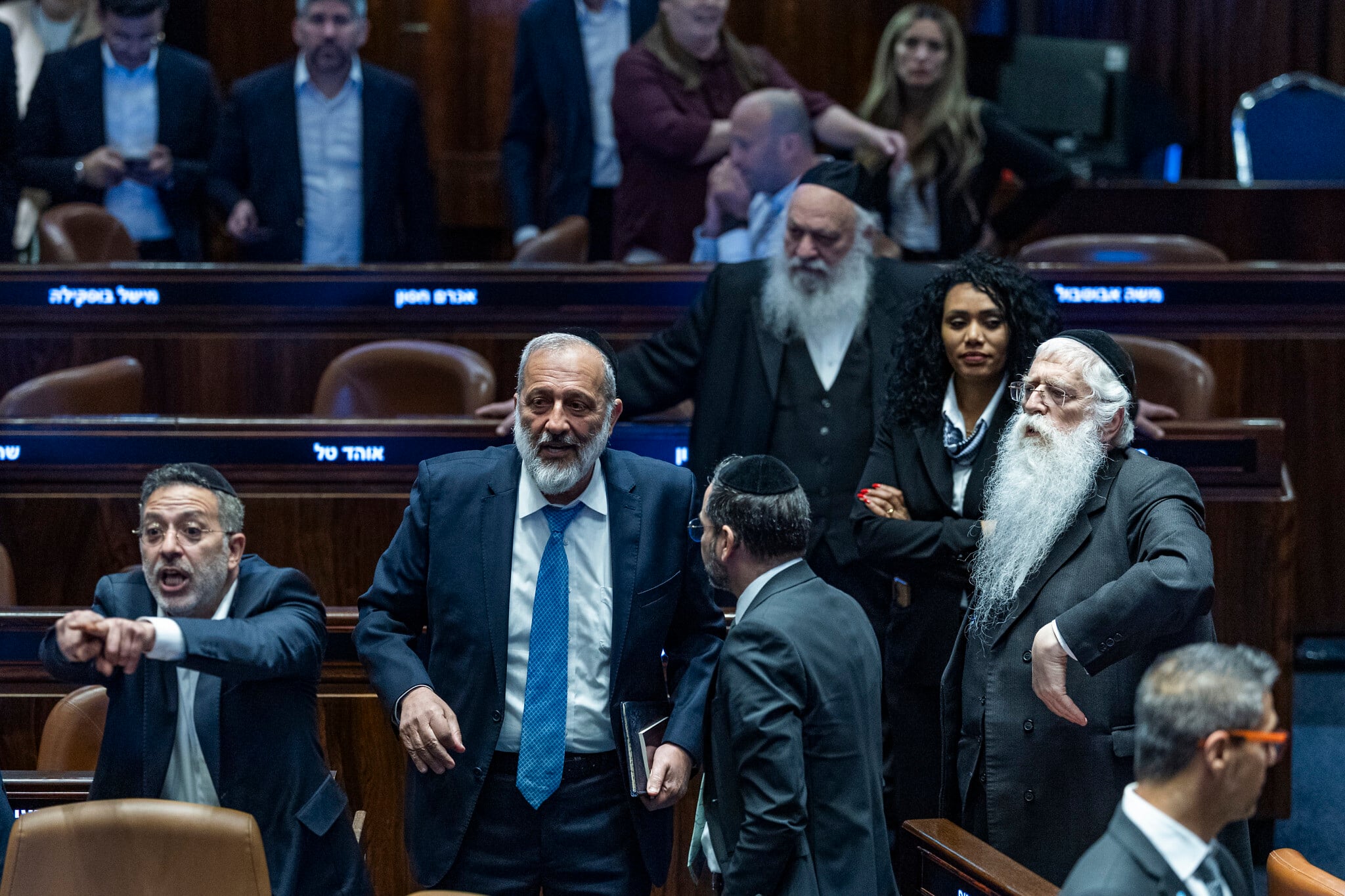
In a joint statement, UTJ chair MK Yaakov Asher and Shas leader MK Aryeh Deri said the agreement “reflects the continuation of cooperation between the two factions, in accordance with the directives of the generation’s leading rabbis and sages.”
They added that the two parties will “continue to cooperate fully and present a united front on core issues concerning the preservation of Torah study, the status of yeshiva students and the strengthening of religious educational institutions.”
Surplus-vote agreements do not merge parties, which run independently and must each cross the 3.25% electoral threshold for the deal to take effect, but pool leftover votes in the allocation of the Knesset’s final seats, potentially helping one of the parties gain an additional mandate. Parties have until October 16 to submit their agreements.
Times of Israel staff contributed to this report.






The Times of Israel Community.