

Netanyahu condemns ‘horrific’ attack on Riyadh airport that killed 12, injured hundreds
PM’s statement coincides with fresh Houthi attack on the same airport terminal, which causes more injuries; Houthis say Riyadh launched strikes in Sanaa
 Add ToI as a Preferred Source on Google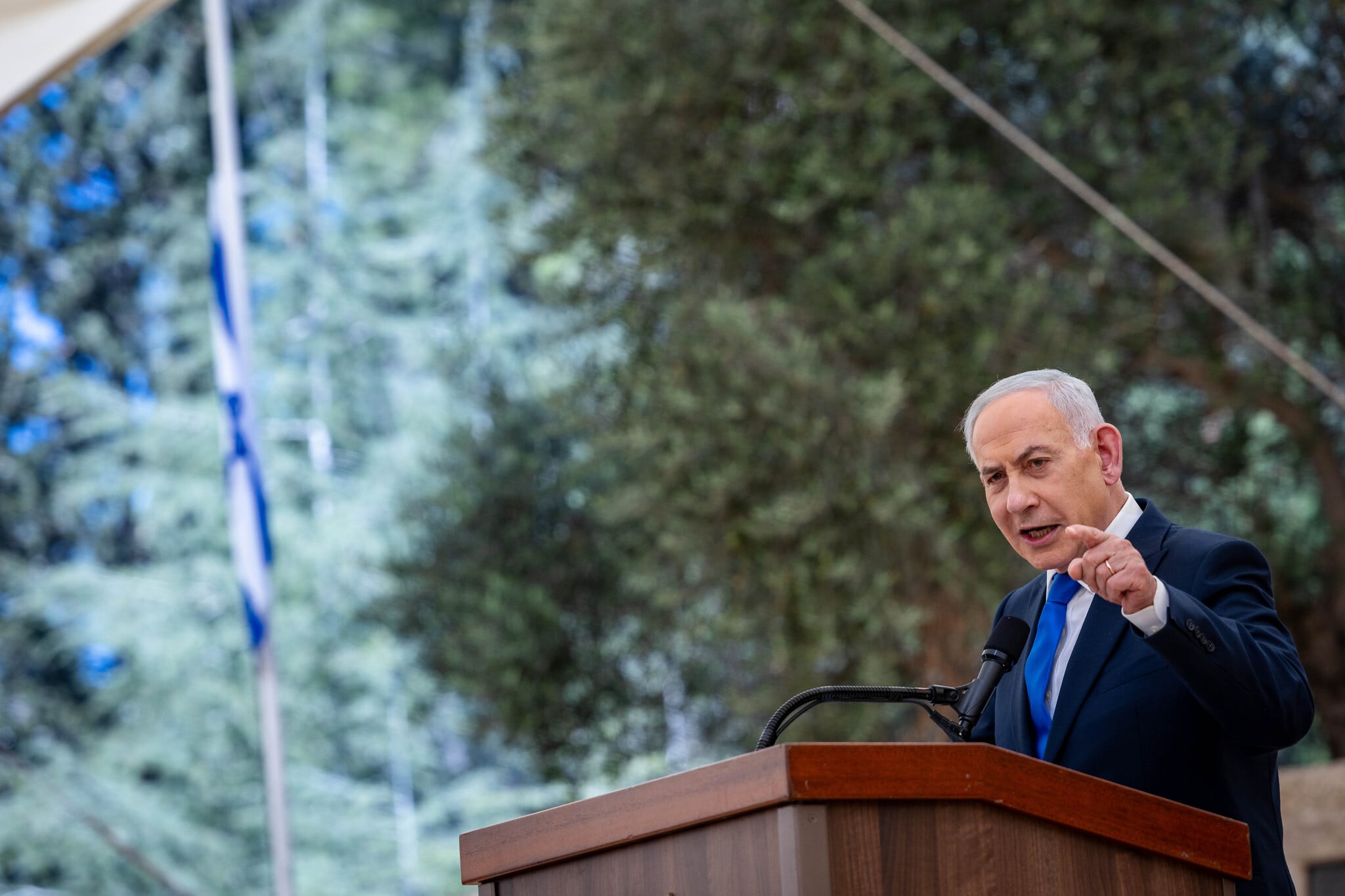
Prime Minister Benjamin Netanyahu joined the chorus of condemnation on Sunday of a Houthi missile attack on an international airport in Riyadh the previous day, in which at least 12 people were killed, and more than 300 others were injured.
Saturday’s attack, the deadliest on Saudi soil in more than a decade, was a sharp escalation in the Yemen war, where Riyadh backs the internationally recognized government against the Iran-backed Houthis, who captured swaths of Red Sea coastline in a lightning offensive last month.
Netanyahu’s statement, which lamented the “horrific terrorist attack” on King Khalid International Airport, coincided with yet another attack on Sunday evening on the same terminal, which has been closed since Saturday’s strike.
“I condemn in the strongest possible terms the horrific terrorist attack on King Khalid International Airport in Riyadh, Saudi Arabia,” Netanyahu wrote on X, extending Israel’s “deepest condolences” to the families of the victims.
“Terrorism targets innocent people and seeks to spread fear and instability. It must be confronted with resolve,” the statement continued. “Israel looks forward to a strong Middle East—one that stands united against threats, protects its people, and builds a future of security, cooperation, and prosperity for all the peoples of our region.”
Israel and Saudi Arabia have some intelligence ties, but no diplomatic ties to speak of, with Riyadh maintaining that it will not normalize relations with Israel without a clear path to Palestinian statehood.
Prime Minister Benjamin Netanyahu:
I condemn in the strongest possible terms the horrific terrorist attack on King Khalid International Airport in Riyadh, Saudi Arabia, which claimed the lives of 12 innocent people and injured hundreds more.
On behalf of the people of Israel, I…
— Prime Minister of Israel (@IsraeliPM) October 11, 2026
The dead in Saturday’s attack included four Saudi citizens, two Bangladeshi nationals, a Palestinian, a US citizen, an Egyptian, a Jordanian, a Syrian, and a Sudanese, Riyadh said in a statement.
The Egyptian woman was a flight attendant identified as Azza Ramzy, who worked for Saudi airline Flynas, according to Egyptian state-run TV.
The Syrian woman was a widowed mother of four who had been living in Saudi Arabia for five years, a relative told The Associated Press. The Syrian embassy identified her as Buthaina Ahmad Oweida. Her niece, Nisreen Oweida, said she had left during Syria’s civil war. She had been living in Mecca and was returning from a visit to her sister in Riyadh when she was killed.
‘A full-fledged war crime’
Passengers who were in the airport complex at the time of the attack recalled scrambling for safety as panic and chaos swept through the terminals.
“I heard a very loud noise, so loud that I felt the airport shake,” a 32-year-old Riyadh resident told AFP a day after the deadly strike. “The airport alarm sirens went off, and that’s when the panic started.”
People spoke to AFP on condition of anonymity due to the harsh measures Saudi authorities have threatened against those who speak out about strikes.
“People who were in Terminal 3 started running toward us. Some had blood covering their faces,” recounted the 32-year-old.
“Some had lost a hand or an arm. People were running while carrying injured people, covered in blood.”
“My blood ran cold. I didn’t know where to go or what to do.”
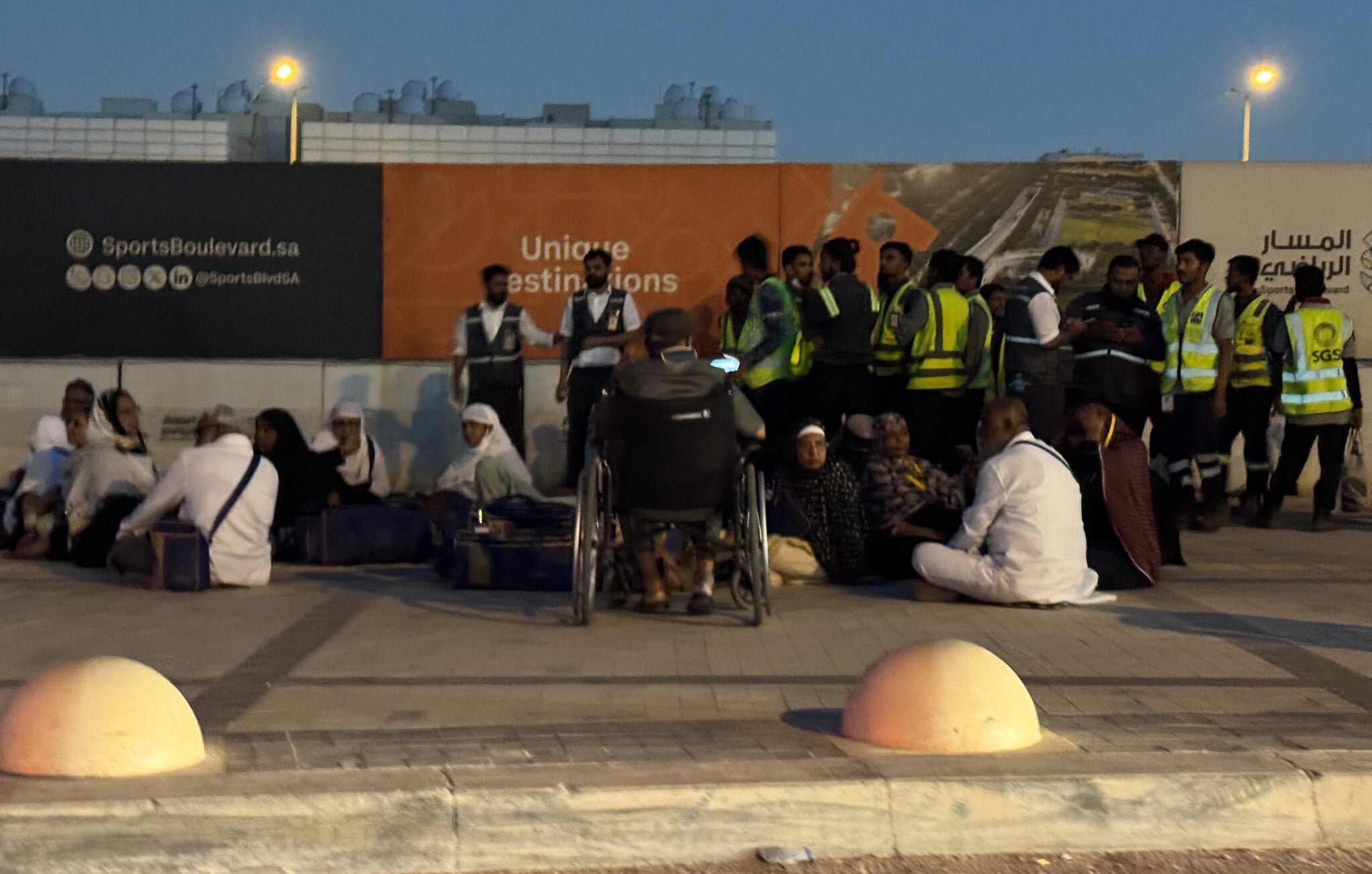
Security personnel escorted him and other passengers to a lower floor, where they waited for an hour before being allowed to leave the scene.
A Saudi military spokesman called the attack a “full-fledged war crime.”
Airport, schools closed, but energy conference going ahead
On Sunday afternoon, the Saudi-led coalition fighting the Houthis said that a projectile had once again struck a passenger terminal at the King Khalid International Airport.
The Saudi civil aviation authority said the attack “resulted in injuries, and the assessment of the damage and verification of the safety of the facilities are still under way.”
The airport has been closed since Saturday’s attack.
Despite the airport’s temporary closure, the Saudi Energy Ministry said a long-planned international energy conference was still going ahead in Riyadh on Sunday.
The five-day WPC Energy Congress is taking place this week at a convention center some 10 kilometers (6 miles) from the airport. State TV said more than 70 ministers, 300 company executives, and representatives of over 25 international energy organizations had confirmed their attendance.
It was not immediately clear whether the participants would attend in person or virtually.
A ministerial meeting of the International Energy Forum was also set to go ahead on Sunday, with its plenary session to be held behind closed doors, according to a media advisory. No further details were immediately available.
Separately, Saudi authorities notified parents that in-person classes would be suspended and shifted to remote learning from Sunday until Thursday for all students, teachers, and administrative staff.
Houthis blame Riyadh for fresh strikes in Sanaa
The Houthis, meanwhile, said that an airport in the rebel-held Yemeni capital of Sanaa had been struck, and blamed the Saudis. The Houthi-run health ministry also claimed that a child was killed and six people wounded in a suspected Saudi strike on a house in the same city.
The ministry also said 91 Yemenis have been killed by the Saudi-led coalition in five weeks, 60 percent of them women and children.
There was no immediate comment from Saudi authorities on the claims.
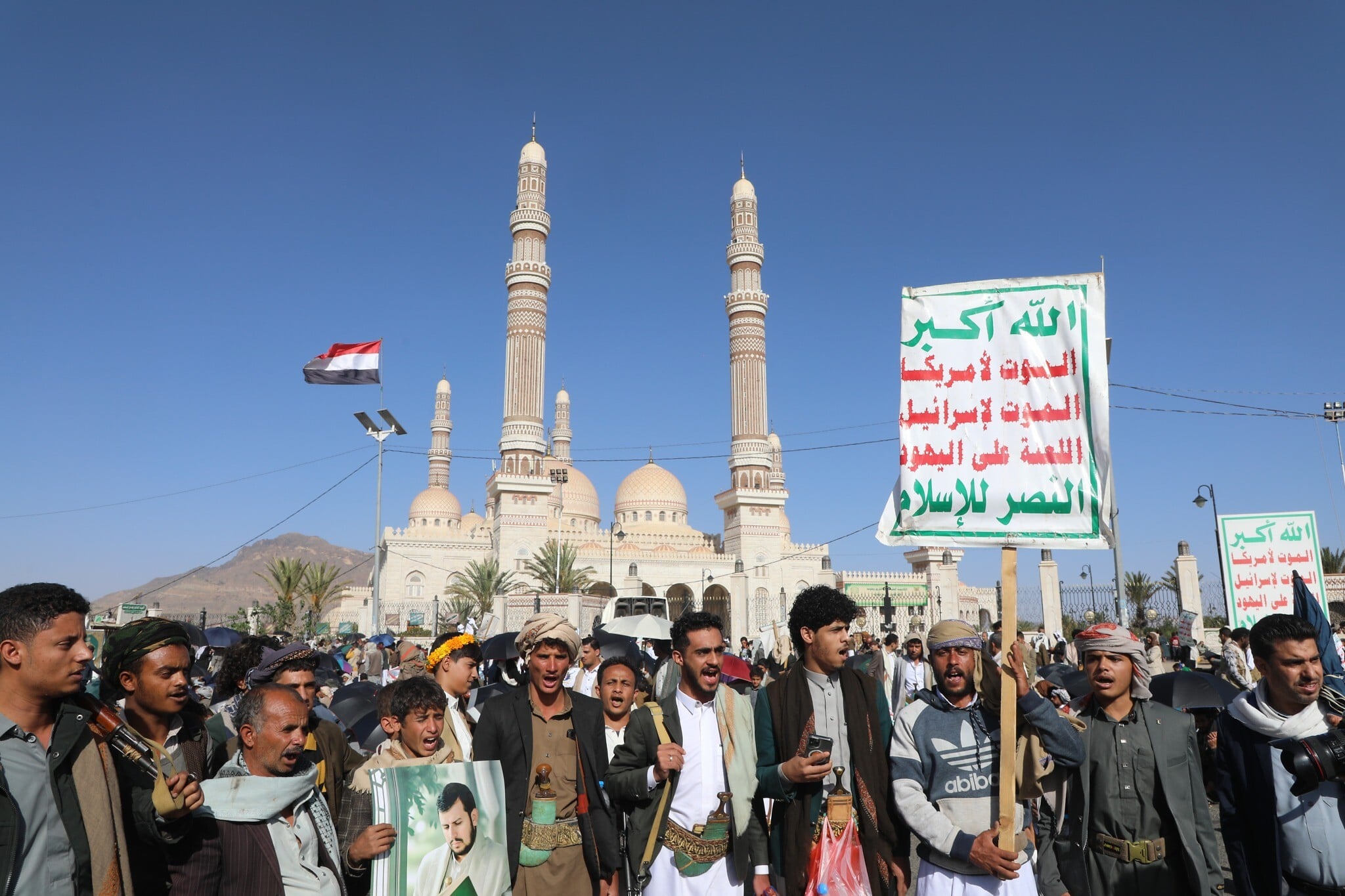
The rebels earlier acknowledged targeting Saudi airports and oil and military installations in recent days. On Sunday, they also claimed attacks on King Fahd Airport in the city of Damma, as well as oil and gas facilities in the kingdom’s east.
Separately, the rebels again warned “all airlines, experts, employees, workers, and travelers against using Saudi airports and airspace, as they are vulnerable to attack and have become a theater of operations for our forces.”
Brig. Gen. Yahya Saree, the group’s military spokesperson, wrote on X that airports in the holy cities of Mecca and Medina, however, were exempt. The kingdom earlier called Mecca a “red line.”
Amid the dramatic escalation in fighting, US President Donald Trump said on Saturday that he planned to speak with Saudi Crown Prince Mohammed bin Salman.
A US intervention could prompt the Houthis to halt shipping through the Bab el-Mandeb Strait at the southern end of the Red Sea off Yemen and further restrict the flow of oil out of the Persian Gulf. The rebels seized key areas along the strait last month and the Saudi-led coalition has been trying to seize them back.
The Houthis claimed to have repelled them, even as the Yemeni government last week announced a counteroffensive to retake Houthi territory.
Claims by the warring parties have been impossible to independently verify, with the situation moving fast on the ground and access for journalists difficult.






The Times of Israel Community.