Israel goes to the polls: A guide to the election and the battle to form a government
With neither bloc assured of a majority, here's how Israel's electoral system works, what could decide the election and how Netanyahu could remain in power -- even if he loses
Some 7.3 million Israelis are eligible to vote Tuesday to elect the 26th Knesset. With a majority of voters backing parties opposed to Prime Minister Benjamin Netnayhu’s rule, it is an election that could end his long hold on power — or leave him in office.
Final polls suggest a tight race between Netanyahu’s bloc of right-wing and ultra-Orthodox parties and the opposition, led by Gadi Eisenkot’s Yashar. While the opposition appears to have more potential paths to a parliamentary majority, deep divisions among its leaders, particularly over cooperation with Arab parties, could prevent them from translating an electoral advantage into a governing coalition.
After the devastating Hamas-led October 7, 2023, attack, successive multi-front wars, deepening political polarization and growing international isolation, Israelis are heading to the polls for an election with profound implications for the country’s future. Yet despite the upheaval of recent years, Netanyahu could once again emerge victorious even if his opponents collectively win more votes, as they did in 2022.
Under Israel’s parliamentary system, winning the most votes does not necessarily mean winning the right to form a government. Instead, the outcome will depend on which parties cross the electoral threshold, how the Knesset’s 120 seats are distributed and, ultimately, whether rival leaders can reach the agreements needed to form a government.
With another political deadlock, a minority government or even an unlikely unity government all possible, the election could be just the beginning of yet another prolonged struggle over who governs Israel.
Here’s what to know about how the election works, what happens after the votes are counted and the possible political scenarios that could unfold in the days and weeks ahead.
Israel’s electoral system
Similar to the United Kingdom, Canada and Germany, Israel is a parliamentary democracy, meaning voters elect a legislature rather than directly choosing their prime minister. The government draws its authority from parliament and must retain its confidence to remain in power.
Israel uses a proportional representation system, widely employed across Europe, Latin America and elsewhere, including in countries such as Germany, the Netherlands, Sweden, Brazil and South Africa. Under this system, parliamentary seats are distributed roughly in proportion to each party’s share of the vote. In Israel, voters select a party list rather than an individual candidate, and the 120 seats in the Knesset are allocated accordingly.

While proportional representation is common internationally, Israel’s particular electoral system is unusual in several respects. Unlike most other democracies, Israel has no geographic electoral districts. The entire country acts as a single constituency, meaning voters in Tel Aviv, Jerusalem and Haifa all choose from the same party lists, rather than electing individual lawmakers to represent their local areas.
Other parliamentary democracies, such as Germany and New Zealand, combine proportional representation with geographic constituencies, allowing voters to elect local representatives alongside political parties. Many other countries using proportional representation divide their territory into multiple electoral districts, each electing several representatives.
To enter the Knesset, parties must simply receive at least 3.25% of valid votes, equivalent to roughly four seats. Parties that fail to cross this threshold receive no representation, and their votes are excluded from the distribution of seats among the qualifying parties.
The number of votes required to win a seat depends on turnout and is calculated by dividing the total number of valid votes cast for parties that cross the electoral threshold by the Knesset’s 120 seats. In the 2022 election, this amounted to approximately 36,000 votes per seat, although the precise allocation also depends on surplus-vote agreements between parties and the method used to distribute remaining seats.
The system makes it comparatively easy for smaller parties representing distinct political, religious or ethnic constituencies to win seats, contributing to one of the most fragmented parliaments in the developed world.
Election day
According to the Central Elections Committee, over 12,000 polling stations and some 18,000 ballot boxes have been prepared for Tuesday’s vote, with approximately 100,000 workers overseeing the process.
Most polling stations open at 7 a.m. and close at 10 p.m. Israelis must vote at their assigned polling station, although special arrangements exist for soldiers, hospital patients, prisoners, and certain other groups.
Voting is conducted using paper ballots. Behind a privacy shield, voters select from piles of paper slips, each bearing a party’s name and identifying code of up to four Hebrew letters, place their chosen slip inside an envelope and deposit it in a ballot box. For example, Gadi Eisenkot’s Yashar party uses the letters Daled-Resh-Chaf (דרך) and Prime Minister Benjamin Netanyahu’s Likud uses Mem-Het-Lamed (מחל).
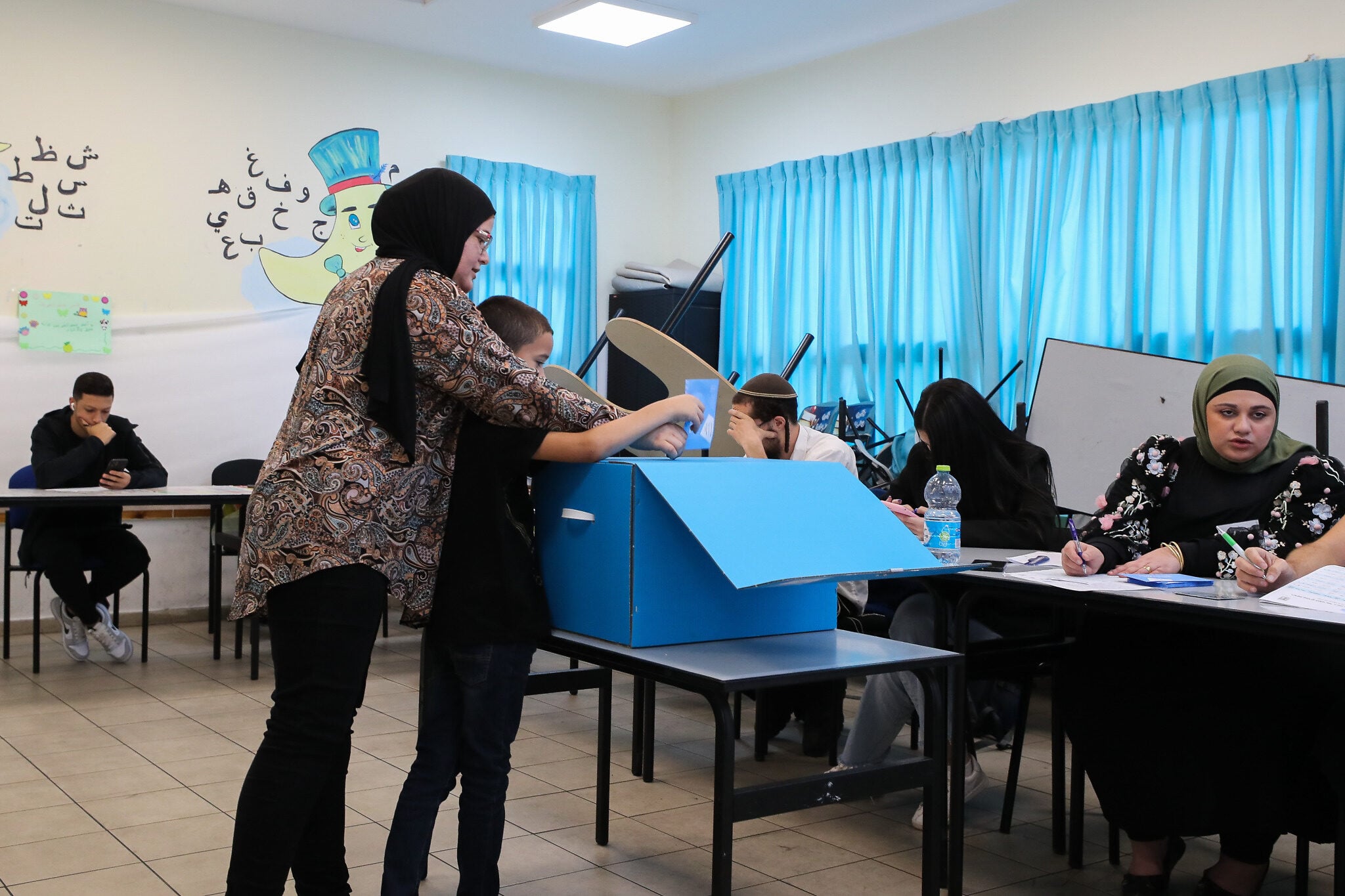
When polling stations close at 10 p.m., television networks will publish their first exit polls, offering an initial indication of the results. However, the official count will take longer, particularly if the contest is close.
Votes cast at regular polling stations are counted locally before being taken to the Central Election Committee, followed by special ballots, including those cast by soldiers and voters using double envelopes to maintain their anonymity. These could prove decisive if the competing blocs are separated by only a handful of seats.
The official results are scheduled to be published on November 4, with parties able to appeal until November 18.
Israeli citizens aged 18 and over are eligible to vote, with registration handled automatically through the population registry.
According to the Central Bureau of Statistics (CBS), 6.5 million of Israel’s 7.3 million eligible voters reside in Israel, with another 810,000 living abroad. However, Israel does not generally allow absentee voting, meaning most Israelis living abroad must register to vote and then return to the country to cast their ballots.
An exception is made for certain citizens serving overseas in official capacities, including diplomats, representatives of government ministries, the military and police, and their families. Some 4,218 eligible Israelis voted abroad on October 16.
What happens after the election?
Once the results are determined, President Isaac Herzog will consult the leaders of the elected parties before tasking the lawmaker he believes has the best chance of forming a government, who does not necessarily need to be the leader of the largest party or bloc.
Because Israelis vote for parties rather than directly electing a prime minister, neither the party winning the most seats nor the bloc receiving the most votes is guaranteed to form the government. What matters is which bloc can assemble sufficient parliamentary support, giving smaller parties disproportionate influence, particularly when their backing is needed to secure a majority of 61 lawmakers.
That candidate will have 28 days to form a coalition, with a possible 14-day extension. If those efforts fail, a second party leader may be given 28 days (without an extension) to try, and if that attempt falls short, a majority of 61 MKs can request that the president assign the task to a particular lawmaker within a further 21-day period.

A new government takes office only after winning a confidence vote in the Knesset. Although a coalition generally needs the support of at least 61 lawmakers, the law does not require an absolute majority to approve a new government, allowing a minority government to take office if more MKs vote in favor than against.
The process can take weeks or months, meaning that even after Tuesday’s votes are counted, the identity of Israel’s next prime minister and the composition of the next government may remain uncertain.
What are the possible outcomes?
1. A clear majority
A decisive majority for either political bloc appears unlikely based on most pre-election polling, but a potential surge in support for Eisenkot’s bloc appears more plausible than a decisive Netanyahu victory.
With the exception of the pro-Netanyahu Channel 14, which has projected a majority for the incumbent government, the final polls published by Israel’s major television networks showed the premier’s bloc winning just 50-51 seats, compared with 52–56 for the four Jewish-led opposition parties. Crucially, that figure excludes Ra’am and the Joint List, Arab-led parties that are projected to win another 14–16 seats combined, giving the parties opposed to Netanyahu a clear parliamentary majority.
The central question, therefore, is whether Eisenkot and his prospective coalition partners — Naftali Bennett’s B’Yachad, Avigdor Liberman’s Yisrael Beytenu and Yair Golan’s Democrats — would be willing to rely on Arab parties to form a government, something several, particularly Liberman, have ruled out.
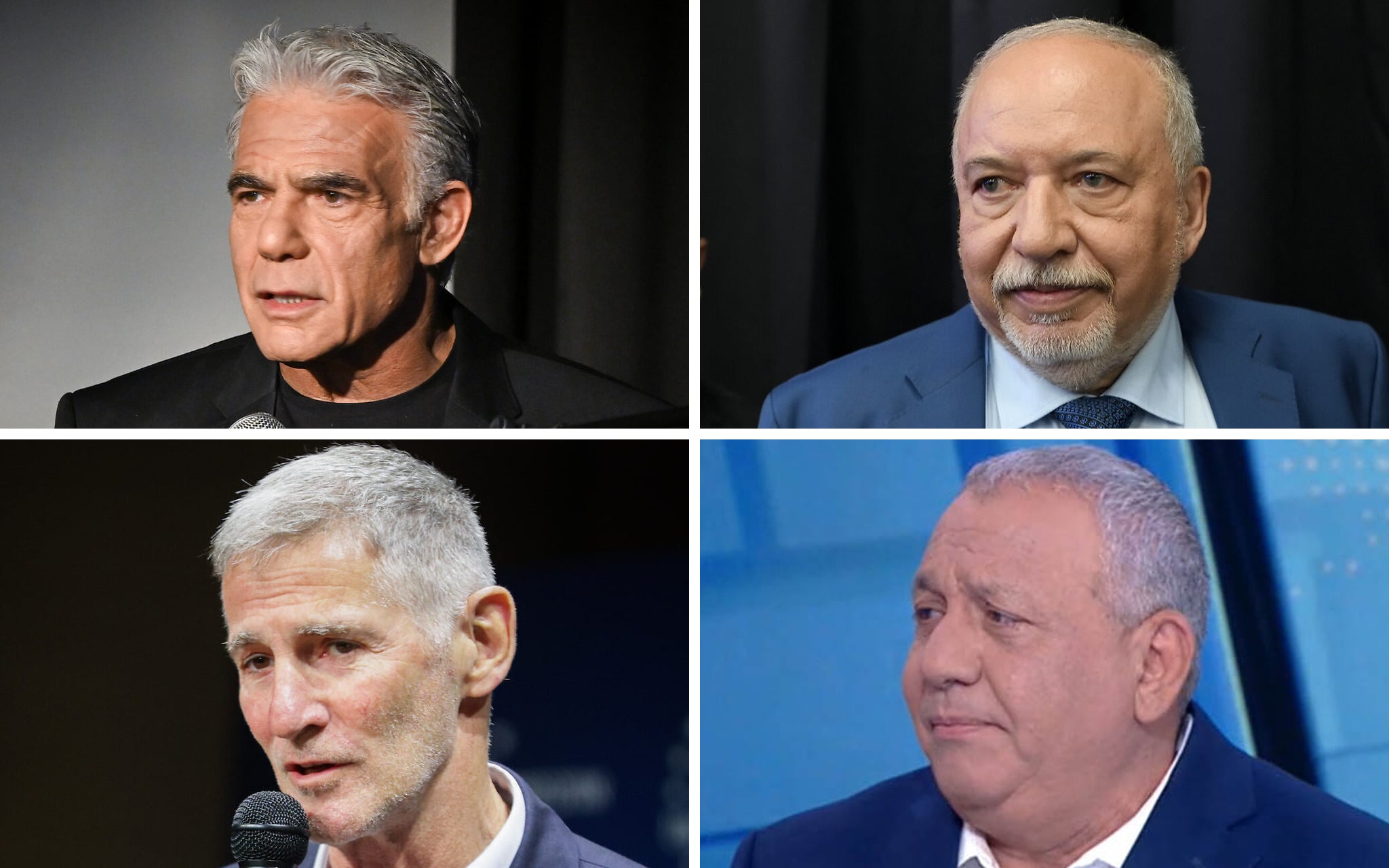
If the four Zionist opposition parties fail to secure an outright majority, which no polls have projected them doing, their leaders will face difficult choices over whether to cooperate with Arab parties or admit defeat. Any agreement would likely require leaders to abandon campaign commitments.
Ra’am, which participated in the Bennett-Lapid government, could prove particularly important, although even its support may not be enough to give the opposition a parliamentary majority under some polling scenarios.
All that being said, Eisenkot has several potential paths to forming a government, while Netanyahu is significantly restricted to his existing far-right and ultra-Orthodox allies.
Several factors could further shift the parliamentary balance.
Arab voter turnout could prove particularly consequential. Arab citizens comprise roughly 21% of Israel’s population, and higher turnout could strengthen Ra’am and the Joint List, expanding the pool of lawmakers potentially willing to support an alternative government, even from outside the coalition. It would also increase the total number of valid votes cast, raising the number of votes needed to cross the 3.25% electoral threshold and potentially pushing smaller right-wing parties below it, further weakening Netanyahu’s prospects of assembling a majority.
Netanyahu and his allies appear to be taking the threat seriously. Likud has made opposition to Arab participation in government a central campaign theme and announced plans to deploy 2,000 “volunteers” to Arab polling stations over unsubstantiated fraud allegations, drawing accusations of racist incitement and voter intimidation.

Smaller parties crossing the 3.25% electoral threshold could also prove decisive. Ofer Winter’s People of Israel, Yoaz Hendel’s Reservists and especially Moti Leitner’s Charedi Public have all struggled to cross it in recent surveys. Their failure would leave potentially hundreds of thousands of votes unrepresented, benefiting parties that do qualify for Knesset seats.
In the 2022 election, Netanyahu’s bloc won a 64-seat majority despite receiving fewer votes than parties opposed to him, largely because anti-Netanyahu parties Meretz and Balad failed to cross the electoral threshold, leaving nearly 289,000 votes — equivalent to more than seven seats — wasted.
This time, the risk could fall more heavily on Netanyahu’s bloc. Winter has pledged to join only a Netanyahu-led government, while Leitner could draw ultra-Orthodox votes away from Netanyahu’s Shas and United Torah Judaism allies. Both have resisted pressure from Likud and its partners to withdraw from the race.
Conversely, Winter crossing the threshold could unexpectedly strengthen Netanyahu’s bloc, while Hendel, who has declined to align with either camp, could emerge as a kingmaker if his party enters the Knesset.
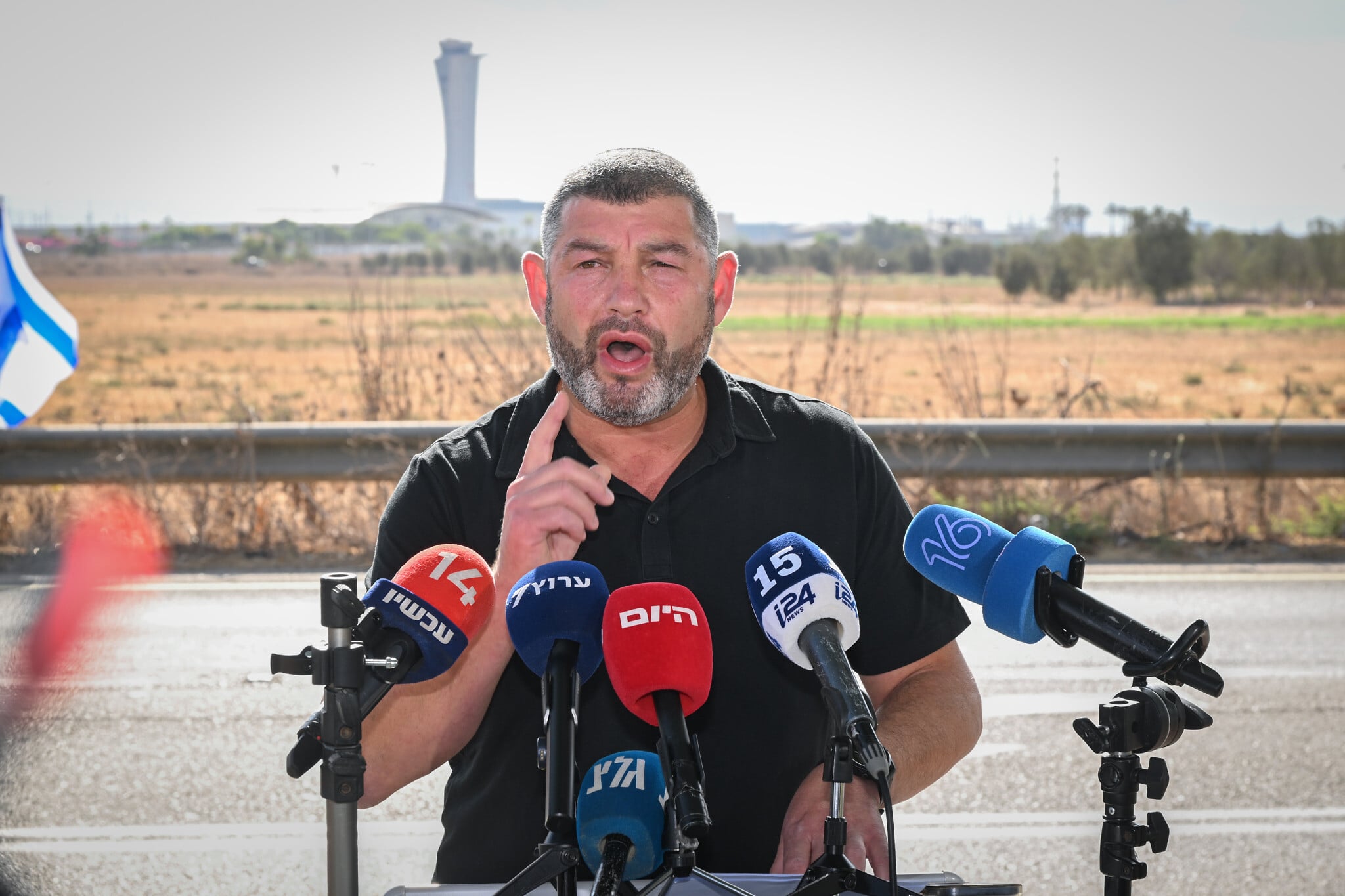
Finally, roughly 70,000 Israelis are reportedly returning from abroad to vote, including through organized initiatives, which could be significant. Although their political preferences remain uncertain, the perception that many support opposition parties prompted Likud to petition the Central Elections Committee in September against Fly & Vote, a nonpartisan initiative helping Israelis travel home for the election, which was rejected.
Together, these factors could shift the parliamentary balance further against Netanyahu, even if they do not necessarily guarantee Eisenkot the support needed to establish a government.
However, even a clear opposition majority would not ensure a stable coalition. Many of the parties seeking to replace Netanyahu participated in the ideologically diverse government formed by Bennett and Yair Lapid in 2021, which collapsed after just over a year following defections from Bennett’s right-wing Yamina party.
Similar concerns surround Eisenkot’s Yashar party, whose slate is heavily populated by religious Zionist and right-wing candidates, and mainly political unknowns, raising questions about whether all its lawmakers would remain loyal to a coalition dependent on left-wing and possibly Arab parties.
If Eisenkot and his allies fail to secure a clear majority, Netanyahu is the clear beneficiary in any of the alternative scenarios.
2. A minority government
Another possibility is that Eisenkot’s bloc falls short of a 61-seat majority, even with Ra’am’s support, but still holds significantly more seats than Netanyahu’s bloc, potentially allowing it to form a minority government.
Under Israeli law, a government does not necessarily need the support of 61 lawmakers to take office, provided it wins a Knesset confidence vote. Eisenkot could therefore seek to establish a minority government with outside support from the Arab-majority Joint List, which has said it would back an alternative government without formally joining the coalition.
There is precedent for such an arrangement. After Shas withdrew from his coalition in 1993, Prime Minister Yitzhak Rabin governed for more than two years with just 56 coalition lawmakers, relying on outside support from Arab parties. His successor, Shimon Peres, also headed a minority government with Arab-party support in 1995-1996.

Such an arrangement would nevertheless face significant political obstacles, including Liberman’s repeated opposition to forming a minority government dependent on Arab parties.
Even if an agreement were reached, the ideological divisions among Eisenkot’s prospective partners and the government’s dependence on outside parliamentary support could make its long-term survival difficult and vulnerable to defection to the Netanyahu bloc.
As a result, while Netanyahu lacks a clear path to forming a government, an Eisenkot-led minority government does not necessarily spell his defeat, at least not for long.
3. Repeat elections
If successive attempts by party heads to form a government fail, the Knesset would ultimately be dissolved and another election called. This would benefit Netanyahu, who would remain in office as caretaker prime minister, potentially extending his tenure and in practice giving him more time to assemble a coalition, despite failing to secure a parliamentary majority.
Such a scenario would recall the political crisis that began in 2019, when repeated failures to establish a stable government led to four elections within two years. A fifth election followed in 2022 after the collapse of the Bennett-Lapid government.
4. A unity government
Herzog has indicated his desire to avoid another prolonged period of political paralysis, raising the possibility that he could encourage Netanyahu and Eisenkot to form a unity government if neither side can form a government independently.
Otzma Yehudit leader and far-right National Security Minister Itamar Ben Gvir has suggested that Netanyahu is seeking to replace his far-right allies with Eisenkot, while Winter’s People of Israel party has also floated the prospect of a broader right-wing government that would not depend on ultra-Orthodox parties.
Eisenkot, however, has repeatedly ruled out serving in a government with Netanyahu, including under a rotation agreement. Having built his campaign around presenting himself as an honest, trustworthy alternative to Netanyahu, reversing that pledge could severely undermine his credibility and almost certainly erode his public support.
The Yashar leader would also have to be remarkably naive to overlook the precedent set by Gantz’s ill-fated decision to enter a rotation government with Netanyahu in 2020, which collapsed before Gantz could assume the premiership.

A renewed war with Iran either before or after elections, however, could dramatically alter that calculus, placing pressure on rival parties to form a national unity government in the name of national security — as Gantz and Eisenkot himself briefly did following the October 7, 2023 attacks.
Netanyahu has repeatedly warned of mounting security threats, while recent reports have emerged that he has been pressuring IDF Chief of Staff Eyal Zamir and US President Donald Trump to launch military action against Iran ahead of the election, which he has denied. Critics have accused him of seeking to exploit a potential conflict to postpone the vote and prolong his hold on power.