

 From the Liveblog of
Tuesday, September 15, 2026
From the Liveblog of
Tuesday, September 15, 2026
Report: Eisenkot fears defections from party if he forms minority government with Arab support
 Add ToI as a Preferred Source on Google
Ariela Karmel is a political correspondent at The Times of Israel. She previously reported for Calcalist and Haaretz. She holds an MA in Middle Eastern and African History from Tel Aviv University and a BA in Political Science from the University of British Columbia.
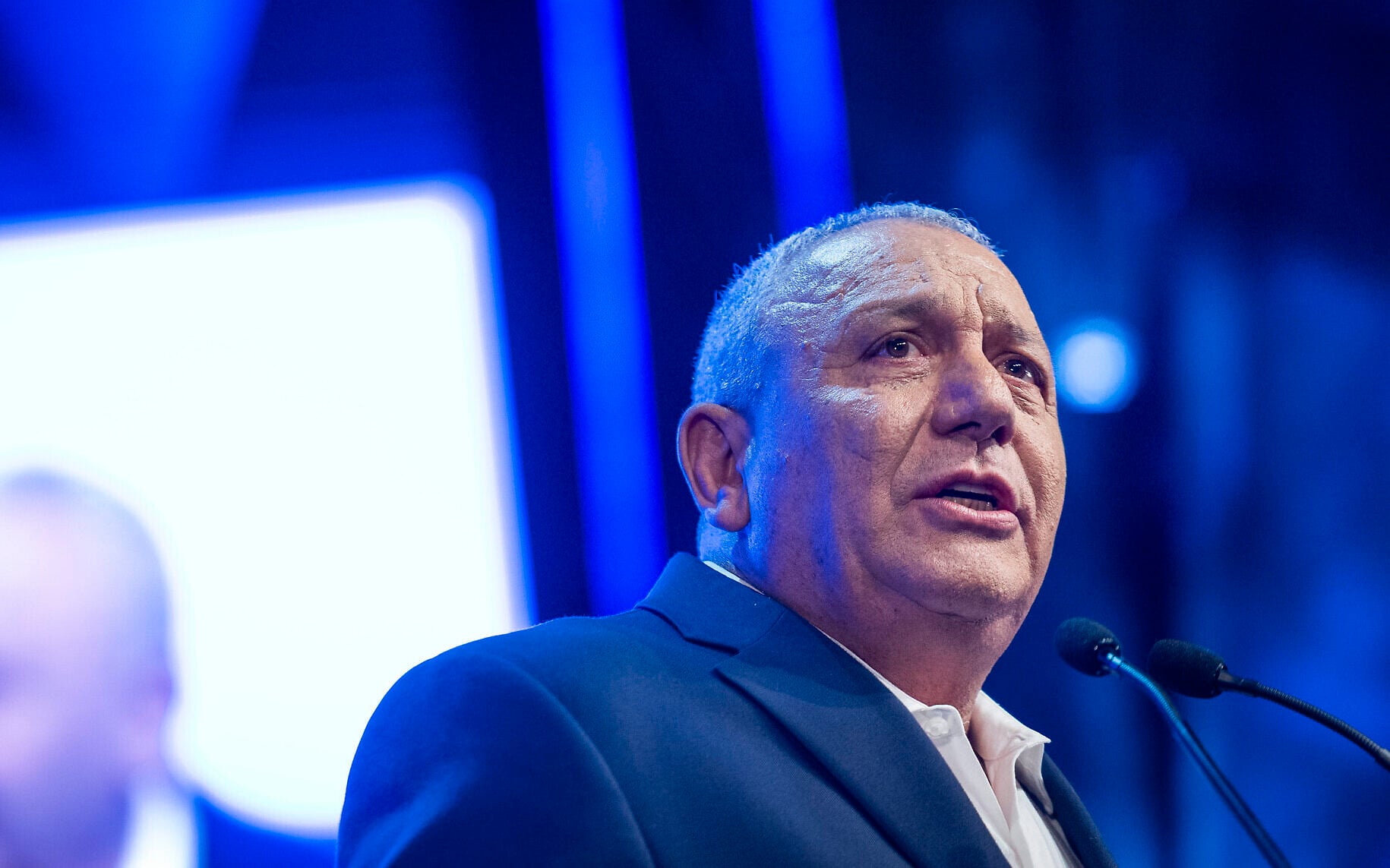
Yashar leader Gadi Eisenkot is reportedly concerned about potential defections from his party, particularly in the event that he forms a minority government with support from Arab parties that remain outside of the coalition, according to a Channel 12 report.
Eisenkot reportedly told members of his slate that they would be expected to abide by party discipline or resign from the Knesset if they felt unable to support such a government. Eisenkot reportedly told candidates that he expects them to follow his own example, having resigned from the Knesset when he disagreed with decisions made by his former party, Benny Gantz’s Blue and White, instead of remaining in the Knesset and rebelling against the faction.
The Yashar leader reportedly told his slate that if his prospective coalition – Naftali Bennett’s B’Yachad, Avigdor Liberman’s Yisrael Beytenu and Yair Golan’s Democrats – fails to win 61 seats, he hopes to establish a minority government. He plans to achieve that goal by persuading Arab parties to abstain from the vote over the new coalition, which would give his government a majority of the Knesset’s remaining members.
Eisenkot’s four-party bloc has been polling around 57 seats for months, more than the 52 seats the current coalition is slated to win, but still several short of the 61 needed for a majority. This means that the bloc would require support from another party, most likely Mansour Abbas’s Arab-majority Ra’am, in order to form a coalition.
Eisenkot has reportedly insisted that he plans to go down that road rather than form a unity government with members of the current coalition. But that appears to be in conflict with recent remarks by his own No. 2, Yoram Cohen, who said the party would be open to partnering with the far-right Religious Zionism and even with Prime Minister Benjamin Netanyahu’s Likud, provided Netanyahu does not lead the government.
Eisenkot has also left the door open to governing with the ultra-Orthodox Shas party if it accepts his demand for universal military service.
The prospect of defections may be particularly sensitive for Yashar given its right-leaning slate and large number of political newcomers whose positions, and willingness to adhere to party discipline, have never been tested in elected office.
Defections are ultimately what collapsed Naftali Bennett’s short-lived anti-Netanyahu government in 2022, as Idit Silman left his party for Likud.
Channel 12 reports that Yashar previously considered requiring all candidates to sign a written commitment that there “would be no Silman,” but ultimately abandoned the idea.









The Times of Israel Community.