Kuwaiti jailed for life in UK over attempted attack at Israeli embassy in 2025
Abdullah Albadri, 34, had a note saying he intended to be a martyr 'for the glory of God,' police said; he twice sought asylum in UK, was motivated to attack by Gaza war
A Kuwaiti man who tried to enter Israel’s embassy in London armed with two knives and carrying a martyrdom note was sentenced on Monday to life in prison with a minimum term of 20 years, after being convicted of preparing an act of terrorism.
Abdullah Albadri, 34, attempted to breach the embassy’s perimeter in west London in April 2025 before being stopped by armed police officers guarding the site. Prosecutors said Albadri wanted to attack the embassy in revenge for Israel’s actions in Gaza.
Evidence presented at trial showed he had researched the embassy’s location, carried two knives, and was in possession of a note indicating his intention to die as a martyr “for the glory of God,” police said.
Police video played for jurors showed Albadri telling officers upon his arrest, “I wanna make a crime inside there. Why are you stopping me?”
Officers added that in the days leading up to his arrest, he searched “several Arabic terms related to suicide and martyrdom.” He had earlier sought asylum in the UK. The trial jury was told Albadri was refused asylum after he twice entered the UK by crossing the Channel in small boats in August 2021 and April 2025, about two weeks before the attack.
A jury at London’s Old Bailey found him guilty in May of preparing an act of terrorism and possessing two bladed articles. His minimum 20-year sentence was adjusted to 18 years and 207 days to reflect the time he has served in prison on remand.
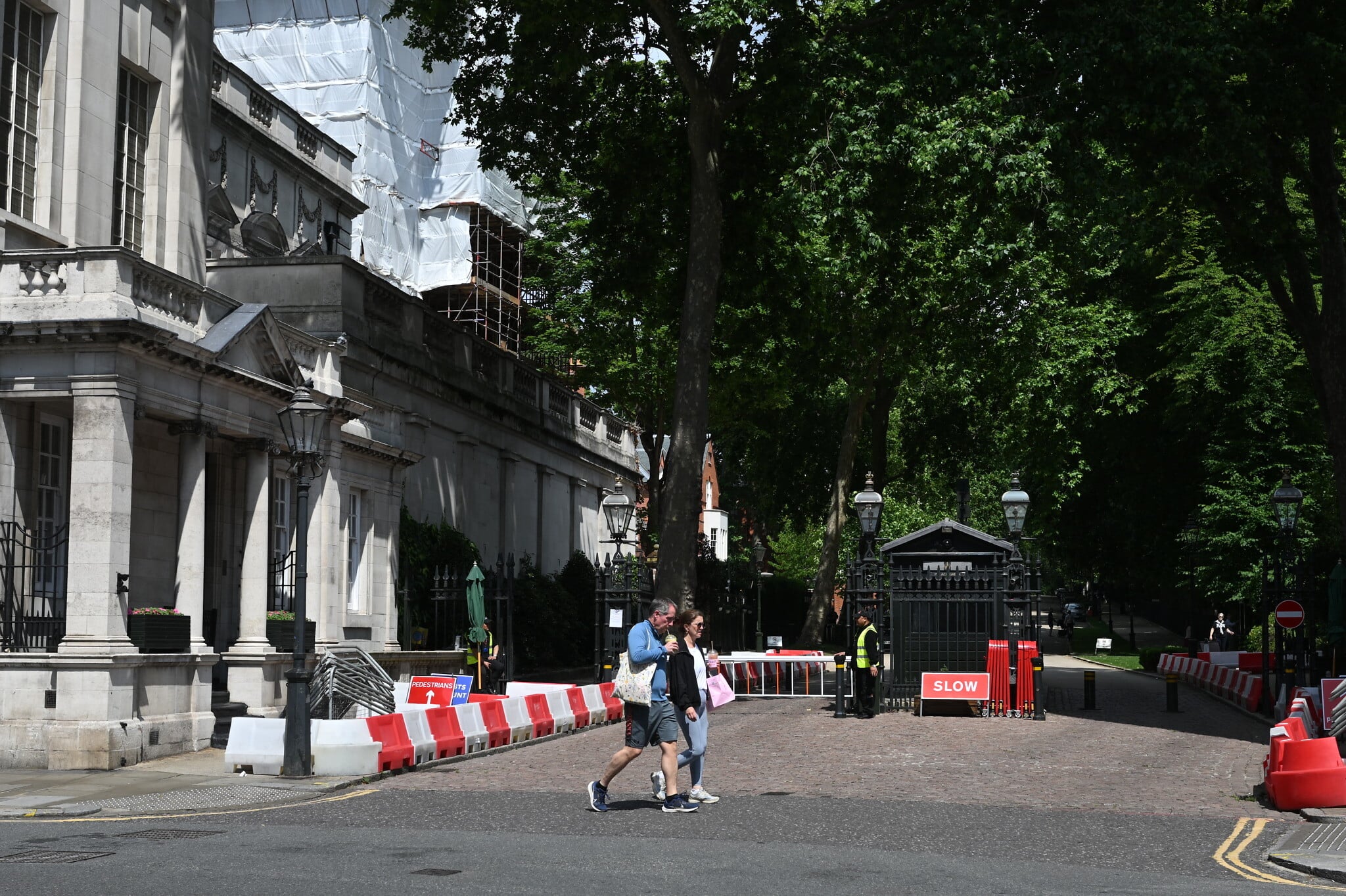
Albadri attempted the attack on April 28, 2025. He was stopped when officers from the Parliamentary and Diplomatic Protection Command became aware of a man attempting to gain unauthorized access to the embassy’s grounds in Kensington in west London, police said at the time.
He wore a Palestinian keffiyeh, and “managed to get very close to where staff members were,” an unnamed source told the UK’s Daily Mail newspaper after the incident.
The attempted breach was one of a string of anti-Israel or antisemitic attacks to take place in the UK in recent years. The previous August, pro-Palestinian activists staged a violent raid at a factory belonging to Elbit, the Israeli defense contractor.
Later in 2025, a man perpetrated a deadly terror attack at a Manchester synagogue on Yom Kippur. That December, two men were found guilty for plotting to kill hundreds in an Islamic State-inspired gun rampage against the Jewish community in England.
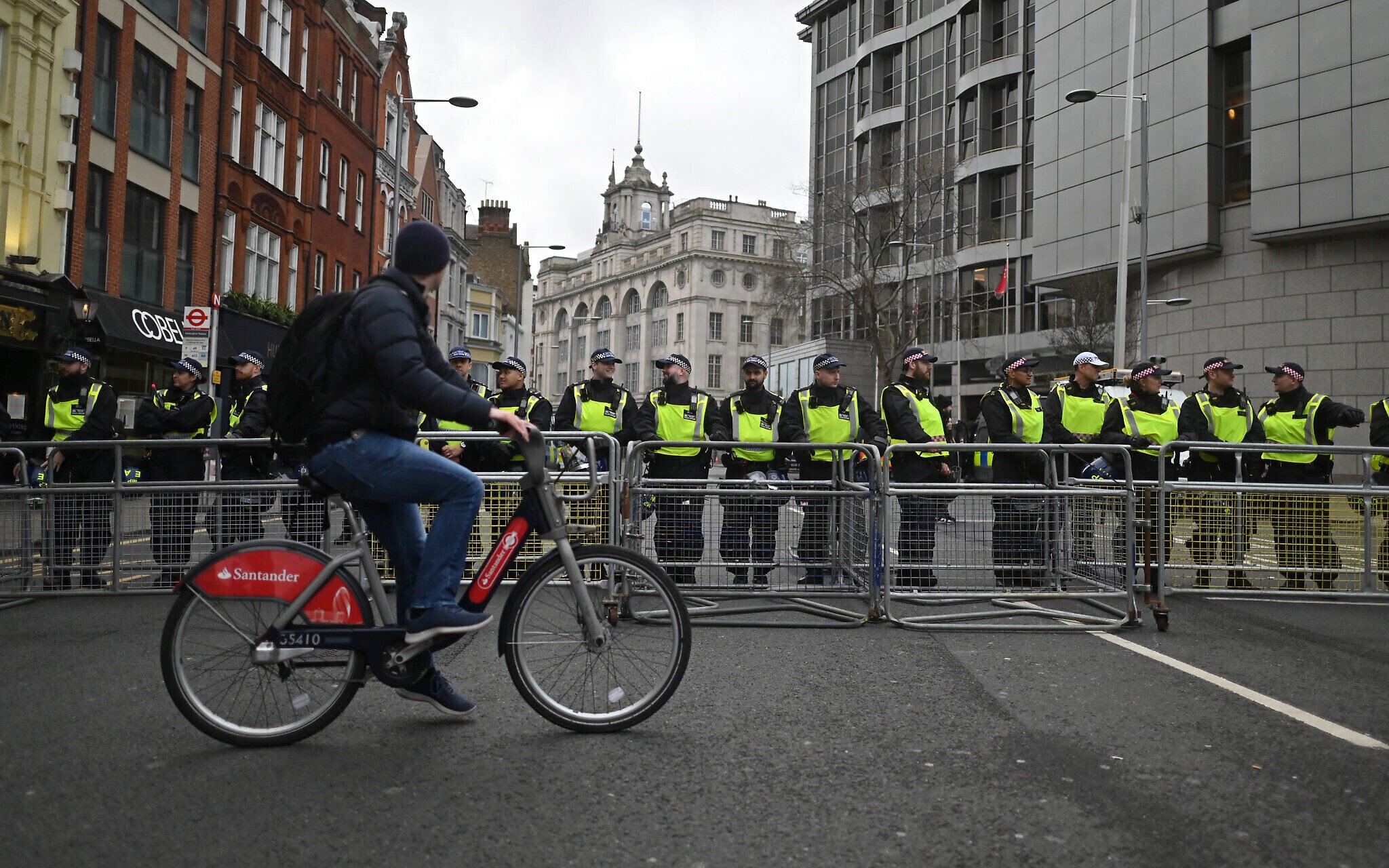
This year, two Jewish men were stabbed in London’s Golders Green neighborhood, where four ambulances belonging to a Jewish emergency service were torched in a separate attack.
The Israeli embassy in London has been subject to other suspected threats. In September, the UK’s Sunday Times newspaper reported that two apartments thought to be owned by Iran’s Supreme Leader Mojtaba Khamenei, and located close to the embassy, were put on the market.
The two apartments, acquired through various intermediaries in 2014 and 2016, are located on the sixth and seventh floors of a building on the same street as the embassy, Palace Green in Kensington, British media reported earlier this year.
At the time, the Daily Mail quoted a terrorism and security specialist saying that the location of the apartments meant that “Iran owns the view into the back of the Israeli embassy from less than 50 meters away.”
Nava Freiberg contributed to this report.