

Anger, defiance in the UK as October 7 anniversary colored by Manchester attack
After a terror attack at the Heaton Park Synagogue on Yom Kippur left two dead and four seriously injured, memorial events blame government inaction as they remember the fallen
 Add ToI as a Preferred Source on Google
Zev Stub is the Times of Israel's Diaspora Affairs correspondent.
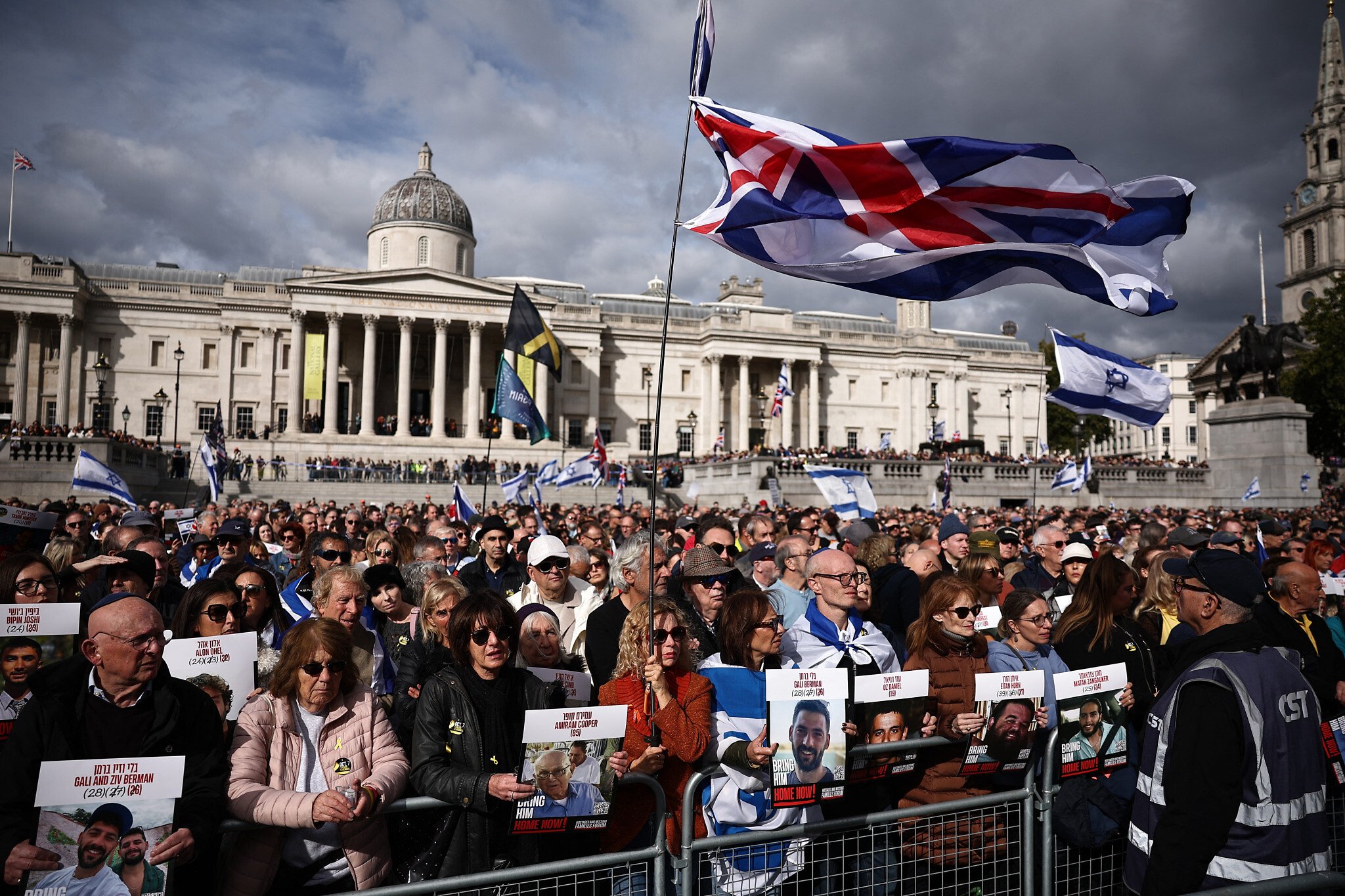
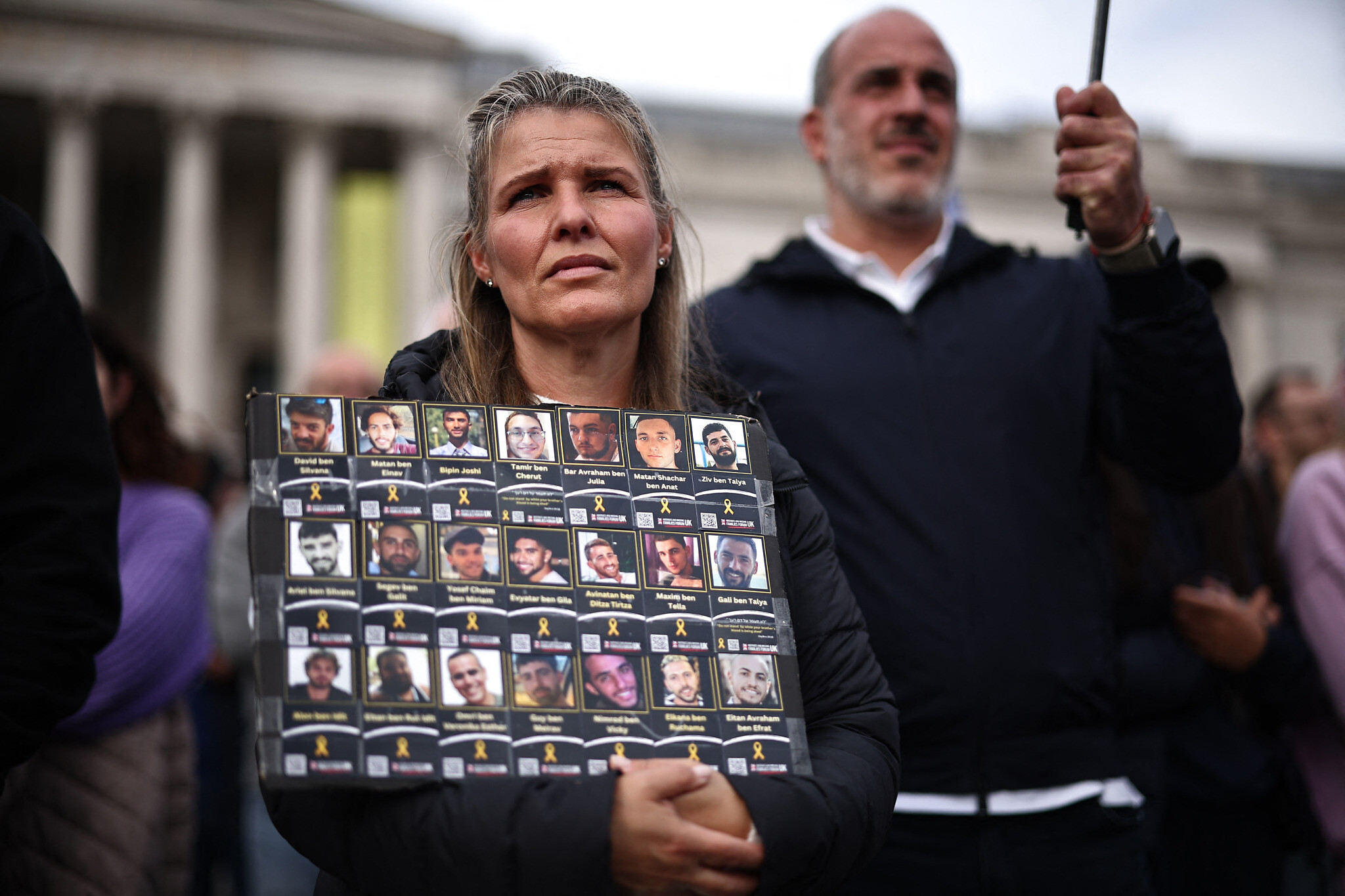
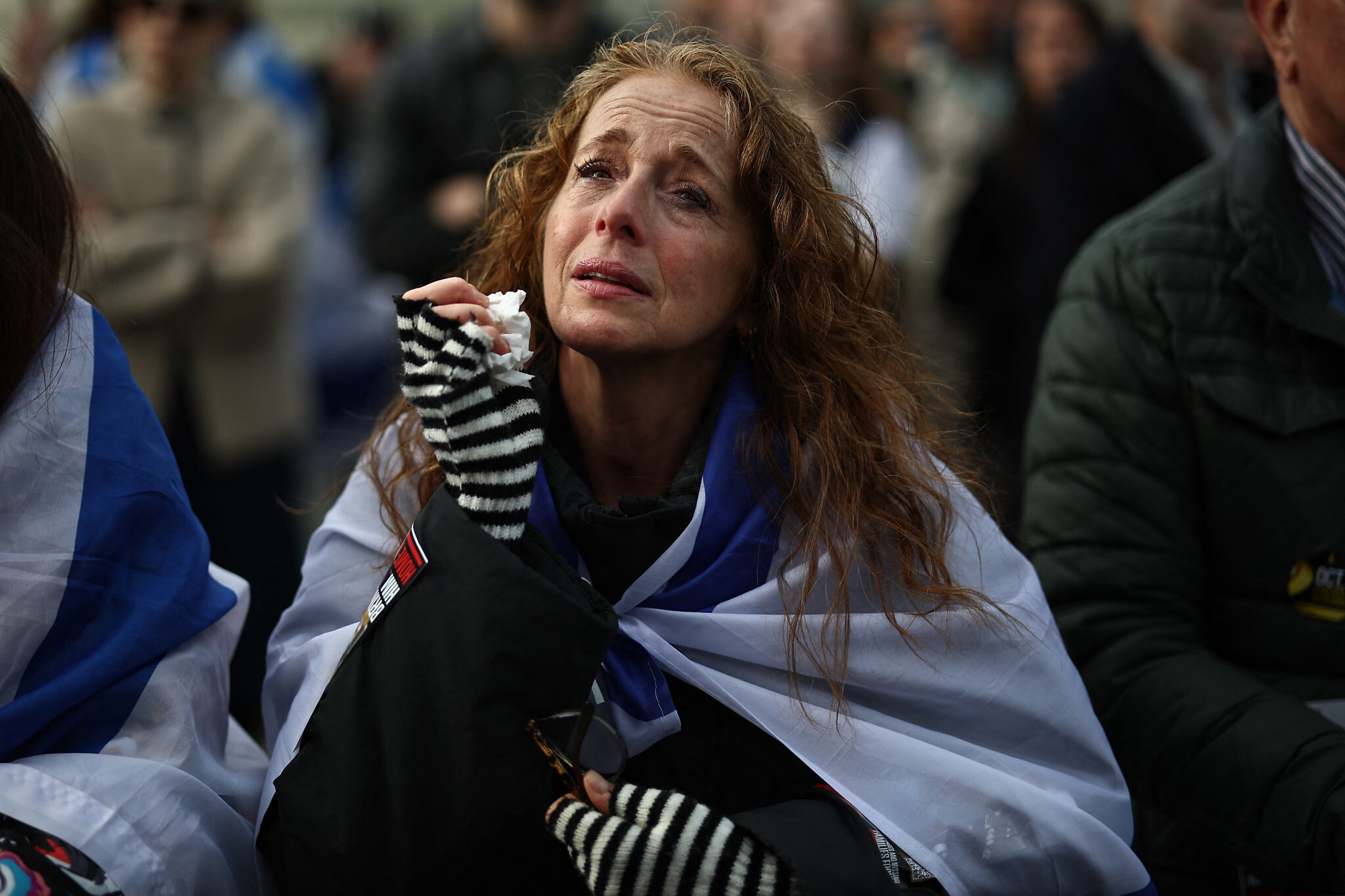
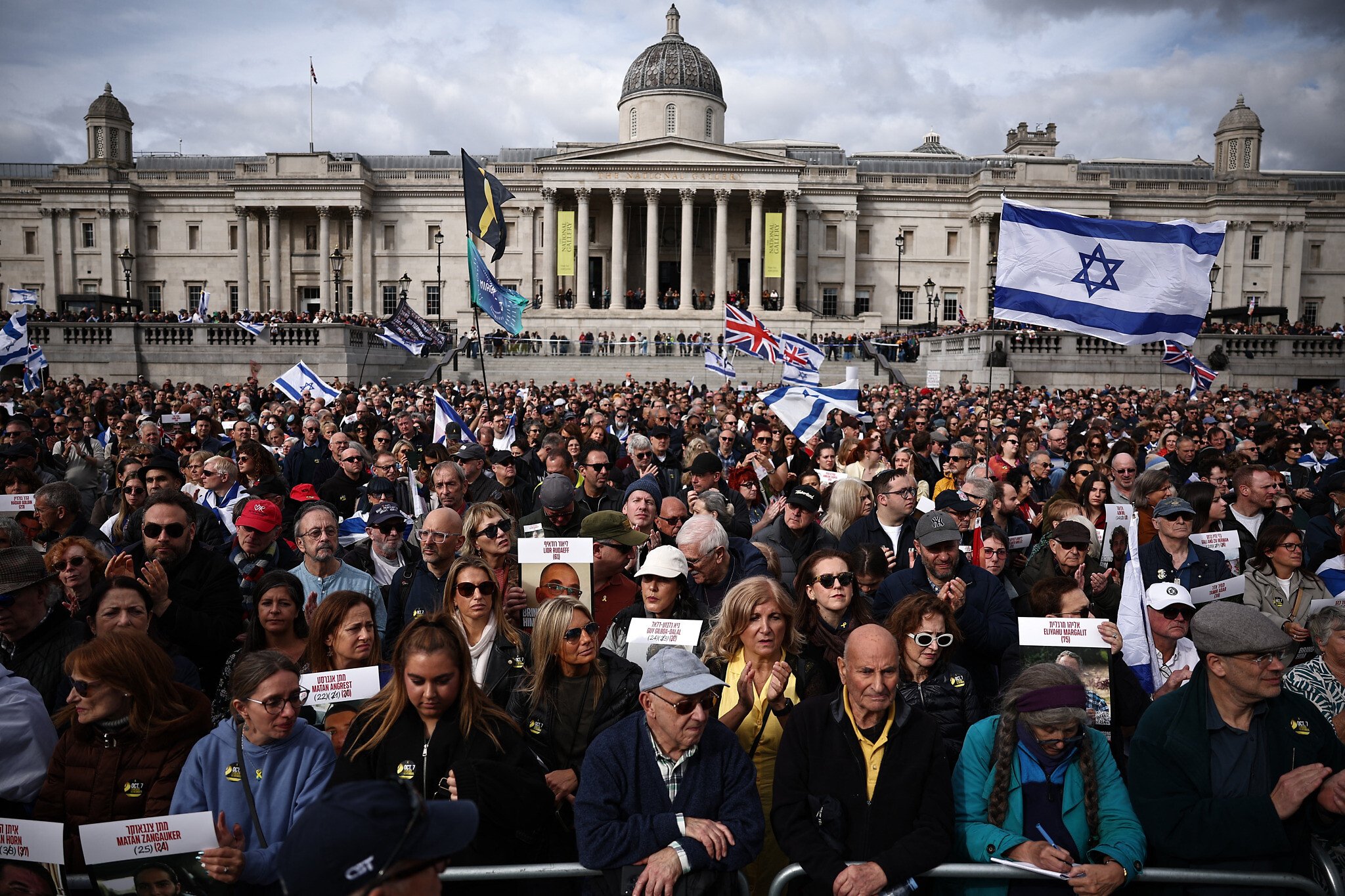
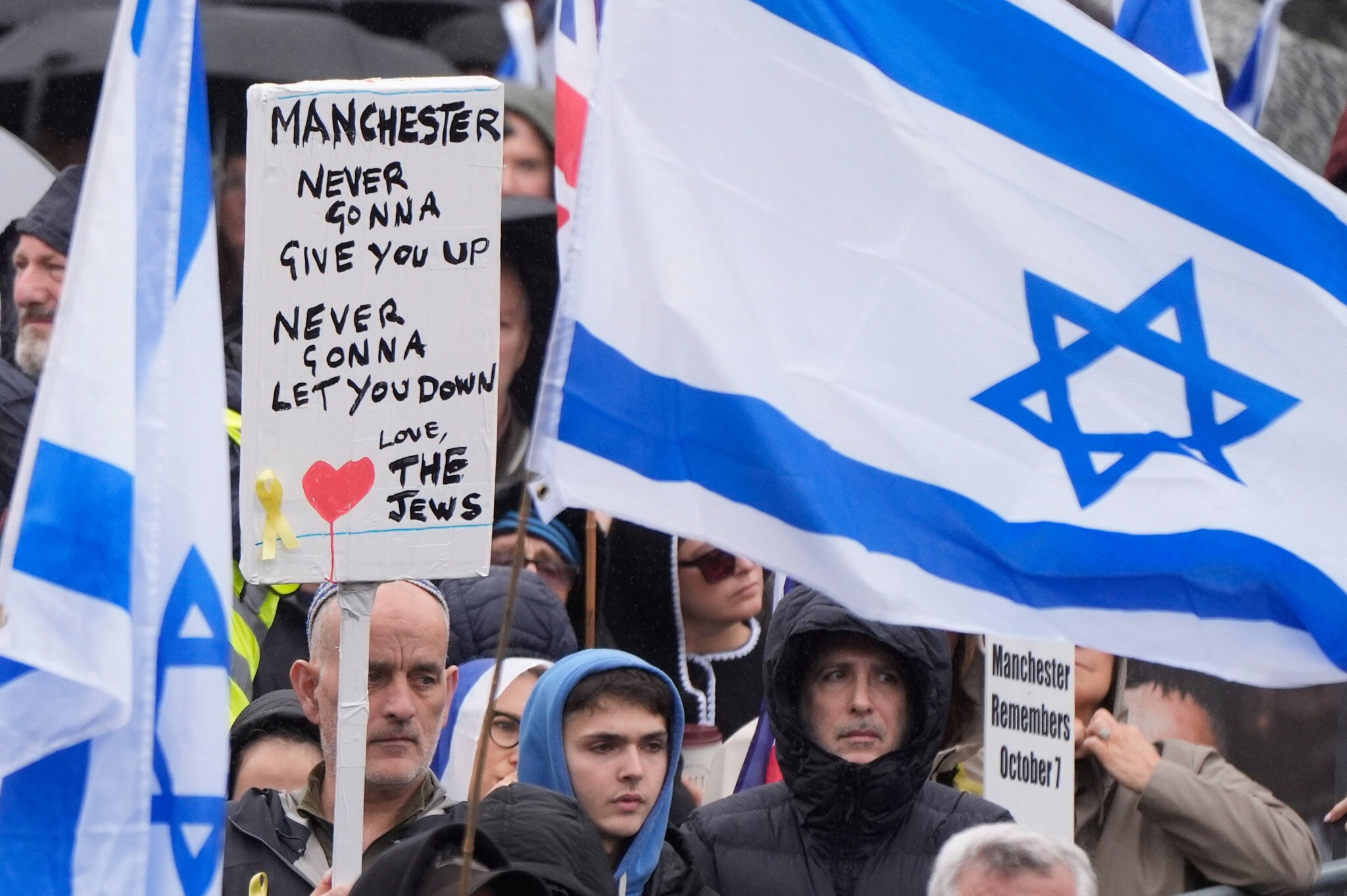
British Jews gathered on Sunday to mark two years since the October 7, 2023, Hamas massacres in southern Israel with anger, sadness, and defiance in ceremonies that were heightened by the shock of the deadly terror attack on a synagogue over the Yom Kippur holiday.
Participants lamented that the wave of antisemitism unleashed after the Hamas attack and subsequent war in Gaza had been left unchecked in the UK, where rabid anti-Israel and antisemitic protests have become regular events.
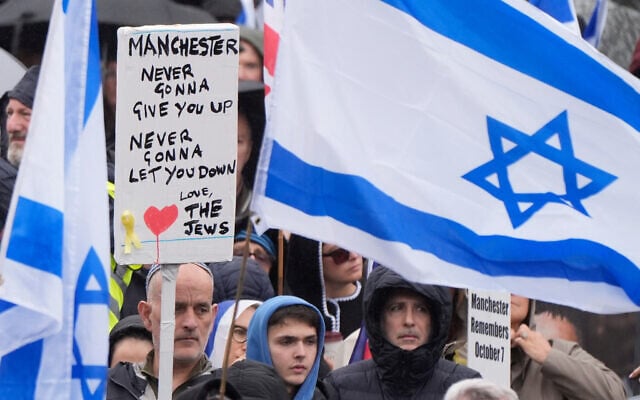
In Manchester, where a knifeman assaulted congregants on Thursday at the Heaton Park Synagogue in an attack that left two dead and four seriously injured, thousands gathered under the banner, “We are not Jews with trembling knees.”
In London, Keith Black, chairman of the Jewish Leadership Council, told a crowd of some 3,000 gathered at Trafalgar Square that “antisemitism in this country is out of control.”
“Our streets have been filled with protesters screaming Jew hatred, our students have faced relentless waves of abuse on campus,” Black said.
“A new concept called ‘ambient antisemitism’ has entered our vocabulary, a prevailing undercurrent across society, across a society that has turned against Israel, in consequence, against us as Jews,” he added.
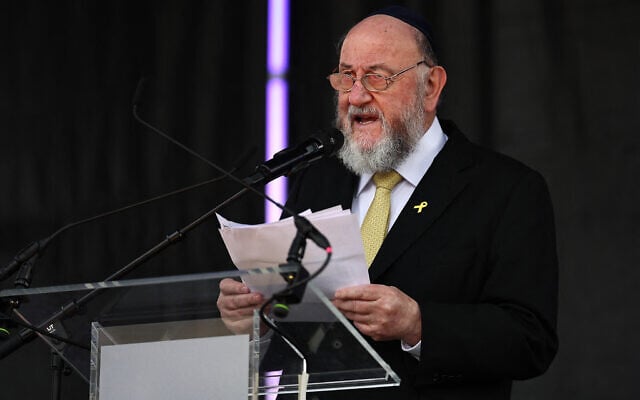
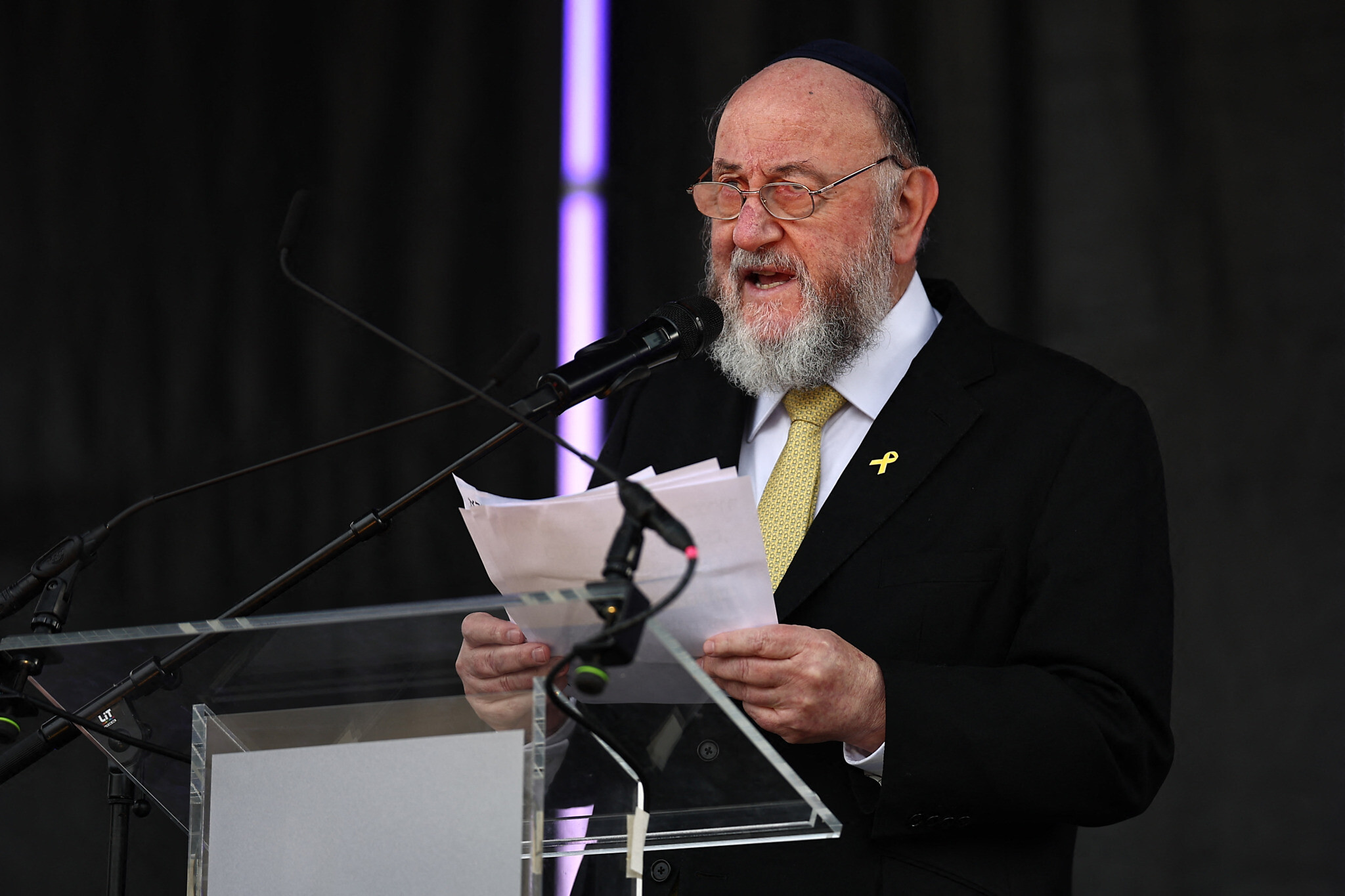
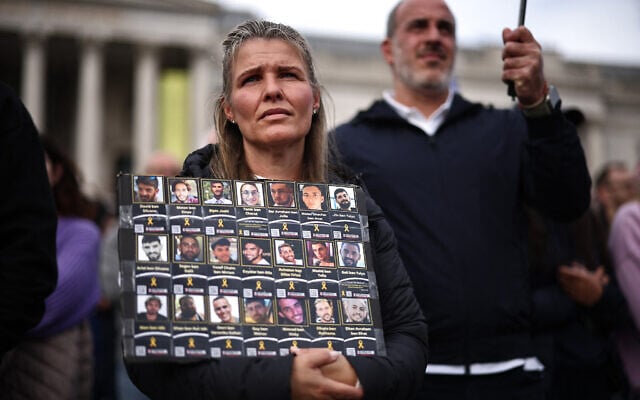
Chief Rabbi Ephraim Mirvis led prayers for the release of the remaining hostages and in memory of those killed in the attack. Candles were lit in memory of the different communities that were attacked on October 7, and the names of British citizens killed in the attack were read.
The rally came a day after nearly 500 people were arrested Saturday at a pro-Palestinian, anti-Israel protest, also held in London’s Trafalgar Square. In the aftermath of that event, the British government granted local police forces the power to restrict repeat protests in the same place, recognizing the cumulative impact of protests on a local community.
In a video message, British-Israeli Emily Damari, who was kidnapped by Hamas terrorists on October 7 and held hostage in Gaza for 471 days, urged the crowd “to use your voice” to secure the hostages’ release, adding: “We can never give up on them.”
Another survivor, Shaun Lemel, who had been at the Nova Festival, recalled the day “everything changed” within minutes when things went from “an epic music festival to the most horrific battlefield.”
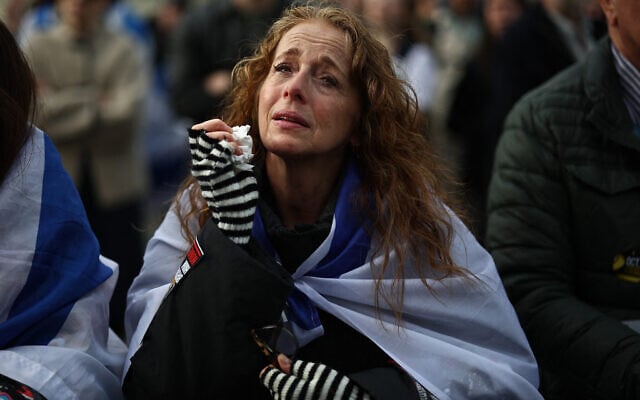
“At 6:18 a.m., I was dancing and having the time of my life. At 6:29 a.m., the music stopped,” Lemel said.
The images from that day are seared in our collective memories, said Phil Rosenberg, president of the Board of Deputies.
Defiance in Manchester
Meanwhile, in Manchester, more than a thousand people attended the ceremony outside the Manchester Cathedral on a chilly, rainy day, as bolstered security forces guarded a crowd still fearful after two members of their community were murdered days earlier.
After a six-minute rampage Thursday morning outside the synagogue, police shot dead the terrorist, a British man of Syrian descent who counterterrorism police said may have been inspired by extremist Islamist ideology. The attacker was on bail over an alleged rape, but had not been charged.
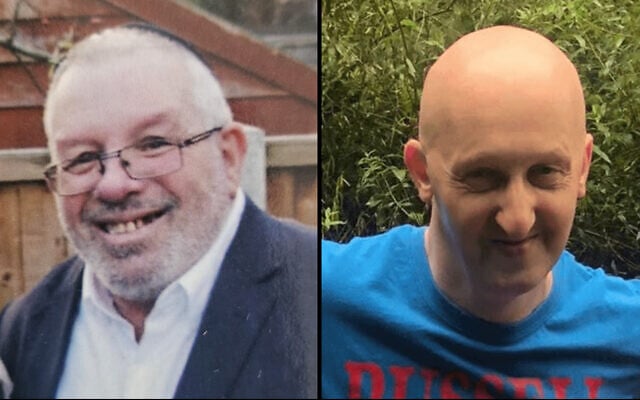
“Adrian and Melvin’s bravery will never be forgotten,” banners proclaimed, referring to the two victims of the attack, Adrian Daulby and Melvin Cravitz.
Rabbi Amir Elituv led prayers and a moment of silence for the victims of both the October 7 and the Heaton Park attack before blowing the shofar.
Marc Levy, chief executive of the Jewish Representative Council of Greater Manchester, offered condolences to the families of the murdered and injured, and thanked the security forces that helped prevent the attack from being even worse.
“Being Jewish in the UK over the last two years has been a very lonely place. We have been screaming about the abuse we were suffering in all sections of society, and we were largely ignored,” Levy said. “There are no words that will comfort their families, but I hope the fact that we are all here united will resonate and provide some comfort to them.”
Raphi Bloom, a prominent community member who attends Heaton Park Synagogue, blamed Prime Minister Keir Starmer for emboldening Hamas by recognizing Palestinian statehood last month.
“For two years, our community has faced unprecedented Jew hatred,” including assault, vandalism, and marches that made city centers effectively off-limits for Jews, Bloom said.
Never has Jewish life in the UK been as uncertain, and it is not an exaggeration to say that our government’s demonization of Israel and inaction and failure in tackling [antisemitism] has played a significant part in allowing this Jew hatred to flourish and to make many British Jews question in our country,” he said.
“When you fail to act on constant calls to globalize the intifada, the results are that the intifada came to our Manchester Jewish community with horrific consequences,” Bloom concluded.
Elsewhere in Manchester, the leader of the UK’s Conservative Party, Kemi Badenoch, said that pro-Palestinian marches in the country had become “carnivals of hatred directed at the Jewish homeland.”
The terror attack on Yom Kippur “was not just an attack on British Jews, it was an attack on all of us,” she told the annual Conservative Party conference.
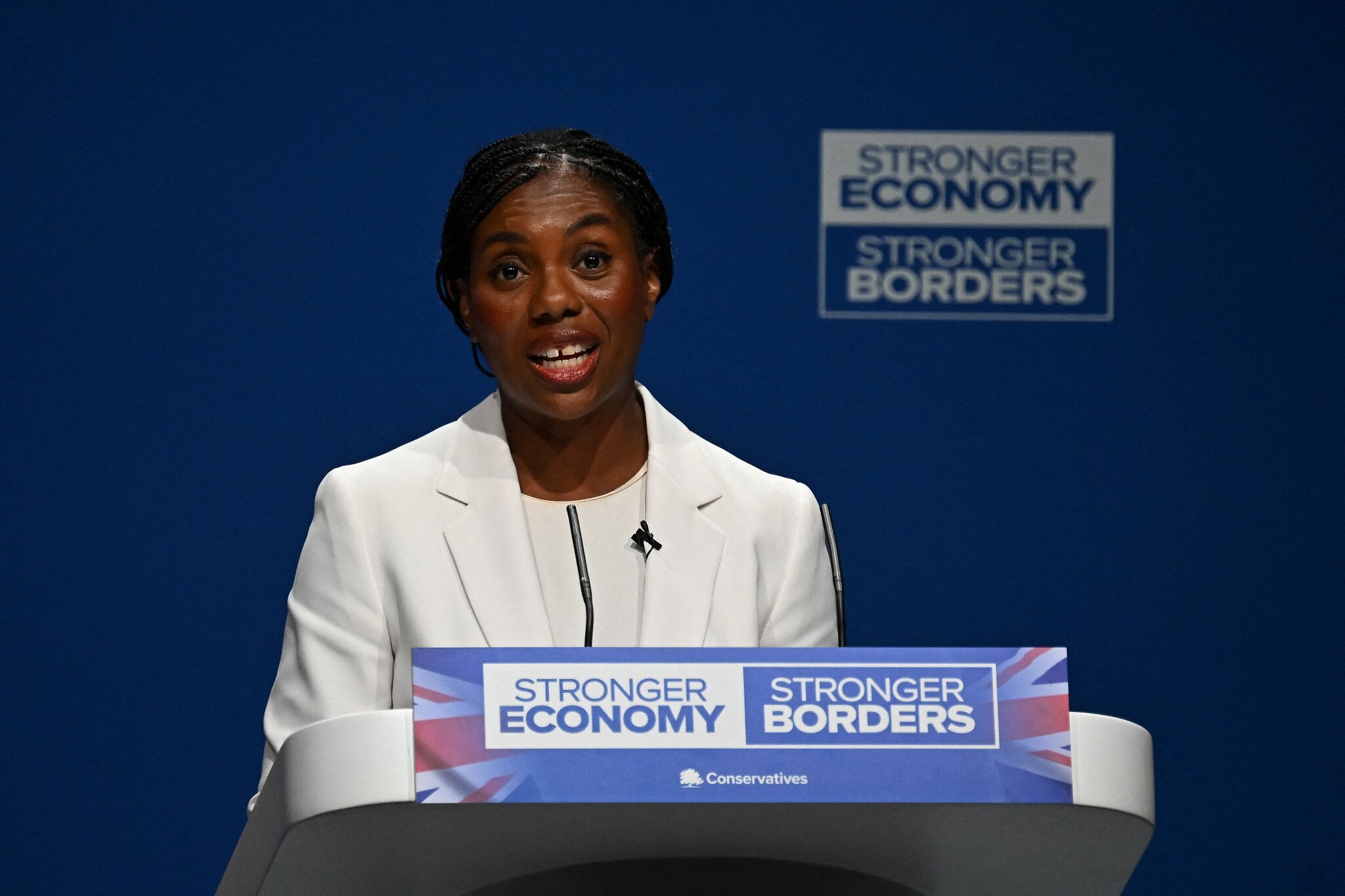
Badenoch suggested that in the spirit of the Day of Atonement, Britain should consider where it went wrong, and that one mistake was tolerating rhetoric at anti-Israel demonstrations that are most plausibly understood as calls for violence against Jews.
“You hear it in the asinine slogans; you hear it in ‘from the river to the sea,’ as if the homes and the lives of millions of Jewish people should be erased,” she said.
“You hear it in ‘globalize the intifada,’ which means nothing at all if it doesn’t mean targeting Jewish people for violence,” she continued to applause.
“We have tolerated this in our country for too long, and we have tolerated the radical Islamist ideology that seeks to threaten not only Jews, but all of us, of all faiths and none, who want to live in peace.”
“We must now draw a line and say that in Britain you can think what you like, and within the bounds of the law you can say what you like, but you have no right to turn our streets into the theaters of intimidation, and we will not let you do so anymore!” she asserted.
Trouble brewing for British Jews
The feelings expressed at the rally outside the Manchester Cathedral were highlighted by a study published ahead of the second anniversary of the October 7 massacre by the UK-based Institute for Jewish Policy Research (JPR) which, found that 82 percent of British Jews now consider antisemitism a “significant” problem and nearly half described it as “very big,” compared to just 11% a decade earlier.
The survey of 4,800 adult British Jews conducted in June and July 2025 found that nearly one-third of Jews experienced at least one antisemitic incident in 2024, and 35% rated their safety between 0–4 on a 10-point scale. Trust in UK institutions, political parties and media is poor, and 45% said they experience “ambient antisemitism” — hostile media coverage, online comments, and microaggressions — “frequently” or “regularly.”
Increases were noted in levels of Zionist and Jewish identity, but younger Jews are increasingly critical of Israel, and disagreements about Israel’s military actions in Gaza have exacerbated communal tensions, the report found.
Times of Israel staff contributed to this report.







The Times of Israel Community.