Netanyahu, Eisenkot spar over perception of Iran as an ‘immediate’ security threat
PM accuses rivals of 'minimizing' danger for political reasons after Eisenkot says no need for immediate military action; Bennett, Golan disagree over push for unity government
Prime Minister Benjamin Netanyahu on Monday accused his political opponents of “minimizing” security threats to Israel for political reasons, after his rival Gadi Eisenkot disputed that there was an immediate threat from Iran.
The caretaker prime minister also repeated his call for a unity government, claiming that Israel’s ability to counter security threats relies on it.
“Our ability to ensure the existence of the state against the great threats surrounding us depends on our unity,” Netanyahu said at the Likud party’s weekly faction meeting at the Knesset. “Whoever derides, whoever minimizes these threats — those surrounding us that are immediate, tough and severe — is doing so for political reasons.”
Netanyahu’s remarks came amid reports that he is pushing for renewed military action against Iran, which security officials reportedly oppose and which have prompted accusations that he is seeking conflict to delay the formation of a new government.
Contradicting him, Eisenkot told a faction meeting of his Yashar party that he did not see an immediate Iranian threat requiring military action before a new government is sworn in.
He argued that instead of pursuing more military action, Israel should focus on Iran’s stockpile of enriched uranium. “The gravest threat from Iran is the 440 kilograms of enriched uranium that have still not been destroyed or removed,” he said. “We need to focus on that.”
Eisenkot also addressed Netanyahu’s demand for a unity government, asserting that Yashar will work toward “genuine unity, not a political arrangement.”
He reiterated his red lines, saying Yashar would not compromise on establishing a state commission of inquiry into the October 7, 2023, attack, or on its demand for universal military conscription.
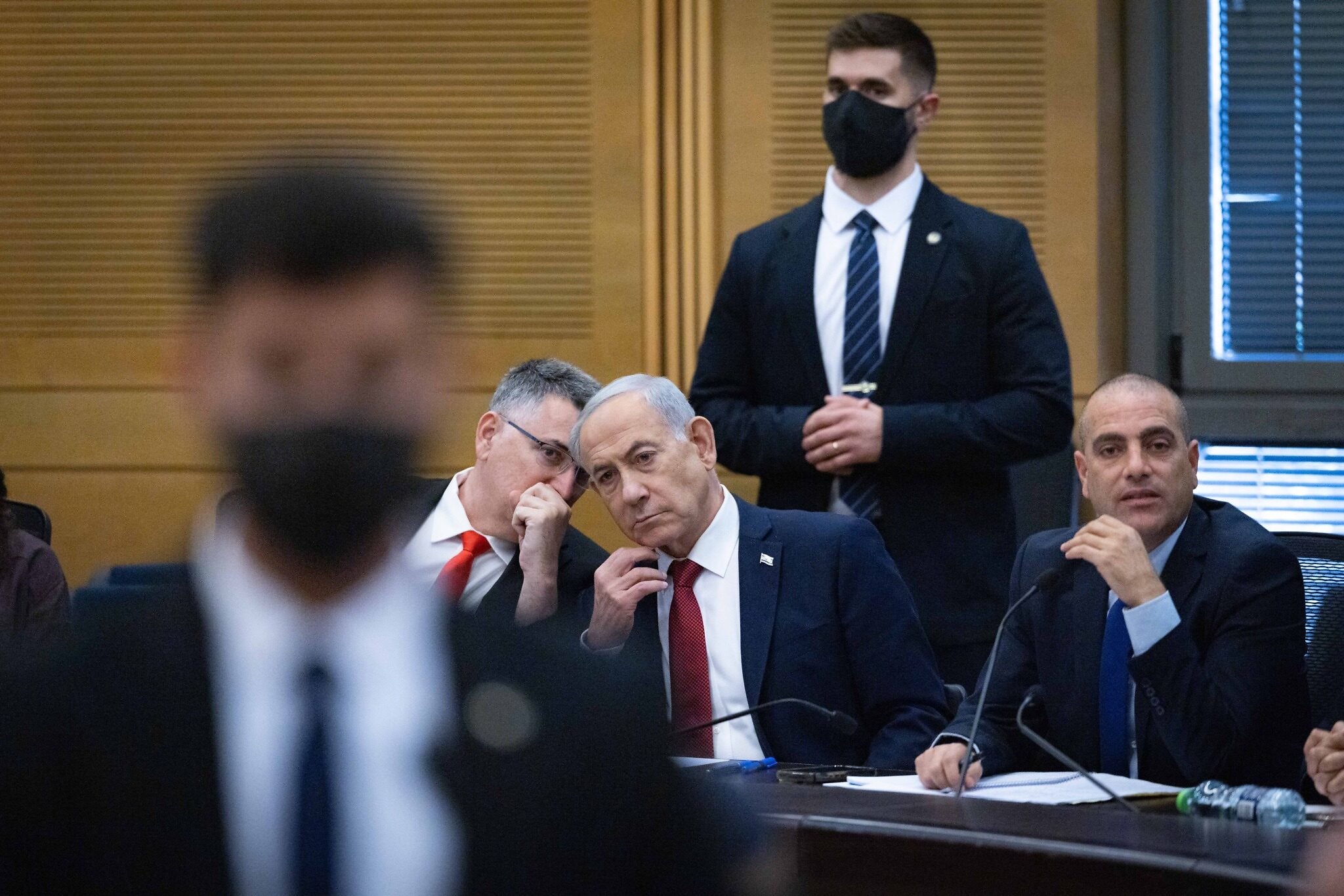
Netanyahu, meanwhile, told the Likud meeting that he would demand “flexibility” from “every side” on the issue of ultra-Orthodox conscription, because the Haredi United Torah Judaism and Shas parties “must be part of the unity government.”
The caretaker prime minister also used the faction meeting to reiterate his opposition to the creation of any government that relies on the Arab-majority Joint List or Ra’am parties, whose lawmakers he and his allies have repeatedly accused of supporting terrorism.
“A Zionist government cannot be controlled by Ahmad Tibi, Ofer Cassif or their associates,” he said, insisting that “a government that wants to fight for the future of the Jewish state cannot depend on those who want to destroy the Jewish state. This is not a matter of religion, race or gender. It is a matter of ideology.”
Netanyahu has sought to delegitimize the Arab parties and portray them as supporters of terrorism in the wake of their strong showing in the election, in which they swept up a combined 19 seats. Eisenkot’s four-party Zionist opposition bloc may eventually rely on their support to form a minority government if all other options have been exhausted.
Not all members of Eisenkot’s bloc are on board with forming a minority government with external support from Ra’am and the Joint List, with the issue seemingly causing fissures in the alliance.
Bennett, Golan clash over collaboration with Netanyahu
B’Yachad chairman Naftali Bennett said Monday that he would prefer a unity government with Likud to one relying on the ultra-Orthodox or Arab parties, prompting public criticism from left-wing Democrats chair Yair Golan.
He clarified, in a discussion with a group of soldiers in the Knesset, that of all the possible options — an alliance with the Arab parties, an alliance with the Haredi parties, or a unity government with Likud — he would like to see a unity government with a premiership rotation, “with Eisenkot serving first as prime minister.”
“I think we need a government in which all the strong, central figures support IDF service – whose own children serve in the IDF,” Bennett said. “People who can serve together in a tank can also run the country together.”
“I don’t know if we’ll succeed, but I’m certainly committed to my people,” he added. “That’s what I’m trying to do.”
Bennett met with Netanyahu for two hours last week, reportedly without previously notifying his allies in the bloc led by Eisenkot. He subsequently ruled out sitting in a government under Netanyahu, reaffirming his support for a unity government led by Eisenkot and including Likud.
His continued support for a unity government came after a four-hour meeting between Yashar and Likud representatives on Sunday, with reports claiming they would meet again on Monday evening.
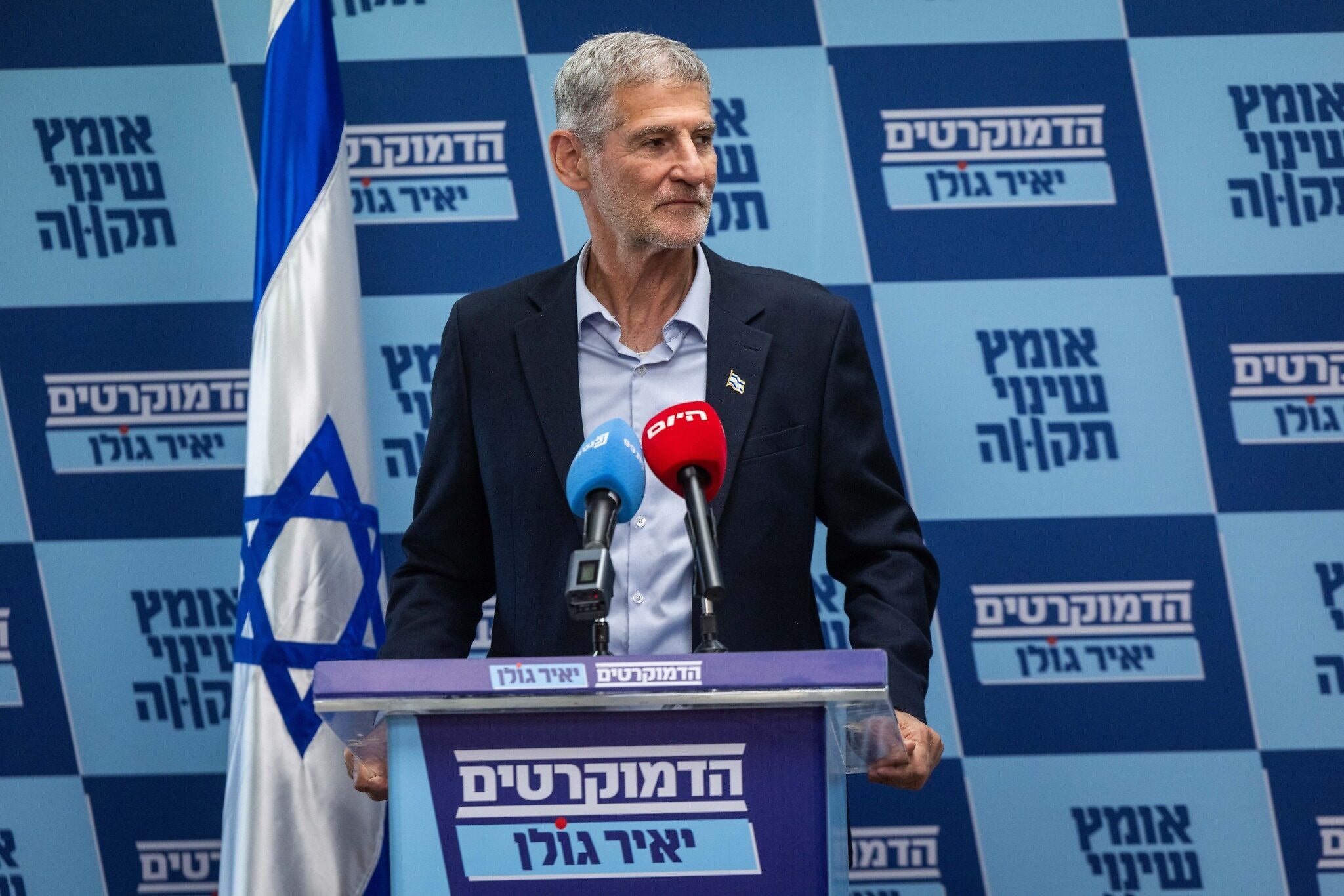
Golan, meanwhile, labeled the talks a “sham” and urged Bennett to back away from his appeal for a unity government with Likud.
“The public gave us a clear task: replace Netanyahu as soon as possible and put Israel back on a path of security, responsibility and democracy,” Golan said at the start of the Democrats’ faction meeting.
He acknowledged the “aspirations, considerations and concerns” of his allies but stressed Israel’s security and the lives of soldiers and civilians must outweigh political considerations.
“We cannot afford to keep delaying and hold endless negotiations,” he said.
Addressing Bennett directly, Golan added: “You swore to look after those who serve. I know those were not empty words. But the first step in looking after them is preventing Netanyahu from leading combat troops into an unnecessary war that could cost them their lives or leave them physically and psychologically wounded.”
Golan also accused Netanyahu of trying to drag Israel into another war with Iran and inflame the West Bank, which has seen an explosion of unchecked extremist settler violence.
“Anyone who cares about those who serve must do everything possible to get Netanyahu away from the steering wheel. You cannot sit with him or alongside him, even in a rotation agreement,” he told Bennett.
To save Netanyahu would be “a blatant and unforgivable breach of voters’ trust,” said Golan. “We have an excellent partnership with Mansour Abbas. Rejecting this option would be a gift to Netanyahu.”
He called for a clear plan by the end of the week, including “partners, a parliamentary majority and a timetable for reaching a decision.”
Following Golan’s remarks, Bennett doubled down on his demand for a unity government, but warned of “consequences” for Netanyahu if he is found to be “merely looking to waste time rather than pursuing unity first under Eisenkot’s leadership.”
“We are closely monitoring efforts to establish a Zionist unity government, and we support all the steps being taken by Eisenkot to form a good government for Israel,” he said.
Eisenkot’s contingency plan
Despite Bennett’s enthusiasm for a unity government, the Kan public broadcaster reported that the Likud demanded that B’Yachad be excluded from its talks with Eisenkot’s Yashar on Sunday.
B’Yachad sent representatives to last week’s talks.
According to Kan, Yashar instead provided B’Yachad with a full update at the conclusion of Sunday’s talks.
The report said that the Eisenkot-led bloc believes Likud is trying to sow division among its members, whom Eisenkot has struggled to unite behind a shared vision.

Each potential path to a coalition, be it with the Haredim, with the Arab parties or a unity government with Likud, has been publicly ruled out by some members of his bloc.
If he cannot unite all corners of his bloc, Eisenkot has indicated he will instead swear in a government without the approval of all his partners, hoping that even if some of them won’t support it, they won’t vote against it.
To do this, Kan reported that Eisenkot will declare at an unspecified time that he has formed a coalition, and call a vote in the Knesset plenum within a day or two of his surprise announcement. This would increase the pressure on his allies, the report said, and limit time for political maneuvers and defections.
The result would be a minority government with him as prime minister. If the government collapses and the country moves to repeat elections, he would remain in office in a caretaker capacity, as Netanyahu currently is.