Security threats have marred Netanyahu’s term. They might also keep him in power
The PM has a well-worn playbook: brand his opponents as left-wing, then warn that Israel is in danger, and only he can keep it safe. They haven't figured out how to respond
On Friday, as the candidates kicked off their closing arguments ahead of Tuesday’s election, Prime Minister Benjamin Netanyahu delivered an unsettling warning: Israel needs to prepare for sanctions on its banking system — and may need to turn to cryptocurrency as a workaround.
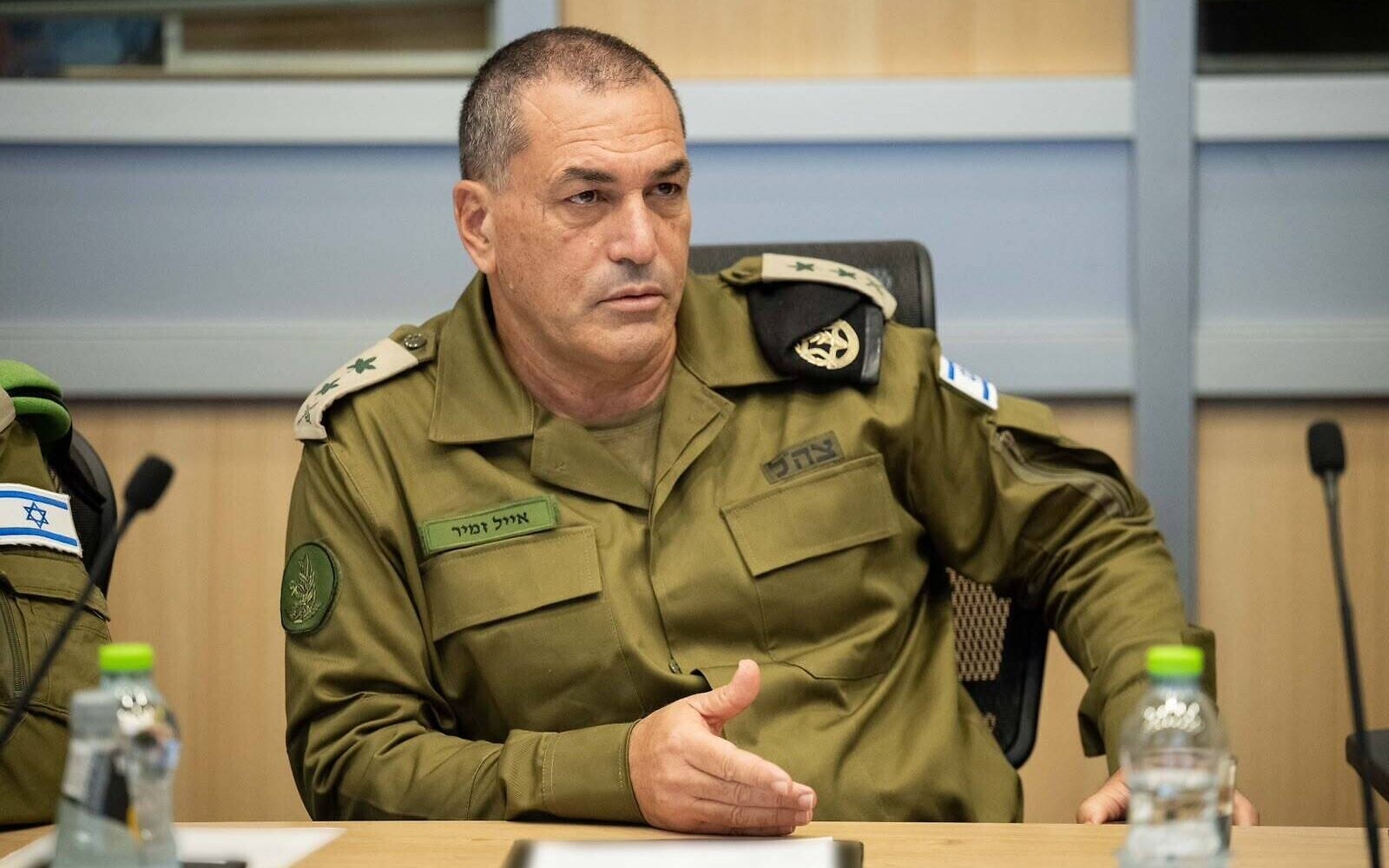
That blunt comments came several days after the Israel Defense Forces went on high alert, following weeks of reports that Netanyahu has been pushing for a renewal of the war with Iran. On Sunday, Channel 12 reported that Netanyahu had had an “unprecedented confrontation” with IDF chief Eyal Zamir, who resisted an order to take military action related to Iran. Earlier that day, Netanyahu had posted an AI-generated image of a nuclear bomb hitting Tel Aviv, and warned of a “second Holocaust.”
To recap: The incumbent prime minister of Israel is telling voters that they should prepare for a reality in which their country is an economic pariah state at war with Iran for the third time in 18 months, and is at risk of being nuked. He is saying, in his own words, that three years after the worst attack in Israel’s history, following an exhausting multi-front war that has ruptured Israeli society and turned most of the world against it, the country is still in “real existential danger.”
Against that backdrop, he’s asking for another term. And he might just get it.
To be clear, a Netanyahu victory is not a foregone conclusion. But nor is a loss. No matter who — if anyone — wins this election, the best they can hope for is a narrow coalition in a polarized Knesset. The vote will almost definitely not signal a historic political realignment, much less a resounding death knell for a prime minister who was in office on October 7, 2023.
The Hamas-led attack may have changed everything in and about Israel, but somehow, the country’s politics have stayed the same. In this election, as in so many others, the electorate is split roughly down the middle, with many of the same politicians running who were in power a decade ago, and with an inconclusive outcome likely. And because Netanyahu is the sitting prime minister, that uncertainty works in his favor.
In other words, there are three possible outcomes to the election: Either Netanyahu’s camp wins, his opponents win, or Israel heads to another round of elections, with the current government in place as a caretaker. In two of those three scenarios, Netanyahu stays prime minister for at least the next several months.
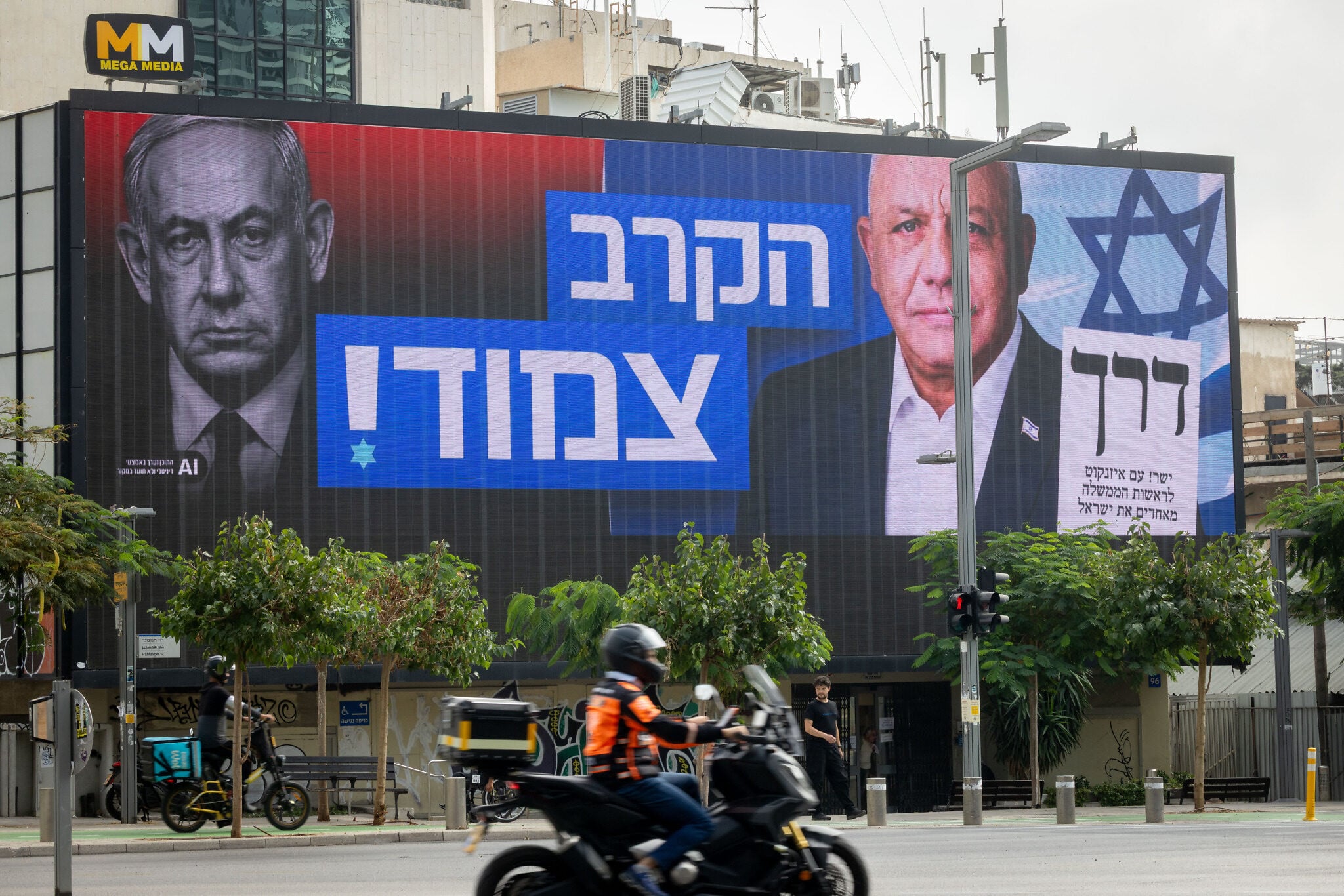
How is that possible? Why are the electoral dynamics so stubborn when so much else — Israel’s security doctrine, its international reputation, even the territory it controls — is so different than it was on October 6, 2023?
The answer lies partly in Israel’s shifting demographics, partly in ideology and partly in the structure of the country’s electoral system. But much of it is due to Netanyahu’s long incumbency, and the chokehold he has on his base, forcing his opponents into an impossible conundrum.
Speaking with bombast to the base
To understand the political headwinds Netanyahu’s opponents face, one need only travel to the southern Israeli city of Dimona, long a stronghold for the premier. When the prime minister visited last week for a campaign rally, one of his many enthusiastic supporters arrived clutching a small Netanyahu-shaped pillow.
“This is a doll I sleep with at night,” the rallygoer, Noa Dadon, told Channel 12. “I admire Bibi. There’s no one like Bibi. I have bedsheets of him, I have kippot of him.”
Others chanted “Bibi, king of Israel,” or rhythmically droned his name. When Netanyahu arrived, he led a call-and-response where he asked whether the crowd wanted various opposition politicians in power. Each time, they responded, “No!”
This is the playbook Netanyahu has run for more than a decade: brand all of his opponents as left-wing, relentlessly demonize them, then warn that Israel is in danger, and that therefore only he can keep it safe. In a country where most Jewish voters identify with the right, that pitch has worked over and over.
It’s a strategy Netanyahu’s various rivals have struggled to combat, and it helps explain how the premier has survived politically even as everything else has changed after October 7. Fear becomes an even more potent motivator when the threats feel near. By evoking and projecting that fear, Netanyahu forces his rivals to react to his pronouncements, keeping himself in the spotlight.
Netanyahu’s opponents have long tried to fight him not just on policy but on personality. In elections in 2015, 2019 and again this year, they’ve framed the campaign as a choice between Netanyahu and his hard-right allies, and an understated opponent promising to return the country to sanity, unity and moderation.
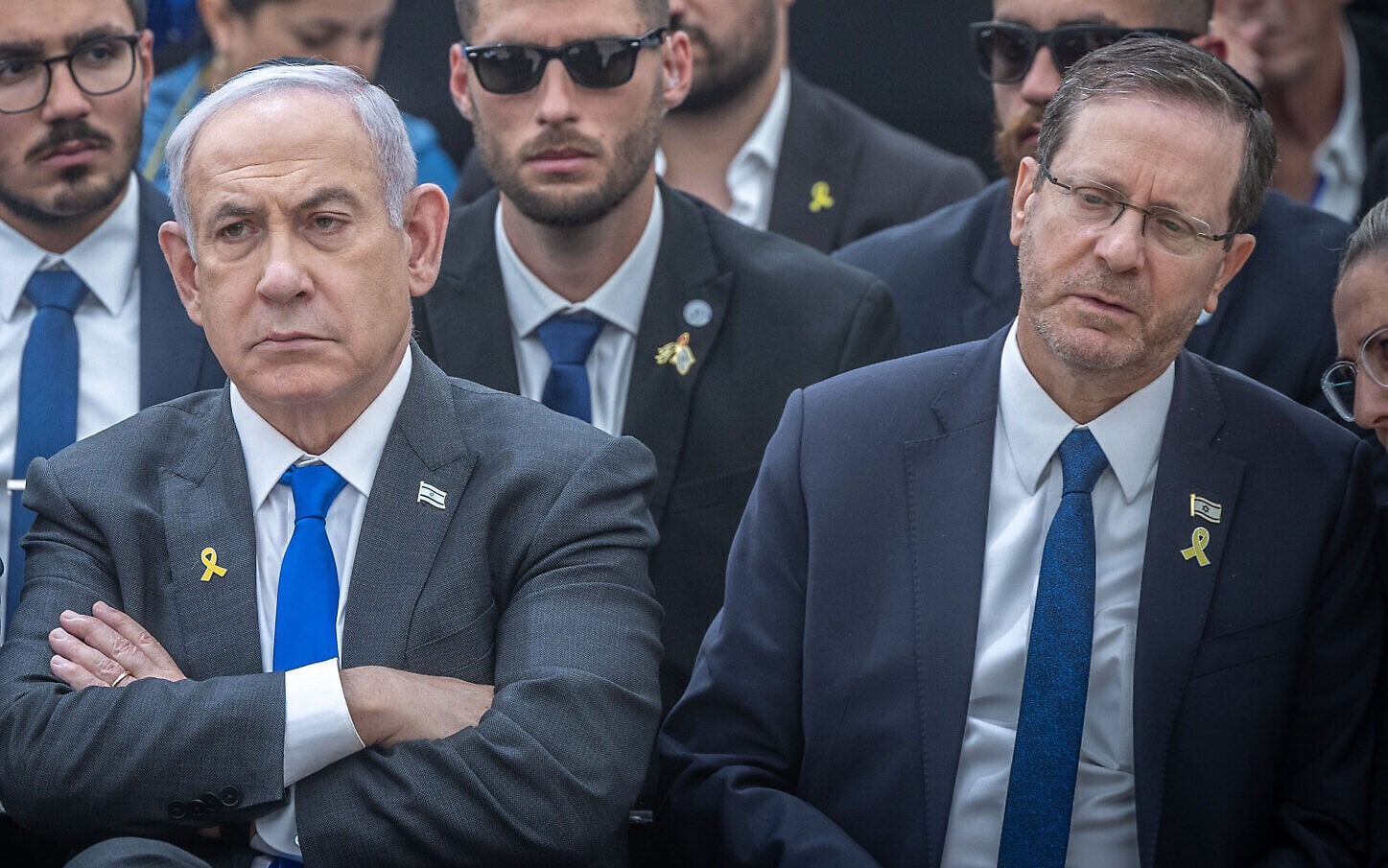
In 2015, Labor candidate Isaac Herzog’s slogan was, “A thoughtful and responsible leader.” He spoke softly and once went so far as to shush a crowd of supporters cheering for him. In 2019, Benny Gantz, a former IDF chief, ran on the slogan “Israel above all else,” with a party named “Blue and White” — choices that broadcast a bid for consensus, unburdened by specific ideology.
Neither of them defeated Netanyahu. This year, the leading opposition candidate, Gadi Eisenkot, is again a former IDF chief with a brand-new party, again positioning himself as a calm, moderate, even boring alternative to the showman prime minister. His events are characterized by his measured speech and the crowd’s polite cheers. No one, it’s safe to say, is carrying an Eisenkot-shaped pillow.
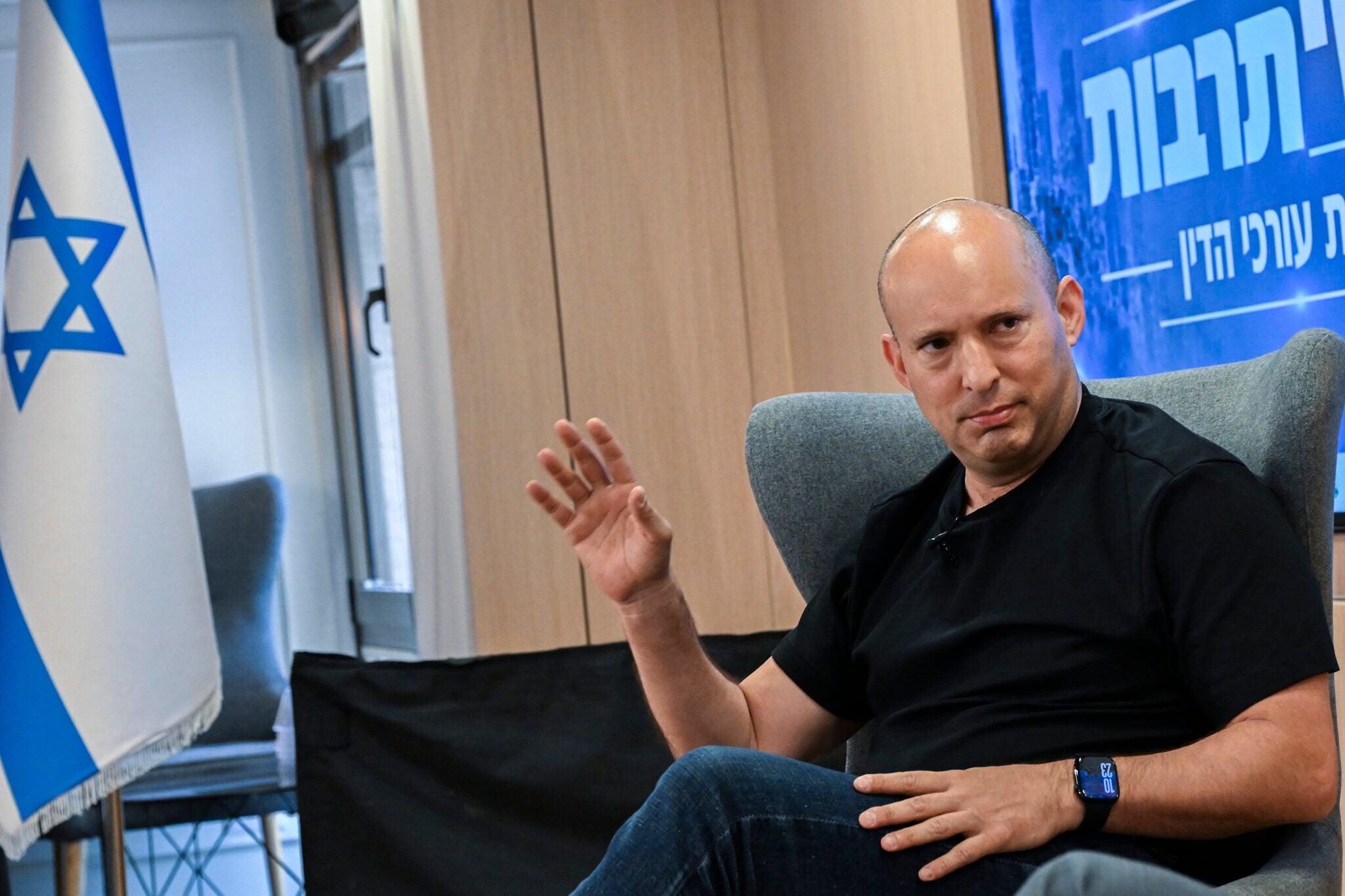
Another opposition prime ministerial hopeful, Naftali Bennett, has tried to beat Netanyahu at his own game. He also speaks in a deep, forceful voice and has fluent, almost unaccented English. He also makes headline-grabbing pronouncements. He’s also a natural in the TV studio.
But Bennett has the bombast without the base. Netanyahu can say and do shocking and divisive things, and the pillow-clutchers will stand by him no matter what. Even on October 20, 2023, not two weeks after he presided over the bloodiest day in Israeli history, a poll gave his Likud 18 seats, the second-biggest tally of any party.
Bennett once had a base as well, of religious-Zionist, pro-settler voters and their sympathizers. But he gambled it in 2021 when he chose to form a government with parties to his left, and the Islamist Ra’am. Now allied with Opposition Leader Yair Lapid, Bennett’s pitch of center-right, tech-inflected managerial competence clearly has pull with voters; he’s polling as the third-biggest party.
But popularity isn’t the same as loyalty, and Bennett has yet to rebuild the dependable following he once had. In fact, no one in the opposition can command the entire camp’s support. Unlike on the right, they can’t even agree on which candidate should be prime minister.
The other two Jewish-led opposition parties do boast both an ideology and a base. Yair Golan’s Democrats carry the torch of the social-democratic Zionist left, popular in secular Tel Aviv and its environs, while Avigdor Liberman’s Yisrael Beytenu has long counted on hawkish, secularist Russian-speaking voters. But neither of those constituencies is nearly big enough to carry the electorate.
Netanyahu’s doomer campaign
Opposition politicians argue, of course, that this election is about substance, not style. And their parties agree on a few core policies beyond opposing Netanyahu: drafting Haredi men to the army; rolling back the outgoing government’s judicial overhaul; establishing a state commission of inquiry into the October 7 attack. Observers have also predicted that having a prime minister not named Netanyahu (in addition to booting his far-right partners) will begin to mend Israel’s tattered global standing. Everyone from Golan to Liberman agrees that these policies are essential to rescuing Israel from its current tailspin.
That’s where Netanyahu’s increasingly dire statements come in. His bet is that if you think this election is about issues like the judicial system, Haredi-secular relations or what kind of investigation should probe an attack that happened three years ago, you might be tempted to vote for the opposition. But if you believe that the very survival of Israel is at stake, you just might want to stick with the guy who has his hand on the wheel, not to mention the support of the president of the United States.
His rivals are quick to shoot back, crying out that Netanyahu has been in power for almost all of the past 17 years, that the country’s security lapses are therefore his fault, that he has had every opportunity to address the threats he says may now doom the country. That he has failed to win the war he’s running his campaign on.
In recent days, as Netanyahu has reportedly pushed for a renewed war with Iran, his opponents have accused him of politicizing Israel’s security. When the report of his fight with the IDF chief emerged, Liberman accused him of “treason,” and Lapid said he had gone “off the rails.”
Either way, Netanyahu has kept himself at the center of the conversation, driving discourse and forcing his opponents to react to him. Meanwhile, his base — guided by the vociferously pro-government Channel 14 — comes to his defense.
Will that allow him to win a majority in the Knesset? Probably not. But he doesn’t need to win. All he needs to do is not lose. Unlike in the opposition, all of Netanyahu’s allies say he should be prime minister. And if you add up his base with Haredi and far-right voters, two demographics closely tied to him, it may give him just enough seats in the Knesset to stave off defeat, while Israel lurches to another election, and whatever crisis comes next.