Senior Arab MK backs replacing Knesset speaker after election, hints minority government an option
Joint List's Ahmad Tibi says alliance will back replacing Amir Ohana to give opposition control of parliamentary agenda, and will 'do more' than recommend a Netanyahu rival as PM
A senior member of the predominantly Arab Joint List said Saturday that the political alliance would collaborate with the Zionist bloc opposed to Prime Minister Benjamin Netanyahu in a push to replace the Knesset speaker immediately after the next parliament is sworn in following next month’s election, even if no agreement is reached on a new coalition to replace the premier.
MK Ahmad Tibi, chairman of the Ta’al party and No. 2 on the Joint List — a merger with the Hadash and Balad parties — also said during an interview with Channel 12 that the alliance would be willing to go further than backing a Netanyahu rival for prime minister, without elaborating, amid talk of a potential minority government based on Arab support from the outside.
“There are all kinds of things, a range of steps, immediately after the elections, that could change reality,” Tibi said when asked what would happen if the likely scenario according to opinion polls — a stalemate with no majority for either Netanyahu’s bloc or the Zionist bloc opposing him — materializes after the October 27 vote.
Leading opposition parties have said they won’t sit with Arab parties in a future coalition, and the Joint List or its member parties have never been part of a ruling coalition, unlike the rival Ra’am party. But the Joint List still wants to prevent Netanyahu from forming the next coalition.
“You know what the election of a Knesset speaker immediately after the elections means?” Tibi continued. “The story is over. This is complete control of the Knesset.”
The current Knesset speaker is Amir Ohana, from Netanyahu’s Likud party. Changing the speaker before a government is formed would give opposition parties control over the parliamentary agenda.
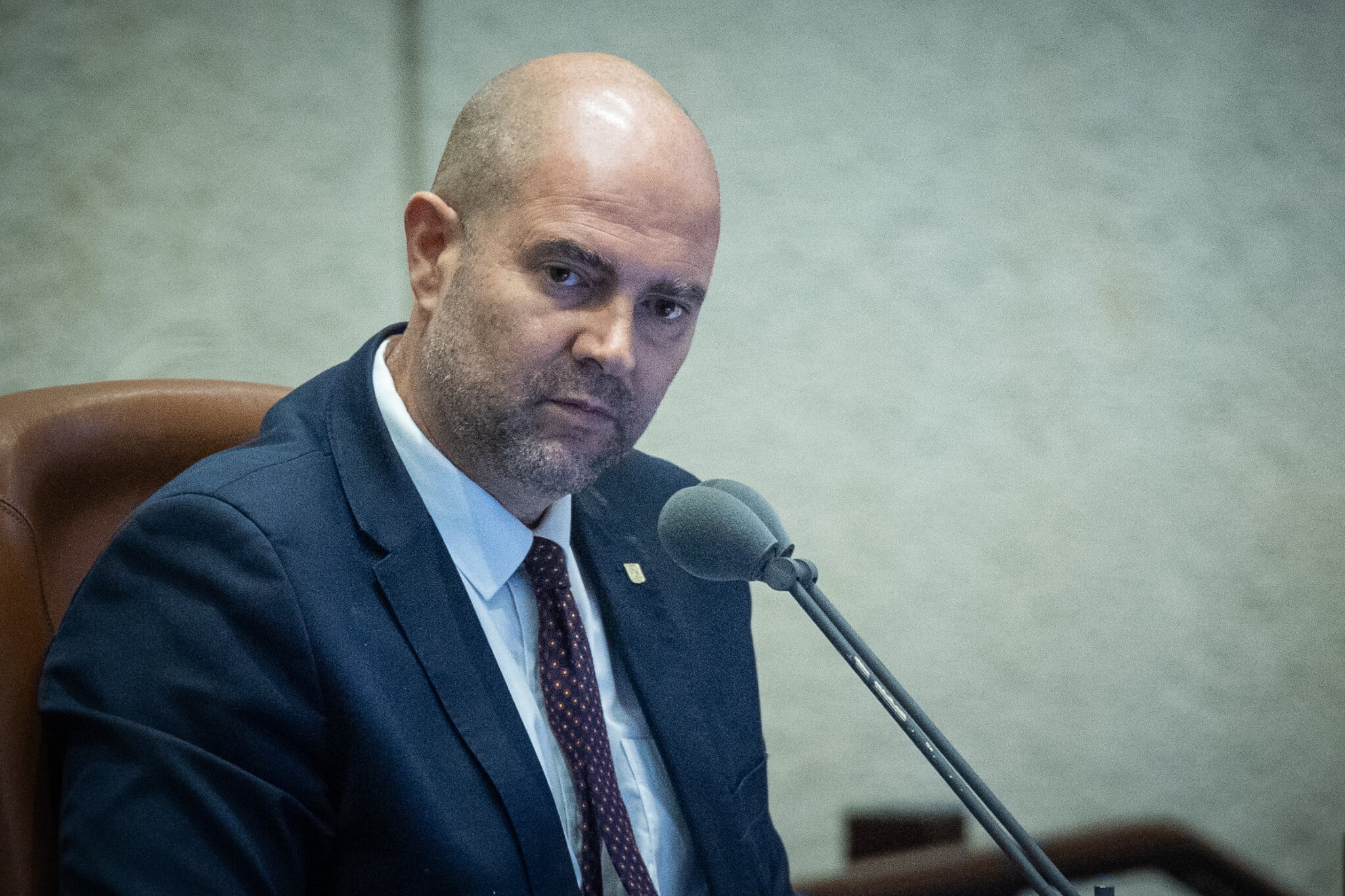
“Do you think we will vote for Amir Ohana, who turned the Knesset into a Kahanist circus? We will support the rival candidate for Knesset speaker,” Tibi said.
Asked whether he would recommend an opposition candidate as prime minister to the president after the elections, Tibi said: “We will, I believe, do more than that.” He didn’t spell out what that meant.
In Israel’s parliamentary system, becoming prime minister requires a coalition of at least 61 members of the 120-seat Knesset. After the election, each party meets with the president and tells him who each of its members recommends as premier, and, on that basis, the president tasks a lawmaker with forming a majority coalition. Israel’s Arab parties have historically mostly avoided recommending Zionist politicians as prime minister to the president.
But Tibi noted that the Joint List in 2019 and 2020 recommended then-opposition candidate Benny Gantz as prime minister, and that Gantz eventually opted to join a unity government with Netanyahu rather than form a government based on that recommendation.
Gadi Eisenkot has emerged as the leading challenger to Netanyahu for the premiership, and he has reportedly been weighing the option of swearing in a minority government that falls short of 61 members but is propped up by the external support of Arab parties. Not all members of the Zionist opposition are expected to back that option, though, and such a coalition would be weakened and fragile.